April 13, 2026
By Nehal Malik
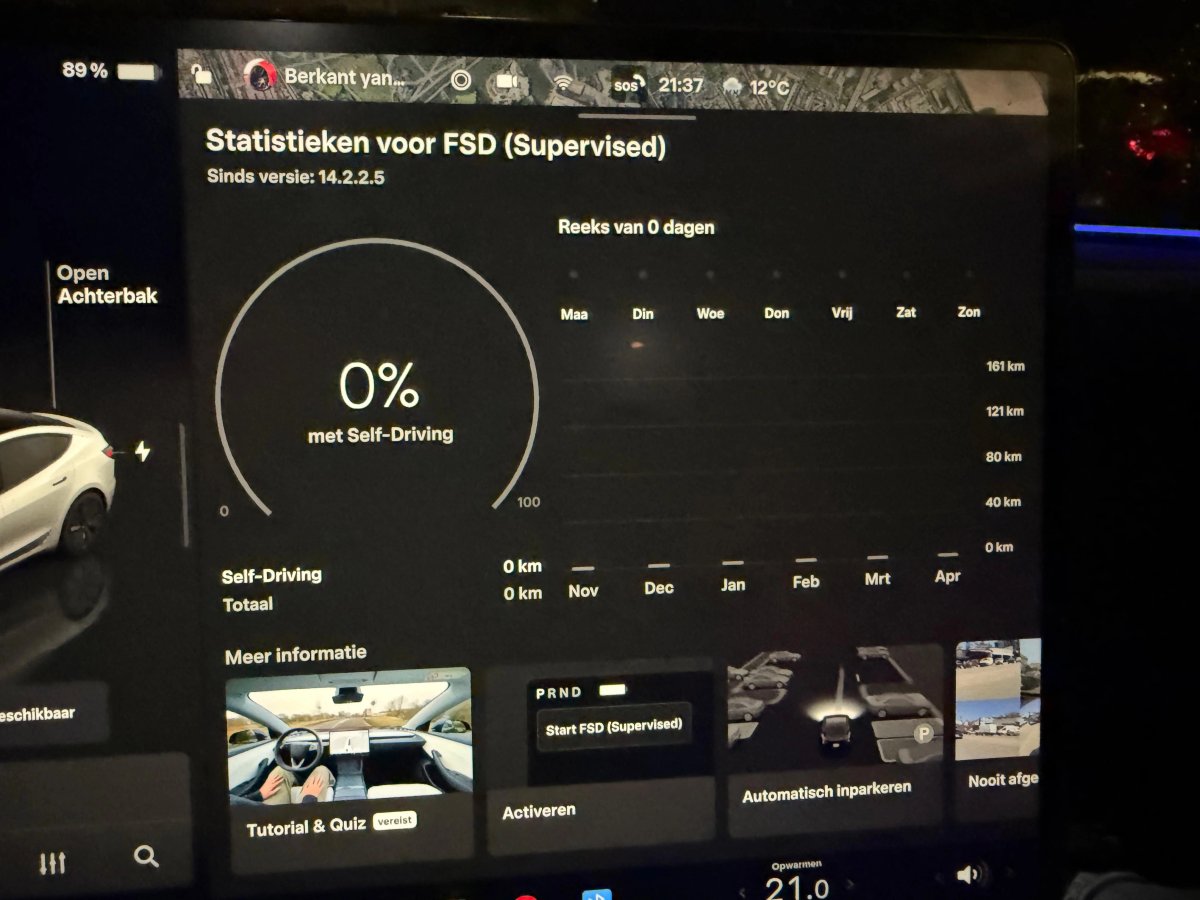
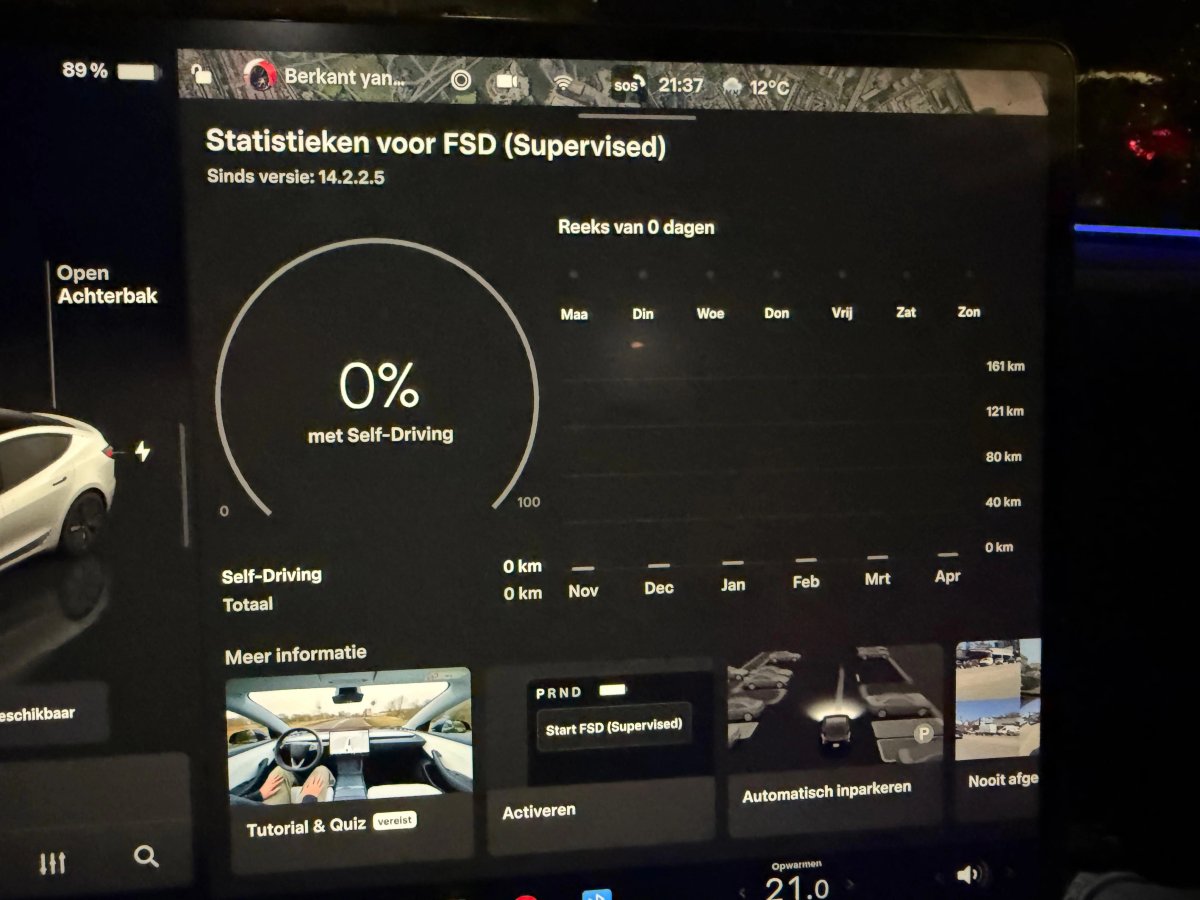
Tesla is officially rolling out Full Self-Driving (Supervised) in Europe, and as the first wave of public testers begins to use the software, we are getting a look at some exclusive interface changes. Following the historic approval in the Netherlands last week, Tesla has introduced a dedicated “FSD (Supervised) Stats” screen that is currently only available on European builds.
The new dashboard is a notable detail in footage shared by the first Dutch Tesla owners to try out FSD in the country, including Kees Roelandschap (@KRoelandschap). While owners in North America have had a basic version of these stats since last fall (available in Settings > Autopilot and the Tesla mobile app), the European implementation — specifically on version 14.2.2.5 — is a much more robust and visually engaging experience that truly gamifies the self-driving journey.
A New Way to Track Your Drive
The new FSD Stats screen provides a comprehensive breakdown of how much the car is actually driving itself. The most prominent feature is a large circular gauge showing the percentage of total kilometers driven using FSD. Below that, owners can see a direct comparison between “Self-Driving” distance and the “Total” distance traveled.
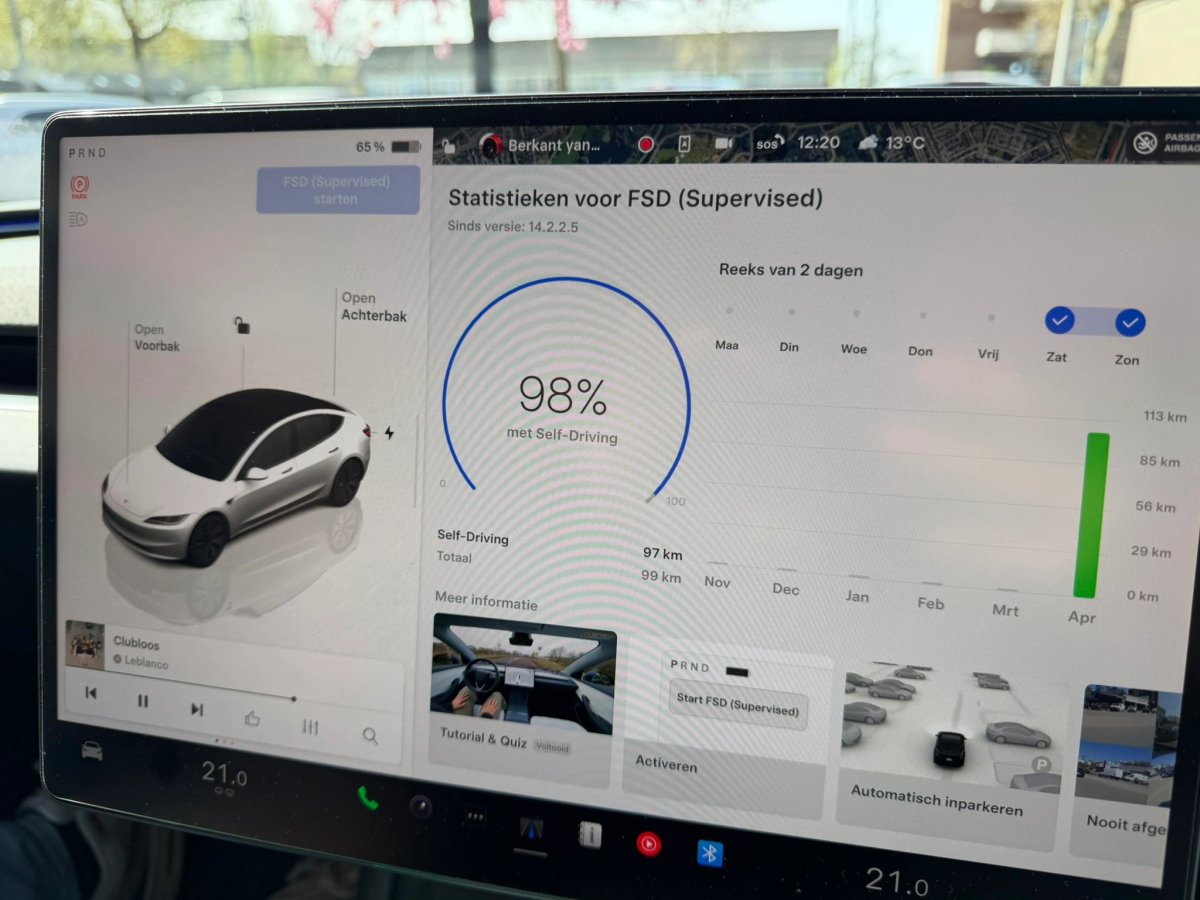
Perhaps most interesting is the new “Daily Streak” and bar graph. The interface tracks how many consecutive days you have used the system, similar to a fitness app or a language learning streak. The bar graph provides a monthly overview, allowing users to see exactly how their usage fluctuates over time. It is a cool addition for a region that has been waiting years for this technology to arrive, giving early adopters a way to “prove” how much they are relying on the new tech.
Onboarding and On-Screen Learning
Before Dutch owners can even see this stats page or engage the system, they must complete a much more rigorous onboarding process than their North American counterparts. To comply with strict European safety regulations, owners must watch a dedicated tutorial video and pass a short safety quiz to confirm they understand that they are still responsible for the vehicle.
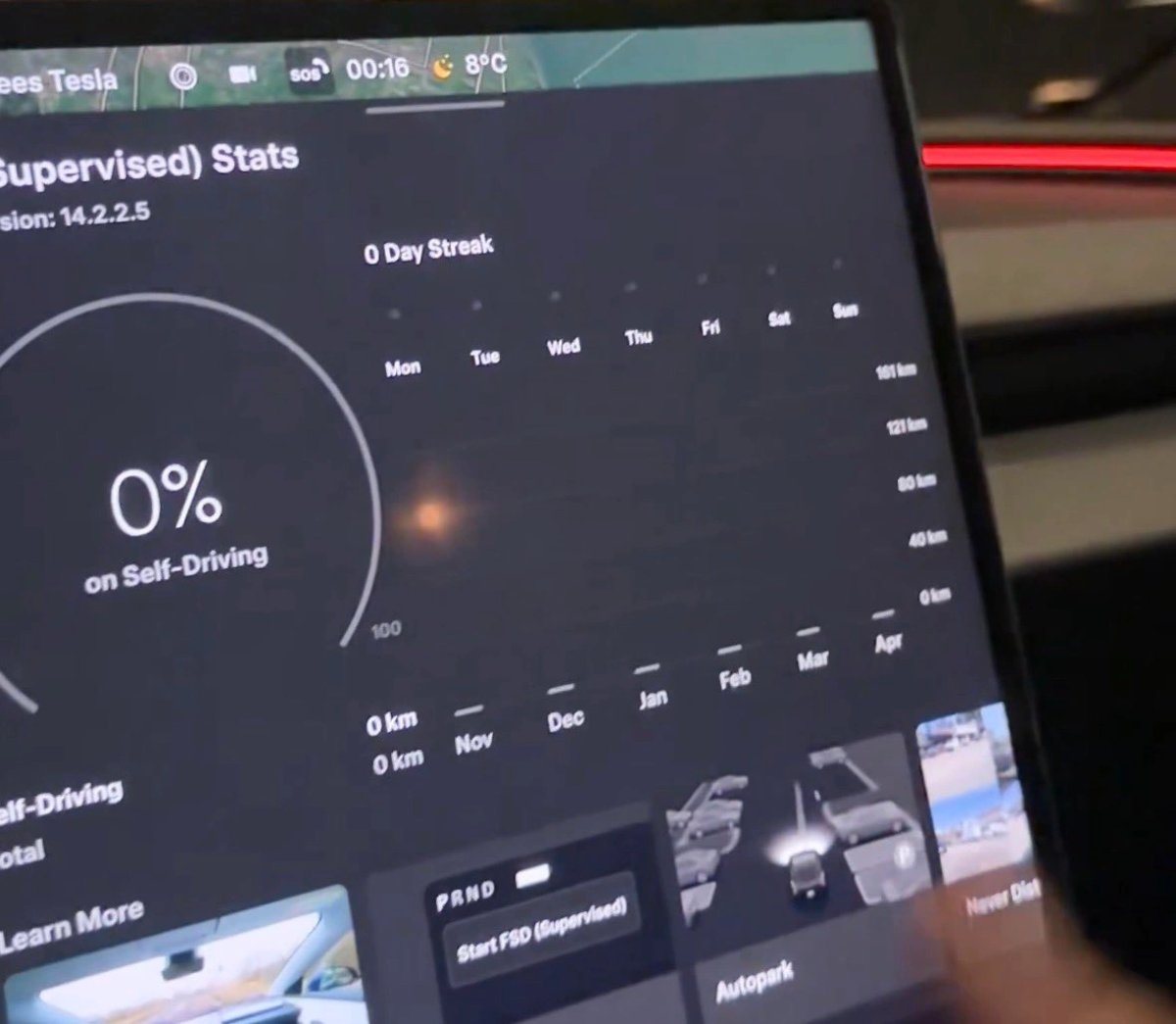
The stats page itself even includes quick-access tiles at the bottom for information about features like “Autopark,” along with a prominent link to the FSD tutorial. This education-heavy approach is likely part of the deal Tesla struck with the Dutch RDW to ensure drivers do not become complacent while the car navigates complex city streets.
Is the New Stats Screen Coming to North America?
While this refined stats screen is currently a European exclusive, there is hope it could eventually make its way to FSD users in other regions. Tesla’s leadership, including Ashok Elluswamy, has noted that the Dutch approval is likely the first domino to fall in a global expansion strategy.
As Tesla continues to roll out FSD across the continent, this new UI will serve as the primary hub for owners to monitor the value they are getting from the software. Whether you are aiming for a 100-day streak or just trying to hit a 99% self-driving ratio, the new FSD Stats screen makes the transition to autonomy feel more like an interactive experience than ever before.
Subscribe to our newsletter to stay up to date on the latest Tesla news, upcoming features and software updates.
April 13, 2026
By Nehal Malik
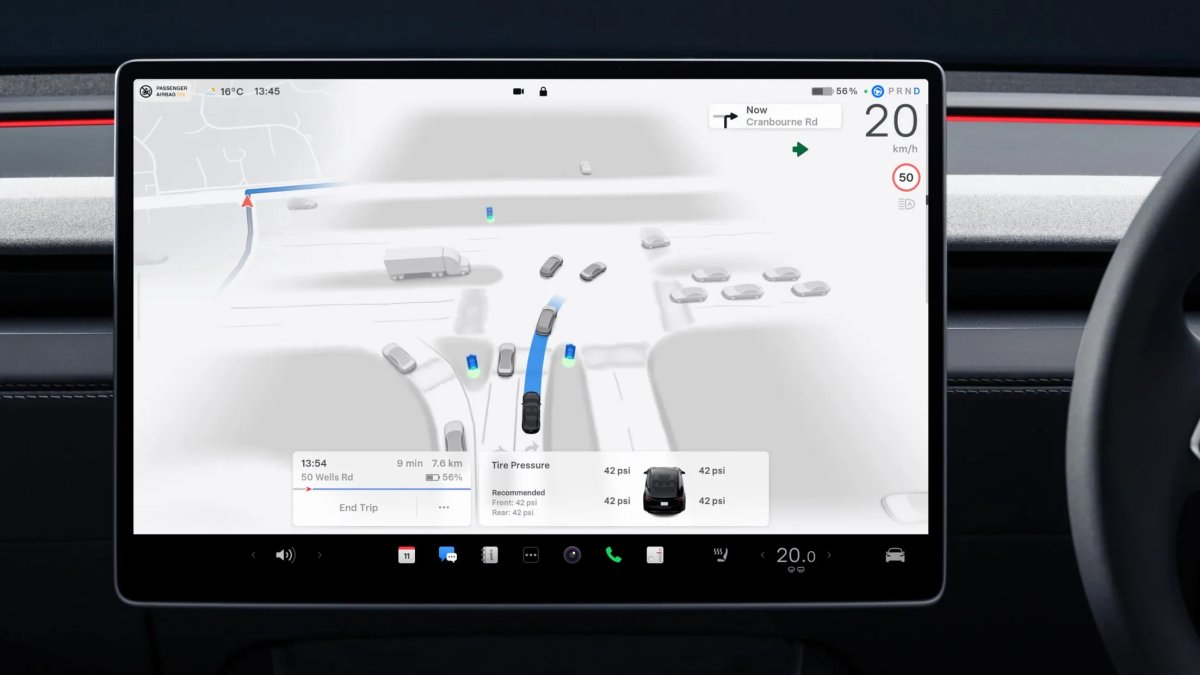
The regulatory dam has officially broken in Europe, and the ripple effects are expected to reach far beyond the borders of the Netherlands. Following the historic approval and subsequent rollout of Full Self-Driving (Supervised) to Dutch owners last week, Tesla’s leadership is signaling that this is just the beginning of a global expansion.
Tesla’s Vice President of AI, Ashok Elluswamy, took to X to highlight the significance of the Dutch RDW’s decision. “The European regulation is followed by a lot more countries than just the ones in EU,” he noted. This suggests that the technical validation performed in the Netherlands could serve as a “gold standard” for regulators in European countries outside the bloc, Asia, the Middle East, and other regions that typically mirror the EU’s automotive type-approvals.
The RDW’s Push for EU-Wide Approval
The Dutch vehicle authority (RDW) is not stopping at its own borders. According to a report from Reuters, the RDW has officially notified the European Commission of its plan to seek Union-wide approval for Tesla’s FSD system. Bernd van Nieuwenhoven, the general manager of type approvals at the RDW, stated, “If it is good enough for the Netherlands, it is good enough for Europe.”
The process is moving quickly, with the Netherlands expected to present its case to the relevant EU technical committee in May. If a majority of member states support the application, it would pave the way for an implementing act that allows for an EU-wide rollout. In the meantime, the RDW is already holding bilateral conversations with other regulators, offering its technical findings as a reference point for individual countries to grant their own approvals.
A Stricter, More Supple European Build
While the software is functionally similar to what North American drivers use, the European version has been specifically modified to meet local safety demands. Van Nieuwenhoven noted that the Dutch-European version features “stricter monitoring of whether drivers are paying attention to the road.”
Early public testers in the Netherlands have confirmed this increased scrutiny. “The driver monitoring is strict, but supple,” noted Tesla owner Kees Roelandschap, who was among the first to get the FSD update and try out the feature. He mentioned that simple actions like picking up a phone or even wearing a hat with a visor that blocks the camera’s view of the driver’s eyes can trigger warnings. Despite the strictness, the car is reportedly handling narrow, bike-heavy Amsterdam streets with impressive confidence.
The Domino Effect
The success of this rollout is vital for Tesla’s pivot toward an AI-first business model. Elluswamy, who is also set to lead the MACROHARD joint venture between Tesla and xAI, is overseeing a software stack that must now prove itself in the world’s most complex regulatory environments.
With roughly 100,000 eligible vehicles in the Netherlands alone, the potential for high-margin subscription revenue from Europe is massive. If the May vote within the EU committee passes, the “domino effect” will likely turn into a landslide, bringing FSD (Supervised) to millions of drivers across the continent by the end of the year.
April 13, 2026
By Nehal Malik
Tesla’s Full Self-Driving (Supervised) is officially available in Europe, and the first lucky testers are revealing that the software experience across the Atlantic is a bit different than what we are used to in North America. Following the landmark approval from the Dutch Vehicle Authority (RDW) last week, Tesla has wasted no time in pushing the software to public roads.
Early footage and screenshots from Dutch Tesla owners like Kees Roelandschap (@KRoelandschap) have provided a deep dive into the unique features Tesla has baked into the European build. From new speed settings to strict safety requirements, here is everything that sets the European version of FSD (Supervised) apart.
The Netherlands Leads with v14.2.2.5
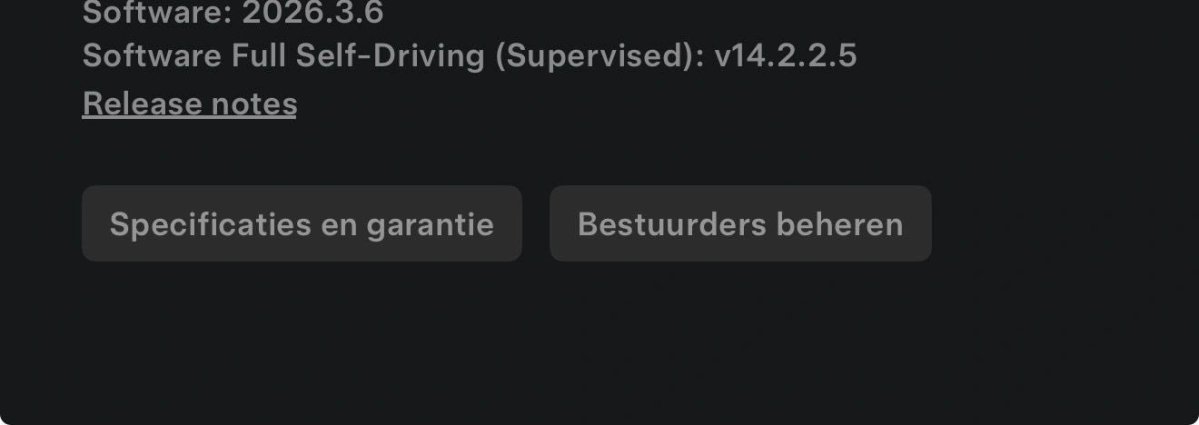
While North American owners recently started receiving FSD v14.3, the version currently rolling out in the Netherlands is v14.2.2.5, delivered via software update 2026.3.6. This specific version was likely used during the rigorous regulatory testing phase with the RDW. For now, the rollout is targeting Hardware 4 (AI4) vehicles first.
The software allows the car to drive almost everywhere with minimal input, though Tesla is very clear that it is not autonomous and requires a fully alert driver. This successful launch in the Netherlands is widely viewed as the first domino to fall; as many EU countries look toward the Dutch RDW for automotive regulation, a broader expansion across the continent is likely just around the corner.
Contextual Max Speed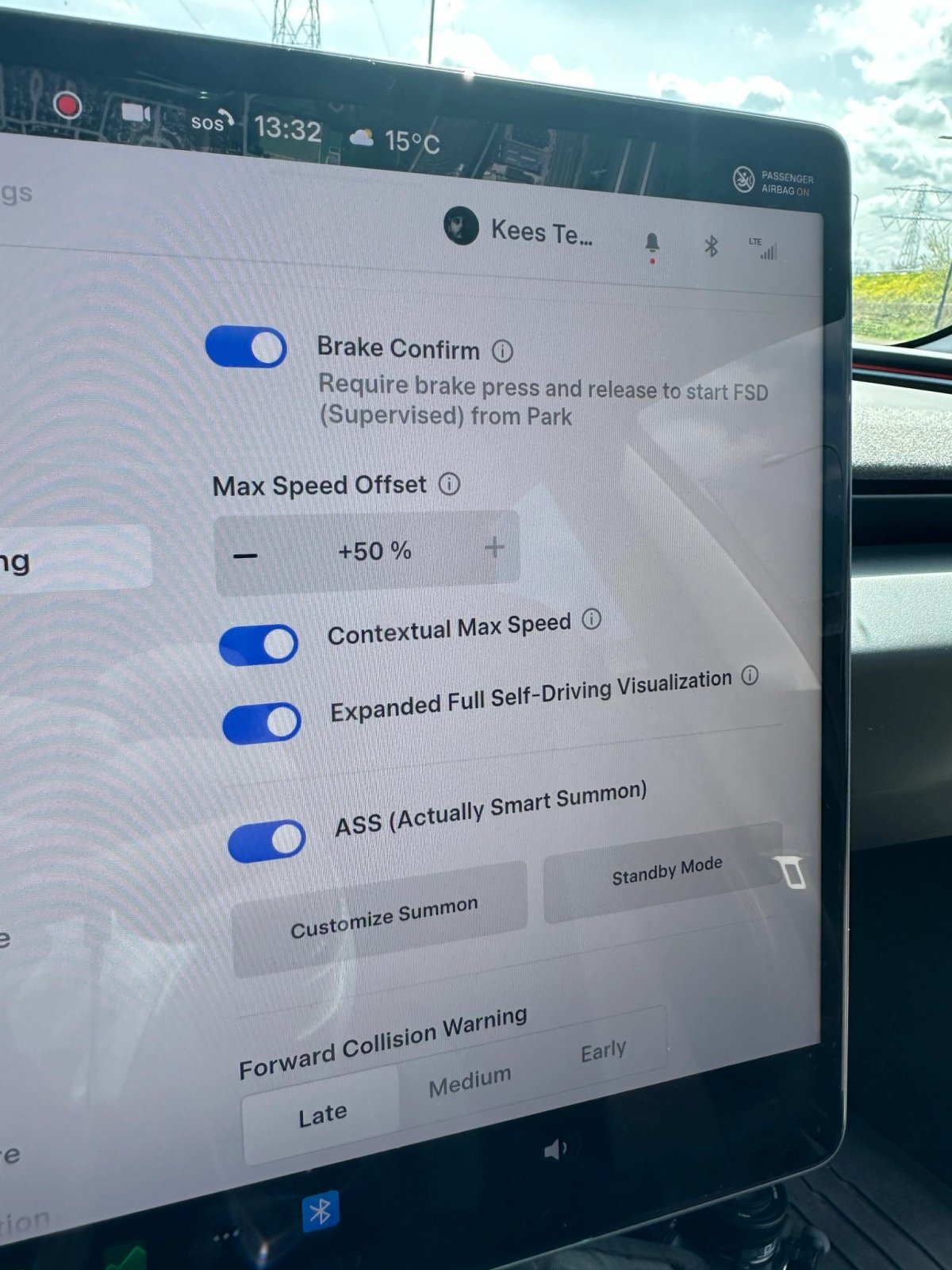
One of the most interesting additions to the European build is a new setting called Contextual Max Speed. This feature allows the car to adjust its pace based on the environment rather than just a fixed number. According to the in-car description, “When contextual max speed is enabled, the system will make adjustments to your max speed setting dynamically based on visual context.”
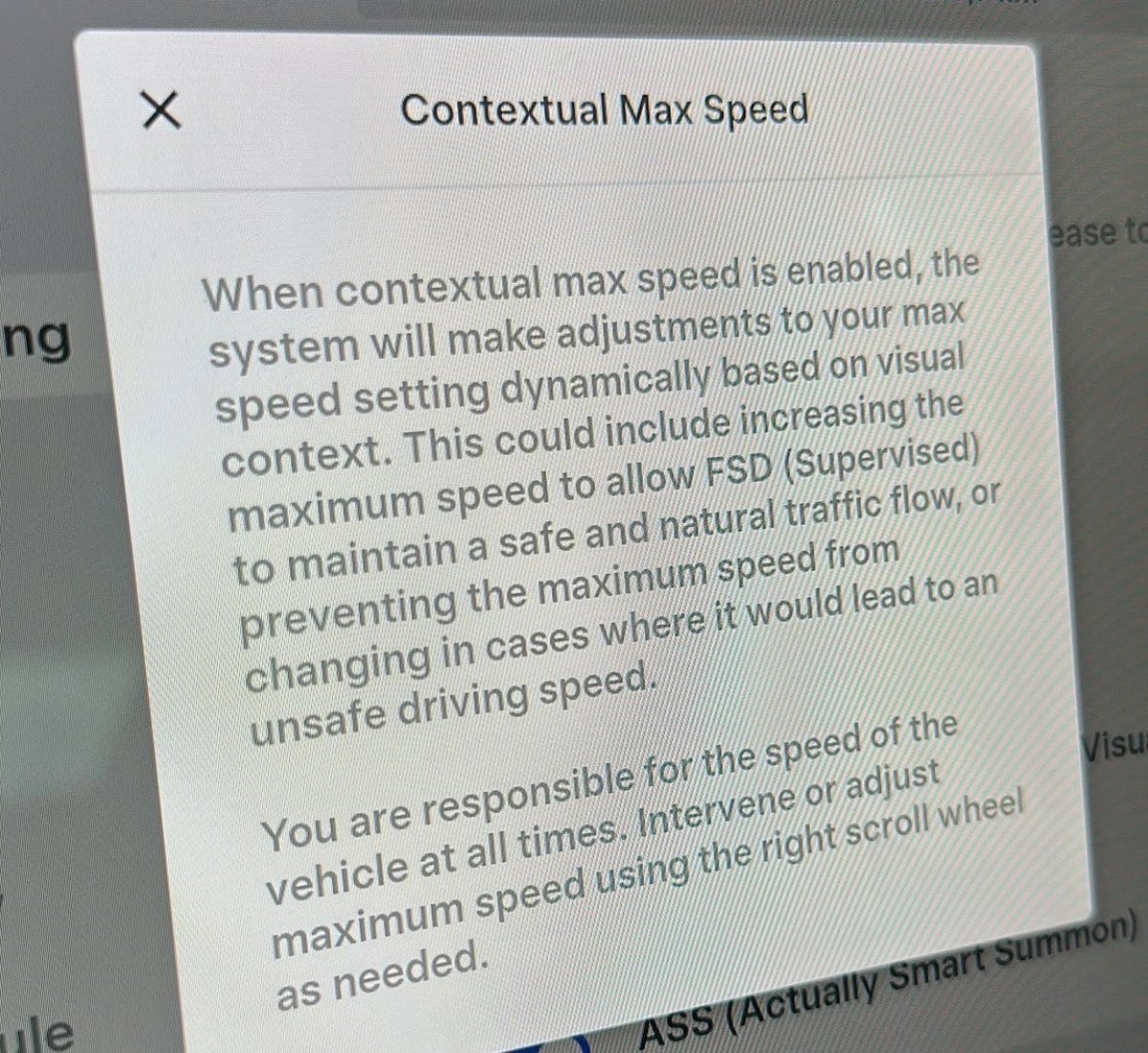
This includes increasing speed to maintain a natural traffic flow or preventing the car from speeding up in areas where it would be unsafe. Interestingly, Roelandschap noted that the speed offset can be set as high as 50%, giving the system a significant amount of room to breathe while navigating European motorways.
Out of View Traffic Lights Warning
European infrastructure often features traffic lights placed in positions that can be difficult for cameras — or humans — to see when pulled up close. To combat this, FSD v14.2.2.5 displays a new notification: “Traffic light may be out of view. Please pay attention.”
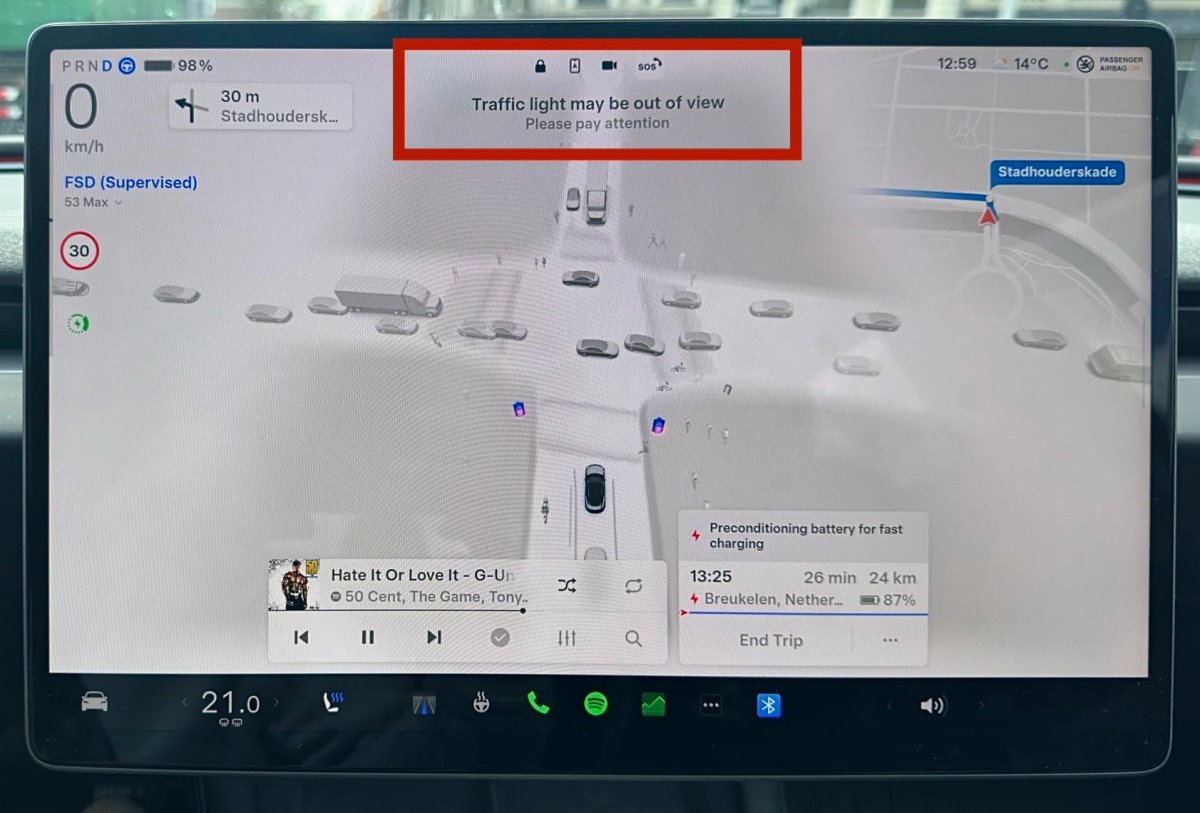
This is just one of many tailored UI features Tesla has introduced to comply with strict local laws. These visuals are designed to keep the driver informed about exactly what the car can and cannot see, helping to bridge the gap between human intuition and neural network perception in tight, historic European city centers.
A New Stats Page and Mandatory Safety Quiz
European owners are also getting a completely new FSD Stats page. This dashboard shows a daily streak, monthly usage data, and an overall usage percentage. It is a sleek addition that gamifies the experience while providing transparency on how often the system is engaged.
However, before Dutch owners can even see this screen or enable the software, they must pass a mandatory safety quiz. After watching a dedicated tutorial video, owners must answer questions to prove they understand the limitations of the software. This is a much stricter onboarding process than what is seen in the U.S. and highlights Tesla’s commitment to satisfying safety regulators in the region.
Subscriptions and Purchase Options
Along with the software rollout, Tesla has launched FSD subscriptions in the Netherlands. This allows owners to test the feature on a month-to-month basis without committing to the full purchase price. Notably, Tesla still offers a one-time purchase option in the country, a choice that was recently discontinued in North America in favor of a pure subscription or monthly payment model.
The arrival of FSD in the Netherlands marks a new chapter for Tesla. While the software is still technically “Supervised,” the level of localization and the speed of the rollout suggest that Tesla is finally ready to conquer the complex roads of Europe. We will be watching closely as the “domino effect” begins to move through the rest of the European Union.