
April 17, 2026
By Nehal Malik
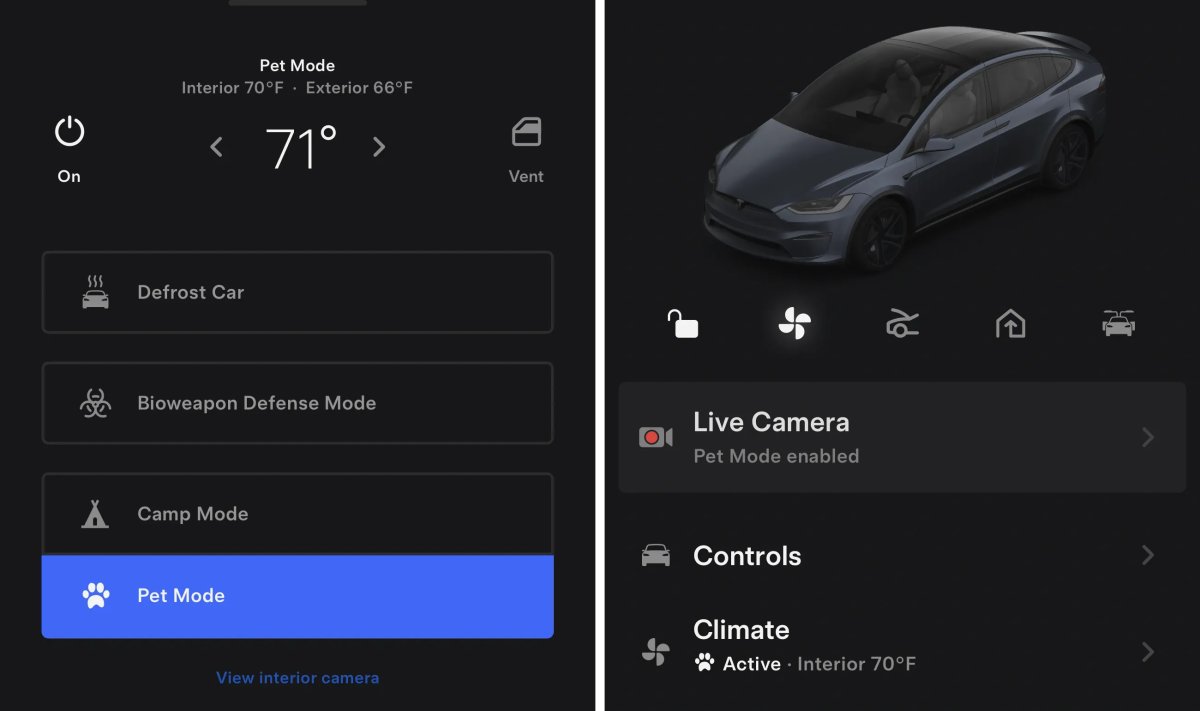
Tesla is making its most famous animal-safety feature a lot more inclusive. In a move that acknowledges not every Tesla owner is a “dog person,” the automaker has officially rebranded its iconic Dog Mode to Pet Mode. The change is arriving as part of the massive Spring 2026 Software Update, which started rolling out to vehicles this week with software version 2026.14, though the new name has already popped up for users in version 4.55.6 of the Tesla mobile app.
Last updated: Apr 16, 6:01 am UTC
The rebranding is a cheeky nod to the diversity of pets that find themselves along for the ride. While the feature still functions the same way at its core, the visual experience has been updated to make the car feel more personal for you and your non-canine companions.
Beyond the Balloon Dog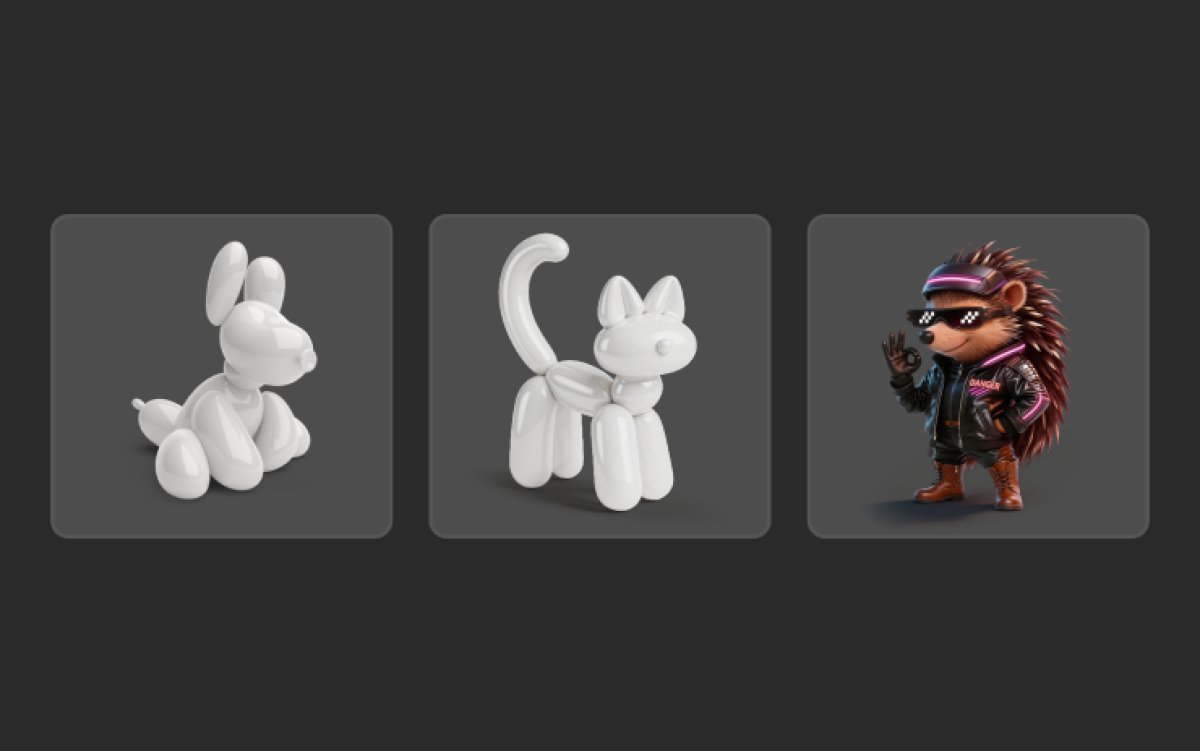
For years, the “balloon dog” graphic on the center touchscreen has been a staple for parked Teslas. With the switch to Pet Mode, owners can now choose between a dog, a cat, or even a hedgehog to display on the screen while they are away. Tesla has even created a specific “balloon cat” model to match the aesthetic of the original dog.
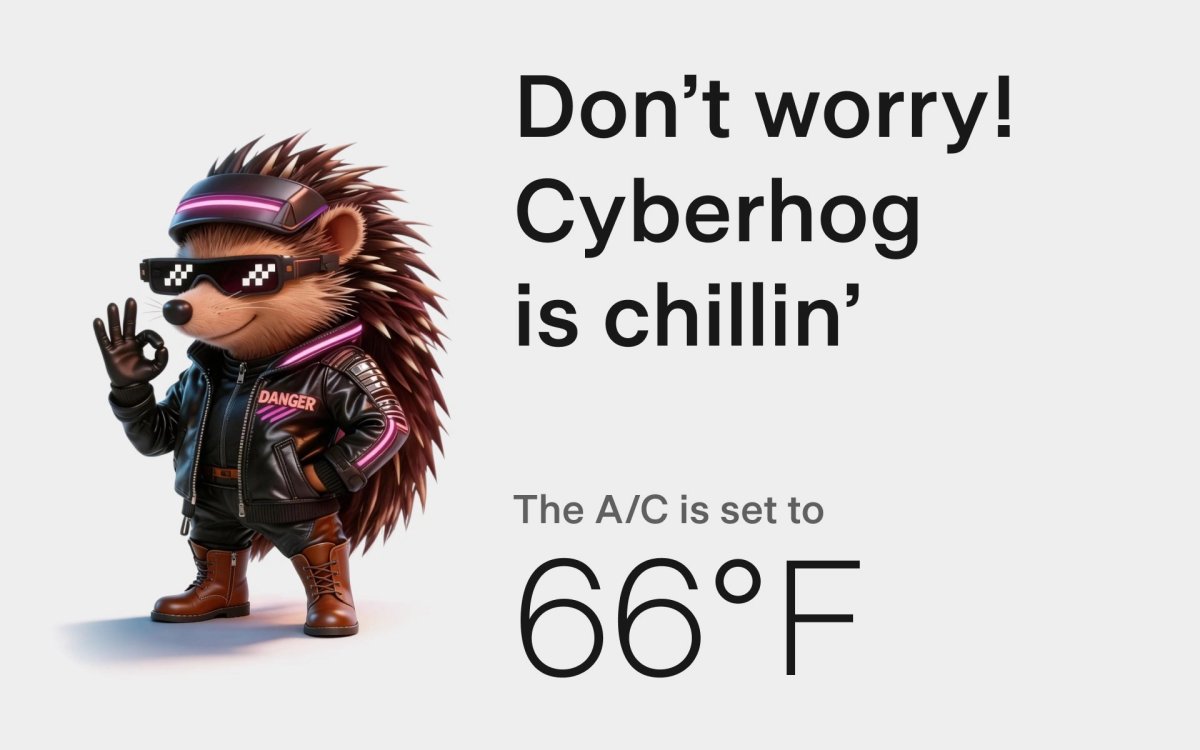
Perhaps the coolest addition is the ability to customize the display with your pet’s actual name. By going to Controls > Display > Customize Pet Mode, you can type in your pet’s name so passersby see “Don’t worry! [Pet’s Name] is chillin’” alongside the internal temperature. It is a fun UI touch that adds a layer of personality to the vehicle.
Interestingly, while the menus and the name of the feature have changed, the icon in the Tesla app currently remains a dog paw, likely to keep it recognizable for long-time users.
How Pet Mode Keeps Your Animals Safe
If you are new to the ecosystem, Pet Mode is essentially a high-tech climate control system for your parked car. When enabled — which you can even do via voice command — the car maintains a consistent temperature using the AC or heater. To prevent concerned bystanders from breaking a window, the center screen displays a large message to reassure them, along with the current cabin temperature.
Safety is baked into the software. The car won’t let you enable Pet Mode if your battery is below 20%, and if it hits that threshold while you are away, you’ll get an immediate notification on your phone. To keep things secure, the windows are locked while the mode is active, preventing a curious cat or dog from accidentally opening the door. There have been documented cases of the mode’s critical alerts saving pets’ lives during extreme heatwaves, making it one of the most beloved features Tesla has ever released.
A Growing Ecosystem of Connectivity
The Pet Mode update is just one piece of the 2026.14 puzzle. The same Spring Update is bringing a “Hey Grok” wake word for xAI’s assistant and a brand-new Self-Driving app with streaks and detailed usage stats. On the mobile side, version 4.55.6 of the app also adds telemetry data to saved Dashcam clips, showing that Tesla is focused on transparency across the board.
Whether you are leaving your golden retriever or your favorite hedgehog in the car for a quick grocery run, Pet Mode ensures they stay cool while giving you peace of mind. It’s a small change in name, but a big leap in making the Tesla experience feel more like a family-oriented product. We expect to see even more pet-specific customizations as Tesla continues to refine the user experience offered by its products.
Ordering a New Tesla?
Use our referral code and get 3 months free of FSD or $1,000 off your new Tesla.
April 17, 2026
By Nehal Malik
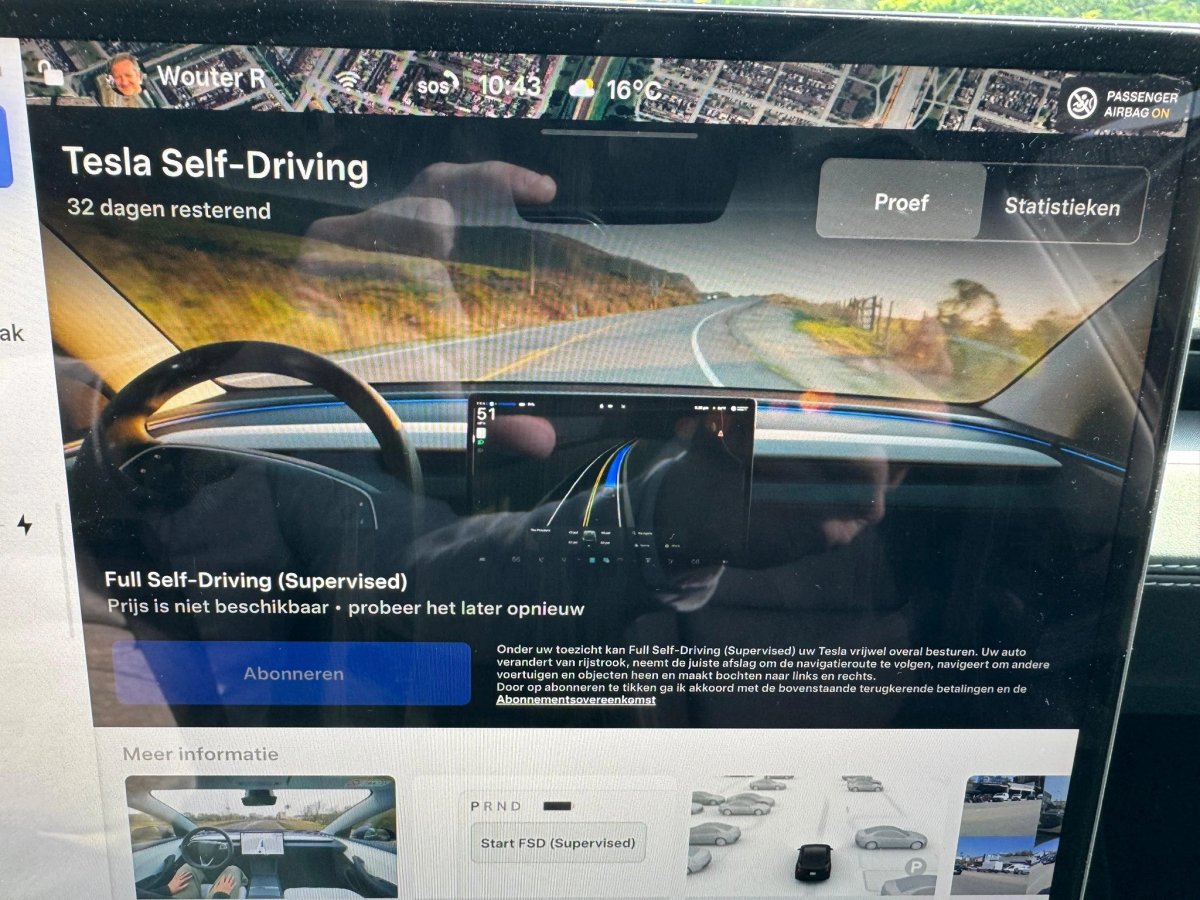
Tesla is wasting no time getting its most advanced software into the hands of European drivers. Just a week after Full Self-Driving (Supervised) was approved in the Netherlands, the automaker has not only started rolling it out but is also reportedly offering free trials to local owners to kickstart adoption in the region.
According to reports from industry watcher @TSLA_inside_, several Tesla drivers in the Netherlands have confirmed seeing a free FSD trial appear on their vehicle touchscreens since the release began. While the rollout currently appears random (and is limited to AI4 vehicles), not to mention it hasn’t reached the entire fleet yet, this move follows a familiar pattern Tesla uses when entering a new autonomous market.
A Proven Strategy for FSD Uptake
Free trials are a pivotal tool for Tesla. They allow anyone with a compatible vehicle to test the system’s capabilities on their local roads before committing to a monthly subscription. Interestingly, while North America moved to a subscription-only model earlier this year, Dutch owners still have the option for a one-time outright purchase. We expect the same will be the case in other European regions when FSD availability starts expanding across the continent.
Tesla has a storied history of using these trials to increase uptake, generally coinciding with major updates or an entry into a new market. We saw a massive push last fall with the launch of FSD v14.2, and the company also launched a 30-day free trial when the feature first arrived in Australia and New Zealand. It is important to note for new testers that, as of last year, Tesla now pauses free trials if your car is in for service, ensuring you don’t lose any of your evaluation time.
Tailored for European Roads
The version of the software rolling out in the Netherlands is FSD v14.2.2.5, delivered via software update 2026.3.6. While North America is already on v14.3, this specific build has been tailored to meet the strict regulatory requirements of the European market. It includes unique UI elements and changes designed for complex European intersections and traffic laws.
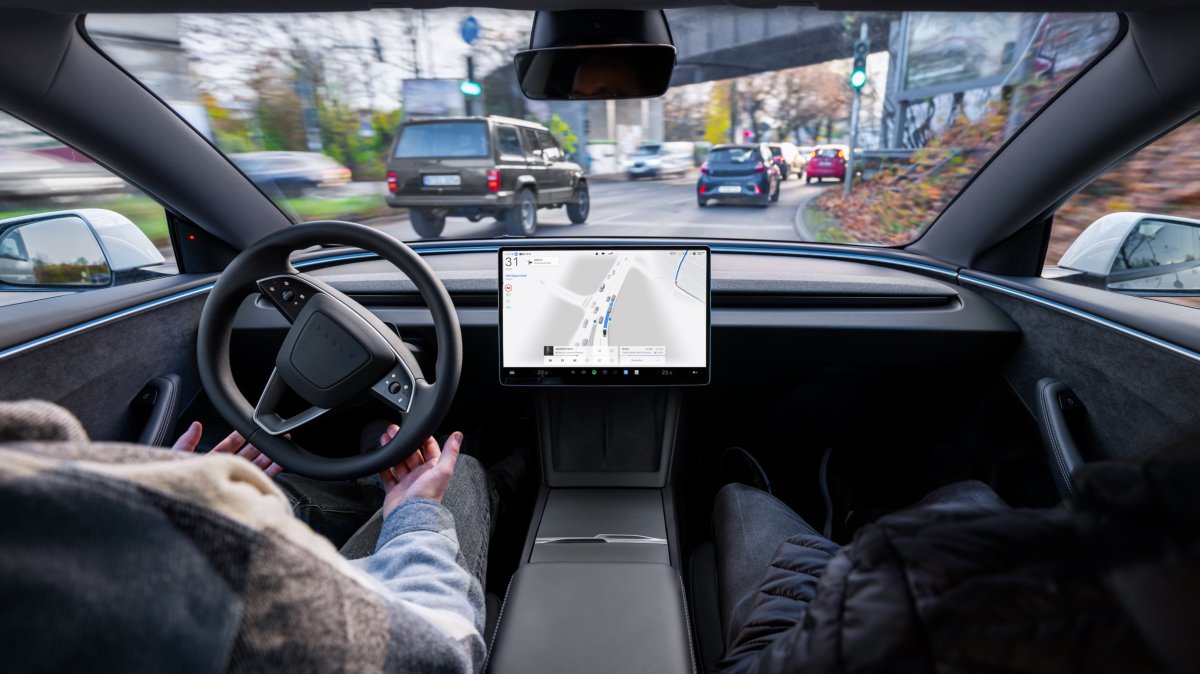
Dutch owners must also jump through a few extra hoops before they can engage the system for the first time. To ensure safety and regulatory compliance, Tesla requires a mandatory tutorial and a short quiz. Only after passing the quiz and watching the video can the “Start Self-Driving” button be activated on the screen.
The Domino Effect Begins
The launch of FSD and accompanying free trials in the Netherlands is likely the first step in a much larger European expansion. Tesla’s AI leadership believes that Dutch approval will create a domino effect across the continent, as many other nations look to the RDW to lead the way in automotive type-approvals.
By giving Dutch drivers a “taste” of the system now, Tesla is building a library of real-world European driving data that will help refine future versions like v15. If the trial rollout continues at this pace, we could see FSD (Supervised) become a common sight across the rest of the European Union by the end of the year.
April 16, 2026
By Nehal Malik
Elon Musk is not letting up on Tesla’s relentless pursuit of computational dominance. Just hours after confirming that the next-generation AI5 chip has officially finished its design phase, Musk took to X to share some eye-watering specs for its successor: AI6.
According to Musk, the AI6 chip will feature a massive performance leap, delivering a “true doubling of performance over AI5.” This progress is particularly impressive considering a single AI5 chip is expected to offer five times as much raw compute power as current AI4 hardware (which features a dual-SoC design), despite it being a rush job. Musk admitted that the team “had to make several design concessions to move fast,” even though they managed to finish the design 45 days ahead of schedule. Musk added that AI6 will address those early shortcuts while introducing “many new great ideas.”
The Architectural Step-Change: AI6 and AI6.5
AI6 won’t just be an incremental bump; it represents a generational shift in how Tesla handles memory and processing. While Samsung was originally expected to be the sole producer after a massive $16 billion deal last year, Musk has also revealed a surprise “mid-cycle” refresh: AI6.5.
The standard AI6 chip will be manufactured using Samsung’s 2nm process at its new facility in Taylor, Texas. However, AI6.5 will see production shift to TSMC’s 2nm process in Arizona to further eke out performance. This dual-sourcing strategy suggests that Tesla is looking to leverage the slight technical advantages of different foundries to keep its lead. Both chips will transition to LPDDR6 memory, moving beyond the LPDDR5 (or LPDDR5X) expected in AI5, providing the massive bandwidth required for the next generation of neural networks.
The SRAM Secret Sauce
One of the most technical details shared by Musk involves how these chips handle data. Both AI6 and AI6.5 dedicate about half of their TRIP AI computation accelerators to SRAM, which is ultra-fast onboard memory.
This is a big deal because it allows the chip to perform complex AI calculations in a high-speed workspace without constantly waiting on the main system memory (DRAM). Musk noted that this design makes the effective memory bandwidth “an order of magnitude greater than DRAM bandwidth.” Essentially, by keeping the most critical data right on the chip, Tesla is bypassing the hardware bottlenecks that currently plague the AI4 fleet.
From Cars to the TERAFAB
While Musk recently downplayed the need for AI5 in current consumer vehicles, claiming AI4 is enough for “better than human safety,” the roadmap for AI6 is clearly looking toward the future of unsupervised autonomy. These chips will likely serve as the brain for the Cybercab and the Optimus humanoid robot once they reach high-volume production.
The development of these chips will likely also be supported by the jointly developed TERAFAB project between Tesla and xAI. This vertically integrated facility will consolidate chip design, memory production, and advanced packaging under one roof, allowing Tesla to iterate on a nine-month cycle. By the time AI6 enters mass production, Tesla’s “galactic civilization” goals might not seem so far-fetched.