BMW CEO: “This New Engine Will FINALLY END Electric Cars!”
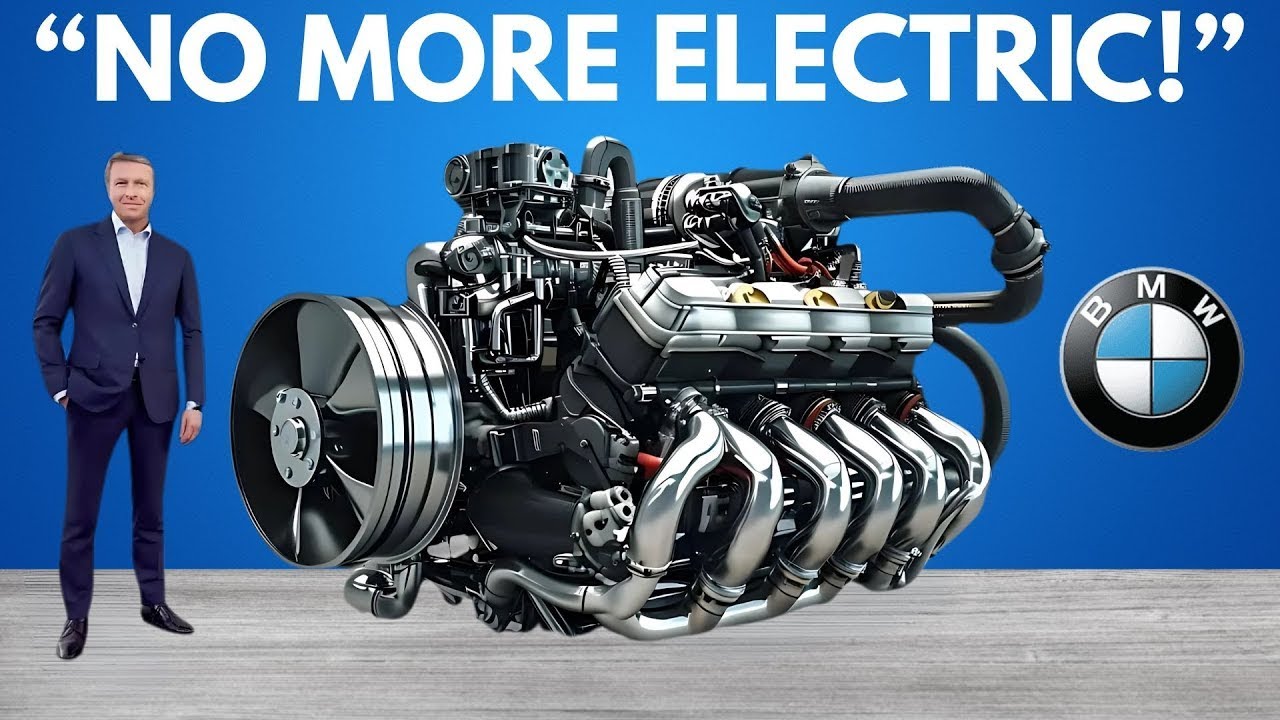
BMW CEO Oliver Zipa has made headlines with the announcement of a groundbreaking new engine that promises to turn the automotive industry on its head. The revelation has sent shock waves through the electric vehicle EV sector with many industry experts and car enthusiasts wondering if this could be the beginning of the end for the rapid rise of EVs. Zips’s declaration is not merely about introducing a new engine, but a statement of intent that could redefine the future of automobiles. With BMW’s long history of innovation, the German automaker appears ready to challenge the dominance of electric vehicles, aiming to restore the internal combustion engine, ICE, to its former glory. BMW has long been recognized as a leader in automotive engineering, particularly in the realm of performance vehicles. The Bavarian manufacturer has built its reputation on producing cars that combine luxury with dynamic driving experiences. In recent years, however, like many of its competitors, BMW has been forced to adapt to the growing pressure to reduce emissions and embrace electric powertrains. The shift towards electric vehicles has been largely driven by regulatory changes and growing environmental awareness which have forced even the most traditional automakers to invest heavily in EV technology. Despite its commitment to electrification, BMW has rolled out models like the i3, i4, and the allect electric i9. There has always been a sense that the company is not entirely convinced about abandoning internal combustion engines. This skepticism is shared by other major automakers like Toyota and Mazda, both of which have continued to develop ICE technology alongside their electric offerings. However, BMW’s latest announcement takes this reluctance to fully embrace electrification to a new level. Oliver Zips’s revelation of the new engine is not just a proclamation of BMW’s engineering prowess, but also a challenge to the prevailing narrative that the future of mobility is exclusively electric. The new engine, which remains under tight wraps, is rumored to incorporate cuttingedge technologies that push the boundaries of efficiency, power, and emissions control. Sources within BMW suggest that this engine could be a hybrid of traditional ICE and new innovations, possibly integrating aspects of hydrogen fuel cells or advanced turbocharging systems that minimize environmental impact. This is said to offer unprecedented power output and fuel efficiency, potentially outperforming even the most advanced electric motors currently on the market. Furthermore, BMW claims that this engine could meet or even exceed the stringent emission standards being introduced globally, positioning it as a viable alternative to full electrification. By achieving such a balance, BMW aims to address the primary concerns that have driven the shift to EVs, reducing carbon emissions and increasing fuel efficiency without sacrificing performance or driving pleasure. The announcement of BMW’s new engine has been perceived by many as a direct affront to the electric vehicle industry. Over the past decade, EVs have been heralded as the future of transportation with companies like Tesla leading the charge. Tesla’s rise to prominence driven by its charismatic CEO Elon Musk has been nothing short of meteoric. The company has set the benchmark for electric vehicles. With models like the Model S, Model 3, and Model Y becoming symbols of a new era of automotive engineering, Tesla is not alone in the EV space. Established automakers like Ford, General Motors, and Volkswagen have all made significant investments in electric vehicle technology. Ford’s Mustang Mache and the F-150 Lightning, General Motors Chevrolet Bolt and Hummer EV and Volkswagen’s ID series have all been wellreceived in the market, signaling a major shift in consumer preferences towards electric mobility. However, BMW’s new engine threatens to disrupt this momentum by offering a powertrain that promises to combine the best of both worlds. Traditional ICE benefits with modern efficiency and emission standards. BMW could sway consumers who are still on the fence about fully transitioning to electric vehicles. There remains a substantial segment of the market that is resistant to EVs due to concerns over range anxiety, charging infrastructure, and the overall driving experience. BMW’s new engine could appeal to these consumers, providing them with a compelling alternative that does not require them to compromise on performance or convenience. The introduction of BMW’s new engine could have far-reaching implications for the global automotive industry. If successful, it might prompt other automakers to reconsider their all-in approach to electrification. Companies that have already committed significant resources to developing electric vehicles might find themselves at a crossroads, wondering if they should pivot back to ICE technology or develop their own hybrid solutions. Mobility may not be as one-dimensional as the current EV trend suggests. Mazda, another automaker known for its engineering focus, has also been reluctant to fully commit to electric vehicles. The company has continued to refine its Skyactive technology, which includes highly efficient internal combustion engines, ICE, that offer a blend of performance and fuel economy. Mazda’s cautious approach to electrification, coupled with its ongoing development of ICE technology, could position it to benefit from a potential shift in industry sentiment sparked by BMW’s new engine. The potential resurgence of ICE technology could also impact suppliers and related industries. Companies that manufacture components for internal combustion engines could see a revival in demand, reversing the trend of declining orders as automakers shifted towards electric drivetrains. This in turn could affect the broader economy, particularly in regions where the automotive supply chain is a major source of employment. The reaction from consumers will be crucial in determining the success of BMW’s new engine. While there is certainly a segment of the market that remains loyal to internal combustion engines, the question is whether this group is large enough to counterbalance the growing number of EV enthusiasts. BMW will need to carefully position this new engine to appeal to a broad audience, emphasizing its environmental credentials, performance capabilities, and the driving experience it offers. Price will also be a critical factor. Electric vehicles have been steadily decreasing in cost as battery technology improves and economies of scale are achieved. To compete effectively, BMW’s new engine must not only match EVs in terms of performance and efficiency, but also be priced competitively. If the new engine is seen as a premium option that is out of reach for the average consumer, it may struggle to gain traction in a market that is increasingly price sensitive. Moreover, BMW will need to address the growing infrastructure for electric vehicles. Governments around the world are investing heavily in EV charging networks, and many cities are introducing incentives for electric vehicle owners, such as reduced taxes and access to restricted areas. BMW’s new engine, no matter how advanced, could face challenges in markets where EVs are being actively promoted by government policies.
In this video, we look at a game-changing discovery that has the potential to completely upend the automotive sector. BMW CEO Oliver Zipse has announced a groundbreaking new engine that promises to upend the electric vehicle (EV) market like never before. As the globe shifts toward sustainable and electric mobility, BMW’s latest innovation calls into question the very premise of this movement, providing an alternative that has the potential to completely redefine the game.
Join us as we delve into the technical aspects of this revolutionary engine, comparing it to current EV technologies and exploring what it means for the future of transportation. We’ll talk about the possible impact on the EV sector, from automakers to customers, and why this development could be the most serious threat to electric vehicles to yet. Could this be the start of a new age in the automobile industry, or is it simply another technological advancement that will coexist alongside the rise of electric vehicles?
Don’t miss out on this exclusive analysis, which also includes industry comments and expert opinions on BMW’s brave move. To remain up to speed on all of the latest automotive news and advancements, click the subscribe button and enable notifications!