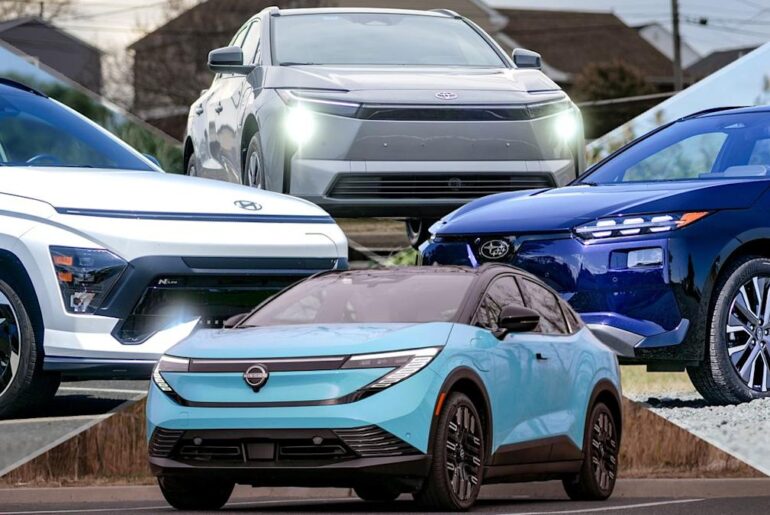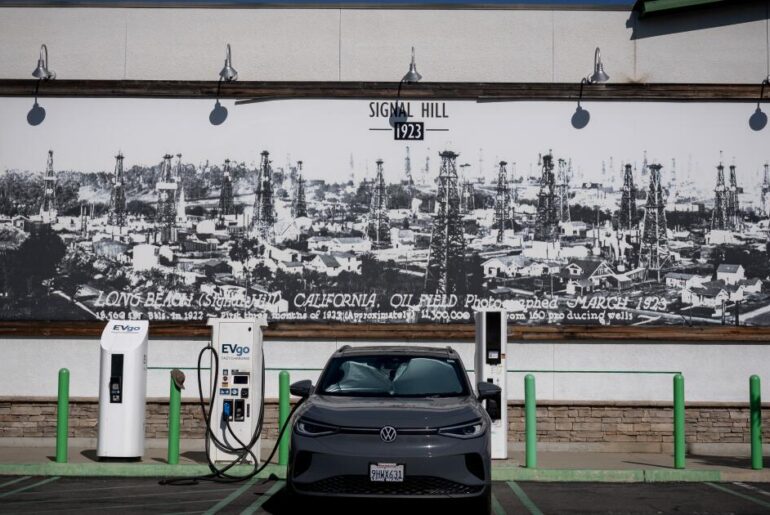
For years, the industry has been beating the drum of the “Battery Electric Vehicle (BEV) or bust” narrative. We were told that by 2025, internal combustion would be a relic. But as we sit here in 2026, the reality on the ground is far more nuanced. While BEVs are marvelous pieces of engineering, they suffer from a fundamental “user experience” flaw: the public charging infrastructure isn’t just broken; in many regions, it remains a gamble.
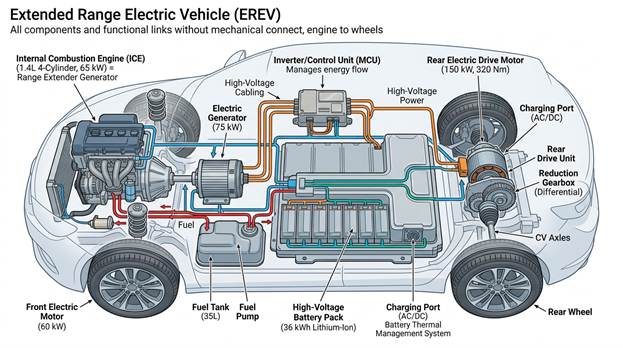
Enter the Extended-Range Electric Vehicle (EREV). Unlike a traditional Plug-in Hybrid (PHEV), which often feels like a compromised gas car with a small battery, an EREV is a pure electric vehicle at heart. The wheels are driven exclusively by electric motors. The “range extender”—a small, highly efficient internal combustion engine—acts solely as an onboard generator to top up the battery when you’re away from a plug.
According to McKinsey & Company, EREVs could be the critical “nudge” needed to move the mass market toward full electrification. They solve the “range anxiety” problem not with larger, heavier batteries, but with the elegance of a backup plan. In the Enderle view of the world, technology succeeds when it fits the user’s life, not when it forces the user to change their life to fit the technology. EREVs represent that rare moment of technological pragmatism.
Why EREVs are Winning the “Bridge” War
The attractiveness of the EREV over the pure BEV right now comes down to three pillars: Weight, Cost, and Confidence. BEVs are fighting a losing battle with the physics of energy density. To get 400 miles of range, you need a massive battery pack that adds thousands of pounds to the vehicle. This weight spiral requires beefier suspension and tires, creating a cycle of inefficiency. An EREV achieves that same range—and often much more—with a battery half the size. This makes the vehicle lighter, more agile, and significantly cheaper to produce.
Furthermore, data from the Union of Concerned Scientists suggests that EREVs are “electric-first” by design, often covering over 70% of miles in all-electric mode, unlike parallel hybrids that rely heavily on their gas engines for power.
The King of the EREVs: The Ram 1500 Ramcharger
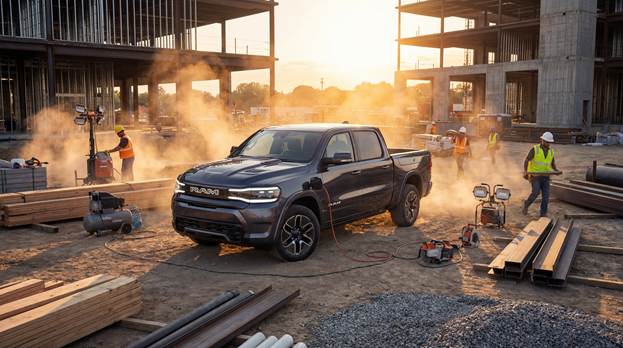
If we are looking for the gold standard of this technology, we have to look at what Stellantis is doing with the 2026 Ram 1500 Ramcharger. While many manufacturers are tentatively dipping their toes in, Ram has built a beast that defines the category.
The Ramcharger features a massive 92-kWh battery pack paired with a 130-kW onboard generator powered by a 3.6-liter Pentastar V6. It delivers a targeted 663 horsepower and a staggering 615 lb-ft of torque. Because the engine is not connected to the wheels, it can run at its most efficient RPM constantly to charge the battery, avoiding the efficiency losses of traditional transmissions. With a total range of 690 miles, it renders the term “range anxiety” obsolete.
Who Should Buy the Ramcharger? The ideal candidate for the Ramcharger isn’t just the tech-savvy early adopter; it’s the “Utility User.” If you tow a trailer, a pure BEV truck is a nightmare – range can drop by 50% or more. The Ramcharger is for the person who needs to tow 14,000 pounds to a remote site but wants to drive to the grocery store on pure electrons during the week.
The Volvo EX60 and the Threat of High-Range BEVs
As we look toward the late 2026 release of the Volvo EX60 P12, a new wave of BEVs is coming. Built on the new SPA3 platform, the EX60 P12 aims to solve the range problem through sheer efficiency. It is touted to offer an EPA-estimated 400 miles of range with an ultra-fast charging capability that hits 80% in just 19 minutes.
The Resale Value Trap Will these high-range BEVs make EREVs obsolete? In the premium SUV segment, likely yes. Once a BEV can reliably charge in the time it takes to grab a coffee, the complexity of carrying an internal combustion engine becomes a liability. Much like plasma TVs were the best bridge between CRT and LCD but eventually lost their value, EREVs face a precarious resale future. In five to seven years, an EREV might be viewed as “the car with two systems to maintain,” leading to steeper depreciation than a late-model, high-range BEV.
The Future: Solid-State and Beyond
The EREV is a bridge, but the destination is evolving. Two technologies currently in development will eventually challenge the EREV’s relevance:
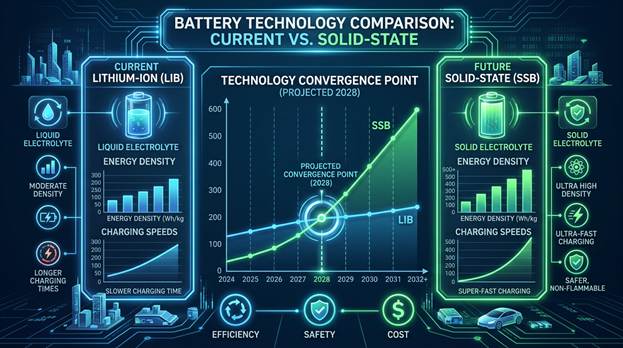
Solid-State Batteries (SSB): QuantumScape recently inaugurated its “Eagle Line” for pilot production, targeting batteries with double the energy density of current lithium-ion cells.
Toyota’s Roadmap: Toyota has signaled that by 2027-2028, its solid-state tech will offer 600+ miles of range and 10-minute charge times.
Wrapping Up
The transition to a fully electric world was never going to be a straight line. We are currently in a period where infrastructure has not yet caught up to ambition. In this environment, the EREV is the smartest choice for the majority of North American drivers.
The Ram 1500 Ramcharger proves that you don’t have to sacrifice power or utility to be environmentally conscious. However, buyers should go in with their eyes open: this is a bridge technology. While it is the best tool for the job today, the rapid advancement of solid-state tech means the window for EREV dominance is likely less than a decade. If you need a vehicle that works everywhere, every time, without fail—buy the EREV. But if you’re looking for a twenty-year heirloom, the high-range BEVs of 2027 are the ones to watch.
Disclosure: Images rendered by Artlist.io
Rob Enderle is a technology analyst at Torque News who covers automotive technology and battery developments. You can learn more about Rob on Wikipedia and follow his articles on TechNewsWord, TGDaily, and TechSpective.
Follow us today…