Higher Fuel Costs Improve EV Economics
One of the biggest drivers behind this shift is simple: EVs are becoming cheaper to own compared to gasoline cars.
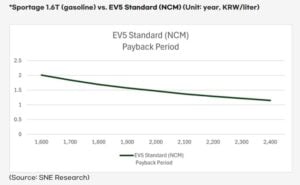
SNE Research compared two popular models—the gasoline-powered Kia Sportage 1.6T and the electric Kia EV5. The results highlight how rising fuel prices change the equation.
At a gasoline price of 1,600 KRW per liter, it takes about two years to recover the higher upfront cost of an EV. However, when fuel prices rise to 2,000 KRW per liter, the payback period drops to just one year and two months.
So, over a longer period, the savings are even clearer:
Total 10-year cost of a gasoline car: 59–65 million KRW
Total 10-year cost of an EV: around 44 million KRW
This large gap makes EVs a smarter financial choice, especially when fuel prices remain high.
Battery Shake-Up: Market Struggles While CATL Surges Ahead
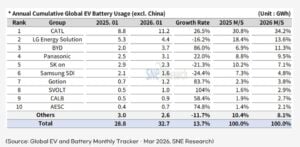
In the first two months of 2026, global EV battery usage reached 134.9 GWh, a modest increase of 4.4% year-over-year. However, not all companies are benefiting equally.
South Korean battery makers—LG Energy Solution, SK On, and Samsung SDI—saw their combined market share fall to 15%, down by 2.2 percentage points. Each company reported declining growth:
LG Energy Solution: down 2.7%
SK On: down 12.9%
Samsung SDI: down 21.9%
This drop was mainly due to weaker EV sales in the U.S. market earlier in the year.
In contrast, Chinese battery giant CATL continued to expand its lead. Its market share grew from 38.7% to 42.1%, strengthening its global dominance.
SNE Research explained that future competition will depend less on overall EV growth and more on supply chain strategy. Companies that diversify across customers and regions will be in a stronger position.
Automakers Feel the Impact Across Markets
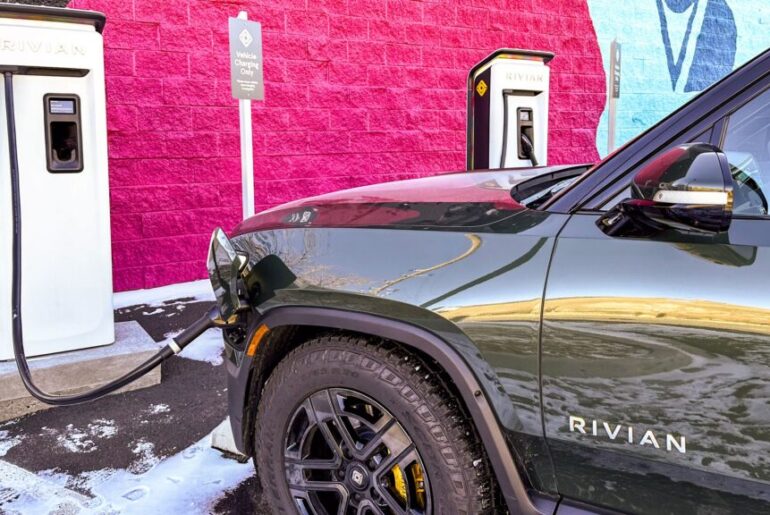
Battery demand also reflects trends in automaker performance. Samsung SDI, for example, supplies batteries to brands like BMW, Audi, and Rivian. However, slower EV sales across these companies reduced overall battery demand.
Some key factors include:
Lower sales of BMW’s electric lineup, including models like the i4 and iX
Weak demand for Audi EVs despite new launches
Declining sales from North America-focused brands like Rivian and Jeep
In some cases, new models even reduced demand for older ones. For instance, Audi’s Q6 e-tron impacted sales of the Q8 e-tron, lowering overall battery usage.
A Structural Shift in the EV Market
Despite short-term fluctuations, SNE Research believes the EV market is entering a new phase. The current surge is not just a reaction to oil prices—it reflects a deeper shift in consumer mindset.
People now see EVs as a safer and more stable option. Energy security, cost savings, and environmental concerns are all playing a role.
As SNE Research’s Vice President Ik-hwan James Oh explained, even if oil prices fall, the memory of sudden spikes will remain. This lasting concern will continue to push EV adoption.
In conclusion, the events of early 2026 have shown how quickly market dynamics can change. A single geopolitical shock has reshaped the global auto industry outlook.
For automakers, the message is clear: EV demand can rise faster than expected. For battery companies, the focus must shift to global expansion and supply chain resilience. For consumers, the decision is becoming easier as EVs offer both savings and stability.
The global EV market is no longer just growing—it is accelerating. And if current trends continue, the shift to electric mobility could arrive much sooner than anyone expected.