As of last quarter, Tesla (TSLA 3.33%) controls more than half of the U.S. electric vehicle (EV) market. This is not unusual for the company. For years, Tesla has dominated the EV category in the U.S. What is unusual, however, is the competitive landscape moving forward.
In some ways, Tesla will face more competition this year than ever before. But in other ways, the competitive landscape has improved considerably. There are two important factors to understand about Tesla’s unusual competitive position in 2026.

Today’s Change
(-3.33%) $-12.67
Current Price
$367.63
Key Data Points
Market Cap
$1.4T
Day’s Range
$364.48 – $379.87
52wk Range
$214.25 – $498.83
Volume
3.8M
Avg Vol
61M
Gross Margin
18.03%
1. Tesla will get more competition for its biggest moneymaker in 2026
Tesla is the No. 1 EV brand in the U.S. by sales volumes. But it may not be for long. When you dig into Tesla’s sales numbers, you’ll find one curious fact: One model is responsible for the bulk of Tesla’s annual car sales. Last year, for example, Tesla shipped 418,227 vehicles. Around 406,000 of those vehicles were either a Model 3 or Model Y — Tesla’s two affordable models. And yet, an even closer look reveals that more than 350,000 units of that figure included Model Y shipments alone. Put together, Tesla’s Model Y accounts for more than 80% of Tesla’s unit volumes in 2025.
Tesla CEO Elon Musk revealed earlier this year that the company will soon discontinue production of its luxury Model S and Model X models, meaning that the Model Y will become an even more important revenue and profit driver for the company. But starting next month, the Model Y will face one of its biggest competitive threats in years: Rivian’s (RIVN 7.51%) R2 SUV.
Rivian’s R2 won’t be alone. Once shipments begin to scale, the company expects to start production on two additional Model Y competitors: Rivian’s R3 and R3X SUVs. By this time next year, Rivian may have three SUVs all priced under $50,000 — stiff competition for Tesla’s smaller but similarly priced crossover, the Model Y.
EV makers like Lucid Group (LCID 2.33%) are also teasing low-priced vehicles. But that company’s production timeline is likely a year or two delayed versus Rivian’s traction. In short, Rivian is positioned as the biggest potential Tesla competitor in the U.S. over the next 12 months. Looking beyond pure-play EV makers, however, the picture gets a little more mixed.
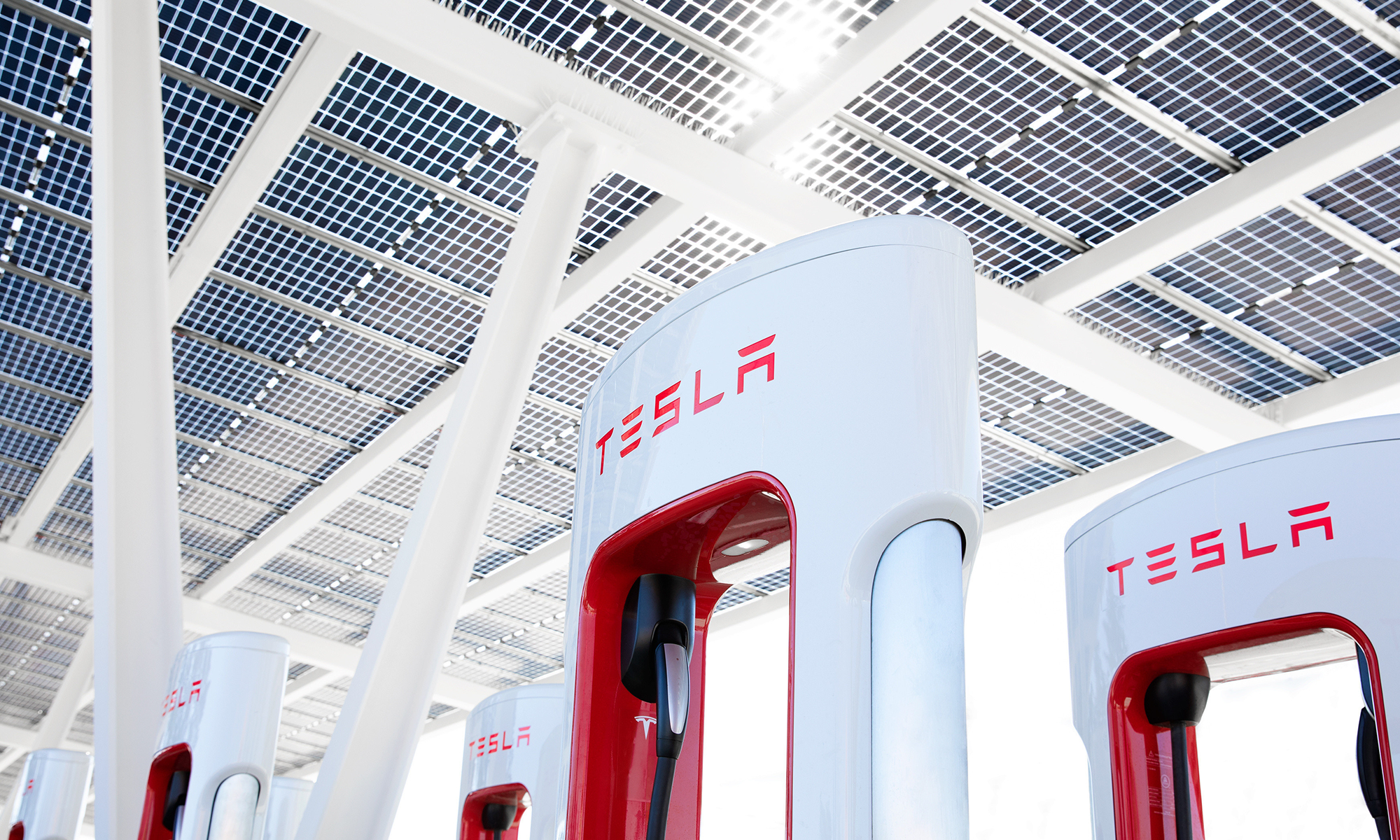
Image source: Tesla.
2. Many automakers are aggressively scaling back EV investments
While Rivian is scaling up its production plans, most conventional automakers are scaling back their EV dreams. “After years of rapid growth,” one industry report concludes, “the electric vehicle boom is hitting turbulence. With demand slowing and incentives fading, at least 18 automakers are now canceling, delaying, or scaling back EV plans in the U.S.” Included on that long list are companies like Ford (F 1.16%) and General Motors (GM 1.41%), both of which have scaled back or ditched plans to launch additional competition for Tesla’s Model Y and Model 3 vehicles.
Industry jitters when it comes to betting on EVs isn’t surprising. According to new research from The Motley Fool, “Ford only sold 84,000 EVs in 2025, while its EV and technology segment (Ford Model e) lost almost $5 billion. The company also took a massive $8.5 billion write-down after cancelling several EV models due to falling demand following the end of the federal EV tax incentives.”
General Motors hasn’t fared much better. “Like Ford, GM is scaling back,” the report concludes. “It took a $6 billion charge related to its EV business in the fourth quarter of 2025. The bulk of that stems from contract cancellations and supplier settlements after GM cut back on its EV production plans. GM stopped production on EV batteries at two joint venture plants for six months and cut production at an EV-only factory to one shift.”
So, while the competitive landscape is heating up with pure-play EV competitors like Rivian, larger automakers, like Ford and GM, are entering a multiyear downscaling phase. Whether this unusual mix of conditions winds up a positive or negative for Tesla investors remains to be seen.