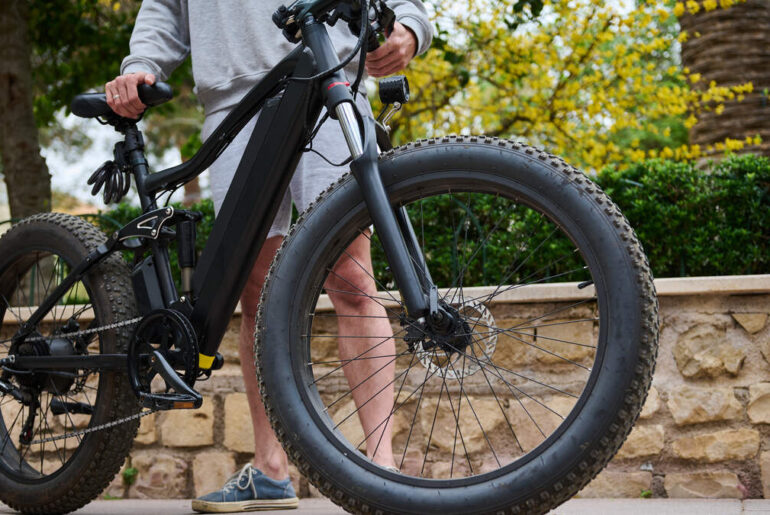
Priority Skyline Smart.Shift E-Bike Review | Smart & Savvy
Imagine an ebike that downshifts for you, never needs a derailure tuned, and hardly needs any maintenance at all. That’s the Priority Skyline, and its performance might surprise Welcome to Electric Bike Report. If you’re new here, I’m John and this is where we dive deep into real world performance testing so you can shop for an ebike with confidence. We put every bike through a series of standardized tests in the real world. And if our work helps guide you toward a bike you like, please consider using our affiliate link down in the description when you make a purchase to help us keep these reviews coming. But let’s talk about the Priority Skyline Smart Shift ebike because this thing has been one of the most surprising mid-tier commuters we’ve tested in a while. Now, in the lifestyle commuter ebike world, bikes generally fall into three camps: entry level, mid-tier, and premium. And usually, if you’re buying in the mid-tier price bracket, you’re getting mid-tier features. Maybe an app with some customization options, maybe some basic security features, and maybe not. There’s always overlap with other bikes in the same camp. But it’s actually pretty rare to see features that jump the bike ahead a category or two. And that’s what makes the Skyline such an unusual and exciting bike to review. At face value, this looks like a fairly standard but well equipped mid-tier commuter. But Priority quietly tucked in something you almost never see at this price point, a 12-speed pinion C1.12i gearbox paired with a Gates carbon belt. That combination puts the Skyline in a completely different league than most of its peers. It’s extremely lowmaintenance, noticeably high-tech, and incredibly userfriendly while still costing way less than most pinion equipped ebikes on the market. To put it simply, the pinion gearbox makes the Skyline feel like a dream machine. It features pinion smart shift electronic shifting system, which includes two semi-automatic shifting modes. With both, you can manually shift up using the buttons on the right handlebar, but one of the automatic modes will downshift to a preset gear every time you come to a stop, making it easy to get pedaling again. The other automatically downshifts while you coast, matching your preset cadence, so you’re always in the right gear without even thinking about it. Instead of using a traditional derailure and chain, all the gearing is tucked away inside a sealed transmission at the bottom bracket. There’s no derailure to knock out a tune, no chain to get your pants greasy, and no cassette to wear down. And because the whole transmission is sealed, the only maintenance you need is an occasional oil change inside the gearbox. The gates belt itself is rated to last at least twice as long as a chain, sometimes much longer. You’re basically getting the closest thing to a maintenance-free ebike drivetrain that exists right now. What surprised us even more is the Skyline’s price. Its MSRP of around $4,000 makes it one of the lowest price pinion equipped ebikes we’ve ever reviewed and also one of the most approachable options with this level of tech. Of course, fancy transmissions aren’t everything. So, we were really curious to see how Priority paired all of this with the motor and the rest of the bike. The Skyline 750 W torque sensing rear hub motor uses a torque sensor that feels responsive, capable, and impressively efficient. We also immediately noticed how good the handling felt thanks to the Skyline’s wide 740 millimeter handlebars and its 27 1/2 x2 inch Maxis Metro Pass tires. The bike feels planted, sporty, and confident in corners, which are all ideal features on a commuter built for daily riding. Rounding out the core specs, the Skyline includes a removable UL 2271 certified 720watth battery that’s fully integrated into the down tube. It also comes equipped with two piston Tekkro hydraulic disc brakes with 180 millimeter rotors, an SR Sunour suspension fork with 80 millimeters of travel, a bright 500 lm headlight, and a full set of fenders with an integrated tail light that flashes when the brake levers are squeezed. The bike weighs just over 68 lb. It supports up to 300 lb total, and it comes in three frame sizes to fit riders from about 5’4 to 6’3. The bike is UL2849 certified for safety and it has this single black and white color scheme. After our first ride, we were really eager to get this thing into our formal testing to see how it stacks up against similar commuters. Let’s jump into our speed, range, brake, and hill tests and see what the Skyline can really do. All right, we are here for a speed test on the Priority Skyline. So, starting things off in class 2 mode and I have the pedal assist system deactivated. So, this is just my own leg power and I’m going kind of right between 11 and 11 12 mph pretty comfortably. I could definitely pedal faster if I wanted to, but trying to keep, you know, a fairly uh moderate level of effort here. So, all right, let’s go ahead and go up into PAS1. All right, so motor’s very quiet. There’s a little bit of a hum from it, but it kicked on right away. And uh definitely made a big difference in my uh speed and the ease of pedaling right away. So, we’re up to about around 15 mph. Maybe between 15 and 15. All right, let’s go up to PA2. Feels really smooth. Feels very responsive. you know, as I push into the pedals, I’m getting more power and and you know, if I back off, then the motor does exactly that as well. Uh, so again, another nice jump here up to kind of right between 17 and 17. All right, on your left, uh, let’s go ahead go up to PA3. All right, picking up nice and swiftly. Going to go ahead and shift up and looking at kind of right around 19 miles per hour on average. Yep. All right. Maybe a little above, but let’s go up to PAS4. All right. So, right here at the class 2 speed limit, just under 20 mph, kind of right between 19 and 12 and 20. Uh, I can, you know, feel the motor kind of cutting out as I hit 20. So, uh, no surprise that we’re, you know, just falling a little bit under that, but let’s go up to PA5. Don’t really expect anything different here. Um, yeah, kind of doing the same thing. Still very smooth, very responsive, feels great. So, yeah, let’s, uh, do a class 3 test and then we will check out the throttle. All right, we are back for a class 3 speed test on the Skyline and starting things off in PAS1. this time. Trying to find kind of a similar baseline to where we were in the uh class 2 test here. So, I am going a little bit faster kind of right around 16 mph. Maybe between 15 and 12 and 16. Uh but yeah. Okay, let’s go ahead and go up to PIS2. So, still feels nice and natural, very smooth pedal assist, very responsive. So, as I push into the pedals, you know, I’m getting more power right away. Uh but it’s delivered in such a way that you know I can tell the the motor is is pushing me faster but it does really feel like it’s mostly my effort. So that is pretty cool. Uh let’s see. So in PAS2 we are cruising up uh maybe a little over 17 mph between 17 and 12. Yep. Let’s go up to PIS3. Gonna go ahead and shift up here. Now again, every ramp up in power is uh pretty consistent and very smooth, nice and gradual so that you almost don’t feel like it’s happening. And then getting another decent difference in speed about 2 mph up to around 19 and 12, maybe a little below. Okay, let’s go ahead and go up to PAS4. All right, so here we are. exceeding 20 mph and we can go all the way up to 28 in this mode. I’m going to go ahead and shift up maybe give it a little bit more leg power. All right, so yeah, that feels pretty good. Right up around between 21 12 and 22 mph. All right, that feels good. Let’s go up to PA5. And wow. All right. Yeah, I can tell that this thing’s kicking out a lot more juice now. And we are up to around 25. We’re climbing steadily, but relatively gradually. Seems like it’s kind of wanting to hold here, but I’m going to give it a little bit more push. Yeah. Okay, we’re definitely going faster now. Right up to 28 and a little over. All right, that sounds good. Uh, let’s go check out the throttle. All right, then last thing, we will see how quickly the bike gets to 20 mph. Let’s go ahead and start in 3 2 1 go. Okay, so interesting delay there on the throttle, but now we’re picking up pretty steadily. It was nice and gradual when the power did kick in and then now we’re building up to 19 and 20 and maybe a hair over, but then we’re kind of settling back down. So, okay, that will be our speed test. Let’s go ahead and bounce back to the studio. As you just saw, I tested the Skyline in its stock class 2 mode and with the class 3 limit unlocked while riding on our usual flat section of pave trail. Starting with the class 2 test, I kicked things off at 11.4 mph with no assist. PAS1 gave me a helpful bump up to 15.3 mph, and PAS2 brought me to 17.3 mph. From there, PA3 landed at 19.1. PAS4 nudged me a bit higher to 19.8. And that stayed the same in PAS5 because of that 20 mph ceiling. When I switched the Skyline into class 3 mode, the first three assist levels felt nearly identical with speeds of 15.8, 17.2, and 19.3 mph. But PAS4 finally let the motor stretch its legs a bit more at 21.8. And PAS-5 delivered the full experience, sending me all the way up to 28.1 mph with a bit of extra leg work. One thing I want to highlight is how natural the Skyline feels in every setting except for maybe the very top one. Even as the motor pushed me faster than I’d normally ride on my own, it still felt like I was the one doing most of the work. That’s something not every ebike can do, and I’ve got to say that it’s a pretty cool thing when you do get to experience it. I also tested the Skyline throttle, and as you saw, there was a brief delay when starting from a dead stop. Once it kicked in, it ramped up smoothly to 20 mph, and that delay disappeared completely when I engaged the throttle while already moving. I suspect that pause is a safety feature, but quicker engagement from a standstill would make it much easier to keep up with traffic and get through intersections quickly and safely. Overall, the Skyline tuning feels intuitive, active, and genuinely fun. On top of that, it reached its advertised speeds without issue. So, I’d say it did a great job in this test. Next, let’s look at the Skylines range test results. Our goal here is simple. We want to know how far this bike can actually travel on a single charge in real world conditions. To do that, we fully charged the Skyline 720watth battery and rode it on paved paths until it ran out of juice. We ran two tests, one in PAS5 to find the bike’s minimum range and another in PAS1 to measure its maximum. Priority advertises a range between 20 and 60 mi depending on how you ride. Our test results came in at 40.4 mi in PAS5 and 63.1 mi in PAS1. So, the high end of Priorities estimate seems totally reasonable. And our PS1 test even surpassed it. And on the low end, we exceeded the 20 m per hour mark by a significant margin, showing that some riders may get better mileage than expected under ideal conditions. To put this into context, similar commuter ebikes we’ve tested averaged around 35.1 mi on the low end and 65 mi on the high end, with batteries averaging about 662-watt hours. With its larger than average battery, the Skyline slots right in with the category and possibly even a touch ahead. Now, we did notice a couple of interesting things. First, our speed test showed that the Skyline’s PAS1 setting gives a relatively generous amount of assist, which might have trimmed the top end of the bike’s range slightly. Additionally, based on our experience with other pinion equipped ebikes, the Smart Shift gearbox may draw a bit of extra power, which could explain why our max range results sits closer to the average, even with the bike’s larger than average battery. Even so, the Skyline is clearly well speced for longer rides. Most commuters we talked to ride between 10 and 20 m around trip, which means many riders could make multiple commutes on a single charge. And to make things even more convenient, Priority includes a 2.8 amp fast charger. So, you can go from empty to full in about 5 1/2 hours. All right, now let’s move on to the hill test, which we perform at a location we call the Devil’s Backbone. This is a half mile climb with an average 8% grade and about 217 feet of elevation gain. It’s a tough sustained climb, which is exactly the kind of test that reveals how well an ebikes motor can hold steady power under load. As always, we ran the test using both the Skyline throttle and its highest pedal assist level. Let’s go check out how the test went, and you can hear our test rider Justin’s thoughts along the way. All right, we are out here doing the hill test at the Devil’s Backbone on the Priority Skyline and this is the throttle test. Now, the bike does go to 20 on the throttle and it pretty easily got up to 20 before we hit this first section here. We’re currently at 17.1 mph, 16.2, and we’re going to bottom out right at 14 about 14 and a half miles per hour. There is where we’re going to kind of bottom out and picking up speed now. We’re at 17 mph. We’re going to hit right about 18 17.9 before this next section, which gets pretty steep. We’re at 15.5 14.6 13.9. We’re going to bottom right at about 13 13.1 miles per hour. or tap the brakes and then see where we get to before we hit this lamp post. 13.7 mph. So, we’re climbing decently. We’re going to cross right at 14.6 mph. Now, in terms of noise level, it’s pretty darn quiet. Um, I can hear it. It’s kind of a low hum to it. I’ll let you listen to it um here in a second. and then comment about the throttle. It feels very natural. Um, peppy, but definitely not too overpowered where it’s going to just jump out and bite you. Um, but I’ll let you listen now. Those are going 12.7 mph. See, I heard just a little bit more as we get up to almost 16 mph, but overall, I mean, good result with that hub motor. Um, pushing up the hill nicely with the throttle. It’s not going to be the fastest by any means, but definitely can get you up. Um, we’ll go check the results as we finish at 14.1 mph. All right, back out on the Priority Skyline. Now doing the pedal test and very excited to do this with this, you know, the pinion gearbox, the rear hub. It’s kind of just fun to ride. Um, easily got up to 20 mph before this first hill. I’m going to downshift once. So 17.2 is where we’re going now. 16.8 kind of bottoming right there about 16.8 mph. Don’t feel like I need a shift. I think it’s good right here. Getting back up to about 19. I’m going to downshift one. About 16 miles per hour, 15.9. Yeah, it’s just going to kind of hang right in there. Bottoming out about 15 and 12. Downshift as we tap the brakes. So we get see what we get to before this first lamp post. Going to shift back up one. Crossing that ride at 15 12. I’m going to shift back down one. Um so in terms of feel, yeah, I love the shifting, being able to shift under tension. The motor definitely feels fairly fine-tuned where you can hear me breathing a little bit. So, it feels much more like a mid drive with that rear hub. I can push it faster if I want or just keep a nice cadence. And yeah, I really like the responsiveness and the feel. Let you listen for a second. Probably can’t hear much there. Still pretty quiet. That’s going to be a pretty decent result as we finish right at 15 miles an hour. >> All right, starting with the throttle test. Our rider reached the top in 2 minutes and 6 seconds at an average speed of 14.4 mph. When he switched to pedaling in PAS5, the Skyline completed the climb slightly faster with a time of 1 minute and 58 seconds and an average speed of 15.4 mph. To give those numbers some context, similar commuter ebikes we’ve tested averaged about two minutes on throttle and 206 when pedaling. So, the Skylines results land right around the middle of the pack, which makes good sense considering its motor specs. Most bikes in our comparison group use 500 to 750 watt hub motors that average 983 watts of peak power and 74 new meters of torque. The Skyline’s motor peaks at 1,56 watts and delivers 90 N of torque, which puts it a bit above average in terms of raw output. Outside of our formal testing, I also took the Skyline to our secondary location, Pilot Hill. On throttle, the bike climbed steadily and without strain, but not with a ton of urgency. When pedaling though, it felt much more lively and energetic, so its formal test results make even more sense. Altogether, both our control testing and our realworld rides show that the Skyline is absolutely capable of handling steep hills. It’s well speced, consistent, and it performs right in line with expectations for this category. Next up is our brake test, which is performed by our test rider, Griffin. He is 6’1 and about 230 lb. As always, he brought the Skyline up to 20 mph, applied the brakes in a controlled and consistent manner, and we measured the distance it took it to come to a complete stop. We ran this test three times to get an average, and the Skyline came in with a stopping distance of 21 ft and 6 in. Compared to similar commuter ebikes we’ve tested, that’s actually better than average. The category benchmark is around 22′ 2 in. So, the Skyline comes in roughly 8 in shorter than the average, making it a very solid performer. But truthfully, this result didn’t surprise us at all. The Skyline uses Tekro’s HD E3520 hydraulic disc brake system, which is a setup we’ve seen on a ton of ebikes. It pairs two piston calipers with 180 mm rotors on both wheels, which gives the brakes plenty of leverage for a bike that weighs around 68 lb. Out on the paths, I thought the brakes felt great in day-to-day riding. Modulation was smooth, stopping power was strong, and even under harder braking, the Skyline held a straight, predictable line without skidding or fish tailing. All told, Priority made the right call with this brake setup. So, the Skyline gets an easy two thumbs up from us in this test. All right, let’s talk ride quality on the Priority Skyline here. So, of course, this is a cool high-tech commuter, and it’s got a nice sporty feel with a forward leaning riding position. Uh, although there is quite a bit of adjustability here. So, um, there are three frame sizes to allow you to really dial in your fit. They’re intended for riders from 5’4 up to 6′ 3. And we are on the large frame size, that is the largest of the three, and I am 5’11. So, uh, that puts me pretty much in the middle of the recommended range for this size. And got to say, it feels really dialed in. Um, definitely feels appropriate for my height. And it’s very comfortable overall. You know, I’ve got really good leg extension here with the saddle set fairly high, but definitely still some room for taller riders. And then again, you know, this forward leaning riding position. And I have my arms outstretched and I’m putting some weight on the handlebars. Um, but I’m, you know, very comfortable here. And then we also have an adjustable stem that allows you to change that riding position by raising the handlebars if you do prefer that. Um, but I do want to say, you know, I typically do prefer a more upright position, but just with this bike’s geometry and these ergonomic rubber grips, they’re nice and supportive. Uh the wide handlebars here, everything just really works together to feel great. Uh this bike has excellent handling, very precise steering control. The handlebars are a bit wider than we typically see on uh commuters, but yeah, just very nimble and agile. So feels excellent to ride. Um now there’s a front suspension that helps to soak up bumps, which you know is definitely important since you are putting some weight on the handlebars. So, I’m rolling over, you know, a little bumps and dips that I would normally feel without that suspension, but, uh, it’s doing a really good job of soaking those up. And the tires are doing a little bit of work as well. So, uh, we’ve got 27 1/2 in wheels with 2-in wide Maxis street tires. And, uh, you know, a little bit of shock absorption there, but not super wide or heavy. Um, so, you know, maybe not quite as stable as some other commuters out there with wider tires, but still very good. And you know the uh lower weight, narrower width does help to make this bike more agile and have less rolling resistance. So uh all around feels good. Then of course we have the powerful 750 W hub motor with a torque sensor. Uh so as we’ve talked about, you know, even in the lowest assist level feels great. I’m spending most of my time riding the bike in the lowest assist level even though I’m uh using a higher power setting right now, but I think I’ve been in PAS one or two most of the time. So, uh yeah, plenty capable regardless. And then, of course, we got to talk about the pinion gearbox. That is a 12-speed system. And, you know, it’s got the two uh semi-automatic shifting modes. Right now I have both uh activated on your left. So the bike will automatically downshift when I come to a stop and it automatically downshifts to match my set cadence uh when I am riding here. So actually you know what? Let’s go ahead and show that off. I will come to a stop here and then you guys can hear the system downshift. So there we go. All right. But it actually happened a little bit before we stopped this time. But yeah, so now it’s in my starting gear. It’s ready to go. And then I can manually shift up to get up to speed. And then if I let off pedaling, there you go. Yeah, it’s it’s downshifting to match my set cadence. So very cool system. Uh pretty easy to set up through the app. Super low maintenance as we’ve covered. Just all around awesome. Every bike that I’ve tested with Opinion Gearbox has been great. So, uh, yeah, I really love it. Let’s go ahead and bounce back to the studio and talk about a few other things. To round out the subject of ride quality, the Skyline scores high marks across the board with just a couple of small areas that could be improved. First off, I appreciate that Priority offers the Skyline in three frame sizes. A small for riders between 5’4 and 5’7, medium for 5’7 to 5′ 10, and the large we tested for riders from 5′ 10 to 6′ 3. They also give more precise inseam ranges for each size. 28 to 31 in, 30 to 33 in, and 32 to 35 in, which is the most ideal metric to use to make sure you’ll get proper leg extension and a comfortable fit. When it comes to operation, the Skyline keeps things refreshingly simple. Plenty of ebikes out there pack in layers of app-based features and customization options, but the Skyline isn’t like that. Its small color display is clean and easy to read with only a handful of settings to adjust, mainly your max speed. Most riders will probably set it up once and rarely need to touch it again. You can connect to the Pinion Smart Shift app to toggle between the two semi-automatic shifting modes for the drivetrain that I mentioned back in the overview section, but otherwise everything feels streamlined and intuitive. I did have one moment during testing where the gearbox felt like it was caught between gears, but running the calibration function in the app fixed it right away. And I found the settings within the app pretty easy to adjust and tune to my preferences. One small note, when the bike is unlocked to class 3 mode, I noticed PAS 1 through 4 capped out at about 23 mph with only PAS5 letting me reach the full 28. I’d personally like to see that cap removed so you can hit top speed even in lower assist levels. But outside of that, the Skyline is just a really wellp put together bike. It feels sporty, nimble, and comfortable. It handles confidently. It’s super convenient and easy to use. and it’s absolutely built for everyday commuting. All right, before we wrap things up, let’s run through a quick summary of pros and cons to give you a clear snapshot of where the Skyline shines and where it has a little room to improve. Starting with the good stuff, the Skyline offers premium features at a genuinely approachable price. At around $4,000, it’s one of the most affordable ebikes on the market, equipped with a pinion gearbox. It’s high-tech, low maintenance, and just incredibly convenient for daily use. We also love the Skyline’s handling. The wide 740 mm handlebars and 27 1/2 x2 in tires give it precise steering and an appropriately sporty feel. It also performed well in all of our standardized tests, often matching or beating the averages for similar commuter ebikes. Fit is another strong point here. With three frame sizes and an adjustable stem, the Skyline accommodates riders from about 5’4 to 6’3 and makes it easy to dial in a comfortable riding position. And speaking of comfort, its power, responsiveness, and relaxed but sporty geometry makes it feel like the ebike equivalent of a refined executive sedan. On top of that, this bike uses name brand components throughout, which means predictable performance and easy parts replacement down the road. The biggest drawback we found is a slight delay in throttle engagement when starting from a dead stop. Faster response would make quick getaways and intersection starts feel more intuitive. And in class 3 mode, PAS 1 through four tops at about 23 miles per hour with only PAS 5 reaching 28. We’d prefer full class 3 speeds in all assist levels. Commuter ebikes are meant to be practical, reliable tools for daily transportation, but when they’re done right, they become so much more than that. The Priority Skyline is a great example. It’s comfortable, easy to spend long hours on, and honestly, one of those bikes you don’t really want to put down once you start riding. We came away highly impressed with its overall feel and performance. In every one of our standardized tests, the Skyline held its own against the competition, and in some cases, it even pulled ahead. Its programming is intuitive, its pedal assist is fun, its range is solid, it is plenty of muscle for climbing hills, and its braking performance is exactly where we want it to be. The Skyline’s lowmaintenance convenience forward drivetrain adds in another layer of appeal. The pinion gearbox with its ability to shift under load and its two semi-automatic shifting modes elevates the riding experience to a genuinely premium level. And at around $4,000, Priority has made this technology far more accessible than most similarly equipped bikes. We covered a couple of minor areas of critique, but overall we find it extremely easy to recommend the Skyline to anyone looking for a high-tech, easy to live with commuter that feels natural, active, and simply enjoyable to ride. Whether you’re tackling long-distance leisure rides, commuting daily, or just getting in a great workout, this bike delivers, and the sky really is the limit. If you want to take a closer look, you can check out two links to the bike’s web page and our written review in the video description. You can use our affiliate link when purchasing this bike to help support us. And we also appreciate hitting the like and subscribe buttons. Leave any questions down in the comments section and we’d be happy to get back to you. But thanks for taking a ride with me today. Again, I’m John with Electric Bike Report and this is the Priority Skylight.
👉 Use our link below for current pricing and availability:
https://ebrdeals.com/PrioritySkyline
👉 See more details in our written review:
In this Electric Bike Report review, we test the Priority Skyline Smart.Shift—a commuter e-bike with a 12-speed Pinion gearbox, electronic shifting, a Gates belt drive, and a 750W torque-sensing motor. This bike blends high-end performance with everyday practicality, all at an approachable $4k price point.
We run the Skyline through our full testing process, including:
✔ Speed Test (Class 2 & Class 3)
✔ Range Test (PAS 1 & PAS 5)
✔ Hill Test at The Devil’s Backbone
✔ Brake Test
✔ Ride quality impressions and commuter usability
Whether you’re searching for the best commuter e-bike, a low-maintenance belt-drive electric bike, or a model with advanced Smart.Shift technology, this review breaks it all down.
Key Features:
– 720Wh battery
– 750W hub motor (1056W peak, 90 Nm)
– Pinion C1.12i Smart.Shift gearbox
– Gates Carbon Drive CDX belt
– Hydraulic disc brakes, 500lm light, full fenders, and more
Don’t forget to like, subscribe, and comment with your questions!
00:00 – Intro
00:41 – Overview
04:40 – Speed Test
11:26 – Range Test
13:11 – Hill Test
19:07 – Brake Test
20:20 – Ride Quality
26:16 – Pros & Cons
27:45 – Conclusion