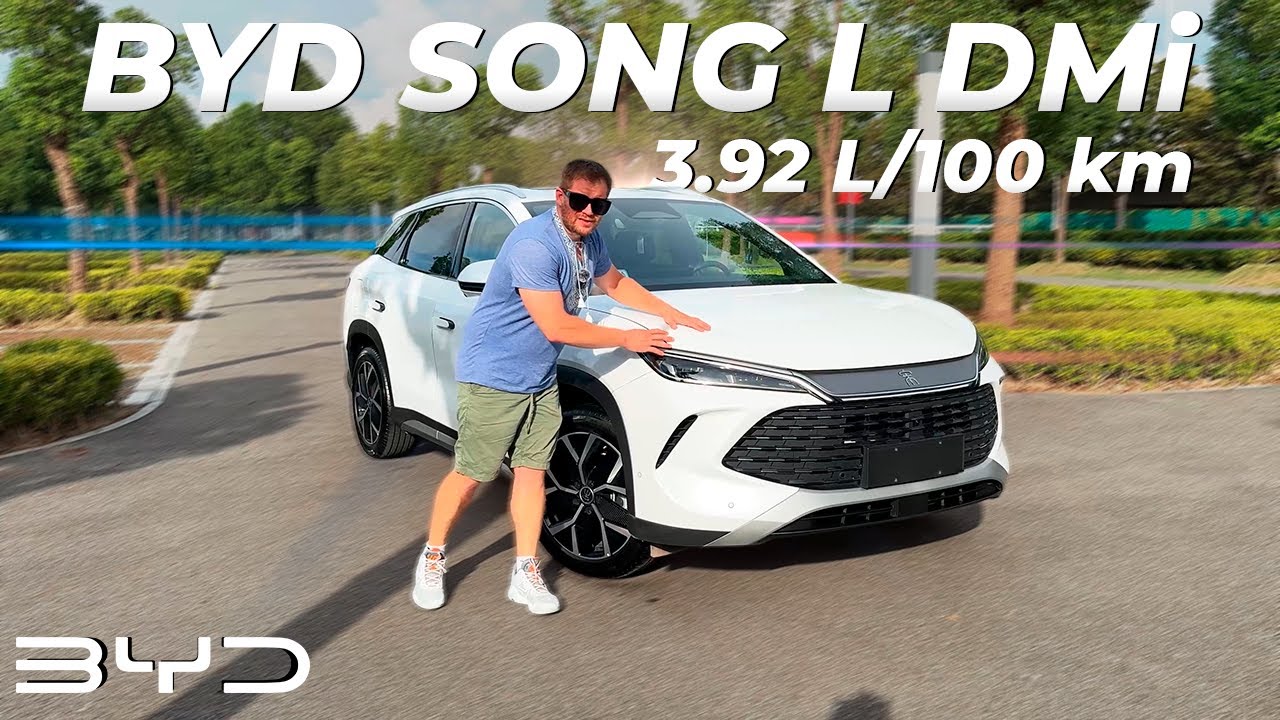
BYD Song L DMi : 3.92 L/100 km
[Music] This is Song LDMI and in my opinion it’s
one of the best hybrid SUVs. One of the most cost effective cars on the market. I also like the
equipment of this car, the handling of this car, enormously large interior space. But the most
important for the moderate price you get the 26.6 kW hours battery which is far bigger than most
of the than actually all of the competitors. And today we will test the real fuel consumption of
this car. Well, not today. It will take probably one week or more. For now, we have fully charged
battery 158. It’s almost 160 kilometers of range, which is officially in the specification of this
car. It’s about 99 to 100% of the battery. Trip A. Now, we have 0 kilometers as you see. And we
have already filled up the tank with 95 petrol until the first click. We’ve just done it. So
now we put the fuel gun right here. By the way, who is curious? The price of 95 petrol is
about 1.1 USD. It has increased recently a little bit. And from today, I will drive
probably around 500 kilometers. And we will see the real fuel and energy consumption
in this car. Let’s start. Of course, as usual, today we will review this car
in details, versions, equipment, prices, and technical specifications. We start from the
body. The full length is 4.8 m. The wheelbase is 2.8 m. This is the perfect golden standard for
the medium-sized SUV. Totally enough to make the interior space sufficient for five-seeers and
at the same time pretty convenient to park in the city. The body itself is fully made of steel
and it has tin coated on all the panels including outside panels and including the inside panels for
example panels of the doors as you see it has thin coating and the body crate itself. Even the roof
panel of course is pretty small because of the panoramic sunroof is thin coated as well. The curb
weight of this car depends on the battery is from 1,850 kg to 2,000 kg with the biggest battery.
Now we talk about the technical specifications and of course we start from the battery. This is
a hybrid model. It shares its platform with many many other BYD models including BYD song plus
which is actually a sibling of this car. Not in terms of the design of the exterior or interior.
But in terms of technical specification, equipment and even prices the cars are actually similar. The
sizes are similar as well by the way. So this song LDMI has three options of the battery. The first
one is 12.9 kilwatt hours. This is 75 kilometers of pure electric, pure electric range by CLTC. And
this car is actually very difficult to find. Yes, it is the cheapest version, but basically no
one buys it because uh the advantages of hybrid technology here basically not so obvious. The
next option, we have two equipment levels with this option is 18.3 kilwatt hours. And of course,
it is much more interesting with 110 km of pure electric CLTC possibility to drive. And the last
battery, the biggest one, same as in this car, also has two equipment level with the biggest
battery is 26.6 kW hours. This is pretty big. This gives you 160 km by CLTC. In fact, it can
give you actually almost dead mileage on one charge. I have tested it already. And with this
battery at this price, the car basically doesn’t have many competitors. Maybe in China it has, but
in the whole world almost no. What is interesting about the batteries, it’s not 800 volt platform.
The voltage here is pretty low. It’s 338 volts on this battery, which is pretty enough for that
size of the battery. And the smaller battery, which is 12.9, it doesn’t have fast charging at
all. But all other versions have fast charging. We have DC port, we have AC port. And with
DC port, the smaller battery which is 18.3 has charging cap capability of uh 26 kW per
hour. But the bigger battery like this can take up to 54 kilow kilowatts per hour, which
is extremely extremely good. I tested and this car really took more than 46 kilowatts per hour
uh on my charging station near my home. [Music] So friends, now we have done exactly 400
kilometers. These all uh results we will analyze later. But currently we are going at the same
petrol station to charge until the first click of the charging gun. So this is the moment of truth.
15.7 liters 95 uh petrol and we have done 400 kilometers out of which one once I charged full
after that I didn’t charge and about 250 km was highway and about 150 km was the city so friends
for me it’s amazing amazing result it was combined driving about 70% highway about 30% city maybe 40%
city I was driving according to the traffic rules but also I also I checked the acceleration from 0
to 100 during the test drive for the video about five to six times. Also, of course, I did uh some
overtaking on the highways and so on. And we have 400 km just one charging from the charging station
before the start of the cycle as I showed you. And the actual fuel consumption under these conditions
is here 3.927 L per 100. I hope it’s focusing and you see it. It’s amazing because I use the air
conditioner all the time. It’s two ton carb car. It’s mediumsiz SUV. I am purely impressed. Now I
will show you what the uh gorgeous say us about the consumption. So past 50 km minus 4 kwatt
hours because the car was giving energy to the battery 6.5 L per 100 km. It’s just past 50 km
combined 5.4 L per 100 km. Cumulative 20 12.4 4 kW hours per 100 km in just 1.4 L because this
car before me was used mainly in EV mode. At the same time, you see that the tire pressure is
about 2.8, which is uh pretty pretty high, but actually it’s normal because the car is still
convenient. And here we also have mostly I use the AI management, but sometimes I also use the
safe. Um we have also the energy consumption curves and data. And here it shows that the
drive used n uh 89% the AC 5% we have 33° C and we have the 6% for electric appliances.
Uh amazing amazing result but now we will do something else. At the next stage I will show you
how much song LDMI can cope by using just battery. That’s why we are now arrived at the charging
station. The car is charging a DC current. The current power is 42.2 kilowatt kilowatts per
hour. Uh actually this car can take up to 54 but these charging stations are really really not good
and really low power. Sometime they don’t give uh more than 40 kilowatt hours even for EV car.
And after we have 100% I will tell you about the methods of how I will check the pure electric
range of this car. So, I have charged the battery until 100% and I will control the pure electric
range in this way. First of all, I turn the car in full EV mode. Here it’s uh said it’s EV. Secondly,
trip A, I will zero. I already zeroed it. Now it’s 0 km. Thirdly, we have the EV trip 6,700 km. Now
we should remember these numbers. At the moment when the car will turn to HEV by itself and start
the internal combustion engine probably it will be at about 20% of the battery which actually
is set here. You cannot set less than 20%. We will know that pure electric range basically
finished and we will see how many kilometers will be added. Let’s start right away. Now I will
tell you several words about new autopilot system which is called I ofgot which is by default
in all versions of this car because it’s 2025 model year. In the city it’s almost useless but
at the highway it can do pretty many things and almost reaches the level of the market leaders
such as for example Evar or Tesla but still it is pretty worse. First of all now I’m using this
system. I’m not touching steering wheel or the pedals or anything. And when the conditions are
uh suitable, the car can drive up to 20 minutes, I had experience without my interfering. But when we
have some construction sites or when we have some uh exits or entrance to the ramp, then the car
basically lose its tracks and sometimes it is even dangerous. Several times I had pretty dangerous
situations. Yes, this system obviously has very high potential potential and almost reached the
leaders but still not yet. Maybe they have still some space to improve it based on the current
software and hardware installed. Uh for now I must say uh in less congested road conditions with
relatively straight roads with good uh linings, this system works pretty pretty okay. What is
good about it? It can change lanes. I just use the uh turn signal and it will change lane by itself.
And also it can change by lane by itself. It was a little bit not in the center of the lane. Uh
it also can change lane by itself when it thinks it’s appropriate. And also it’s navigation guided
autopilot system. Now we are driving based on the navigation. But again sometimes the car will just
tell you please help me to do something. This is conditions are like pretty difficult. Take the
steering wheel. Okay. Nevertheless, as you’ve seen already about 3 4 minutes, I haven’t touched
any uh any controls of the car except I did uh lane changing on purpose. Oh, finally I managed to
do it. It was long trip. It was in the city with a lot of traffic jams. But just look at our amazing
result. 146 kilometers trip A.4. still have 20% of the battery because actually that is what we
set it and it cannot go uh lower. And also we have the trip EV 6161. It’s actually uh about the
same amount bigger as the trip A. So no cheating at all. All the way the air conditioner
was turned on like that and we have 12.4 4 kwatt hours per 100 km and just maybe at last
3 km the petrol engine turned on and that’s why we have this 0.5 but it’s actually not super true.
It’s amazing this DM hybrid car really can be used as an EV car for the city with pretty sufficient
range. Now we know that with the biggest battery, this car can actually achieve in normal real
life more than 130 kilometers per one charge. But what to do after we made this 130 km and we
did not have possibility to charge the battery. For that case, we of course have the IC internal
combustion engine. This is it. And the BYD claims that by the WLTC cycle with fully uncharged
battery, the fuel consumption here is 4.95 L, which is pretty close to reality. How it possible
that such a big car with 2,000 kilos of the curve weight can take less than 5 L of petrol 92 by the
way for 100 km. Let me explain to you. Of course, all that is thanks to this particular engine.
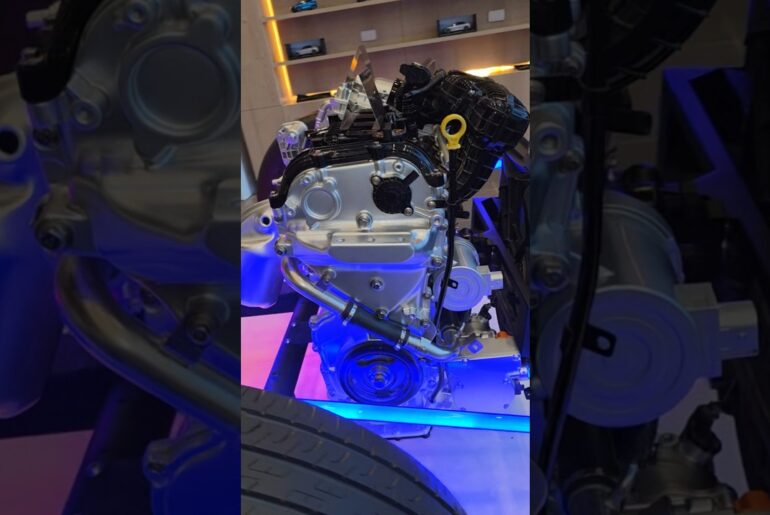
This is BYD 472QC and this model of the engine is used in dozens of other models of BYD including
the sibling car the BYD song plus DM including uh Cine05 DMC06 DM Chin DM and many many other cars.
This is 1.5 L naturally aspired engine with 101 horsepower u the peak power of this engine and
it works using the Atkinson cycle. To be honest, it doesn’t uh have the Atkinson style mechanically
but it imitates the Atkinson cycle by the work of the variable valves. The intake valves they close
much uh longer time than it is in a normal engine without using the Atkinson cycle. That results
uh to the intake mixture actually intake gases go to the intake basically intake manifold and the
energy of these gases used in a better way. As a result, we have much colder engine with super good
thermal efficiency coefficient which is I think 43% for this motor. Because of this, we also have
lower power compared to normal motors. But because of this, we have much better real fuel economy.
For a hybrid car, not only the battery size and the internal combustion engine matters, but also
the drivetrain. Here everything is very good with it because here we have the already classical
ECVT system which is t very normal for modern hybrid cars and which was uh firstly used in big
amounts on the Prius. Then it used in big amounts in almost all the BYD models including the premium
models that is a planetary gear. To one part of it we have connected the electric motor to another
part of it we have connected the IC motor. They can work basically independently or together.
What is the total uh comprehensive power of this system? Actually by doesn’t claim any only in some
articles we could found that it is about 234 kW which is about 313 horsepower. But the truth is
a little bit different in this system. You will never have the peak power from the motor uh from
the electric motor and from the IC motor at once. If we just combine the peak power from electric
motor which is 160 kW or 218 horsepower and combine the 101 horsepower from here we will
have actually more than 313 horsepowers. But in real life as I already said it will never
happen. Judging from the acceleration which is about 7.7 seconds from null to 100 in this car
with bigger battery it’s actually 7.9. We can uh assume that the peak power which goes to the
wheels is more than 200 horsepower probably about 220 230 horsepower which is pretty feelable
when you drive it. The car feel the car feels with a quite good dynamic at least below 100
km per hour in the sport mode. We finished with technical part. Now it’s time to talk about the
equipment and prices of this car. Generally we have five versions of this car. Visually from from
appearance, they all are the same. The same LED headlights with automatic headlight. Even the rain
sensor I think is in all the versions maybe except the cheap is the basic one. 19in wheels with the
tires 23550R uh 19 in all the versions. And this probably as many of you know this is a part of
the new autopilot system which is named the eye of God. from 2025 model year. All the versions
equipped uh with this system by default. Here we also have the bench showing that this car has the
IOT autopilot system because this is 2025 model year car produced in 2025 year as well. And in
this model year even the huge panoramic openable sunroof is also by default in all the versions.
By the way, about prices, the basic car without any discounts in Chinese showroom costs about 19
uh,900 United States dollars. They also have some discounts normally. And the top version with 26.6
kilwatt hours with HUD with premium sound system, okay, at least hi-fi uh audio system cost about
$25,000 without any discount. Can you imagine all the remaining differences between the equipment
level we will find inside in the interior? I would also like to remind that all the cars at least in
2025 model year has have camera 360 and also have the blind spot monitoring of course because it
is the IOT autopilot system. But now we go to the differences. This is the multi-layered soundproof
glass which is presented only in the three latest uh versions. Same as the front seat heating
and ventilation presented only in the last three versions. And this material uh is by
default. Of course, it’s not real leather, but it’s very good, very durable material. I’ve
already tested it. Uh, also pretty beautiful, pretty nice to touch. We also have the Cortex
material on the steering wheel in all versions. But the heated steering wheel, we have only
in the last three versions, which is actually extremely good for this price range and also for
the Chinese market because this is not the most important function in China. What I really like
about this car is the electric adjustment of the seat caution angle. Now I can adjust just the this
part of the uh seat cushioning height and also I can adjust the back part and I can make this seat
more sportive and more bucket like which is very important for me and it’s not super common in
Chinese cars in this price range. By the way, one of the few differences of the top version compared
to the previous version, there are really not many of them is the HUD screen which is not presented
in my car because this is subtop. I have just this plastic cover which looks a little bit odd which
I personally don’t like. In the top version we have nice huge HUD colorful not as nice in modern
cars like Jer or uh for example uh Xpang or some others but still okay. And also only in the top
versions we have 10 speakers of the audio system from Infiniti brand. In previous two top versions,
in previous versions like fourth and third, we have eight speakers like in this car which
sounds pretty okay but worse than the top version. And in the first two versions, first two basic
versions, we have only six speakers. I really like the interior of this car. For me, it’s better than
the Bon Plus, which is actually sibling of this car. But in fact, this one gives me more feeling
of an adult with this panel a little bit higher. The space here feels a little bit bigger. But this
all is pretty subjective. What I can tell what I can tell you objectively that ergonomy here is
perfect. The seat position is perfect. The armrest is perfect as well. Here we have the gorgeous
cluster which is about 10.2 in something like that which is in all the BYD like in all other
models. Extremely informative. In the right part we have the trip menu with the fuel consumption
with actually the amount how many kilome kilowatt hours this car used in a plug-in version. the
tire pressure monitoring system with precise data which is in all versions even in the basic one by
default. Here we also have the past 50 kilometers uh fuel consumption. Here we have the cumulative
consumption and so on. And in the right part we have the radio menu. We have the actually it’s
multimedia menu. We have the navigation menu. We have the speed limit adjust set menu. We have the
timer acceleration timer menu is in all the B and also navigation. I think I already told you about
this. Super convenient. Everything has its own physical buttons. It’s so nice that even in 2025,
BYD doesn’t cancel the physical buttons and even doesn’t doesn’t lower its amount. Here we also
have the physical buttons cluster with the parking with uh EV or HV mode with the actually driving
mode with the air conditioner main two buttons like the windshield defrosting and actually turn
off turn on of the air condition and even the uh sound volume adjustment we have from here by
this wheel and from here by another wheel and of course we can do it here on the touchcreen as
well. For me it’s amazing. Uh this under steering switch is for the uh eye of god autopilot system
which is turning it off and on is very pleasant to click is very nice very convenient and so on.
Uh basically everything here is good. This 15.6 in touchscreen is extremely nice. In the first b
two basic versions we will have only 12 in smaller touchscreen. But here we have sufficient size.
Everything works very very fast. Everything uh is pretty pretty well and the menu is classical.
First of all it’s Android. You can add here uh some a if you need uh like witch is already
pre-installed and also uh here you have the sent remote mode which I think has been added in some
last versions of this car software. This car can uh monitor itself, turn on the cameras while being
parked. Of course we have here the driving video uh recording and we have very classical menu
typical for BYD. The English uh of course is from the factory. We have it in the link menu somewhere
here. Everything other is pretty pretty normal. Uh we also have I will show you one more time the
menu of the seat ventilation and heating with the steering wheel heating right here. The second row
is amazing. I’m sitting behind myself. I’m 178 cm. It’s very very good. Basically same as in the BYD
plot. The sizes are same as well. Completely flat floor. We have very long seat cushion. Very high
seat cushion. Pretty high. I have a lot of space over my head in front of my knees. I have some
basic uh conveniences like the USB type A type-C charging port. I have the climate deflectors.
Of course, I have this uh pretty convenient armrest. And I have some nominal uh seat back
rest regulation which basically will not help you too much. But it’s same as in all the SUV of this
price range and this size. Generally for me, it’s 10 out of 10. It’s super super comfortable. Now we
go to the trunk. By the way, look how this logo is lighting nicely. We have the electric tailgate
opening and closing in the last three versions. The first two don’t have it. And this car is
extremely practical because I have been using it for a long time before I had one more like this
just green exterior. So in these configurations, the smallest volume here claimed by BYD is 459
L. But we also have here the niche and under this false floor. And we could make it like that
more deep. I cannot make it now because I have mess here. Then it will be a little bit bigger. By
the way, look at the factory set. We have the V2L. Yes, 16 uh amper max. We have the very bad, very
low power charger. And we have the tire repair kit uh with this towing hook. Now we will fold the
rear seats. And as you see with the false floor, we have actually the flat floor. And we also
have this curtain which can be very easily very easily disassembled from here in this
way. In this configuration with both seats folded we have 1,000 liter what BYD claims
but in my opinion it’s actually much more. I think it’s 1.5,000 L taking into account
all the volume here. Uh you are seeing the infography of this trunk on your screens right
now. Front suspension, classical magerson, huge ball bearings which are exchangeable.
All the all the silent box is exchangeable, very powerful lever. Everything is super durable,
super classical and handling very very nice. The ground clearance under the front subframe under
its plastic cover is 178 mm which is more than enough. And one more thing which I actually not
very confident about in the specification of this car. The two highest versions including this one
has the uh adaptive or variable hardness of the shock absorbers. So this should be probably
the Union C like in the new Cine06 where you can adjust the hardness of the shock absorbers.
But I couldn’t find anything in the menu of this car which should be there as a separate ADP.
So, I guess if it’s actually here presented, uh, it should be working together with the sport
mode being a little bit more stiff and in comfort mode a little bit more so, but generally I haven’t
seen or found anything like that until now. On the middle of the car, the ground clearance is even
a little bit better. It’s 217 mm, 214. Here, everything is protected pretty nice. Here we have
the exhaust system uh alongside the uh right seal of the car. Here we have the battery which
is protected nicely. Same as in other B cars, the quality is pretty well. BYD L lighting logo.
Here we have the ground clearance more than 340 mm under this muffler uh made of stainless steel.
Here we have the four lever per wheel multi-link suspension. Here we have the uh stabilizing bar
with huge silent locks which are actually pretty easy to change without any need even of the lifter
of the car. Here we have some anti-corrosion surface cover. So, it’s pretty normal as most of
modern SUV. The suspension looks pretty robust. So, now we are driving the Song LDMI. I’ve
driven this car, not particularly this one, but the the same model for more than 1,000 km
already. For me, it’s extremely nice. Very good feeling of the car. Very, very good handling.
Actually, the suspension is adjusted more to a comfort. I don’t feel anything in the sport mode
more stiff. I don’t feel it. Despite specification has some words about shock absorber stiffness
adjustment. I never felt it. Nevertheless, view is extremely good. The rear view mirrors is super
nice. The handling is good as well. I like how the front suspension how I feel it in the turns. I
precisely feel both wheels. The most disadvantage of this suspension that uh sometimes on the
obstacles like the uh speed barriers especially on the lower speeds lower than 50 I feel a lot of
unsuspended masses uh working on this suspension. Uh this I feel other things are basically perfect.
Also the sound insulation is extremely good. Even at 120 at the on the highway, the sound
insulation is uh in my opinion better than average in this price segment of the SUVs. First
of all, about the acceleration, we will do it now in sport mode with almost uh with low battery
level uh with using the acceleration timer. Yeah, because it’s basically one gear you
feel like you do it on the on the first gear of a normal gearbox. It’s 8.1 and
basically we feel that this is very very uh close to the to what the BD claims. They
say it’s 7.9 but we had the curvy road. So it’s pretty dynamic car but at the same time you
will not like to do such acceleration because the engine sounds the internal combustion engine
sounds like it’s on the first gear. This is not what this car designed for. But in normal
modes let’s turn to normal or even to echo. This car is also pretty dynamic at least
uh below 100 km per hour. At the same time, don’t forget that this car can be pure EV car
uh up to 130 km per single charge. In this mode, it just drives normally completely. Okay, like
electric car, maybe a little bit less powerful than pure electric models of the same size and
price range, but still power is enough. Then you have HV mode and you have many uh different modes
of the driving like classical like sport mode, snow field, sport, normal and so on. Echo of
course also you have the energy management mode which will be AI management or safe. I’m not
sure what is the difference exactly. You can also adjust the state of charge target and for
example if we make 50% or 45 the car will always maintain the 45% level of battery charge. We also
can make uh no lower than 20% and the car will never make lower than 15% because it’s better for
the battery and it will use this 15% for at least uh driving on the reverse gear to prove
that it’s very nicely dynamic car in the city conditions. I will just push a pedal
of accelerator in normal mode from 55. It’s already 85. It’s it’s pretty okay. It’s of
course it’s not a sports car, but it’s more than enough in the city. But you should understand that
if your lifestyle demands from you or you just like it and driving like 140, 160 or 170 km/h on
highways for a long time, this car simply will not fit you. This motor 1.5 will be not enough to do
it. Uh also the drivetrain is not adjusted to this at all. And basically this is car for city and
suburban driving. Of course, I’ve done about one to 200 kilometers on the highway by this car and
it was no any problem, but I didn’t drive faster than 130 kilometers per hour, which is okay for
this car. Like, let’s say it’s okay. It’s pretty comfortable. I hope I proved you this is a perfect
hybrid car. First of all, costs on petrol are very close to the cost of driving electric car. The
fuel consumption is very, very good. Secondly, you can use it as an electric car with limited to
about 130 km of range. Thirdly, equipment comfort very good. Interior is spacious. Handling is nice.
The only one thing this car is not suitable for is actually driving at high speed on the highway.
It’s not good either for you because the engine will be too loud nor for the car itself because
the drivetrain and the motor is not actually designed for that. And of course, price is super
moderate. If you want to get one from China, new car or used car like this one, just contact
me directly. All the contact information below this video. Yes. And we finish this video uh on
the petrol station. It’s a quite symbolic. Please push the like button, subscribe to my channel, and
of course, leave the comment whether you like this video or not, or any other comment about this
car or the next car you would like me to film. [Music]
Denis Cars Lover presents an in-depth, hands-on review of the BYD Song L DM-i — 2025 model. In this video I test the real-world electric range and efficiency, walk through the technical layout and trim levels, inspect the cabin and cargo space, and put the car through a detailed test-drive to show how the Song L DM-i behaves in everyday driving.
Powertrain: 1.5L Atkinson petrol engine + DM-i plug-in hybrid system (E-CVT + electric motor)
Battery options: Blade LFP packs (approx. 12.9 kWh / 18.3 kWh / 26.6 kWh configurations depending on trim) with CLTC electric ranges reported ~75 / 112 / 160 km respectively.
Combined (total) range claims with hybrid system: up to ~1400–1500 km in some configurations (market / CLTC figures).
0–100 km/h: roughly 7.7–7.9 s depending on battery/powertrain. Top speed ~180–201 km/h on various trims.
Boot: ~458–459 L (seats up) expanding to ~1,100–1,550 L with seats folded (depends on spec).
Complete technical summary (concise)
Layout / class: Mid-size crossover SUV, 5-seat.
Engine: 1.5 L BYD 4-cylinder (Atkinson cycle) working with DM-i hybrid system.
Electric motor: permanent-magnet synchronous motor (high-output motor option up to ~160 kW in some variants). Combined system torque/power varies by trim.
Transmission: E-CVT (electric CVT hybrid transmission).
Battery: BYD Blade LFP, multiple capacity options (12.9 / 18.3 / 26.6 kWh commonly reported).
Claimed EV ranges (CLTC): ~75 km / 112 km / 160 km depending on battery. Real-world figures vary — watch the range test section for our logged data.
Dimensions (typical): length ~4,780–4,840 mm; width ~1,890–1,950 mm; height ~1,560–1,670 mm; wheelbase ~2,765–2,782 mm (market dependent). Ground clearance varies by spec (typically ~180–210+ mm).
00:00 — How we will test the real range
02:15 — Technical specifications of the BYD Song L DM-i (2025)
05:40 — Real-world range: test results and analysis
09:30 — Technical layout and powertrain explained
13:00 — Trim levels and equipment (which one to choose)
16:20 — Interior: screens, comfort and tech features
19:10 — Boot / cargo space and practicality
21:30 — Suspension, ride quality and ground clearance
24:00 — Test-drive: acceleration, handling, noise and comfort
28:45 — Who this car is best for — buyer recommendations
Interesting facts & buyer takeaways
DM-i 5.0: The Song L DM-i uses BYD’s 5th-generation DM-i plug-in hybrid system (designed for very high fuel economy and long combined range), which gives unusually large total range figures for a PHEV when paired with a small combustion engine and efficient energy management.
📲To get more details:
WhatsApp +8618116092008
WeChat +8613062787790
🇨🇳 RDL Cars Exportingt Company
🤝 Direct export without intermediaries
🚢 Worldwide delivery
🔎 Full inspection before shipment
#byd , #BYDSongL, #SongL, #DMi, #phev , #hybridsuv , #DenisCarsLover, #carreview , #electricrange ,# testdrive #byd2025