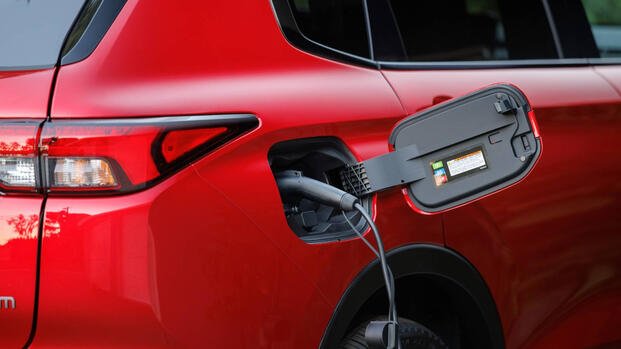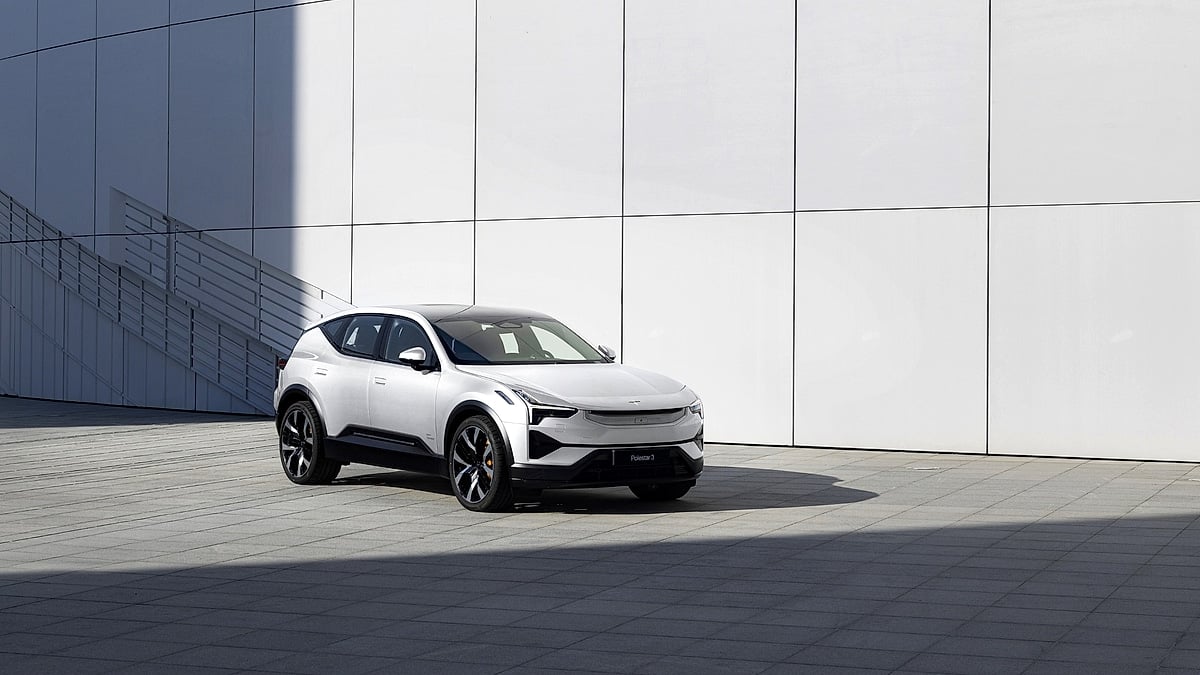
Polestar’s Australian boss has done something the car industry usually avoids. He did not just praise his own technology. He took a swing at another one with language sharp enough to leave a bruise. Scott Maynard called plug-in hybrids “the worst of both worlds,” a neat little phrase that captures every old complaint about the breed in one shot: too much weight, too much complexity, too much hardware, and not enough conviction. Then he said the part that matters. Many PHEV owners, he argued, “rarely charge their cars.”
If a plug-in hybrid is not being plugged in, it stops being a clever bridge between gasoline and electricity and starts becoming something much less flattering: a heavier combustion car carrying a battery it is not really using. The environmental case gets weaker. The efficiency case gets weaker. The subsidy case begins to look suspiciously like a shell game. One executive line, tossed into an interview, suddenly turns into a serious question about whether a whole category of electrified vehicles is delivering what buyers and governments think it is.

The easy version of this story is to laugh at Polestar for forgetting its own past. After all, the brand’s first production car was the Polestar 1, an “electric performance hybrid” produced in limited numbers from 2019 to 2021. It was a six-figure halo machine with a gasoline engine, three electric motors, and all the glamorous complexity Maynard now talks about like a bad habit. That irony is real enough. It also makes for a lazy lead. The better story is not that Polestar has changed its mind. The better story is that Maynard may have stumbled onto the most uncomfortable truth in the plug-in hybrid market. These cars only work as advertised if owners behave a certain way, and a lot of them do not.
The best real-world evidence comes from Europe, where researchers have had time and scale to look past the sales pitch and into actual use. A 2022 ICCT and Fraunhofer analysis found that private plug-in hybrids in Europe were driven electrically about 45 percent to 49 percent of the time. That is not perfect, but it is also not a scandal. It suggests that many private owners really are plugging in and using the cars as intended for a meaningful share of their driving. The trouble starts when you look at company cars. There, the electric driving share drops off a cliff to about 11 percent to 15 percent. Official test procedures assume something much rosier, in the neighborhood of 70 percent to 85 percent. That is not a gap. That is a canyon.
Now the Maynard quote starts to look less like brand snobbery and more like a rough summary of a real problem. He is too sweeping if he means all plug-in hybrid owners, everywhere, all the time. The data does not support that. But he is uncomfortably close to the mark when it comes to the part of the market that has done the most damage to the technology’s reputation: fleet and company car users. In those cases, the promise of low emissions and efficient electric commuting often melts away in the heat of incentives. The employer pays for fuel. The employee pays the power bill at home. The charging cable stays in the trunk, the gasoline tank does the work, and the car cruises around as a poorly behaved hybrid with a very flattering brochure.
This is where the argument gets serious. Not because engineers got the math wrong, but because human beings and policymakers did. If a plug-in hybrid is granted tax advantages, low emissions status, or favorable fleet treatment on the assumption that it will be charged regularly, then the whole arrangement depends on real behavior matching theoretical capability. In too many cases, especially in company fleets, that does not happen. ICCT has said company car PHEVs can produce real-world emissions roughly three to four times higher than the official figures used in type approval. That means the problem is no longer merely technical. It is political. A technology sold as a bridge starts looking suspiciously like a loophole.
Polestar, of course, has every reason to say this out loud. The brand has chosen purity as its position. It wants to be the clean answer in a market full of hedged bets, transitional compromises, and drivetrains that try to please everyone. That makes PHEVs a useful enemy. They are complicated. They are transitional. They are the kind of engineering compromise a pure EV brand can dismiss in order to make itself look more principled. Carsales reported Maynard’s position in exactly that spirit, with Polestar rejecting the halfway house and insisting it would not retreat from its EV-only path even as PHEV sales rose in Australia.
Still, the corporate tension is too good to ignore completely. While Polestar talks like a converted zealot, Volvo is still making the case that plug-in hybrids have a job to do. The company’s new XC70 has been announced as Volvo’s first extended range plug-in hybrid, with up to 200 kilometers of electric range under the CLTC test cycle. Volvo openly describes PHEVs as a crucial bridge toward a fully electric future for customers who are not ready to go all in yet. It is not whispering that argument in some regional market either. The company has celebrated selling its one millionth plug-in hybrid and said PHEVs accounted for 23 percent of its global sales in the first half of 2025. That is not a dying afterthought. That is a serious pillar of the business.
That leaves the wider Geely orbit doing something large car companies often do very well, even when it looks ridiculous from the outside. It is running two bets at once. Polestar gets to play the hard-line electric purist. Volvo gets to sell the bridge technology to buyers who still want flexibility, especially in markets where charging coverage and driving distances complicate the pure EV case. From the outside, it looks contradictory. From inside the boardroom, it probably looks like portfolio management. One brand speaks the language of the future. Another brand sells the machinery that pays the bills while the future is still arriving.
And that matters because Australia is not some dead zone where PHEVs have already been laughed off the stage. Quite the opposite. The Federal Chamber of Automotive Industries said year-to-date Australian PHEV sales had surged 130.6 percent to 47,565 units by November 2025. That is not a rounding error. That is momentum. Buyers clearly still see a use for vehicles that can do some electric commuting without asking them to commit fully to public charging, long route planning, or the economics of a pure battery car. Whatever Polestar may think of the category, the market has not buried it.

Which brings us back to the line that made the story worth writing in the first place. Do plug-in hybrid owners actually charge their cars? The honest answer is neither the industry’s polished fantasy nor Polestar’s clean dismissal. Many private owners do. A lot of fleet and company car drivers plainly do not, at least not enough to justify the rosy emissions and fuel economy claims that helped sell the concept. So Maynard is not entirely wrong. He is just speaking in a way that flattens an uneven truth into a slogan.
That uneven truth is the whole game now. Plug-in hybrids are not dead. They are not irrelevant. They are also not automatically green because the badge says so, and the charge port is there for decoration. Their case depends on discipline, charging habits, and policy rules tough enough to reward actual electric use instead of theoretical capability. If governments keep treating every PHEV like a virtue by default, they will keep subsidizing some very expensive self-deception. And if Polestar wants to argue that the category is the worst of both worlds, it should at least admit the more precise version. The technology is not the scandal. The way too many people use it is.
Image Sources: Polestar Media Center
About The Author
Noah Washington is an automotive journalist based in Atlanta, Georgia, covering sports cars, luxury vehicles, and performance culture. His reporting focuses on explaining the engineering, design philosophy, and real-world ownership experience behind modern vehicles.
Noah has been immersed in the automotive world since his early teens, attending industry events and following the enthusiast communities that shape how cars are built and driven today. His work blends industry insight with enthusiastic storytelling, helping readers understand not just what a car is, but why it matters.
Noah is also a member of the Southeast Automotive Media Association (SAMA), a professional organization for automotive journalists and industry media in the Southeast.
His coverage regularly explores sports cars, luxury vehicles, and performance-driven segments of the automotive industry, including the evolving culture surrounding Formula Drift and enthusiast builds.
Read more of Noah’s work on his author profile page.
You can also follow Noah here:
Follow us today…