Vietnam is moving to extend tax breaks for electric vehicles, aiming to accelerate adoption, cut emissions and support industry growth as the country pushes forward with its green transition agenda.
In a draft National Assembly (NA) resolution on extending special consumption tax (SCT) rates for battery-powered vehicles, the Ministry of Finance (MoF) has proposed continuing tax incentives for various categories of electric vehicles (EVs).
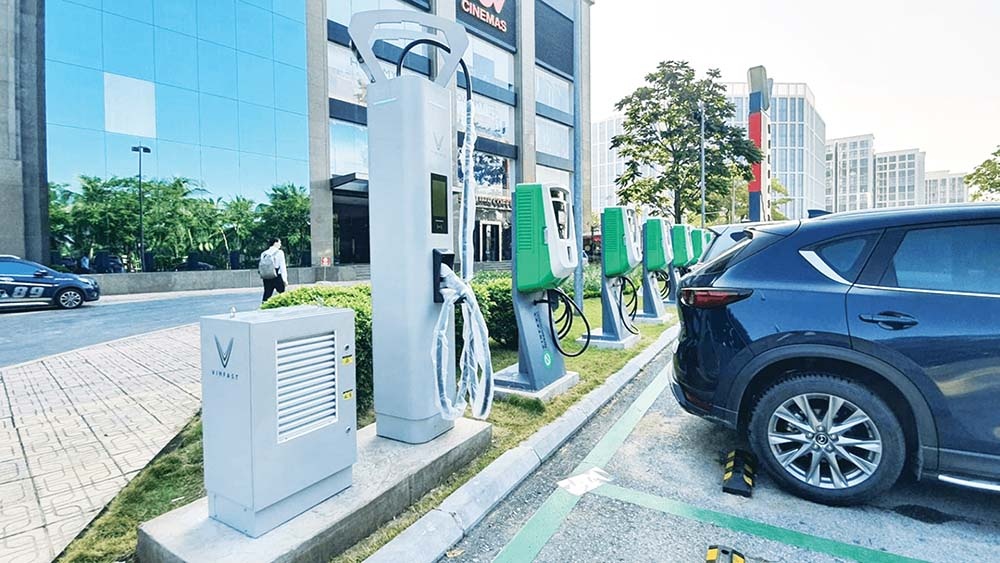
According to the MoF, maintaining preferential tax policies for battery-powered vehicles with fewer than 24 seats could deliver a number of positive impacts.
First, it would help accelerate the transition to clean energy vehicles, reduce emissions from transport activities, and improve air quality, particularly in major urban areas, while also contributing to lower traffic noise pollution.
Second, the policy would make it easier for individuals and businesses to access low-emission vehicles, at a time when the domestic EV market remains in an early stage of development and upfront investment costs for EVs are still generally higher than those for fossil fuel-powered vehicles.
Third, it would support investment orientation in domestic EV manufacturing and assembly, foster the development of supporting industries, and gradually form a related technical ecosystem in line with the automotive sector’s technological transition.
The MoF noted that, based on compiled data, total emissions reductions achieved since the introduction of preferential SCT rates for EVs in 2022, have been significant. CO2 emissions were reduced by 5,936 tonnes in 2022, 27,454 tonnes in 2023, 74,690 tonnes in 2024, and 148,492 tonnes in 2025.
Based on EV performance data and assumptions by relevant authorities, each EV is estimated to cut approximately 0.85 tonnes of CO2 annually compared to internal combustion engine vehicles.
With more than 300,000 EVs sold in Vietnam between 2022 and 2025, total emissions reductions are estimated at 256,000 tonnes of CO2 per year.
Based on these analyses, the MoF has proposed extending preferential SCT rates for battery-powered passenger cars and four-wheeled passenger vehicles with fewer than nine seats, as well as pick-up passenger vehicles, at 3 per cent until the end of 2030, before increasing to 11 per cent from 2031.
For vehicles with between 10 and fewer than 16 seats, the proposed SCT rate would be 2 per cent, rising to 7 per cent from 2031. For vehicles with between 16 and fewer than 24 seats, the proposed SCT rate would be 1 per cent before increasing to 4 per cent from 2031.
On April 6, the government assigned the MoF to take the lead, in coordination with relevant ministries and agencies, in urgently finalising the draft resolution on extending SCT incentives for battery EVs through 2030. The proposal shall be submitted to the government for onward submission to the NA.
The MoF emphasised that the SCT is playing a key role in stimulating EV adoption and driving the development of the EV industry. In the context of Vietnam’s strong implementation of its commitments made in recent years, extending SCT incentives through 2030 would help ensure policy consistency with environmental protection and urban pollution reduction goals. It would also reduce reliance on fossil fuels and accelerate the transition from conventional vehicles to those powered by new energy sources.
Commenting on the proposal, Dao Cong Quyet, head of the Communications Subcommittee of the Vietnam Automobile Manufacturers Association, said the MoF’s plan meets the expectations of many EV manufacturers.
“If approved, this will serve as a highly important resource to encourage businesses to invest in the EV market. Strong growth in EV adoption will reduce the number of fossil fuel-powered vehicles, thereby cutting pollutant emissions and contributing to a greener living environment,” he said.
 VinFast targets Gulf region lifestyle market with EVs
The Vietnamese automaker positioned its electric vehicles to align with emerging consumer preferences in Middle Eastern markets.
 Vingroup to build $850m EV-support industrial hub in Ha Tinh
Vinhomes Ha Tinh Industrial Park Investment JSC, part of Vingroup, will develop factories for lease for the electric vehicle supply chain in Vung Ang Economic Zone.
 Ho Chi Minh City advances low-emission private vehicles
Ho Chi Minh City Department of Construction, in collaboration with the United Nations Development Programme, organised a workshop on advancing low-emission vehicles in Ho Chi Minh City on March 31.