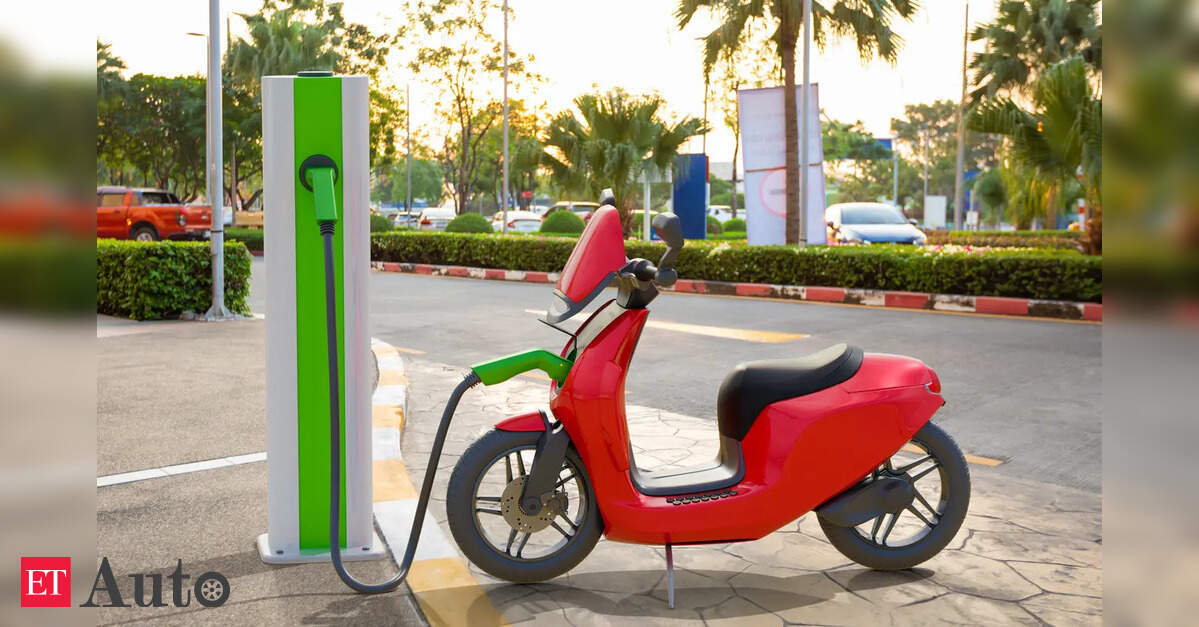
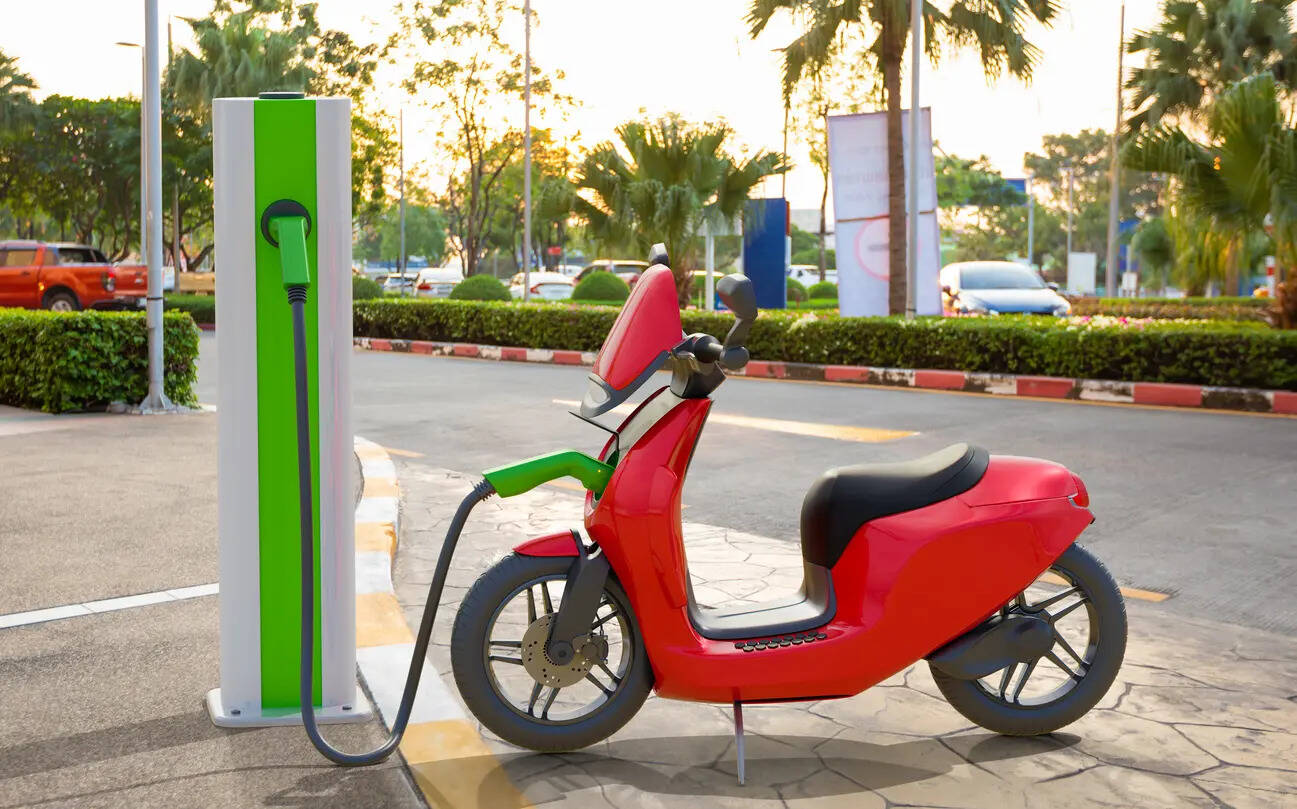
 According to government data, the national capital currently is host to 1919 charging stations and 232 battery swapping stations.Under its newly outlined draft EV Policy 2026-2030, the national capital has proposed to mandate only new electric two-wheeler (e2Ws) registrations in the city from April 2028. While the government’s move is aimed at meeting its larger objective to reduce tailpipe emissions and improve the city’s air quality, the implementation could be easier said than done.
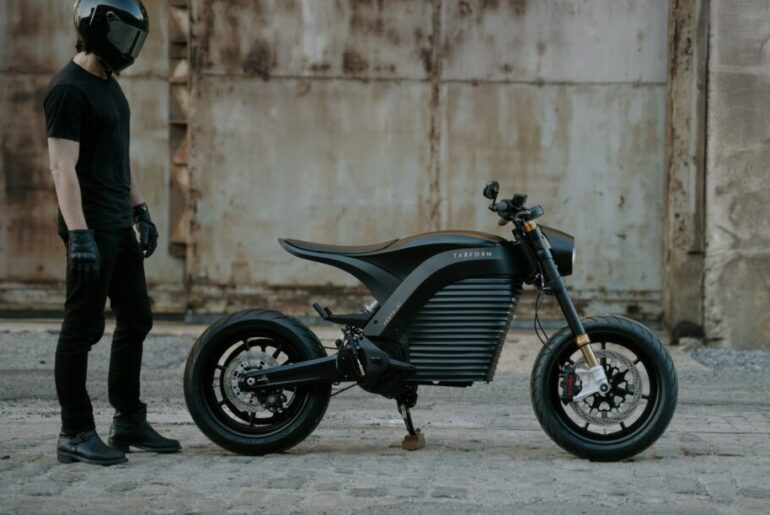
With Delhi witnessing nearly 4.5 lakh new two-wheeler registrations every year–contributing to about 3 per cent of the overall two-wheeler volumes in the country– experts say the lack of a robust charging (and battery disposal) infrastructure, along with a limited product portfolio, particularly that of electric motorcycles, could be among the major challenges before the state to mandate e2Ws from its stipulated 2028 timeline.
“It is an extremely challenging and ambitious target because two-wheeler sales in Delhi are huge in number. While it might be good from a long-term pollution control perspective, it would require the industry to scale and fulfill the demand of the city. Therefore, it is definitely a challenging target that the city has taken, according to an industry expert, who did not wish to be named.
Beyond scale, experts also believe that infrastructure readiness could be the bigger challenge, inhibiting the successful roll out of the proposed mandate. As per Ashim Sharma, Senior Partner & Business Unit Head, Nomura Research Institute, “Readiness on infrastructure, and availability of electric two-wheelers – especially on the motorcycle front – are going to be key”.
He further explained that while e2Ws would consume less electricity when compared to electric cars and buses, “but when we think of everything requiring charging, that would look like a Tsunami”–hinting that the government must ensure a robust grid infrastructure before planning to go all electric, especially when it comes to the mobility of the common man.
Under its EV promotion policy, the Delhi government plans to roll out at least 30,000 charging points for light electric vehicles (2 and 3 wheelers) and fleet vehicles.
According to government data, the national capital currently is host to 1919 charging stations and 232 battery swapping stations.
Auto Inc voices strong opinionThe Society of Indian Automobile Manufacturers (SIAM) has also voiced a strong opinion around the catalysing nature of the policy and how it must avoid ending up into a mandate.
Shailesh Chandra, President, SIAM, said “any policy that comes out on EVs is favourable for the acceleration of penetration of electric vehicles. And, this should be driven by overcoming the key barriers – price parity with ICE and the charging infrastructure”.
“SIAM is of the strong view that there should be greater focus on enablers and one should avoid going through the routes of mandates or bans,” Chandra pointed out.
“Having said that, it is still something that needs to be deliberated in detail,” he added.
While the automotive dealer body – Federation of Automobile Dealers Associations of India (FADA) – declined to comment on the draft policy, a top executive at a leading e2W manufacturer is of the opinion that it is good to give a jolt to the industry once in a while… “But if the government’s intent is to put a hard stop, it may be harsh to ICE players.”
“As long as the operationalisation of the policy is taken care of, it should not be a problem, but where the government usually falters is by not thinking through a cascading impact,” he added, while further pointing out that an inadequate charging infrastructure and imposing restrictions on customer’s choice could potentially backfire.
“What happens to buyers who are looking to buy ICE motorcycles for leisure riding or for inter-city commutes? The government must also look at it from a consumer perspective, otherwise there is going to be antagonism in the public,” the executive added on the condition of anonymity.
According to another senior executive at a leading ICE two-wheeler player, “Around 2010, China saw some of its major cities such as Guangzhou to be among the top most-polluted cities in the world…By 2015, the government there was able to control the situation by tightening the grip on ICE vehicles and subsequently improving the air quality.”
“So, if the government enforces it, the target is attainable…Scale is not a challenge as every OEM has the capacity, but we must look to the future and work on the infrastructure,” he said, adding that even the dumping of EV batteries is far more polluting than ICE technology.
“Moreover, the country’s fragmented local EV supply chain could amplify external dependence on raw materials and components if such mandates are implemented,” he pointed out.
Electric two-wheeler retails registered a notable 22 per cent year-on-year growth in FY26 with sales crossing 1.4 million units and the penetration growing to 6.5 per cent, from nearly 6.1 per cent a year ago. While the Delhi government’s ambition for full electrification, especially for two-wheelers, supports the larger objective of sustainability, experts believe that balancing public interest should be the foremost consideration involving such decisive moves.
Published On Apr 16, 2026 at 07:51 AM IST
Join the community of 2M+ industry professionals.
Subscribe to Newsletter to get latest insights & analysis in your inbox.
All about ETAuto industry right on your smartphone!