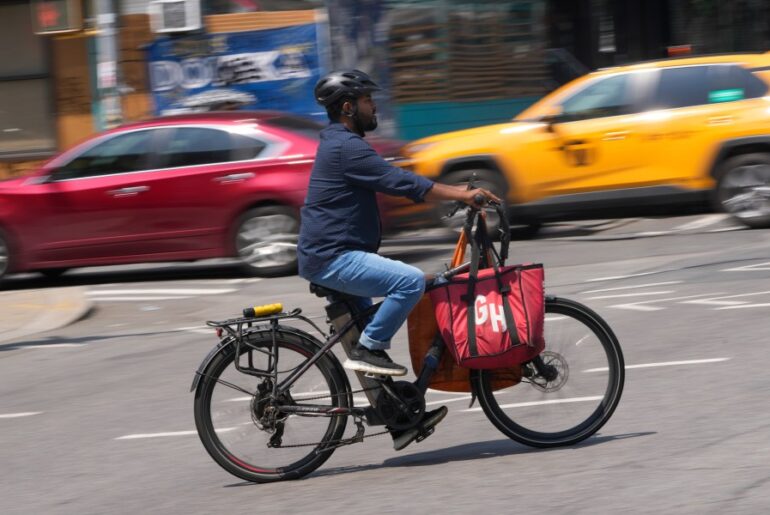
What was once a niche option is becoming a primary mode of transport for many. For many families, the decision is driven by cost.
On April 2 Nguyen Thi Ha, 47, of Xuan Dinh Ward bought an electric motorbike while waiting for her son’s bike to be repaired. To finance it, she sold off two gasoline motorbikes at the end of March for VND35 million (US$1330), or less than half their original price.
“Selling them at a loss is still acceptable because it is almost enough to buy two new electric bikes,” she says.
Her family began transitioning last year when her husband switched to an electric car. With five family members sharing four gasoline motorbikes, annual fuel costs exceeded VND15 million. She estimates that electric vehicles cost about one third as much to operate. “This year, we plan to phase out the remaining gasoline bikes,” she adds.

Ha and her husband in Xuan Dinh Ward buy an electric vehicle on April 2, 2026. Photo by VnExpress/ Phan Duong
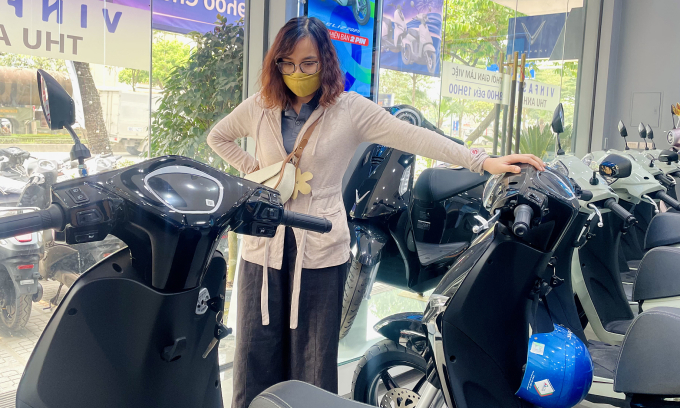
Policy changes are also shaping decisions. On April 3 Tran Thi Hoa, 36, took delivery of a new electric motorbike at a dealership on Le Trong Tan Street in Duong Noi Ward.
Her family already owns two gasoline motorbikes and a car, which meet their daily needs. She says she bought the vehicle for her husband, who commutes to the city center. “I bought this for him to use within Ring Road 1, since the gasoline ban is coming soon.”
Her husband travels 60-70 kilometers each day for work. The family bought an additional removable battery, bringing the total cost to about VND31 million. She says the price was reasonable and decided to buy early to avoid possible increases as restrictions approach.
Decisions like those made by Ha and Hoa are contributing to a growing wave of transition, making the electric motorbike market increasingly active.
According to Hoang Ha, CEO of VinFast’s electric motorbike businessin Vietnam, the company recorded more than 135,000 orders nationwide in March, the highest monthly figure to date. In Hanoi alone, more than 20,000 electric motorbikes were delivered to customers.
The Manh Phat dealership system reported that it sold 1,400 VinFast electric motorbikes in March, three times higher than the average of the first two months of the year. Customers in inner-city wards accounted for more than two thirds of purchases. To meet demand, many dealerships have increased staffing, expanded storage space, and secured additional financing.
Other electric motorbike brands are seeing similar growth, with Dat Bike reporting order volumes in March ten times higher than a year earlier.
Dealerships also report a clear shift in customer demographics. A year ago, electric motorbikes were mainly bought by students, with dealerships selling 50-60 units a month. Today office workers make up the majority of buyers, and demand is concentrated in the VND 20-30 million segment.

Thanh Ha, 45, from Mai Dich Ward, takes delivery of her new vehicle on the morning of April 2, 2026. Photo by VnExpress/ Phan Duong
The shift is also reaching those who previously relied on public transportation.
Long Thanh Ha, 45, recently bought her first electric motorbike after years of commuting by bus. She now uses it for short trips and leisure. Her husband, who frequently works in the city center, also plans to sell his gasoline-powered Honda SH and switch to an electric motorbike next month due to upcoming restrictions on gasoline vehicles in the inner city.
“The trend in the first three months of the year shows that consumers no longer see electric motorbikes as a backup option, but as their main means of transport,” said Ny, sales director at Dat Bike. The transition is also happening quickly. In March, the Manh Phat dealership bought back nearly 400 gasoline motorbikes from customers switching to electric vehicles.
Representatives from manufacturers and dealerships point to four main factors behind the shift.
First, policy changes. Starting July 1, Hanoi will pilot a low-emission zone, restricting gasoline motorbikes during certain hours in central districts within Ring Road 1. This makes electric vehicles a practical option for commuters working in the city center
The second factor is the improvement in technology and infrastructure. Manufacturers are adopting lithium iron phosphate battery technology to address safety concerns and are expanding battery-swapping networks. VinFast has installed 4,500 stations and aims to reach 45,000 nationwide. Some models now offer a range of up to 280 kilometers per charge and can reach speeds of 100 kilometers per hour.
Third, manufacturer incentives are influencing consumer decisions . Even as costs for shipping and distribution increase, some manufacturers are keeping prices stable while offering trade-in programs, installment payment plans, and free charging or battery-swapping services to attract customers.
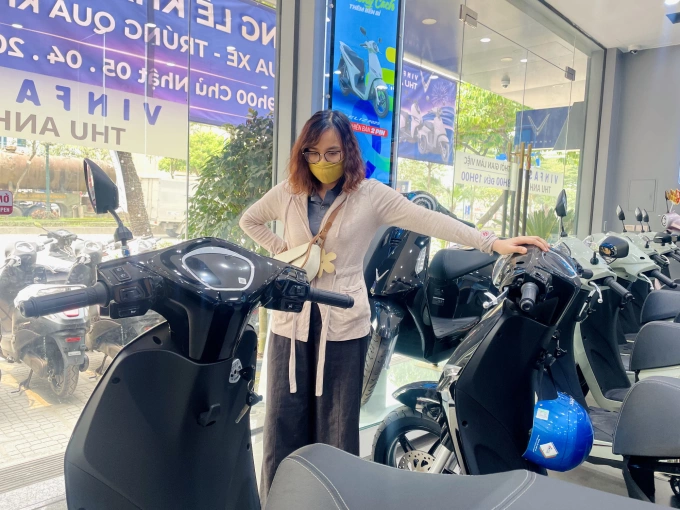
Hoa, 36, buys a vehicle at a dealership in Hanoi at noon on April 3, 2026. Photo by VnExpress/ Phan Duong
Finally, rising fuel costs. Higher gasoline prices and maintenance costs are making electric vehicles a more economical option.
Duc Tuan, 41, who lives in an apartment complex in Dong Ngac Ward, said his weekly fuel expenses for commuting and taking his children to school have increased from VND100,000-120,000 ($4-$5) to around VND200,000.
Currently owning a car and two gasoline motorbikes, he plans to buy an electric motorbike this month, sell one of the old bikes, and move the other to his hometown.
“With everything getting more expensive, any savings help,” he said.
The shift is clearly visible in his building’s parking area. A few months ago, there were about 30 to 40 electric motorbikes. Now, the number has grown to nearly 100. “Earlier, most were small bikes mainly used by students. Now, the majority are mid-range models priced at VND20-30 million and aimed at working adults,” Tuan said.