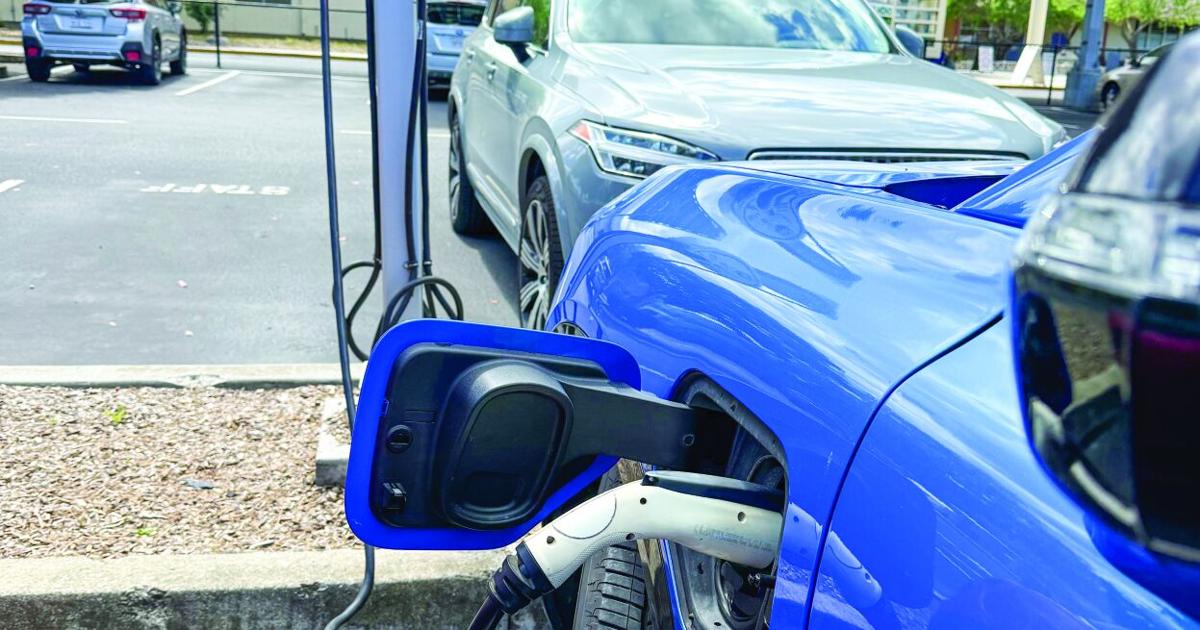
Residents who use electric vehicle chargers at Los Altos School District campuses have questions after noticing higher prices to plug in – and some say the changes weren’t widely communicated beyond stickers on the chargers.
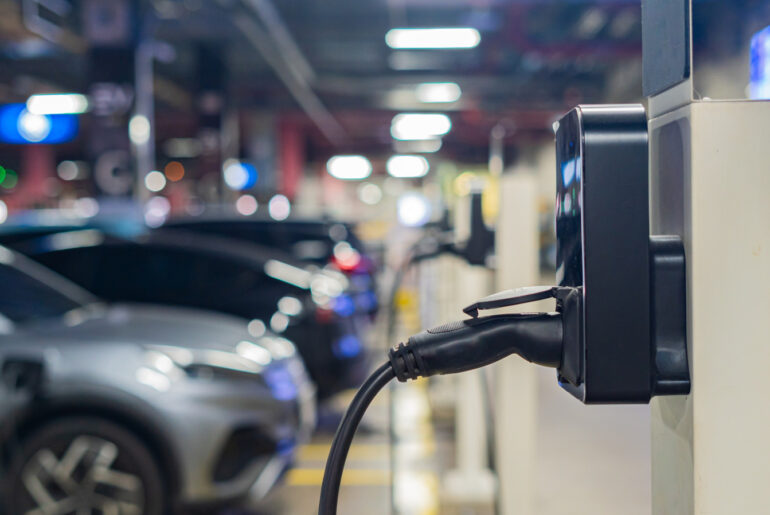
The increases follow the district’s switch to a new charging platform and updated rate structure, which officials say are meant to better align fees with rising electricity costs. Electric vehicle chargers, installed in 2018, are now a familiar sight across all nine LASD school sites, providing convenient access for staff during the day and the community after hours while supporting sustainability and cleaner air.
Erik Walukiewicz, assistant superintendent of business services, told the Town Crier that the district installed chargers for two reasons: “So our employees are able to charge their cars while they’re at work, which is great, and then the public can charge after hours.”
Public users must download an app and enter basic information to activate the chargers. Peak usage typically occurs in the evenings, when members of the public plug in for a few hours or overnight before returning in the morning. Staff usage is smaller but steady throughout the day, reflecting on-site work patterns.
Covington Elementary School, which houses both students and district operations, has the highest usage, according to Walukiewicz. “Much of it is related to the EV charging, for sure, some of it is, but Covington also has more students than our other elementary schools,” he said. “We also have our district operations here, so there are a lot more people using electricity here than probably other places.”
Financially, the program is designed to recoup some – but not all – electricity costs. Staff charging is free as a benefit, while public users pay $0.20 per kilowatt-hour during off-peak hours and $0.40 during peak times.
With average energy costs to LASD at $0.41 per kWh, the program cost roughly $365,000 to deliver about 887,000 kWh from March 2024 through March 2025. Public fees totaled about $150,000, though recent rate adjustments could raise revenue to nearly $390,000 while keeping charging accessible.
“The goal isn’t to make a profit,” Walukiewicz said. “We want to make sure we cover electricity costs, which ultimately frees up funds for other priorities like staff salaries.”
Rates are tied to PG&E’s time-of-use structure, allowing the district to better match user fees with electricity costs.
According to Walukiewicz, the district plans to analyze revenue and usage data at the end of the school year “and then see if we need to make any price adjustments.”
Over winter break, the district switched to a new charging platform after the previous hardware and software began to show wear. Walukiewicz said the transition went smoothly and that the district expects the chargers to continue functioning reliably for years.
Overall, the district considers the EV program a valuable asset. “It’s a great program for our staff and community,” Walukiewicz said. “If you drive around our sites, you’re more than likely to be able to plug your car in somewhere.”