By Mitesh Zaveri & Shrawan Raja
I spent a few days driving the North American-spec 2025 Hyundai Ioniq 5 Preferred Long Range AWD version, which came across as one of the more convincing EVs in its segment. It is quick, practical, and easy to live with, though a few details around storage, controls, and turning radius could be better.
Design
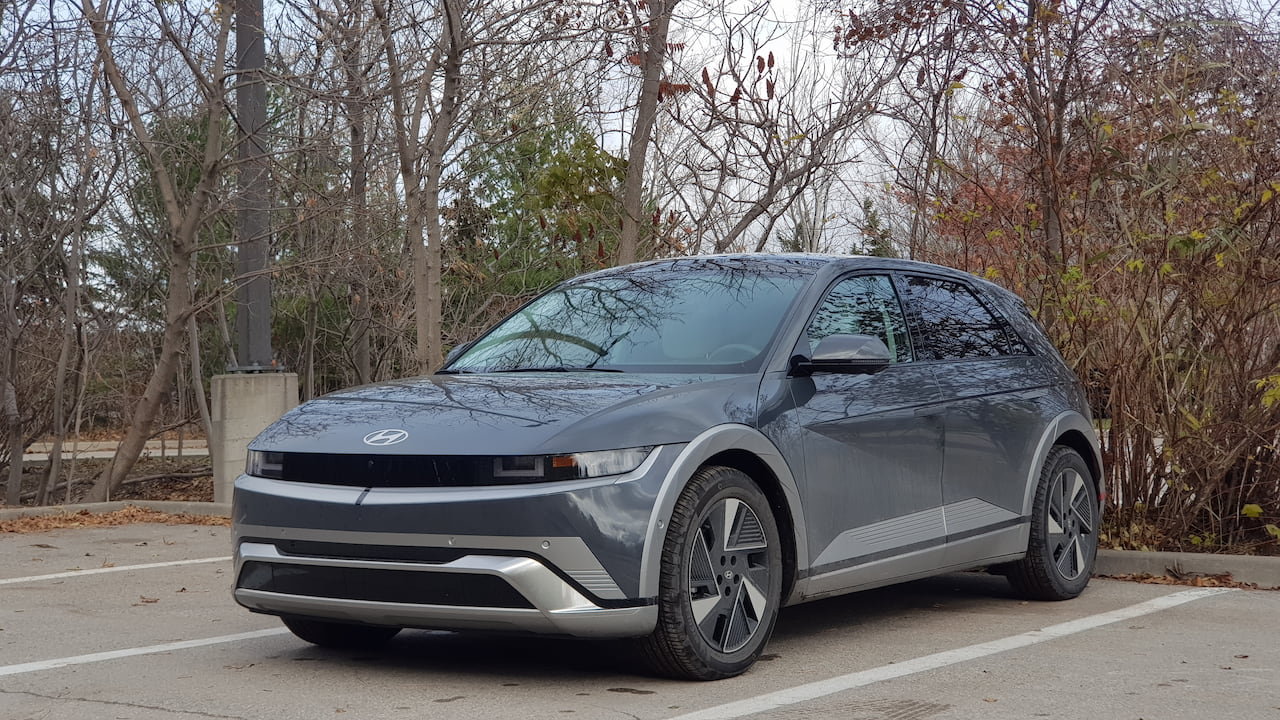
The Ioniq 5 has a look that is hard to confuse with any other model on the road. At first glance it can feel like a hatchback, but it sits with the height of a compact SUV, which is why it lands more as a crossover.

Up front, there is no conventional grille. Instead, Hyundai uses black glossy trim with gray plastic around the lighting elements. The DRLs run across the front and use the now familiar pixel design, and the same lighting elements convert into the turn signals.
The main headlamp units are housed within that design, and the lower section uses more gray and silver trim with active grille shutters that open only when cooling is needed. The side view continues that clean look. The 19-inch dual-tone wheels suit the car, even if they look very much like typical EV wheels.

Flush door handles that pop out when the key is nearby. They are neat in theory, though there is practical concern. In icy conditions after washing the car, water could freeze around the edges of the handles, which could make them difficult to use.
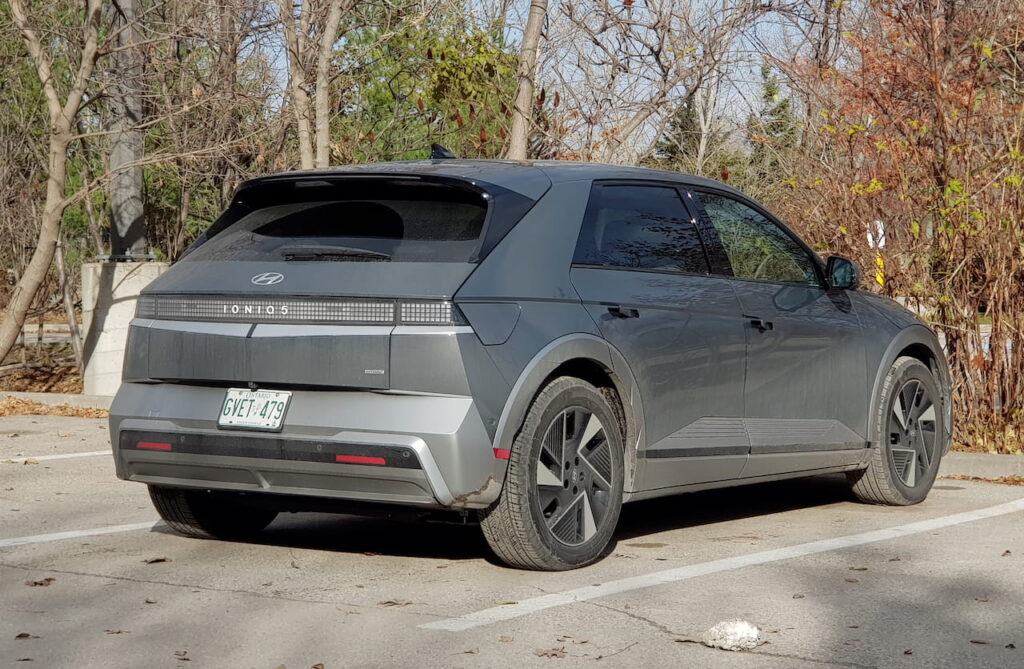
At the rear, the styling stays simple and distinctive. There is a spoiler with openings, a pixel-inspired taillight treatment, and a rounded rear bumper with more gray and glossy black trim.
The smart liftgate can also become annoying in day-to-day use, because it tends to open whenever you stand behind the vehicle with the key, even when you do not want it to.
Interior
The Ioniq 5’s cabin feels open and airy, helped by the light gray color scheme and the very flat floor. Hyundai mixes leatherette, recycled materials, and fabric, and the overall look works nicely. The dashboard is simple and wide, with two 12.3-inch screens placed side by side. There are no sharp edges anywhere, and the design feels intentionally calm.
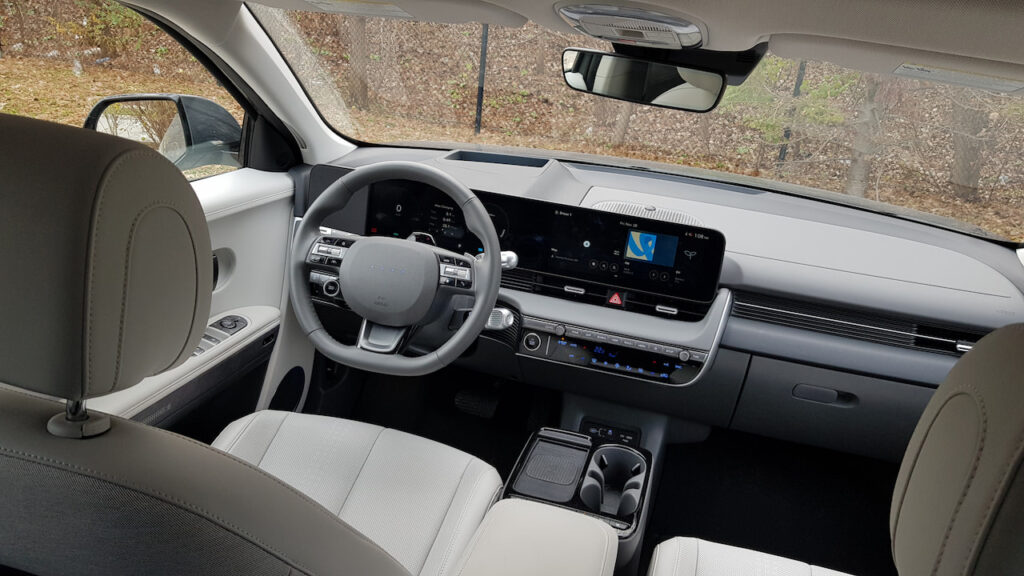
Material quality is generally good. The upper dashboard uses soft-touch trim, though this section could have been softer. Lower down, there is more hard plastic. A practical complaint is on the lower door area, where the light-colored fabric trim tends to get hit by your foot when getting out. Since it is such a pale color, it could become difficult to keep clean over time.
The sliding center console is a clever packaging idea in the cabin. It creates extra flexibility and opens up more usable space when pushed back. Ambient lighting is also included and can be adjusted through the infotainment system, including brightness and 64 different colors.
Seating & Comfort
The seats are one of the best parts of the Ioniq 5. The front seats are perforated, heated, and ventilated, and they are among the softest seats I have come across. They are broad, they hug the body well, and they offer good side support.
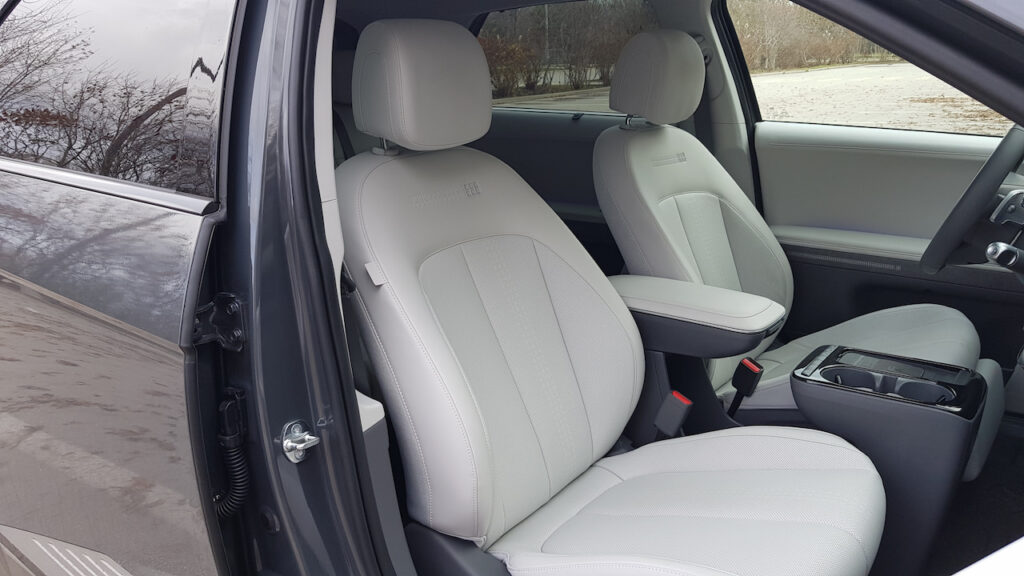
The headrests are soft, and the lower cushions are long enough to support the thighs properly. The main limitation is the lumbar adjustment, which is only two-way. More range there would improve support even further.
At 5’11”, the rear seat space is generous. The bench is broad enough for three passengers, there is almost 7.5 inches of knee room behind the driving position, and there is about 3 inches of headroom, though the panoramic roof trim does eat into that slightly.
The rear bench is more of a flat setup, so it does lose some under-thigh support. You also cannot slide your feet under the front seats because the floor is raised. Still, the rear seats slide and recline, which helps a lot for longer journeys, and the overall comfort remains very good.
The rear also gets heated outboard seats, sunblinds, USB-C ports, vents mounted in the pillars, and a flat floor. That makes it a very usable rear seating area for daily family use. Visibility out the rear is decent overall, with useful higher and mid-level sightlines, though passengers in the back will naturally reduce that.
Infotainment and controls
The Ioniq 5 uses Hyundai’s familiar twin-screen setup, and the infotainment system is straightforward to use. The screen supports built-in navigation, wireless Android Auto, wireless Apple CarPlay, EV information, climate settings, ambient lighting adjustments, digital key functions, and battery pre-conditioning. The layout is clear and the widgets can be rearranged, so the system does not feel difficult to understand.
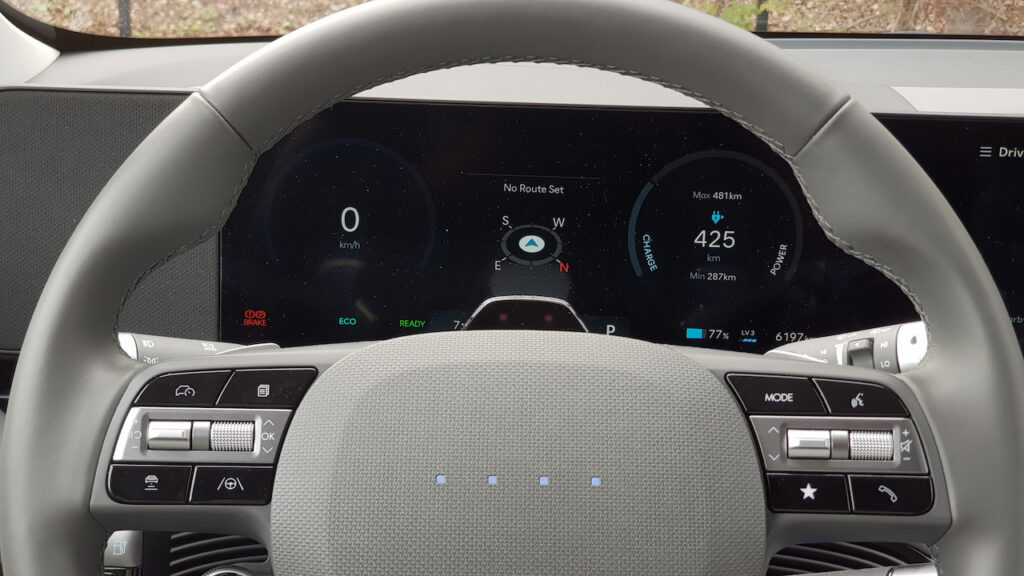
The driver display is easy to read, and I preferred the simple Style A theme because it keeps the information clean and easy to follow. The screen can also show power distribution, charge data, tire pressure, and drive information. The steering wheel buttons are configurable, and there is a head-up display with adjustable content.
The climate controls are easy enough in layout, but they are touch-based, so you still have to glance down to operate them. That is the main drawback. I also noticed that the range changes when you alter drive modes, fan speed, or temperature.
Moving from Normal to Sport reduces the projected range, and raising the climate temperature or fan speed also cuts into it noticeably. Hyundai includes a driver-only climate mode to help reduce range impact.
Cargo and practicality
The Ioniq 5 does include a frunk, though it is a small one. It is useful for charging cables and smaller items rather than larger cargo. In the rear, there is more practicality. The trunk floor is raised because of the battery packaging and the lower storage area, where the portable charger and tire mobility kit are stored.
With the rear seats up, the Ioniq 5 offers 27.2 cubic feet of cargo space, which is decent but only average for the segment. With the rear seats folded, that expands to 59.3 cubic feet. The floor is not stepped, though the folded seatbacks create a slight slope rather than a perfectly level extension. That still makes loading easy enough.
One practical drawback is that the rear seats cannot be dropped from the cargo area. You have to go to the side doors and release them from there, which would have been easier to do from the back. The trunk separator also creates another small annoyance because there is no dedicated place to store it when not in use.
Performance
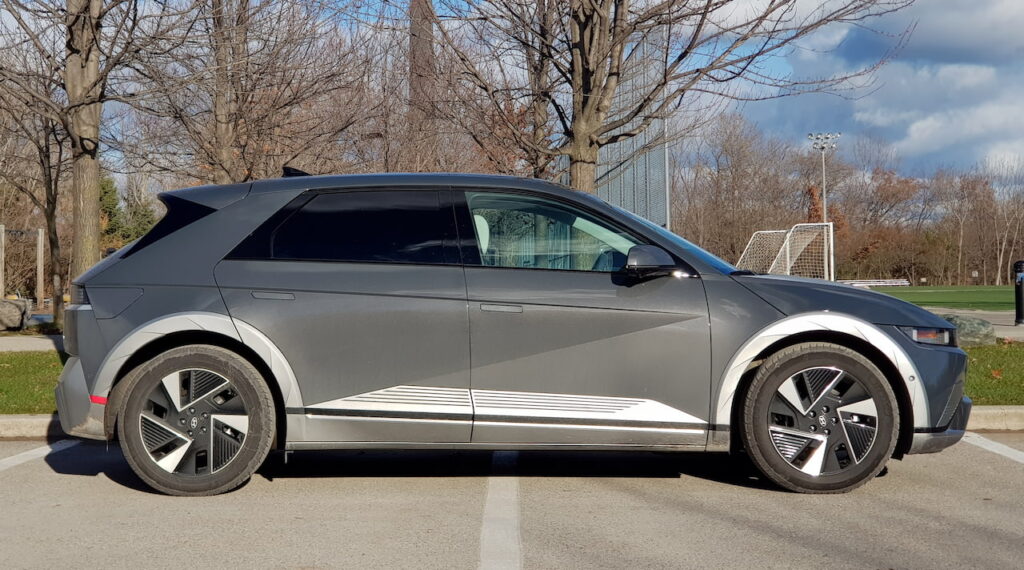
This Preferred Long Range AWD version uses two motors, one at each axle, with a total of 446 lb-ft of torque. The front motor produces about 100 horsepower and the rear produces about 221 horsepower. Hyundai pairs them with an 84 kWh battery pack, and the result is exactly what you would expect from a good EV. It feels quick, smooth, and instantly responsive.
In Eco mode it is already quick, and in Normal or Sport it becomes very lively. It puts you back in the seat the moment you lean into the accelerator.
Real-world range sits around 410-420 km (255-261 miles) in cold conditions, compared with the claimed 504 km (313 miles) in ideal weather. Given that the car was being tested in near-zero temperatures in Canada with different loads and a mix of driving conditions, that result still looks solid.
Highway efficiency hovers around 15.5 to 16 kWh per 100 km (62 miles), while day-to-day mixed driving sat closer to 18.5 to 19 kWh per 62 miles. Hyundai’s own claim is around 20.1, so the observed numbers were actually better.
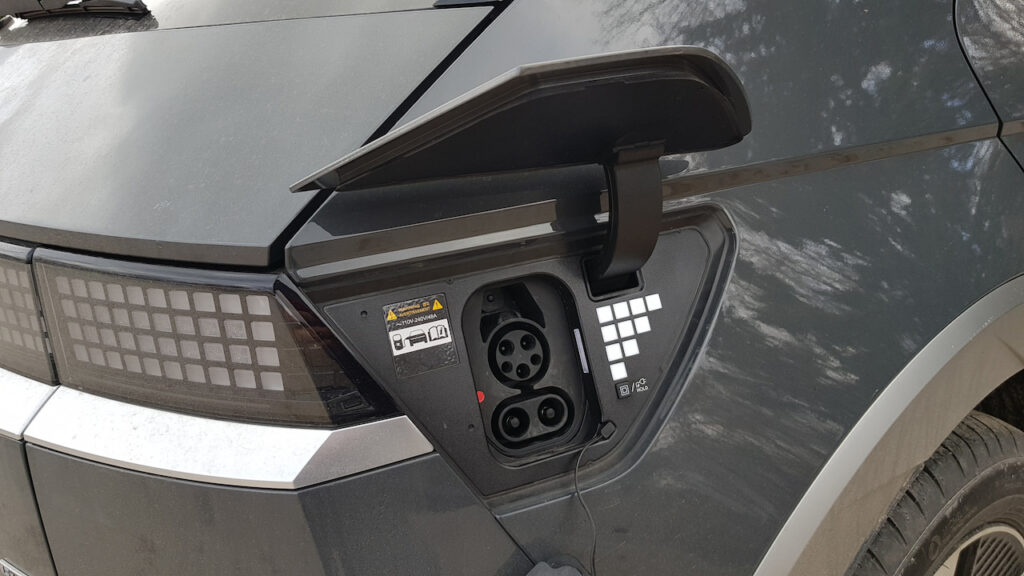
Charging remains one of the Ioniq 5’s biggest advantages. Thanks to its 800 V architecture, it can take up to 350 kW DC charging. Hyundai says 10 to 80 percent takes about 18 to 20 minutes on a 350 kW charger.
On a 50 kW charger, the same window takes about 73 minutes, and on a 240 V AC charger it takes about 5 hours and 40 minutes. Battery pre-conditioning is available through the infotainment system, which takes at least 30 minutes for it to be active, and uses some energy in the process.
In the U.S., the latest Ioniq 5 comes with a NACS port, giving it effortless access to Tesla Supercharging stations.
Ride, steering, and refinement
The Ioniq 5 rides well. The suspension is on the softer side, and it does a good job of hiding the weight of the battery pack. The chassis feels planted and stable, and I have to specifically note how well the suspension irons out bumps. It presents the car with a calm and comfortable feel in daily driving.
The steering is also a strong point in terms of feel. It is light in Eco and gains more resistance in Sport, with better feedback there as well. The main issue is the turning radius. It feels too large for a vehicle of this size, to the point that three-point turns in narrow spaces became more difficult than expected.
Braking is confidence-inspiring overall. The brake pedal has a slight dead zone at first, but once past that it becomes nicely progressive. In practice, though, the Ioniq 5 encourages you to rely on the i-Pedal one-pedal driving mode. I preferred that setup and found it easy to use once I got familiar with it.
Refinement is another high point. The Ioniq 5 is quiet, with double-glazed side glass and almost no tire noise. The one place where sound creeps through is the front glass, which lets in a slight amount of noise. The active sound design system is also present, but I preferred to keep it off because the cabin is generally calm without it.
Pricing
The Ioniq 5 (2026 model year) is priced (MSRP plus additional fees) at CAD 55,499 for the Preferred Long Range, and at CAD 57,499 for the Preferred Long Range AWD. In the U.S., prices (MSRP before taxes and fees) range between USD 35,000 and USD 45,075 for the 2026 model.
TopElectricSUV says
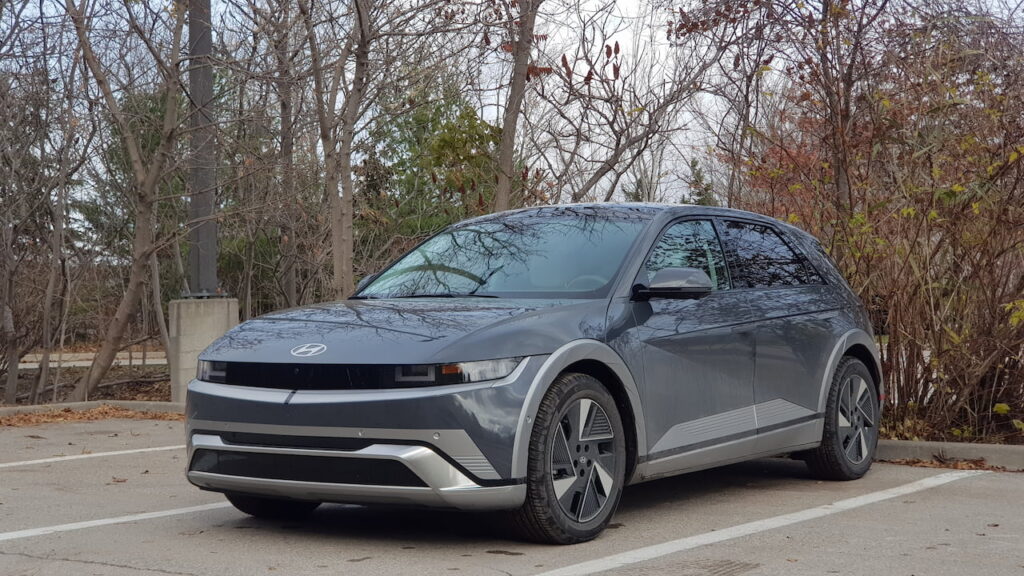
The Ioniq 5 makes a strong case for itself because it combines a unique design, everyday usability, fast charging, and real EV performance in a package that still feels easy to live with.
Its weaker points are smaller but still worth noting. The smart liftgate can be too eager, cargo space is only average for the class, the rear bench loses some under-thigh support, the climate controls still need your eyes because they are touch-based, and the turning radius is larger than it should be.
Even with those issues, it is easy to see why the Ioniq 5 remains one of the more convincing electric crossovers in this segment.

An automobile engineer by training, I’ve analyzed the global car market since 2005, with a keen focus on EVs since 2008. My journey in online automotive publishing spans 17 years, during which I have reviewed cutting-edge automotive technologies and interviewed leading global CEOs and vehicle developers.