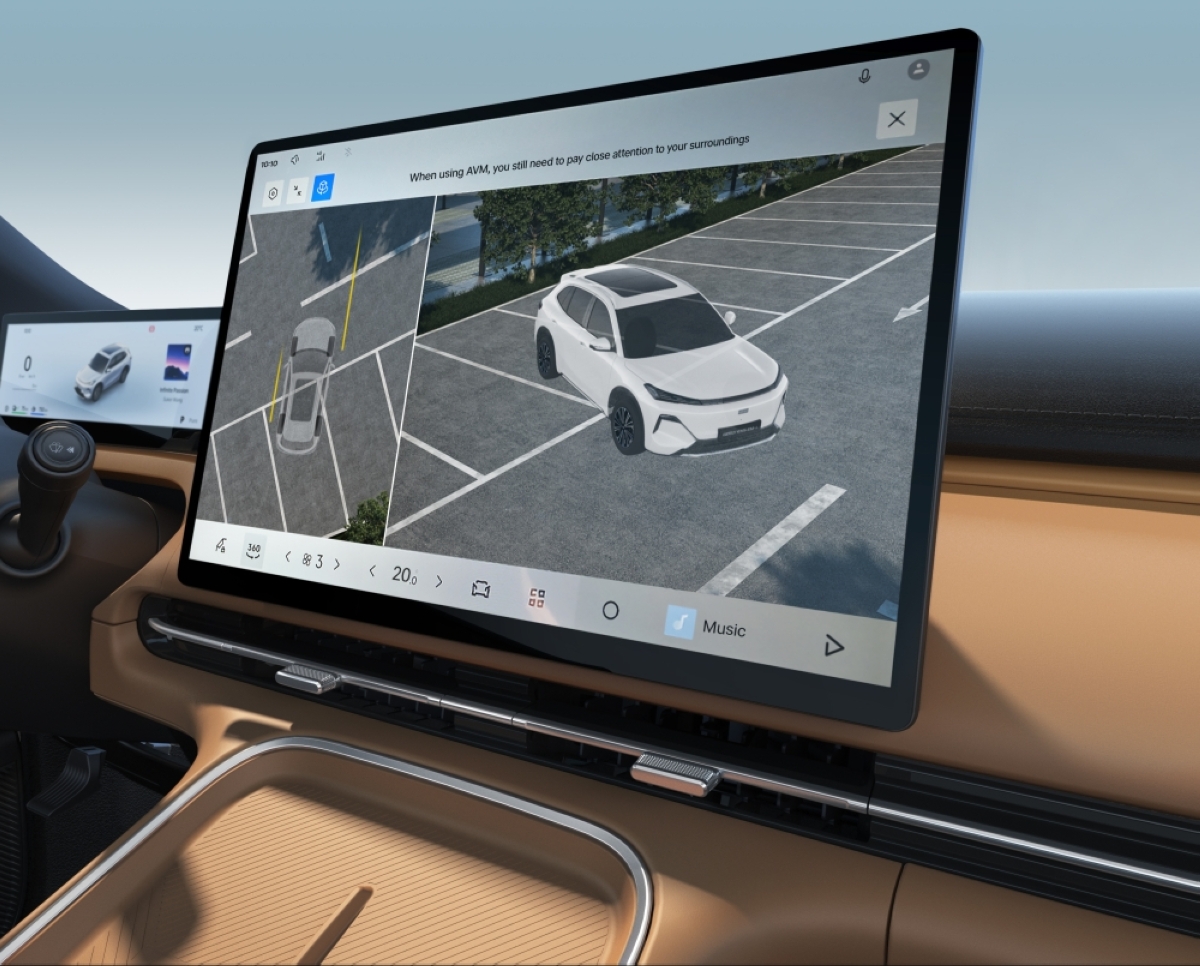

The 540-degree panoramic camera system provides a full view around the vehicle, including a simulated look beneath the chassis.
FOR years, the electrification conversation has revolved around one number: range.

The Geely EX5 EM-i represents the brand’s new generation of intelligent plug-in hybrid vehicles.

Flyme Sound’s multi-speaker audio system delivers an immersive listening experience throughout the cabin.
How far can an electric or electrified vehicle travel before needing to recharge or refuel? It remains an important metric, but as the electrified vehicle market matures, automakers are beginning to shift the conversation toward something else entirely — vehicle intelligence.
Chinese automaker Geely is among those trying to move the discussion forward, introducing a new generation of plug-in hybrid electric vehicles (PHEVs) built on a dedicated hybrid platform rather than the more common approach of adapting conventional internal combustion engine (ICE) vehicles.
Get the latest news
delivered to your inbox
Sign up for The Manila Times newsletters
By signing up with an email address, I acknowledge that I have read and agree to the Terms of Service and Privacy Policy.
The company’s latest systems are based on what it calls the Global Energy Architecture (GEA), a platform designed to integrate software, battery technology, and powertrain systems from the start rather than adding hybrid components to an existing gasoline-powered car.
The idea is simple: if hybrid technology is treated as a core design element instead of an afterthought, efficiency and performance can improve.
One of the key features of Geely’s new hybrid setup is an integrated powertrain module that combines multiple components into a single unit.
Dubbed the 11-in-1 intelligent drive unit, the system packages electric motors, transmission, cooling systems, and several control modules into one compact assembly. The approach is meant to reduce mechanical complexity and energy losses that typically occur when these components operate separately.
According to Geely, the result is a system that can reach efficiency levels of up to 92.5 percent, while also managing the transition between electric and gasoline power automatically depending on driving conditions.
In stop-and-go traffic, for example, the vehicle can rely more heavily on electric power, while gasoline assistance can kick in during sustained highway driving or when climbing steep roads.
As electrified vehicles become more common, battery safety is also receiving greater attention.
Geely’s latest hybrids use short blade battery cells, a design that aims to improve structural stability compared to traditional battery formats. The battery pack itself is integrated directly into the vehicle structure using Cell-to-Body (CTB) technology, which means the battery contributes to the overall rigidity of the car rather than sitting as a separate component.
Beyond structural reinforcement, the battery system has also undergone durability testing that includes exposure to extreme conditions such as water immersion — an increasingly relevant scenario in flood-prone regions.
Intelligence in modern vehicles increasingly means advanced driver assistance systems, and Geely’s new hybrids come equipped with a comprehensive sensor suite designed to monitor the vehicle’s surroundings.
Using as many as 31 sensors, the system creates a 360-degree safety zone around the vehicle.
Features such as autonomous emergency braking (AEB), lane keep assist, and a 540-degree “transparent chassis” view aim to improve situational awareness for the driver. The transparent chassis function allows drivers to see a simulated view beneath the vehicle — useful when navigating tight parking spaces or uneven road surfaces.
Inside the cabin, the focus shifts toward connectivity and comfort.
The system runs on Flyme Auto OS, Geely’s infotainment platform designed to deliver smartphone-like responsiveness. A large 15.4-inch display anchors the dashboard, while a 16-speaker sound system — including speakers integrated into the headrests — aims to create a more immersive in-car audio experience.
Seat technology also receives attention, with multilayer seat construction offering ventilation and massage functions — features increasingly common in vehicles positioned as daily commuting spaces rather than simply transportation.
Many of the plug-in hybrids currently on the road are essentially gasoline vehicles modified to include electric assistance.
Geely’s approach reflects a broader industry shift toward purpose-built hybrid platforms, where electrification, software integration, and energy management are part of the vehicle’s architecture from the beginning.