A 10-year or 160,000-kilometre powertrain warranty, proven reliability, and an all-wheel-drive system well suited to Quebec’s climate are among the main reasons why we recommend most vehicles in Mitsubishi’s lineup.
On the other hand, the brand’s catalogue is tired, doesn’t use the latest in terms of tech, and lacks excitement to attract new buyers. It is essentially carried by the Outlander compact SUV, whose PHEV variant is particularly popular.
Read also
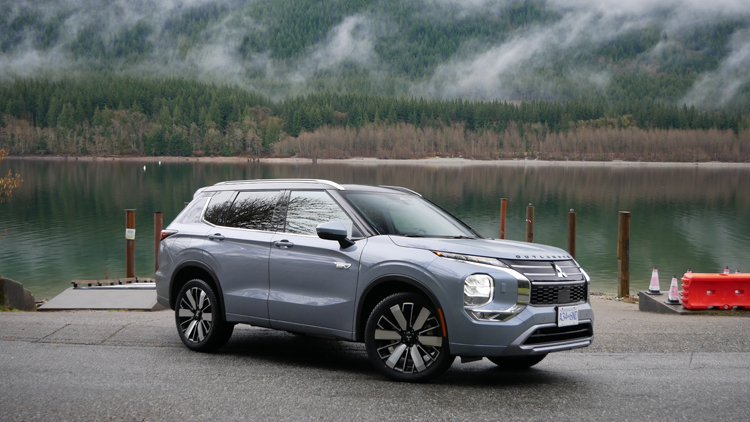
The Car Guide travelled to Vancouver, British Columbia, to test drive the 2026 Mitsubishi Outlander PHEV, which has received minor aesthetic and technical updates, including a new high-voltage battery.
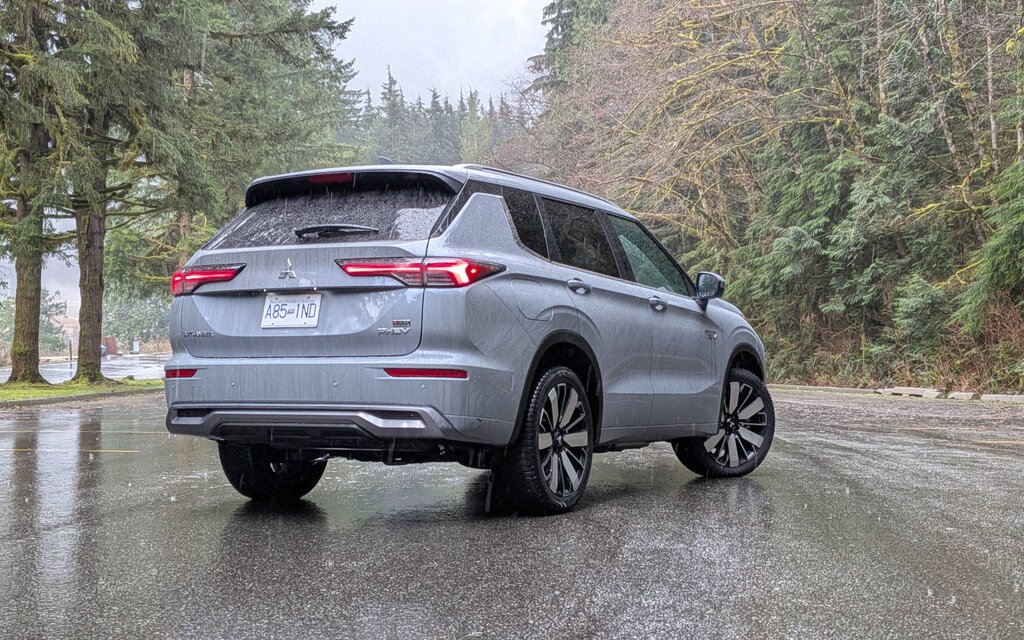 Photo: Louis-Philippe Dubé
A look that doesn’t reinvent itself
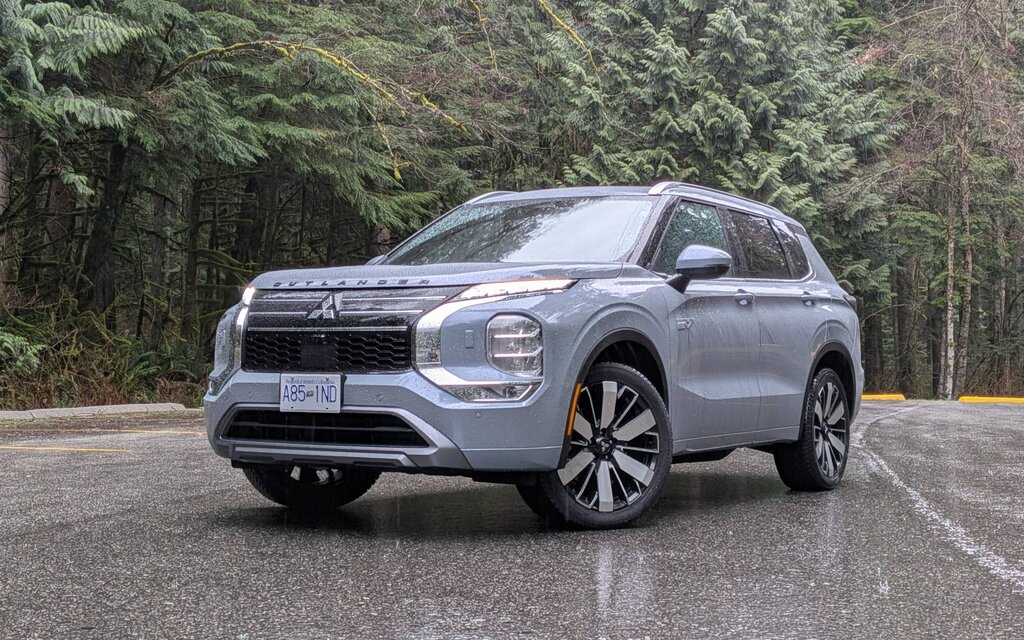
Although most of the 2026 Mitsubishi Outlander PHEV’s exterior design remains unchanged, a closer inspection reveals a slightly revised lower bumper, grille, and rear lights.
This philosophy carries over to the interior, where improvements mainly concern the screens, with a 12.3-inch display featuring a refreshed interface and standard wireless Apple CarPlay and Android Auto. While not perfect, the Outlander’s infotainment system holds up fairly well, especially thanks to physical controls that complement it when needed.
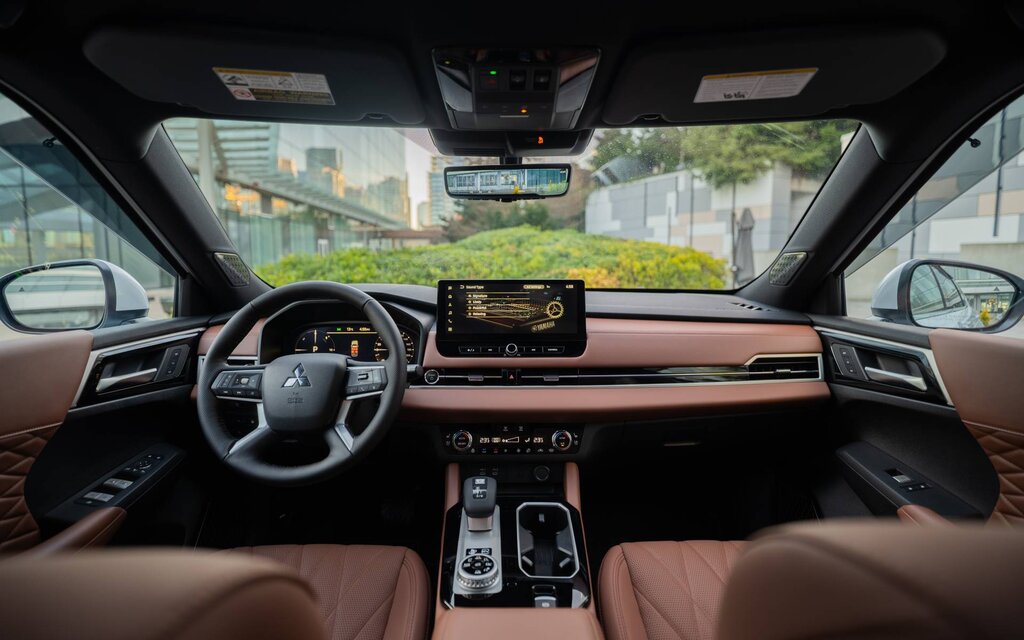 Photo: Mitsubishi
The seat covers get new colour combinations for 2026, and the vehicle retains its unique feature of offering a third row of seats accommodating up to seven passengers. While comfort and space are ample in the first two rows, the third remains cramped. It’s worth noting that ventilated front seats are now available as an option. On the audio side, the Outlander PHEV offers a choice of two Yamaha sound systems, and its cabin has received additional sound insulation for 2026.
Modernized battery technology
The highlight of this mid-cycle update is the adoption of a 22.7 kWh battery replacing the previous 20 kWh unit. This adds 11 kilometres of electric-only range, for a total of 72 km under ideal conditions. The battery incorporates recent design advancements, such as more compact prismatic cells, improved cooling, and reduced resistance. During our mixed driving test, we travelled about 63 kilometres in full electric mode in cool, rainy weather.
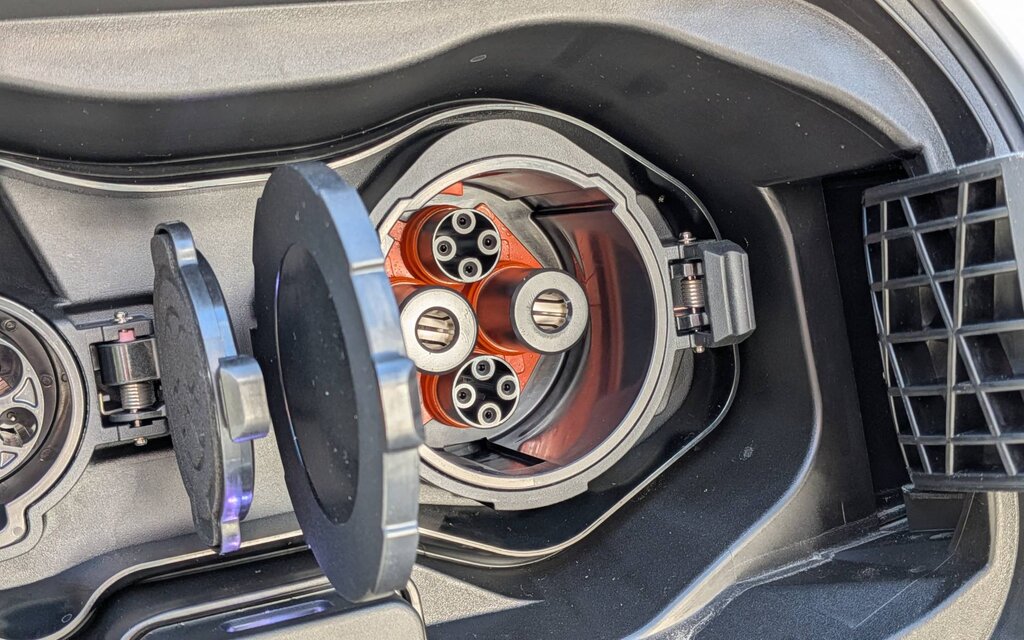 Photo: Louis-Philippe Dubé
In addition to its J1772 charging port for Level 1 and Level 2 charging, the Mitsubishi Outlander PHEV has retained its CHAdeMO fast-charging port. Although this technology is becoming outdated in our market, it can still be useful in a pinch, allowing a rapid charge in just 29 minutes compared with 6.5 hours using the standard J1772 port.
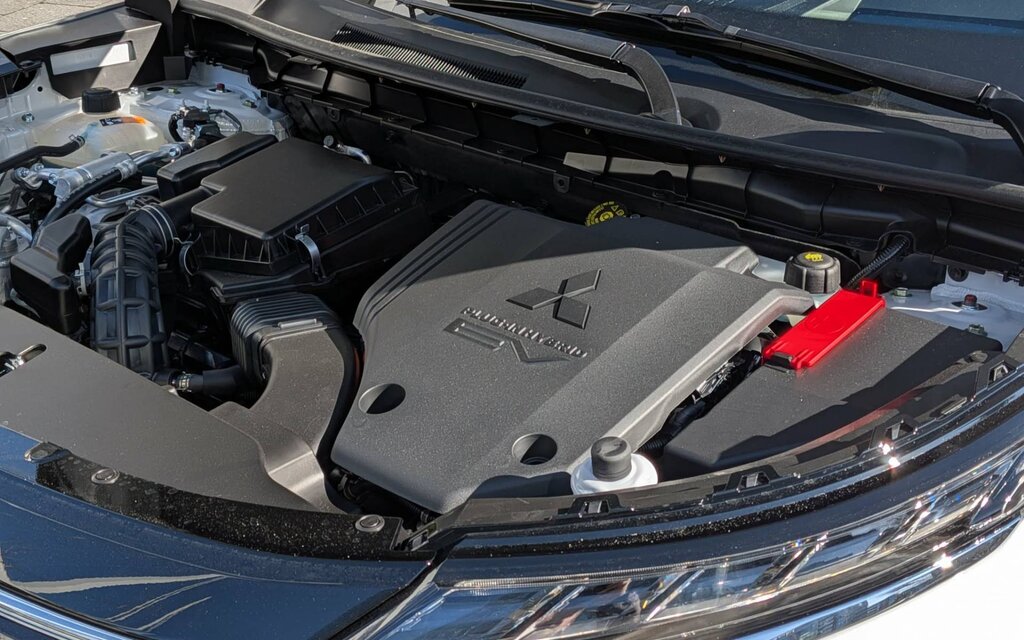
As for the rest of the powertrain, the 2.4-litre naturally aspirated four-cylinder engine paired with two electric motors remains unchanged, but it now outputs 297 horsepower. Once the battery was fully depleted, our observed average consumption during the test was 8.6 L/100 km. It’s not peak efficiency, but it still represents an improvement over the outgoing model, which could frequently exceed 9 L/100 km. This was one of the main sticking points of the Outlander PHEV.
Is the driving experience different?
The Mitsubishi Outlander PHEV delivers the same great level of comfort as the outgoing model, even though it has received suspension and steering calibrations. It’s far from sporty, but it can still rely on its formidable S-AWC all-wheel-drive system when weather conditions deteriorate, providing increased control and driver confidence.
The Outlander also seems to allow the electric motor to operate longer during acceleration compared with the previous model. This not only cuts just over a second from its 0–100 km/h time, but also results in a smoother and quieter driving experience. The added cabin sound insulation certainly helps, but there is clearly a mechanical improvement contributing to greater cabin quietness.
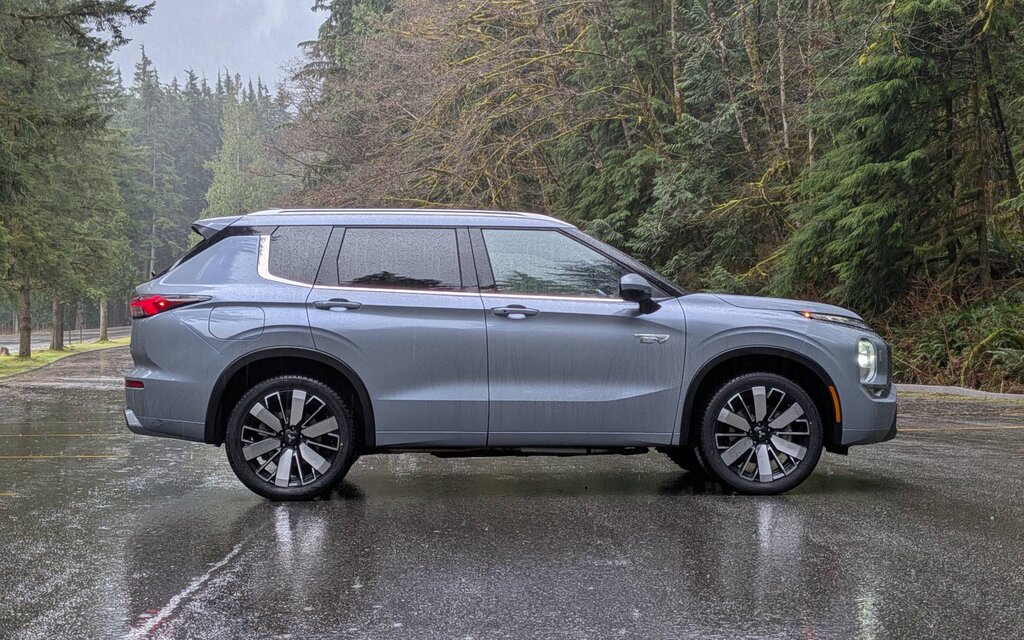 Photo: Louis-Philippe Dubé
It’s always best to plug it in…
A recent study—the largest of its kind—conducted last month showed that plug-in hybrid vehicles can be more polluting than people think. Not because the technology is inefficient, but because owners rarely plug them in. As a result, they burn far more gasoline in real-world use than the figures advertised by manufacturers and government agencies, since they are often driven like conventional gasoline vehicles carrying around a battery and one or more electric motors.
On the other hand, if a plug-in hybrid like the Outlander PHEV, capable of providing 60 to 70 kilometres of electric range, is charged daily, it can go months without consuming a drop of gasoline. All of this while offering safe (though not thrilling) driving, commendable versatility, and solid build quality.
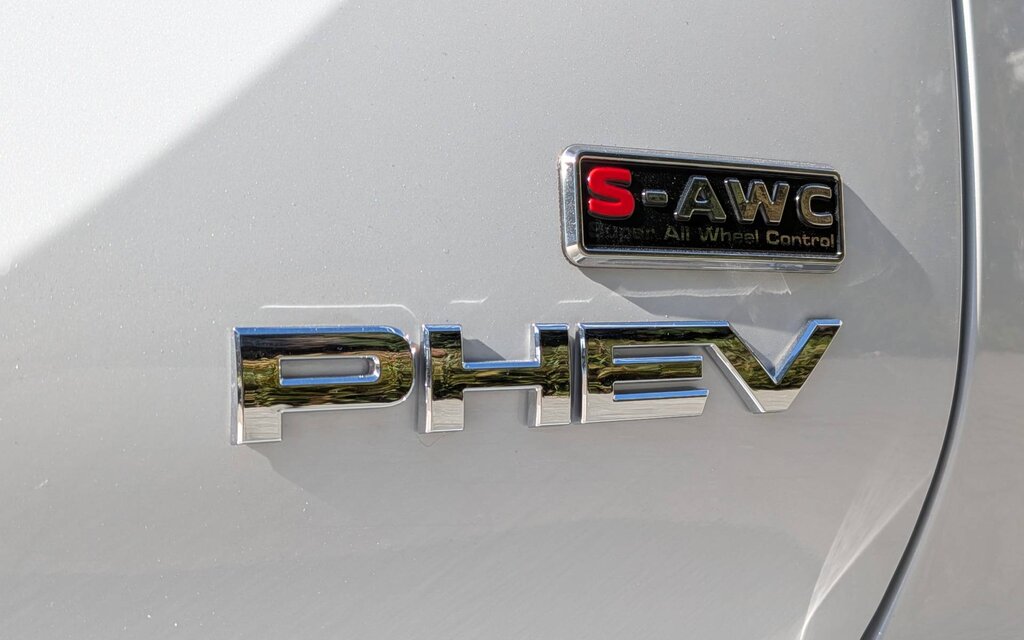 Photo: Louis-Philippe Dubé
In the end, the 2026 Outlander PHEV brings key improvements addressing previous criticisms. It’s a good purchase, though it doesn’t revolutionize its segment, which is evolving very quickly. Once again, we should highlight the attractive 10-year or 160,000-kilometre powertrain warranty, which also covers the high-voltage battery. The 2026 Outlander PHEV is now available at dealerships.