Canadian Prime Minister Mark Carney is set to announce a new system of fuel-efficiency standards for cars and trucks, replacing an electric vehicle mandate that was hated by the auto industry.
The system will be part of a new automotive strategy set to be unveiled by Carney and Industry Minister Melanie Joly on Thursday, according to a government official, speaking on condition they not be identified.
The plan also aims to keep auto manufacturing jobs by providing better market access to companies that build vehicles in the country, Bloomberg has previously reported. Thousands of Canadian autoworkers have lost their jobs or been kept on layoff since US President Donald Trump put tariffs on foreign autos. General Motors Co. has cut production in Canada, while Chrysler parent Stellantis NV reversed a decision to restart a factory near Toronto.
The electric vehicle rules required carmakers to ensure that at least 20% of sales were zero-emission vehicles in the near term. The idea was that by 2035, all new light-duty vehicles sold in the country would be electric.
Auto manufacturers fought the rules, arguing the targets were unachievable, costly and would result in higher prices and reduced choice for consumers. In September, Carney promised to review them.
The long-term viability of the country’s automotive sector has come into question, as the White House seeks to increase the number of US auto-assembly jobs – and the president himself has said his administration doesn’t want imported cars from Canada.
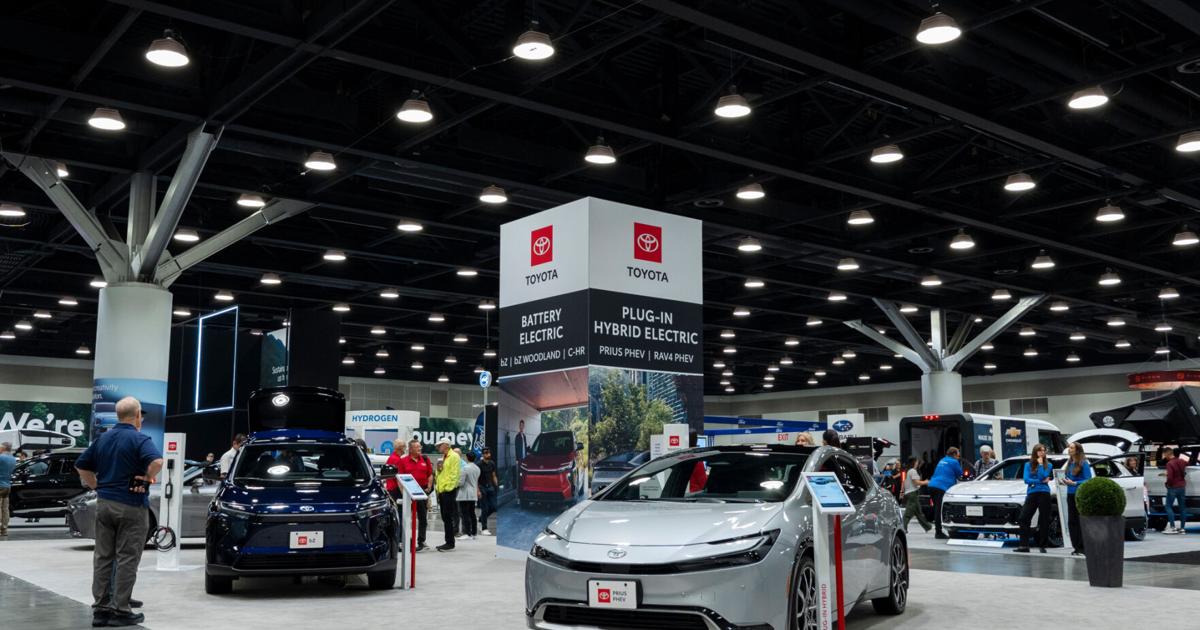
The government’s auto plan strives to help the industry pivot from US automakers, including GM, Stellantis and Ford Motor Co., which have scaled back their investments since US tariffs came into place. They’ve also been declining for years as a share of Canadian auto production. Last year, 77% of the vehicles made in Canada were manufactured by Honda Motor Co. and Toyota Motor Corp., according to calculations by the Trillium Network for Advanced Manufacturing.
Carney’s government is also expected to bring back incentives for consumers who purchase EVs. The incentives will be comparable to the ones provided under the zero-emission vehicles program, which offered consumers a rebate of as much as C$5,000 ($3,660) but expired about a year ago, according to the official. The news was first reported by the Canadian Broadcasting Corp.
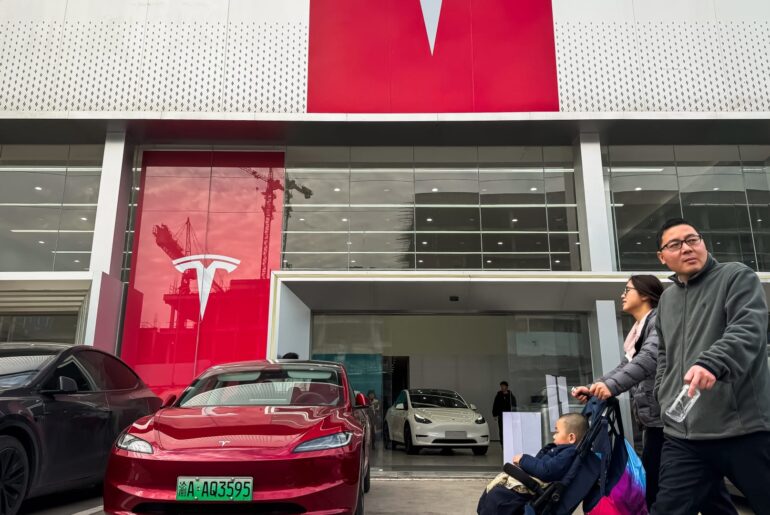
Carney recently said the government is open to Chinese companies assembling vehicles in Canada for the first time. That would be under restrictions that might include using Canadian software and creating joint ventures with domestic firms, another government official told Bloomberg News last month.
Carney struck a deal with China in January to allow Chinese automakers to export 49,000 EVs to Canada at a reduced 6.1% tariff rate.