
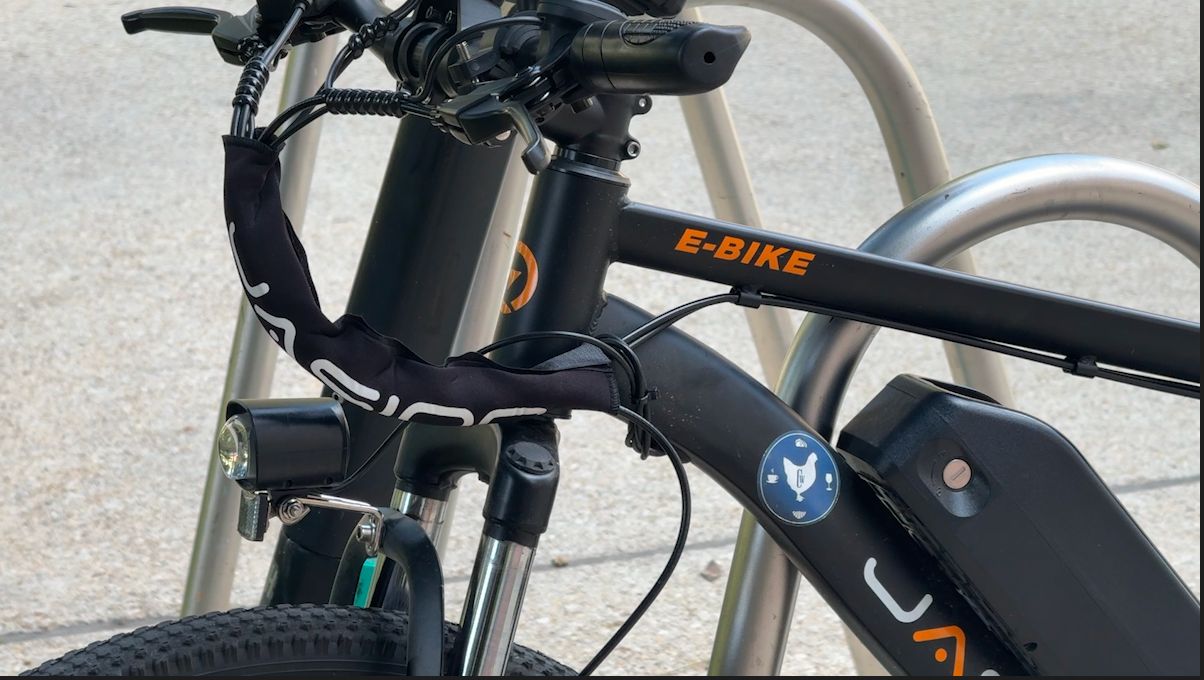
TEXAS — Last year, the City of San Antonio started an e-bike pilot program. Many participants said it has been life-changing for them and the environment.
Patricia Fennell, who goes by Miss Patty, lives in downtown San Antonio without a car.
“I do ride Lyft a lot,” Fennell said. “I do ride the bus a lot. Sometimes, when you’re riding the bus, you always got to remember, every stop is not close by where you need to go.”
She said her neighbor encouraged her to apply for the city’s e-bike rebate program, which gives those selected a $1,000 voucher to purchase an electric bike.
“First time I didn’t get picked, but the second round I did,” Fennell said. “I was so glad of it and really appreciative of it.”
In March 2025, San Antonio’s Department of Resilience and Sustainability launched the e-bike pilot program, increasing mobility options for some low-income residents.
“We received a grant from the Department of Energy, through the Energy Efficiency and Conservation Block Grant,” said Laura Patino, director of San Antonio’s Department of Resilience and Sustainability.
Patino said over two application cycles, more than 4,500 residents have applied.
“Findings from the first phase is that it really is improving in providing additional accessibility for folks,” Patino said. “Even improving the last mile solution from public transit.”
Although many were interested, just 425 people were selected to get bike vouchers — only paying sales tax out of pocket.
“(Ages) 18 to 65, with most people applying around that 40-year-old age group,” said Ricardo Ambriz, sustainable transportation manager. “So surprisingly, 40-year-olds are applying the most for this program.”
Patino said through the e-bike program, they’ve been able to reduce 2,000 pounds of greenhouse gas emissions so far.
“We’re not just reducing emissions. We’re also providing alternative modes of transport,” Patino said. “And at the same time, it’s also an opportunity for folks to get outside and exercise.”
Data from more than a thousand e-bike trips show riders are using these bikes for faster commutes.
“The average e-bike trip is about three miles,” Ambriz said. “So, people are using it to replace short car trips or where it’s just a little too far to walk comfortably, especially in the heat.”
While the city faces a projected $158 million budget deficit, the Department of Resilience and Sustainability is looking at federal, state, and private funding to keep the e-bike program going.
“Really addressing what our community needs are through one program,” Patino said.
After recovering from back surgery, Miss Patty plans to get active.
“Start riding it to church,” Fennell said. “Aug. 14, I got released from the doctor. He said, ‘Go full speed ahead, but make sure you wear your helmet so you don’t have to come back and see me.’”