
LANSING, Mich. — The debate over China’s role in manufacturing is heating up this week following an exchange between the U.S. Secretary of Transportation and Ford Motor Company.
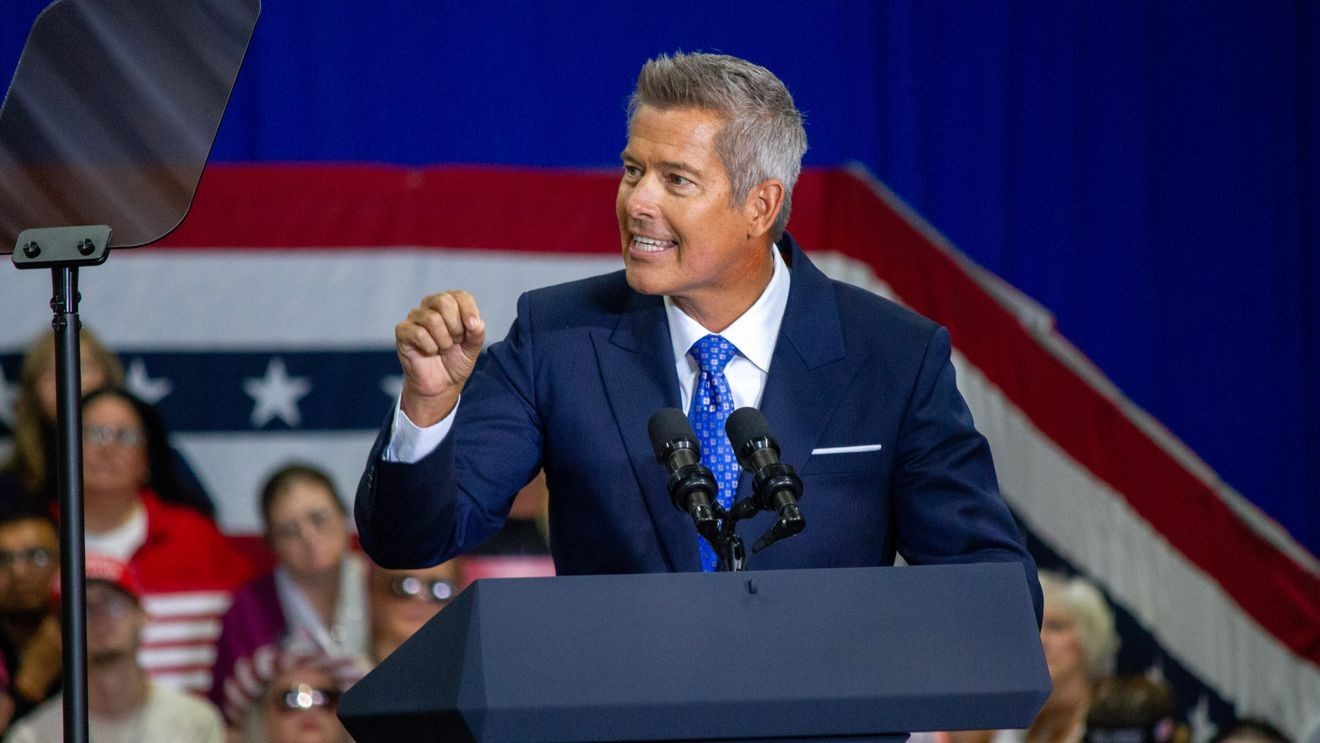
In a letter, Secretary Sean Duffy told Ford CEO Jim Farley that American workers are suffering as the automaker continues to work with China.
Duffy pointed to three different actions by the automaker, including its continued use of licensed technology from Chinese battery manufacturer CATL at the BlueOval Battery Park Facility in Marshall.
Duffy also criticized what he said was Ford’s partnership with China’s Geely Auto to jointly manufacture vehicles in Spain.
A decision to delay the return of U.S. manufacturing of some Lincoln models until 2030 is also an issue, according to Duffy.
“When a company intentionally chooses to deepen operational dependencies on strategic competitors, it fails to act as the reliable partner the American public and this [Department of Transportation] require,” Duffy wrote.
The secretary also said American companies are expected to out-innovate competitors, but experts believe that’s easier said than done.
China has already taken the lead in the production of electric vehicle technology.
“If you want to build electric cars, you’re going to have to access the technology the Chinese have,” Dr. Steven Melnyk, professor emeritus of supply chain and operations management at Michigan State University, said. “If you want have batteries, you are going to have access the processing capabilities, and those are things which are not easy to duplicate.”
Ford responded, criticizing Duffy’s effort.
“Secretary Duffy’s letter is a wrongheaded attempt to capture headlines at the expense of a company that has done more for American manufacturing than virtually any other in the nation’s history,” the automaker said in a statement.
Ford maintains it’s the most American automaker.
“We produce more vehicles in the U.S., employ more hourly manufacturing workers and export more vehicles from the U.S. than any other automaker,” the company said. “While our crosstown rivals and foreign-based competitors increasingly rely on importing foreign-made vehicles from Japan, Mexico and Korea, Ford is doubling down on America.”
The automaker said they both own and operate BlueOval Battery Park in Marshall, which represents billions of dollars in investment and approximately 1,700 American jobs.
“It is producing batteries in Michigan, with American workers, for Ford vehicles also built in America,” Ford said.
Ford said the letter contained factual errors, maintaining it has not proposed a joint-venture framework in Spain.
“The letter’s claims regarding Lincoln are equally misguided,” the automaker said. “Ford is working productively with officials across the administration on trade, emissions standards and bringing manufacturing home, including a commitment to increase Lincoln production for U.S. customers.”
U.S. companies are driven by measurable, short-term gain for investors, Melnyk said, and that doesn’t necessarily incentivize innovation, especially since the demand for electric vehicles is much smaller than traditional vehicles.
“If you bet on the wrong technology, you’re going to be lost because by the time you figure out that you’ve been on the wrong technology, the new technology has come in and you’ve invested in the wrong technology and then you’ve got to reinvest, and the Chinese are moving quickly,” Melnyk said.
He also notes the U.S. lacks the needed raw materials and production bandwidth, and while a country like Canada does, current trade policy hampers cooperation.
“They have an integrated supply chain, so integrated that a lot of parts cross the border about eight times, and with the current tariff structure that’s being proposed, every time it crosses the border, it gets tariffed,” Melnyk said.
Ford’s standing with the Trump administration appears good, despite Duffy’s letter.
A day after it was released, the White House rapid response X account called it a great American company that “has done a tremendous job on increasing investments domestically and shoring production back to the U.S.”