
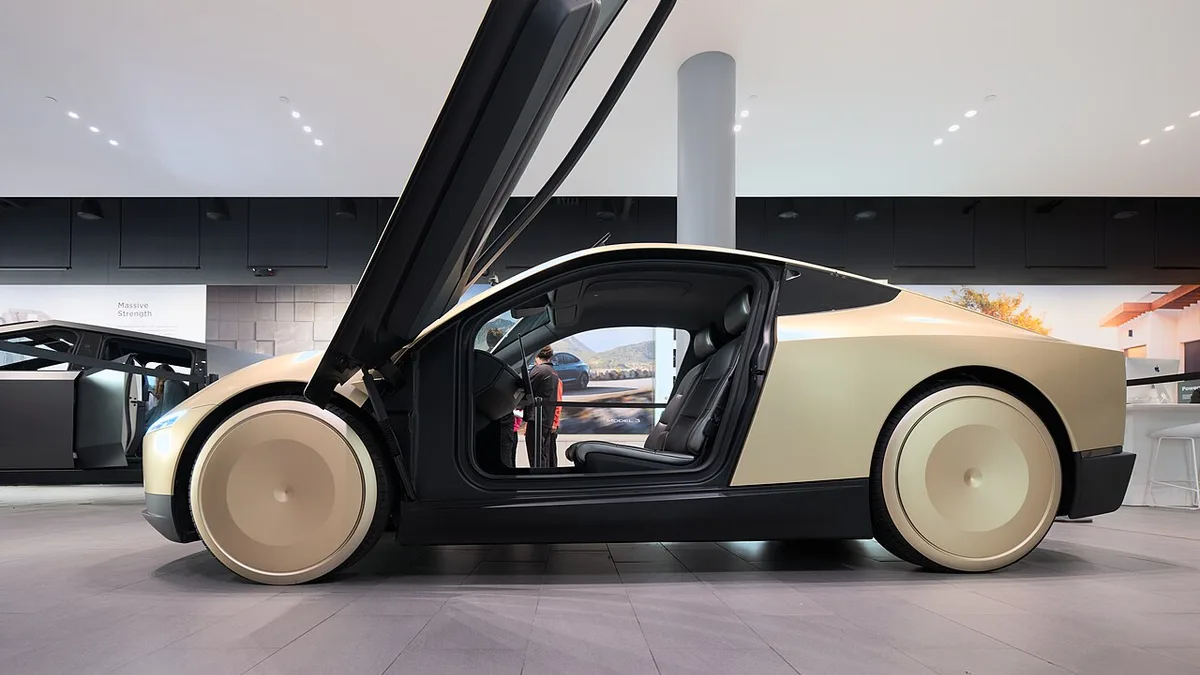
Tesla itself is not promising a quick climb to the approved maximum. That much was made clear at the regulatory hearing by Eric Earley, chief engineer of Tesla’s Cybercab:
Five thousand has always been the ceiling for us. I don’t think that by this time next year we’ll be in a position to deploy 5,000 vehicles.
How many vehicles Tesla actually puts on the road, the company says, will depend mainly on how fast it progresses with the new version of its self-driving software, known as FSD v15, which Tesla executives describe as a precondition for expanding robotaxi service beyond the cities where it has already launched. By comparison, Zoox has operated in Nevada since 2025 and held a permit for just 100 vehicles before Thursday, while Tesla’s new ceiling of 5,000 sits far above the number of vehicles any operator in the state is currently actually driving.
The decision drew opposition from the Livery Operators Association, a trade group representing commercial drivers. Its representative, Kimberly Maxson Rushton, told the commission:
These applications raise two serious concerns. One has to do with oversaturation in the commercial transportation industry.
The second concern, she said, involves congestion on the roads in the part of the city where most autonomous vehicle testing has taken place so far, between the airport and the Las Vegas Boulevard corridor.
An approved vehicle count is not the same as the number of vehicles that will actually show up on the street, and Tesla itself makes no such claim. The permit also leaves unresolved the questions the Livery Operators Association raised before the commission, about market saturation and the strain on traffic in the parts of the city where testing has been heaviest. How many of the roughly 8,000 approved vehicles in Clark County will actually be carrying passengers over the next year, and on what timeline, remains an open question that hinges on how fast manufacturers actually scale up their fleets, not on the ceiling the regulator wrote into the permit.