

Rick Vosper has been in the bike industry since the 1980s, serving in marketing and communications roles for some of the biggest brands in the business. His company, RVMS, provides creative services to consumer products and outdoor companies, and he’s a regular contributor to Bicycle Retailer and Industry News.
What was your first job in the bike industry? How did you land that job?
Is cycling now, or has it ever been, a growth industry? What are the main participation drivers?
For bike brands, how realistic is it to grow overall participation vs. market share?
Why are mountain bikes so expensive? Is anyone getting rich by selling bikes?
What do you make of Chinese brands like Avinox and X-LAB entering the US market? Is vertical integration a threat to existing bike brands?
Is the local bike shop doomed? What is working for the more successful bike shops?
Between brands, retailers, and consumers, who wields the most power in the bike industry?
Is it that some US bike brands are seeing 50% or more of their sales going to e-bikes?
It seems like the US e-bike classification system was meant to avoid confusion, but now we’re seeing problems around the country involving the sale and use of e-motos. What went wrong?
Now that a lot of the volatility in the supply chain has settled down, what opportunities do you see for bike and component brands going forward?
What advice would you offer a young professional considering a job in the outdoor industry?
Keep up with the latest bike industry analysis from Rick at Bicycle Retailer.
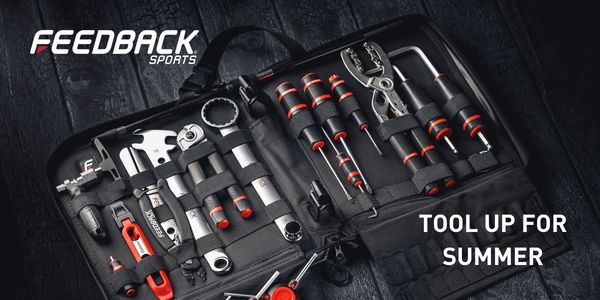
This episode of the podcast is brought to you by Feedback Sports.
If you love your bike, you know that regular maintenance is the key to a smoother, faster, and safer ride. But a good wrenching session starts with the right setup. Enter the Feedback Sports Pro Mechanic and Sprint repair stands. Trusted by World Tour mechanics and home hobbyists alike, these lightweight, anodized aluminum stands are ultra-stable, highly portable, and fold down in seconds.
Whether you’re chasing down a tricky drivetrain click in your garage or dialing in your shifting at the trailhead, Feedback Sports gives you shop-quality precision wherever you are. Pair their award-winning stands with their professional-grade tool kits—like the Reflex Fixed Torque Ratchet Kit—and you have everything you need to keep your rig running flawlessly. Stop wrestling with your bike upside down on the grass. Elevate your maintenance game and give your bike the care it deserves.
Head over to feedbacksports.com today to check out their full lineup of repair stands and precision tools.
Never Miss an Episode
Support this Podcast
Automated transcript
Jeff Barber 0:00
Hey everybody, welcome to the Singletracks podcast. My name is Jeff, and today my guest is Rick Vosper. Rick has been in the bike industry since the 1980s, serving in marketing and communications roles for some of the biggest brands in the business. His company, RVMS, provides creative services to consumer products and outdoor companies, and he’s a regular contributor to Bicycle Retailer and Industry News (BRAIN). Thanks for joining me, Rick.
Rick Vosper 0:28
Well, thank you for having me. It’s good to be here.
Jeff Barber 0:31
So, take us back to the beginning. What was your first job in the bike industry, and how did you land that job?
Rick Vosper 0:38
It’s kind of a downturn. I had just finished a graduate degree in musical theory, and I wanted to get married. I figured I needed a real job, as opposed to teaching trumpet and flute to kids three days a week, so I answered an ad in the paper, which said, and I quote, “warehousemen wanted some knowledge of bicycles helpful.”
So I rode my bike down to the interview, and the interviewer turned out to be Mike Synyard of Specialized Bicycles.
Jeff Barber 1:18
Oh, wow.
Rick Vosper 1:19
I got a job working in the warehouse for $3 an hour. This was June of 1980, remember. After I left that I worked for other bicycle companies for a while, and eventually got a job as an advertising copywriter for Silicon Valley companies. This becomes important because I took what I learned there and began to apply it to bike companies. So, in 1998, Mike Synyard called me and asked me to come back and work for him, so I did, and what eventually became the director of marketing for Specialized.
Jeff Barber 2:01
Wow. It sounds like you first got into the industry because you were looking for a real job. Did it turn into a real job? Is working in the bike industry a real job? Would you classify it as such?
Rick Vosper 2:13
It certainly feels like it. So, yes, the hours are long and the work is hard, and there’s a lot of weekends involved.
Jeff Barber 2:20
Yeah, but at the same time, a lot of people do want to get into it, and, and these days it seems like people are willing to take a pay cut in some cases, just because it’s what they love to do, and, and that sort of thing. Do you see that in the bike industry today?
Rick Vosper 2:37
Absolutely, I did an interview a couple of years ago with a recruiter who specializes in the outdoor industry, and he told me that there is a 30 to 50% pay cut associated if you’re a mid-level management person, there’s that kind of pay cut associated with coming into the bicycle industry, but if that’s your passion, there are positions available, despite the fact that we’ve had downturns and layoffs. The usual path is to start in a bike shop, which pays really poorly, right, and then to move over to the supplier side of the industry, when the opportunity affords itself.
Jeff Barber 3:24
Yeah, interesting. Well, I mean, you’ve worked in Silicon Valley for tech companies, it sounds like, so outside the bike industry, and tech, obviously, is known as like a high-growth industry. There’s obviously a lot of money and investment, cycling not so much, so is cycling now, or has it ever been sort of a growth industry, like tech, or some other industries people are familiar with?
Rick Vosper 3:51
The bike industry goes through booms and busts. If you go back far enough, those of you who are my age will remember the bike boom of the 1960s and early 1970s I grew up. I was in high school during that boom. There was a mountain bike boom in the early 1980s There was a road bike boom in the early 1990s These both just lasted a couple of years, but essentially the bicycle industry has been flat since 2000 which is as far back as my records go.
Jeff Barber 4:26
Wow, yeah, that’s a long time. So, there hasn’t really been a boom. I mean, people kind of think there was this like COVID boom in cycling, but, since 2000 it sounds like we really haven’t grown a ton.
Rick Vosper 4:42
Covid was a perfect wave of a bunch of things happening. The first, obviously, was a lot of people wanted to get outside and do something, and riding bikes was the perfect solution. The other problem was in 2019, the industry ended the year with the lowest levels of inventory seen since at least the 1990s which is as long as people for bikes has been tracking inventory levels.
Jeff Barber 5:12
Wow, and this was pre-COVID. I mean, like, this is before people actually started buying all those bikes, so going into COVID, we had the lowest inventory. Wow.
Rick Vosper 5:23
So lots of people wanted bikes. There weren’t a lot of bikes. The industry horribly over-ordered and over-committed for years’ worth of bikes and components, and we are now on the downside of that curve, finally selling through a lot of the distressed inventory, so advice to consumers is, if you’re still seeing big discounts on bikes and you want to buy, take advantage of it, because they won’t last.
Jeff Barber 5:53
Yeah, for sure. Yeah, it seems like people, some people, maybe are still waiting to see, they think these prices are going to stay, or they’re going to go down further, but yeah, seeing what we’re seeing is that a lot of these discounts are finally disappearing. New bikes are coming out, and they’re full retail price, and so yeah, get those deals while you can.
Rick Vosper 6:14
And the retail prices have gone up partially because of tariffs.
Jeff Barber 6:19
So you mentioned that there’s been these booms, like in previous eras, the 60s and 70s, and then 80s, 90s. What are kind of the drivers of these booms, and like, what gets people participating at higher levels, maybe than they were previously?
Rick Vosper 6:38
Well, the drivers for the boom has always been major product innovation. In the bike boom of the 70s, it was drop bar 10 speeds. In the mountain bike boom of the 1980s it was mountain bikes. In the 1990s it was Lance Armstrong winning the Tour de France, and lots of Americans going on buying road bikes.
Jeff Barber 7:00
Even since then, we’ve seen other categories. You mentioned mountain bikes as being a driver in the 80s, you know, in the 2000s maybe the 2010s is when gravel became a category, but I guess we’re not seeing that necessarily drive participation overall, or e-bikes, or it seems like there’s a lot of new stuff, but maybe is it not moving the needle the same way that previous product innovations have?
Rick Vosper 7:27
According to numbers from both the National Sporting Goods Agency and People for Bikes, people riding bikes who started riding during the COVID era are still riding, they’re just not buying new bikes.
So the numbers are up, and the people who are boosting the numbers are first-time riders or returning riders.
In my opinion, the industry is not doing a good job of addressing that market, and it really needs to do something about that if they wanted to continue to exist as an industry.
Jeff Barber 8:05
Yeah, yeah. Well, I’m curious about that, like with your clients, the people you consult with, or do you recommend that they look at growing sort of overall participation? Like, is it up to individual brands to try to get people who have not biked before, or maybe are new bikers to bike, or or is it safer to just kind of go after market share, and and talk to the people that are already buying bikes?
Rick Vosper 8:33
Well, it’s a funny thing, Jeff, the big bike brands, the big four, what I call the quadrumvirate, which is, as you might expect, Trek, Specialized, Giant, and Cannondale/Pon bikes, in that order, are almost exclusively concerned with trying to take market share away from each other. They’ve not been successful at this that I’ve been able to measure at all, and you sort of have to wonder where the next generation of customers is coming from, so the responsibility for reaching out to beginning and returning riders has fallen on People for Bikes, the big industry organization that is primarily concerned with building infrastructure on the on the idea that if you build places for people to ride bikes where they feel safe, they’re going to come in. There’s a certain amount of evidence to support this, it comes a little bit from second-tier bike brands like SE Racing, has a big outreach program to begin kids for BMX.
It comes from bike shops doing beginning rider clinics. And training sessions and rides, and it comes overwhelmingly from citizen groups who have fantastic programs all over the country for first time riders. I am advocating for the industry as a whole to do more outreach to consumers that will be, and how to do this, and how to fund it, will be the topic for my July piece in Brain. Shameless plug here. Looking forward to that. It’ll be out, I believe, next week in the print edition, and in mid-July in the online edition. You just go to bicyclereciller.com and it’ll show up in the featured story section.
Jeff Barber 10:47
Great. Well, yeah, it’s surprising to hear that the bigger brands, I would have thought they were the ones that would, they would benefit the most from kind of growing the pie, but it sounds like they’re not as focused on that, and it does fall to smaller brands, and, and largely to folks outside the industry, people who don’t necessarily have anything to gain financially, you know, in terms of these nonprofits, and in groups that are just, just trying to get more people on bikes.
Rick Vosper 11:15
Well, that’s absolutely correct. The big brands have focused on increasingly high price points, and that’s there’s, there’s more margin dollars there, obviously. A $10,000 bike, or let’s be realistic, a $1,500 bike makes a lot more money than a $400 bike, even though the margins are comparable.
Jeff Barber 11:40
Interesting, yeah. And I guess I mean we are seeing this in seems like all industries across the economy. I mean, airlines, for example, the same thing, where the most profitable ones, they’re focusing on the higher-end customers, selling more business class, and it sounds like the bike industry is kind of latched on to a similar model, where they’re going after those high-value customers with with more premium bikes, but yeah, that does leave the vast majority of riders and potential riders kind of out without a product in their price range. Along those lines, I’m interested to get your perspective, you know, among the brands that you’ve worked with over the past, one of them was Airborne, which was a bike brand that was set up to, I mean, in large part to make more affordable bikes, and so I’m curious, like from your perspective, why are mountain bikes so expensive, are they? Is it needlessly expensive, or is there a reason that to get a good bike it’s going to cost a good bit of money?
Rick Vosper 12:49
Well, it’s interesting, you had mentioned that there is a perception among some consumers and many bike shops that bike brands are making these huge profits on expensive bikes, but I’ve been an executive with major bike brands. I’ve seen the books. It’s just not true. The bike brands are scraping along, just like the rest of us.
You earlier mentioned IPOs for bike brands, and this was a big thing in the 1990s Cannondale went public, RockShox went public, Bell Giro went public, GT Bikes went public, and they all failed within a couple years. And the reason they failed is they didn’t return enough profit to interest investors, they can put their money into tech stocks or other places that have a greater return.
Jeff Barber 13:46
Yeah, I mean, that was going to be my follow-on question too. Is anybody getting rich in the bike industry? And it sounds like they’re not.
Rick Vosper 14:00
Now, I don’t want to diminish the role of the big four bike brands. These are all billion-dollar companies. Cannondale, if you consider the other assets in the Pon portfolio, which include a bunch of brands sold mostly in Europe, but here in the United States they have Cannondale, they have Santa Cruz, they have Gazelle e-bikes. These are all billion-dollar companies, so they’re turning a lot of dollars every year. What they’re not turning is huge profits.
Jeff Barber 14:32
Interesting.
Rick Vosper 14:34
At the same time, we’re seeing record number of bike traditional bike shops go out of business, and when we look at the dealer numbers, we see the number of dealers remaining more or less constant over the last year, but what’s happening is the new dealers coming into the market are not traditional bike shops, they’re almost exclusively e-bike only dealers. And they will set up shop in a corner of an outdoors or a sporting goods store, so instead of having your local bike shop, you have these e-bike only dealers, and you don’t have the experience of going into a local brick and mortar bike shop and being to hang out, being able to hang out and talk bikes, and seeing all kinds of bikes.
Jeff Barber 15:26
That’s an interesting model. I guess I haven’t come across that, and it sounds like, sounds like maybe that is that a model that works, at least for selling e-bikes.
Rick Vosper 15:37
It is for some shops selling e-bikes, the the there are a number of e-bike brands now that sell through consumers, and so we’re looking at what I would call bike shop quality bikes, and an influx of $500 e bikes come in, in the last year’s the COVID epidemic, so 2022 2023 to a slight extent to 2024 These bikes were able to be sold direct to consumers so cheaply because of what’s called the de minimis exception, customs laws, so bikes under $500 were not subject to customs inspection. They paid no duty. The Trump administration, as part of its trade barrier program, has closed the de minimis loophole, and you no longer have these really cheap e-bike brands coming in and being sold direct to consumers with things like non-CPSC compliant batteries and likely catch fire and poor workmanship.
Jeff Barber 16:56
Yeah, so it sounds like maybe we are, you know, this was going to be one of my questions as well about these bikes that maybe don’t meet US standards in terms of e-bike classes, and it sounds like safety as well. So, now that this de minimis loophole has been closed, do you think we’ll be seeing fewer of those bikes getting finding their way to consumers?
Rick Vosper 17:22
Yes, absolutely. Also, consumers are becoming educated. They know that a $500 e-bike is not going to do what you want it to do. It’s likely to break in many cases. The service on the e-bike is going to cost as much as the cheap e-bike itself,
Jeff Barber 17:39
And are these shops that you mentioned that are kind of setting up within maybe a larger sporting goods store, are they primarily just focused on sales or are they also doing service on these e-bikes?
Rick Vosper 17:54
It depends on the shop. E-bike service is a potentially huge revenue source for bike shops, and as they become accustomed to the fact that, yes, e-bikes are with us, they’re not going away. More and more bike shops are servicing all kinds of e-bikes. In fact, a future piece I will do for bicycle retailer is why almost every bike shop should be servicing almost every e-bike.
To the e-bike classification system — because the industry has introduced a very robust model for it, but they’ve not done a good job of communicating that model to consumers, so you have the class 1e bikes that are pedal assist only and a maximum speed of 20 miles an hour, you have class 2e bikes that use a twist throttle and have a maximum speed of 20 miles an hour, you have class 3e bikes that can use one or either of those mechanisms and have a maximum speed of 28 miles an hour.
When we see kids getting into trouble on bikes that may or may not even have pedals, instead they have pegs riding wheelies on the freeway or in traffic and stuff. This is almost always being done on out-of-class e-bikes, and we need to be clear, those are not e-bikes, those are e-motos.
Jeff Barber 19:29
Yeah, yeah, it seems like a lot of people, consumers, and then also, you know, people in government are starting to understand that distinction, but yeah, there was a while there where they didn’t seem to get that, and hopefully, hopefully, that’s changing.
Rick Vosper 19:46
The bikes were being sold as e-bikes. If the other requirement for all three classes of in-class bikes is the motor be less than 750 Watts of constant power, so we’re seeing bikes that are claiming 1200 or even 1500 watts, that’s usually peak power that’s available for just bursts of speed.
But for your listeners, Jeff, who are mainly mountain bike riders, e-bikes are a great idea, because they get you to the trail or to the trail head, and then when you’re on the trail head, you can use the bike to climb up features you cur you currently cannot, or to maintain additional control in tight circumstances, so there is a whole generation of new e mountain bikes coming out now. They’re not cheap, and you asked why. One reason why mountain bikes are not cheap, and the answer is mountain bikes have suspension. And good suspension costs money, really good suspension costs a lot of money.
Now you can buy $150 alleged mountain bike at Walmart. That’s God, it’s got quote full suspension on it, but as a performance writer, it’s nothing you would want to ride. It’s really not safe to bring on trails. You mentioned airborne bikes earlier. One of the things we did at Airborne was we wanted to make mountain bikes and cyclocross bikes and other kinds of bikes that we would be willing to let our brother-in-law go out on a trail with and feel very likely to come back riding instead of walking.
Jeff Barber 21:40
Yeah, yeah, I mean, it seems like that’s a big challenge. I mean, there’s a lot of challenges in the bike industry and selling bikes, but one of them is definitely that, where if you’re a consumer and you see a bike in a department store and it’s full suspension and it’s $150 you’re you’re confused because you’re like, well, why does this other full suspension bike that presumably does the same thing, why does it cost, you know, 10 times that much, or 100 times that, if my math is right, yeah, $15,000 so how do you, and people, so in my experience, a lot of riders, new riders will buy that inexpensive bike to give it a try, and they’re not going to have fun, they’re not going to have a good experience, and so seems like that’s a real roadblock, is the pricing, and just helping people understand like what it is they’re paying for,
Rick Vosper 22:36
It is, and part of bike shops’ job is to educate consumers about the difference between a department store bike and a bike shop bike, and stores generally do a pretty good job of this, but consider the your sample case. Somebody buys $150 full suspension mountain bike, they take it out on the trails, they don’t have a good experience, they don’t come back with a big smile, they hang it up in the garage, and they’re done with it.
Jeff Barber 23:07
Yeah, yep. And I imagine a lot of purchases, I mean, maybe bike purchases are not a lot of them are not being done online right now, I’m not sure, but for a lot of people, they’re used to buying everything else in their life online, and so if someone is curious about, say, a bike, they’re, they’re probably going to look online first, and they may even buy there before they ever talk to someone in a bike shop, or even someone in the department store, and so it seems like that’s a challenge as well, is actually communicating that in this sort of online world.
Rick Vosper 23:45
It is true, and it’s true at all price points. What we have is we have evolved a sales channel, and I’m talking about bike shop quality bikes now that I refer to as channel agnostic, you can, you can buy your new Trek direct from Trek, you can buy it, have it sent to a dealer for assembly, and pick it up at the dealer, or even have the dealer deliver it to your house. I’m using Trek because they’re the largest mountain bike brand, but the same is true for Trek specialized Giant Cannondale. Now the only difference is with Giant, you can’t buy the bike direct, you have to have it shipped to a dealer.
But the point is you can go on the bike brand’s website, make a decision about what brand you want, what size and model and color. Order it from the brand and complete the purchase, all from within the brand’s website.
Jeff Barber 24:51
Yeah, yeah, that’s a great, great thing that option now exists, because it seems like the bike industry was kind of slow to adopt. Kept, you know, online ordering, and, and that sort of thing, but it does seem like they finally figured it out. And would you say, overall, like dealers are okay with it, that it’s a pretty fair system as far as they’re concerned?
Rick Vosper 25:15
Dealers have accepted it.
Jeff Barber 25:17
okay?
Rick Vosper 25:18
They’re not happy about it, because basically the bike brand has become their competitor. But it’s the, it is the market reality, as I constantly say, it doesn’t matter whether it’s good or bad, it is the way it is.
Jeff Barber 25:33
So I’m curious to know, what do you make of these Chinese brands like Avinox and X-Lab that are entering the US market? These are companies that are generally vertically integrated, so they’re the manufacturer, and they’re also the ones that are branding and selling the bike. Is this a threat, do you think, to existing bike brands that are out there?
Rick Vosper 26:00
It is. They are selling through dealers to consumers at prices that are far below what traditional bike brands offer, so there are sort of three options here that these brands have. The first is they can continue offering low prices and presumably very low profit margins, and offloading some of the cost to the factory, but you have to remember that Giant USA also owns its own factories, and they have large factories, and they produce all kinds of bikes for all kinds of customers, right, and their prices are not significantly lower than Treks or Specialized. The second opportunity will be that these brands are going to raise their prices over time because they’re investing in all the facilities that Trek or Specialized or Giant has, so they have USA warehouses with trained customer service people, supply of inventory parts for warranty, and they’re marketing the bikes, and they’re incurring all the costs that say giant USA is, so the other thinking is that these prices are going to come up over time? So we will see.
Jeff Barber 27:26
Yeah, yeah. And so I mean, I guess that’s a strategy that we see in other industries, where if you’re new to a market, maybe you’re going to underprice a bit, so you can gain market share. Is that kind of where you see things are at the moment?
Rick Vosper 27:41
Yes, it is. We, we don’t know what price these bikes will eventually become, but it’s probably a good bet that because they have all the costs that every other bike brand has, they’re going to end up with the pricing every other bike brand has.
Jeff Barber 27:57
Yeah, interesting. Well, we’ve talked a bit about competition among brands and sort of the interplay between brands and retailers and obviously consumers at the other side, how much consumers are willing to pay for bikes. So I’m curious, within the bike industry, of those three of the brands, the retailers, the consumers, is does any one group sort of wield more power than the other? Are the brands in charge? Is everybody at the mercy of consumers? Like, where, where is the bike industry in terms of that interplay?
Rick Vosper 28:35
Well, ultimately the consumers vote with their dollars, and if the bike business doesn’t like it, too bad for the bike business within the supply chain, before it gets to consumers, the brands have a lot of power, they’re the ones who make bikes and they’re the ones who sell bikes to dealers, but here’s an interesting example we mentioned earlier that the big four bike brands are not particularly interested in appealing to entry level customers, they’re not making models at lower entry level price points, but there are second tier brands, I mentioned SEC, but there’s over a dozen of them in the US that are making real good bike shop quality bikes at entry level prices, dealers are starting to discover this. The reason for this is a little involved, traditionally in what I call the bike 3.0 era, which is 1990 through about 2017 bike brands were able to force feed large amounts of inventory to dealers on preseason programs. The strategy was to lock down all the dealers’ floor space, so. So that other brands couldn’t gain a foothold. This is no longer as much the case, and dealers have been reducing the amount of bicycle inventory for major brands that they keep on the floor. So, what this means to the consumer is, if you go to your local bike shop, you’re not going to see as many bikes as many model sizes and colors on display. Partly, this is because the bike brands are selling direct, that means they’re maintaining inventory year round, and so if your dealer doesn’t have the size, model, and color you want, they can easily order it from the bike brand, so in addition to this, this also means the dealer now has space on their floor to take on secondary brands, and this includes lower price point bikes, and many dealers are doing so. So you have brands that may not be familiar to your listeners, like Batch or Kent, and its various house brands, all of whom are making very, very good, perfectly acceptable bike shop bikes at entry level price points, because dealers no longer have the inventory pressures on them that they have had previously, they’re increasingly bringing these bikes onto their shop floor.
Jeff Barber 31:26
Yeah, well, yeah, it’s interesting that I think back to that bike 3.0 era, and it definitely seemed like the brands had more power over the retailers and the dealers. It seemed like kind of the dealers were the least powerful within the equation, but it sounds like now the dealers are taking some of that power back, and yeah, hopefully that’ll lead in the long term to healthier bike shops.
Rick Vosper 31:55
Hopefully it will. Now we are in a state right now of complete unpredictability as to what the market is going to do, and I spoke to a group of dealers last week in Bentonville, Arkansas. They had a meeting of the National Bicycle Dealers Association, and I talked about the four eras of bikes, we are currently in the beginning of the four dotto era, and it has various features, including, as I say, channel agnostic sales, and there’s a bunch of other features I won’t bore you with, but one of the things that’s happened is dealers are beginning to retake power now, it seems a little strange. You would think with bike shops going out of business, dealers would have less power, but the truth is the ones who remain have got a little more say in what happens on their shop floor than they did, say, 10 or 15 years ago.
Jeff Barber 32:58
Interesting. So, yeah, you mentioned that sort of uncertainty that’s kind of in the industry right now, and I imagine, imagine this isn’t the first time this happens all the time, but it seems like part of the problem, and I believe you’ve kind of addressed this in some of your writing, is that the bike industry, there just isn’t a lot of good data on sales, and you know, just kind of overall metrics that everybody can can see and use for forecasts and all that kind of thing. Is that unusual for an industry the size of the bike industry to be lacking that sort of data that everybody can kind of use to help them.
Rick Vosper 33:43
It is rather unusual, and I mean, you can look at the, you know, hobby shop model airplane industry. They have a trade organization, and the, the, the American pickle manufacturers have their trade organization. The bike industry has people for bikes, which formerly there were two groups. First was called the BPSA, the Bicycle Product Suppliers Association, and there was Bikes belong, which eventually became People for Bikes, and the BPSA got absorbed into People for Bikes, so the B people for Bikes is now representing the trade organization. They have had data service to them through a third party provider for years, they’ve now taken the reins in their own hand and started their own data project.
So the quality of the data is getting much better. And I look forward to being able to see it, I. Get a monthly report, as well as newsletters on it. The National Bicycle Dealers Association, or NBDA, is also starting a data project. It’ll be interesting to see which one of them comes out with the higher quality data.
Jeff Barber 35:16
Yeah, but it’s interesting. There’s the uncertainty side of it, and then the effect seems to be this kind of boom and bust cycle, too, where you’re talking about, you know, just during Covid, people ordering and not really understanding necessarily the demand or what their competitors were doing, and that definitely can lead to some problems.
Rick Vosper 35:41
Well, it certainly has, and we’ve been suffering the results since 1922. Hopefully much of that distressed inventory has sold through, and the business can get back to business as usual.
Jeff Barber 35:57
Yeah, so one of the things that I’ve heard, and I want to get your perspective on this, is that I’ve heard rumors that some, like medium-sized mountain bike brands, are seeing that 50% or more of their sales are e-bikes, and these are these are just rumors. I’ve heard people say this. I haven’t seen any sales data, but is that does that jibe with what you’re seeing in the industry? Is it true that for some brands, half of their sales that had traditionally been non-electric are now electric?
Rick Vosper 36:35
That’s its short answer is no, it’s not true. So let’s go back. If we look at bikes sold to consumers or bikes inventoried or imported for consumers, about 30 to 40% of those bikes are e-bikes.
Jeff Barber 36:58
Okay. Wow, that’s that’s a high percentage.
Rick Vosper 37:01
Yes, it is. And for many bike shops, they’re telling me that over half of their sales to consumers are e-bikes of various types. Some of these are e-mountain bikes, which is currently a growth segment of the industry, for reasons we just discussed, and I look forward to it continuing. When the last time I saw the numbers on this, which was last week, e-bikes were running at about 30 or 40% of all bikes being imported.
Jeff Barber 37:35
Okay, yeah, but then I imagine within that a lot more people are buying electric bikes for commuting or other uses. Mountain biking maybe is not the top use, and so to get to that 50% number, that would be difficult. I mean, is it possible people are confusing like unit sales with revenue, or what could be kind of the disconnect between what people are hearing versus what’s actually happening.
Rick Vosper 38:03
Well, you raise an interesting point. E-bikes are more expensive than pedal-only bikes. I personally refuse to use the term acoustic bikes, pedal-only bikes. Yeah, not only they are more expensive. So, when you look at the dollars, the numbers are higher, but the Light Electrical Vehicle Association has a prediction that by 2030 50% of all bikes imported into the US will be e-bikes.
Jeff Barber 38:34
Okay, that’s still a ways off. I mean, I guess not, not that far. Four years from now, that half of them, again, that’s by volume, and there’s probably an interesting split between what those bikes are. I would guess even among e-bikes, maybe road bikes are the least common type of electric bike?
Rick Vosper 38:57
Yes, the most, the most common type of e-bike is just get out and ride your bike, e-bikes,
Jeff Barber 39:05
Not even a commuter, like more of a like a hybrid kind of like a round town sort of bike.
Rick Vosper 39:12
Yeah.
Jeff Barber 39:14
Okay. So now that we are entering this era where hopefully you know a lot of COVID-era inventory has been sold through and prices have kind of settled down. What opportunities do you see for biking component brands going forward?
Rick Vosper
Well, the innovation at the top end is always going to drive that market, but I see the big opportunity as outreach with middle and low price models, which currently the industry is ignoring. So I’m banging the drum and telling them they need to, they need to make an industry-wide outreach to beginning and returning customers.
Jeff Barber
Hmm. Was there ever an era when those types of bikes were more readily available?
Rick Vosper 40:06
Absolutely, it’s been every era from the 1950s on through the 1990s.
Jeff Barber 40:14
Okay, and that’s been a long time for a lot of us. We don’t remember that era. Bikes have always been expensive and, difficult to get people started on, and so, yeah, it sounds like we have to, we have to reach pretty far back to see how that actually works.
Rick Vosper 40:32
One of my clients, when I was beginning my career as a copywriter, was Schwinn Bicycle Company. This was in the early 1990s and Schwinn had, as probably their most important mission, was to differentiate between a Schwinn bike and a department store bike. Well, now Schwinn bikes are department store bikes, time is the time I was working with them. There was a difference, and they wanted to educate consumers about what’s different about a Schwinn bike, and they had ads where you have 12 points where a Schwinn bike is going to be better than a department store bike, and the other reason department store bikes are so cheap is the department stores take a very slim profit margin on them. They mostly use them as loss leaders to bring families into the store on a sunny, sunny weekend morning.
Jeff Barber 41:38
Interesting. So, yeah, even, even in the department stores, they’re underpricing bikes at an artificially low price. Interesting. Well, Rick, since you’ve been in the industry for such a long time, I’m curious, what advice you would offer a young professional considering a job in the outdoor industry?
Rick Vosper 41:58
Well, the good news is, if you’re passionate about it, there are jobs available, quality bicycle products. One of the largest components distributors also owns several bike brands, has just started rehiring. So, my advice would be, would be, go for it, see what you can see, what kind of deal you can get. I would point out, though, that the majority of people working on the supplier side of the bike business started out in bike shops, and that may be your entry point.
Jeff Barber 42:35
Yeah, yeah, that’s great advice. Well, Rick, thanks so much for taking the time to chat with us. I learned a ton, and it’s super interesting to kind of look behind the curtain at the bike industry and understand what’s going on, and look forward to your continuing coverage with BRAIN.
Rick Vosper 42:51
Well, thank you very much, Jeff. It’s a pleasure being here.
Jeff Barber 42:55
Awesome. Well, you can keep up with the Singletracks podcast online, singletracks.com/podcast. That’s all we’ve got this week. We’ll talk to you again next week.