

UK Electric Vehicle Market Size
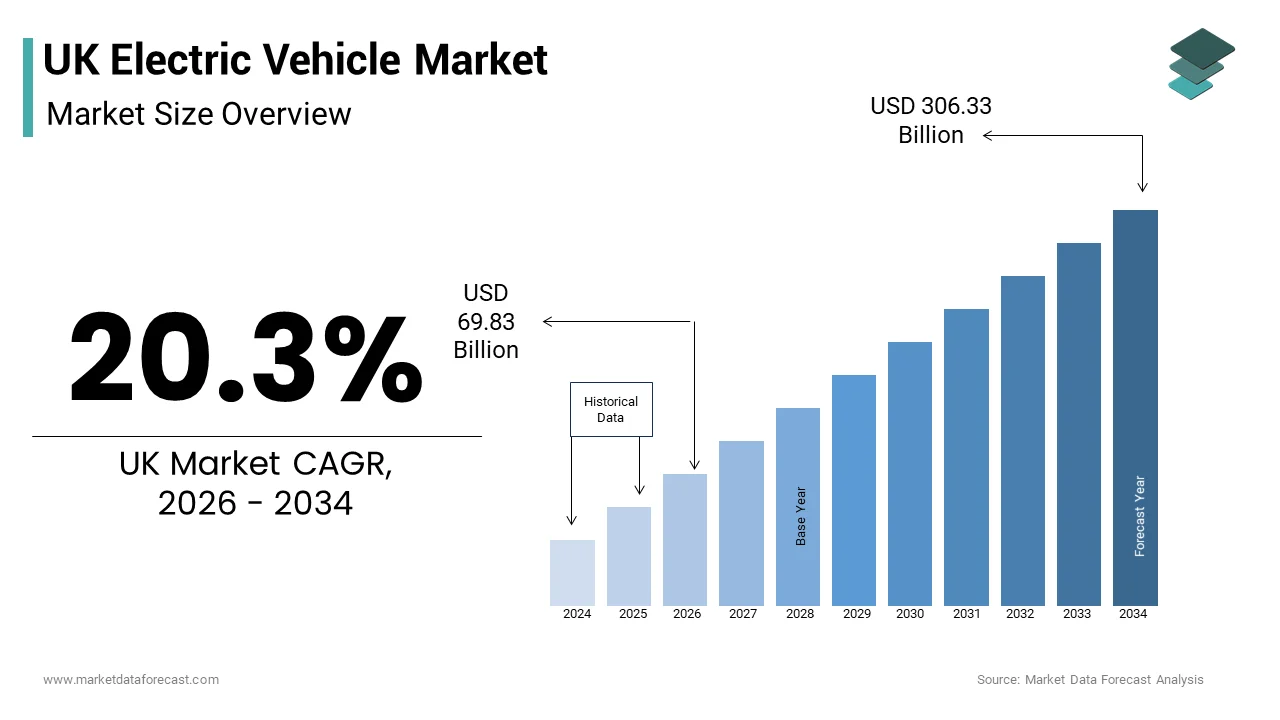
The UK electrical vehicle market size was valued at USD 58.05 billion in 2025 and is anticipated to reach USD 69.83 billion in 2026 to reach USD 306.33 billion by 2034, growing at a CAGR of 20.30% during the forecast period from 2026 to 2034.
MARKET OVERVIEW AND DEFINITION
The United Kingdom is seeing a transformative shift in the national automotive landscape. Rapidly accelerating registrations of battery electric vehicles and plug-in hybrid electric vehicles are quickly replacing traditional internal combustion engines. This transition is driven by a confluence of regulatory mandates, technological advancements, and evolving consumer preferences towards sustainable mobility. As per the Department for Transport, battery electric vehicles accounted for 16.5 percent of all new car registrations in 2023, marking a significant milestone in the decarbonization journey. The government has restored the 2030 phase-out date for the sale of new pure petrol and diesel cars; however, the sale of new hybrid vehicles remains permitted until 2035, consistent with the legally binding ZEV mandate which targets 80% zero-emission sales by 2030. According to the Department for Transport, there were 53,677 public charging connectors available across the UK by the end of 2023 (Jan 2024), reflecting a 45% increase from the previous year. This expanding network is essential to alleviate range anxiety and support the growing fleet of zero emission vehicles. The automotive sector contributes approximately £22 billion to the UK economy annually, recovering from the lower £18.6 billion figure reported in previous years (c. 2018). Major manufacturers are retooling production facilities to accommodate electric platforms, while energy providers are upgrading grid capacity to handle increased demand. This dynamic ecosystem involves collaboration between policymakers, automakers, and utility companies to create a robust framework for sustainable transport. The market is not merely about vehicle sales but encompasses a broader restructuring of energy consumption patterns and urban planning strategies.
MARKET DRIVERS Stringent Government Regulations and Phase Out Mandates
The impending ban on the sale of new petrol and diesel vehicles is a major factor propelling the growth of the United Kingdom electric vehicle market. This compels both manufacturers and consumers to accelerate the transition. The government’s commitment to achieving net zero emissions by 2050 has resulted in clear legislative timelines that provide certainty for long term investment planning. According to the Climate Change Committee, transport accounts for 29% of the UK’s total greenhouse gas emissions, representing the largest emitting sector in the country. The Zero Emission Vehicle mandate requires an increasing percentage of vehicle sales to be zero emission each year, starting in 2024 at 22% for cars and 10% for vans, with the car target rising to 80% by 2030. This regulatory pressure forces automakers to prioritize electric models in their product portfolios to avoid substantial financial penalties. As per the Society of Motor Manufacturers and Traders, major brands have announced billions of pounds in investments to electrify their UK operations in response to these mandates. Consumers are also influenced by these policies, as they anticipate stricter restrictions on internal combustion engine usage in urban areas through expanded clean air zones. The clarity of the regulatory roadmap reduces uncertainty for buyers who might otherwise hesitate due to fears of asset stranding. This top down approach ensures that the market evolves in alignment with national environmental goals, creating a structured pathway for widespread adoption.
Enhanced Total Cost of Ownership Advantages
The improving total cost of ownership for electric vehicles (EVs) is a significant driver for consumer adoption, which further boosts the expansion of the United Kingdom Electric Vehicle market. This is because lower running costs offset higher upfront purchase prices over time. Electric vehicles benefit from reduced fuel expenses since electricity is generally cheaper per mile than petrol or diesel, particularly when charged at home during off peak hours. According to the Energy Saving Trust, drivers can save approximately £1,000 annually on fuel costs by switching to an electric vehicle, depending on mileage and charging habits. Additionally, electric vehicles were exempt from vehicle excise duty until April 2025, after which they became subject to standard road tax rates. Maintenance costs are also lower due to fewer moving parts and the absence of oil changes, exhaust systems, and transmission repairs. As per data from Cap HPI, the residual values of electric vehicles have stabilized, reducing depreciation concerns that previously deterred buyers. Corporate fleets are increasingly transitioning to electric options to benefit from favorable benefit in kind tax rates, which are significantly lower than those for conventional cars. This fiscal advantage makes electric vehicles an attractive option for company car users, who constitute a large portion of the new car market. The combination of lower operational expenses and tax benefits creates a compelling economic case for electrification, encouraging both private and commercial buyers to make the switch despite initial price premiums.
MARKET RESTRAINTS Inadequate Public Charging Infrastructure Coverage
The uneven distribution and insufficient density of public charging infrastructure remain a serious restraint on the United Kingdom electric vehicle market. This is particularly true for residents without access to off street parking. While the total number of chargers is increasing, many rural areas and densely populated urban neighborhoods lack convenient and reliable charging options. According to Zapmap, although there were over 53,000 public connectors by the end of 2023, nearly 45% of them are located in London and the South East combined (with London alone accounting for approximately 30%). This geographic disparity creates range anxiety for potential buyers who rely on public networks for regular charging needs. Furthermore, the reliability of existing chargers is a concern, with studies indicating that up to 10 percent of public charging points are non functional at any given time. As per a survey by the RAC, 65 percent of drivers cite the lack of reliable charging infrastructure as a primary barrier to purchasing an electric vehicle. The complexity of payment systems and varying pricing structures across different networks also frustrate users, hindering seamless adoption. Without a comprehensive and dependable nationwide network, the appeal of electric vehicles is limited to those with home charging capabilities, excluding a significant segment of the population. Addressing this infrastructure gap requires coordinated investment and standardization efforts to ensure equitable access and build consumer confidence in the viability of electric mobility for all users.
High Upfront Purchase Prices and Affordability Issues
The elevated initial purchase price of EVs compared to their internal combustion engine counterparts is a significant limitation for the United Kingdom electric vehicle market. This limits accessibility for average income households. Despite decreasing battery costs, electric vehicles still command a premium due to the expensive materials and complex manufacturing processes involved. According to the Society of Motor Manufacturers and Traders, the average price of a new battery electric vehicle in the UK was approximately £44,000 in 2023, which is substantially higher than the average petrol car. This price gap persists even after accounting for government grants, which have been reduced or removed for certain categories. As per data from Auto Trader, consumer consideration for used electric vehicles has fluctuated between 15% and 20%, with affordability concerns and uncertainty about battery longevity remaining the top deterrents for the majority of buyers. High interest rates further exacerbate this issue by increasing the cost of financing, making monthly repayments less manageable for many consumers. The removal of the plug in car grant for most private buyers has removed a key financial incentive that previously helped bridge the price differential. For low income families, the high upfront cost remains a prohibitive barrier, regardless of long term savings. Until economies of scale and technological advancements bring prices down to parity with conventional vehicles, mass market adoption will face resistance. This affordability challenge restricts the market to wealthier demographics and corporate fleets, slowing the overall transition rate.
MARKET OPPORTUNITIES Expansion of Vehicle to Grid Technology Integration
The integration of vehicle to grid technology offers a substantial opportunity for the United Kingdom electric vehicle market. This enables EVs to serve as mobile energy storage units that support grid stability. This bidirectional charging capability allows vehicles to discharge electricity back to the grid during peak demand periods, providing a valuable service to energy providers and generating revenue for owners. According to the National Grid ESO, the flexibility offered by millions of connected electric vehicles could significantly reduce the need for costly peaking power plants and enhance the integration of renewable energy sources. Pilot projects have demonstrated that vehicle to grid systems can help balance supply and demand fluctuations, particularly as wind and solar generation become more prevalent. As per Ofgem, regulatory frameworks are being updated to facilitate smart charging and vehicle to grid services, creating new market mechanisms for participation. This technology transforms electric vehicles from passive consumers of energy into active participants in the energy ecosystem, adding value beyond transportation. Automakers are increasingly incorporating vehicle to grid compatible hardware in new models, recognizing its potential as a selling point. The ability to earn income by selling excess energy back to the grid can improve the total cost of ownership proposition for consumers. This synergy between the automotive and energy sectors opens new business models and revenue streams, driving innovation and investment in smart charging infrastructure.
Growth in Commercial Fleet Electrification
The electrification of commercial fleets provides a clear path for the growth of the UK electric vehicle market. This is driven by corporate sustainability commitments and operational efficiency gains. Businesses are under increasing pressure to reduce their carbon footprints and comply with environmental, social, and governance criteria, making fleet electrification a strategic priority. According to the Energy Saving Trust, commercial vehicles account for a disproportionate share of urban emissions, prompting many companies to transition to electric vans and trucks. The total cost of ownership advantages are often more pronounced for fleets due to high mileage usage, leading to faster payback periods for electric investments. As per LeasePlan, over 50% of UK businesses had targeted electrifying their fleets by 2025, a milestone that transitioned the sector toward mandatory zero-emission fleet quotas under the UK’s legal framework. Manufacturers are responding by expanding their ranges of electric light commercial vehicles tailored for last mile delivery and logistics operations. Government incentives such as enhanced capital allowances for zero emission vehicles further encourage corporate adoption. The rise of e commerce has increased delivery volumes, making efficient and clean urban logistics essential for maintaining service levels while meeting regulatory standards. Fleets also benefit from centralized charging management systems that optimize energy usage and reduce operational disruptions. This B2B segment provides a stable and scalable growth avenue for automakers, complementing consumer sales and accelerating the overall market transition.
MARKET CHALLENGES Supply Chain Vulnerabilities for Critical Battery Materials
The reliance on global supply chains for critical battery materials such as lithium, cobalt, and nickel is a significant challenge to the United Kingdom electric vehicle market. This exposes it to geopolitical risks and price volatility. The majority of these raw materials are sourced from a limited number of countries, creating bottlenecks that can disrupt production schedules and increase costs. According to the British Geological Survey, the UK possesses significant domestic potential for specific critical minerals, most notably lithium in Cornwall, which is being developed to reduce reliance on imports and support the battery supply chain. Geopolitical tensions and trade disputes can lead to sudden supply shortages or export restrictions, impacting the availability of batteries for vehicle manufacturing. As per the Society of Motor Manufacturers and Traders (SMMT), despite supply chain disruptions causing a 9.8% fall in overall car output in 2022, electric vehicle production actually rose to record levels, accounting for nearly one-third of all cars made. The ethical concerns surrounding mining practices in some source countries also pose reputational risks for automakers committed to sustainable sourcing. Fluctuating commodity prices directly affect battery costs, which constitute a significant portion of the vehicle’s total value. This volatility makes it difficult for manufacturers to maintain stable pricing and profit margins. Diversifying supply sources and investing in recycling technologies are necessary but long term solutions. The market remains vulnerable to external shocks until a more resilient and localized supply chain is established. These shocks can hinder growth and affordability.
Grid Capacity Constraints and Upgrade Requirements
The existing electrical grid infrastructure faces capacity constraints that impede the widespread adoption of EVs, particularly during peak charging times, which holds back the expansion of the United Kingdom electric vehicle market. A simultaneous surge in electric vehicle charging demand could overload local distribution networks, leading to power outages or the need for costly upgrades. According to the National Grid ESO, electricity demand is projected to double by 2050, largely driven by the electrification of transport and heating (with the 50% increase milestone expected closer to 2035). Local distribution network operators must invest billions in reinforcing substations and cables to handle this additional load, costs which may ultimately be passed on to consumers through higher energy bills. As per warnings from the Environmental Audit Committee and automotive industry bodies, the pace of grid reinforcement risks lagging behind the rate of electric vehicle adoption, prompting Ofgem to accelerate investment approvals for local network upgrades. Unmanaged charging behavior, where multiple users charge their vehicles simultaneously in the evening, exacerbates these stress points. Smart charging solutions can mitigate this issue by shifting demand to off peak hours, but widespread implementation requires consumer engagement and compatible technology. The complexity of coordinating grid upgrades with vehicle rollout plans presents a logistical challenge for policymakers and utility companies. Grid limitations could slow down the electric vehicle transition and undermine consumer confidence. Preventing this requires proactive investment and intelligent load management.
REPORT COVERAGE
REPORT METRIC
DETAILS
Market Size Available
2025 to 2034
Base Year
2025
Forecast Period
2026 to 2034
CAGR
20.3%
Segments Covered
By Vehicle, Country
Various Analyses Covered
Global, Regional, and Country Level Analysis, Segment-Level Analysis; DROC, PESTLE Analysis; Porter’s Five Forces Analysis; Competitive Landscape; Analyst Overview of Investment Opportunities.
Regions Covered
London, South East, North West, East of England, South West, Scotland, West Midlands, Yorkshire and The Humber, East Midlands, Others
Market Leaders Profiled
Audi AG, Tesla, Bayerische Motoren Werke AG, Ford Motor Company, Hyundai Motor Company, Jaguar Land Rover Limited, Kia Corporation, Mercedes-Benz, Nissan Motor Co. Ltd., Toyota Motor Corporation, Volvo Car AB
SEGMENTAL ANALYSIS By Vehicle Insights
In 2025, the passenger vehicles segment held the majority share of the United Kingdom electric vehicle market. This supremacy was driven by robust consumer demand and extensive model availability from major automotive manufacturers. The dominance of this segment is supported by the wide variety of battery electric vehicles available in the hatchback, sedan, and sport utility vehicle categories, catering to diverse household needs. According to the Society of Motor Manufacturers and Traders, passenger cars accounted for over 85 percent of all new electric vehicle registrations in 2023, reflecting their central role in the transition away from internal combustion engines. The expansion of charging infrastructure in residential areas and public spaces has significantly alleviated range anxiety for private owners, making daily commuting and long distance travel more viable. As per the Society of Motor Manufacturers and Traders and Department for Transport data, the number of licensed battery electric cars (BEVs) on UK roads surpassed 1 million in January 2024, with the majority being passenger models used for personal transportation. Government incentives such as exemption from congestion charges in London and other urban centers further encourage individual buyers to choose electric options. The strong residual value performance of popular electric passenger models also enhances their appeal, reducing the total cost of ownership concerns that previously hindered adoption. Automakers prioritize this segment due to higher volume potential and brand visibility, ensuring continuous innovation in battery range and interior technology. The cultural shift towards sustainable living among UK households reinforces the preference for zero emission personal transport, solidifying the position of passenger vehicles as the cornerstone of the electric mobility revolution.
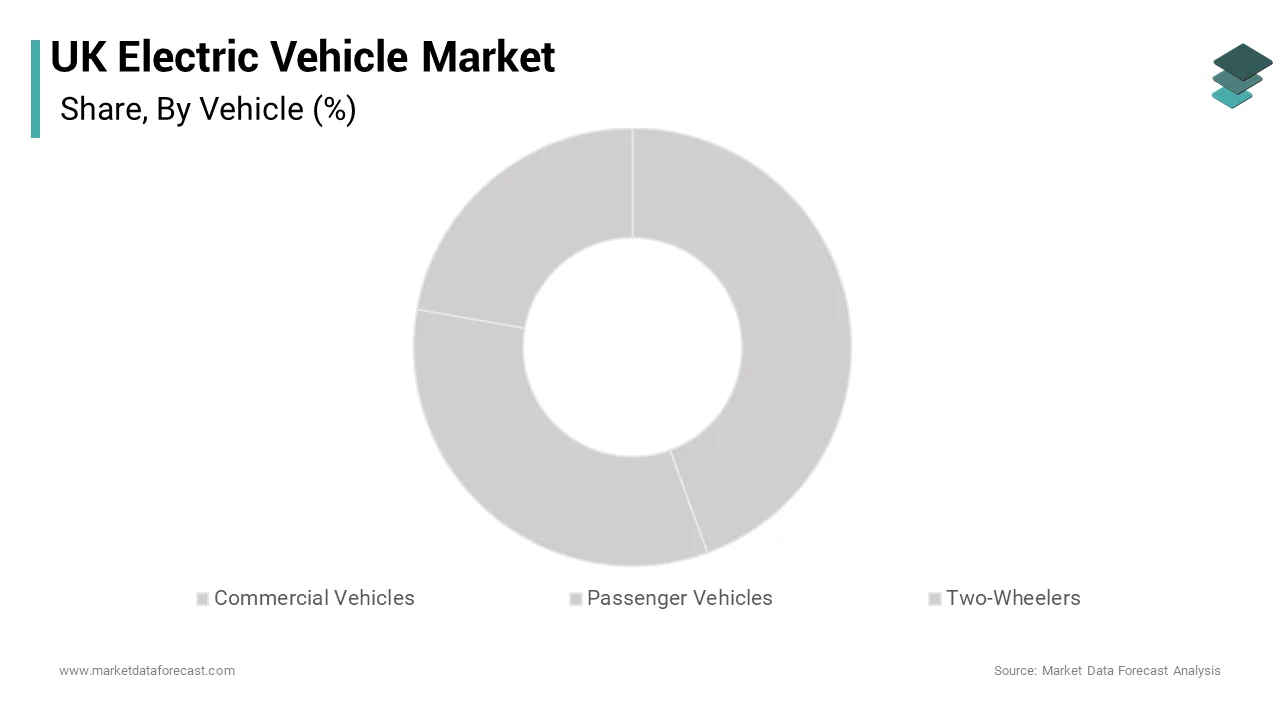
However, the commercial vehicles segment is predicted to witness the highest CAGR of 22.4% during the forecast period due to stringent urban emission regulations and the operational efficiency gains associated with electric fleets. Businesses are increasingly mandated to operate within clean air zones in major cities such as London, Birmingham, and Bristol, where non compliant vehicles face substantial daily charges. According to the Centre for London, commercial traffic contributes significantly to urban pollution, prompting local authorities to enforce stricter access rules that favor zero emission vans and trucks. The total cost of ownership for electric commercial vehicles is becoming increasingly attractive due to lower fuel and maintenance costs, which are critical for high mileage operations. The rise of e commerce has intensified last mile delivery demands, requiring quiet and efficient vehicles that can operate in dense urban environments without noise or exhaust penalties. Manufacturers are responding by launching dedicated electric van platforms with improved cargo capacity and range. Government grants for businesses purchasing electric commercial vehicles further stimulate adoption. This segment’s growth is essential for achieving national decarbonization goals, as freight and logistics account for a significant portion of transport emissions.
COUNTRY ANALYSIS
The United Kingdom was positioned second in the European electric vehicle market and captured a 15.5% share in 2025. This position of the UK’s market was propelled by ambitious regulatory frameworks and a mature ecosystem of manufacturers and infrastructure providers. Such a share demonstrates its rapid adoption and effective policy drivers. The market status is defined by a clear legislative pathway towards phasing out internal combustion engines, with the reinstated 2030 ban on the sale of new pure petrol and diesel cars, followed by a 2035 phase-out of hybrids, serving as a definitive catalyst for industry transformation. According to the Society of Motor Manufacturers and Traders (SMMT), the UK recorded over 314,000 new pure battery electric car registrations in 2023, climbing to over 335,000 total zero-emission vehicles when including commercial vans. The government’s commitment to net zero emissions by 2050 has mobilized significant public and private investment in charging infrastructure, with over 85,000 public charging devices, comprising well over 100,000 individual connectors, now available nationwide. As per the Office for National Statistics, the automotive sector contributes substantially to the national economy, with electrification driving innovation and job creation in manufacturing and engineering hubs. The presence of major production facilities for electric vehicles and batteries ensures that the UK remains a key player in the global supply chain. Regulatory measures such as the Zero Emission Vehicle mandate compel manufacturers to prioritize electric models, ensuring a steady flow of new products. The integration of renewable energy sources with electric vehicle charging further enhances the environmental benefits of the transition. This holistic approach positions the UK as a benchmark for other nations seeking to balance economic growth with environmental sustainability in the automotive sector.
COMPETITIVE LANDSCAPE
The competition in the United Kingdom electric vehicle market is fierce and characterized by a mix of established legacy automakers and agile new entrants challenging for dominance. Traditional manufacturers leverage their brand loyalty and extensive dealer networks to transition existing customers to electric models while investing billions in retooling factories. Newer electric only brands compete on technology and user experience offering sleek designs and advanced digital interfaces that appeal to younger demographics. Price competition intensifies as economies of scale improve allowing for more affordable models to enter the market. Charging infrastructure remains a key battleground with companies forming alliances to expand coverage and standardize payment systems. Regulatory pressures such as the Zero Emission Vehicle mandate force all participants to accelerate their electrification timelines or face penalties. Differentiation increasingly relies on software capabilities battery range and sustainability credentials rather than just mechanical performance. This dynamic environment drives rapid innovation but also leads to consolidation as smaller players struggle with capital requirements. Consumers benefit from greater choice and improved technology as firms strive to outperform rivals in this rapidly evolving sector.
KEY MARKET PLAYERS
A few of the market players that are dominating the UK electric vehicle market are
Audi AG Tesla Bayerische Motoren Werke AG Ford Motor Company Hyundai Motor Company Jaguar Land Rover Limited Kia Corporation Mercedes-Benz Nissan Motor Co. Ltd. Toyota Motor Corporation Volvo Car AB Top Players In The Market Tesla maintains a formidable presence in the United Kingdom electric vehicle market through its direct sales model and extensive supercharger network. The company has significantly expanded its charging infrastructure across major motorways and urban centers to support long distance travel for owners. Recent initiatives include the opening of new service centers to improve after sales support and reduce maintenance wait times. Tesla continuously updates its vehicle software over the air, enhancing performance and adding new features without requiring physical visits. The brand’s strong reputation for technology and sustainability attracts early adopters and tech savvy consumers. Its Gigafactory investments in Europe also influence supply chain dynamics for the UK market. Tesla sets high industry benchmarks. By prioritizing energy efficiency and autonomous driving capabilities, the company compels competitors to innovate rapidly in battery technology and user experience design. Nissan plays a pivotal role in the UK electric vehicle landscape as one of the earliest manufacturers to introduce mass market electric cars. The company operates a major manufacturing plant in Sunderland which produces the popular Leaf and Qashqai e Power models for domestic and export markets. Recent actions include significant investment in battery production facilities to secure local supply chains and reduce dependency on imports. Nissan collaborates with energy providers to promote vehicle to grid technologies that allow cars to power homes during peak hours. The brand focuses on affordability and practicality, appealing to fleet operators and private buyers seeking reliable daily transport. Its established dealer network ensures widespread accessibility for test drives and servicing. Nissan continues to strengthen its position as a trusted provider of sustainable mobility solutions in the region. This is achieved by leveraging its heritage in electrification. Ford contributes significantly to the UK electric vehicle market by transitioning its iconic commercial and passenger vehicle lines to electric powertrains. The company has retooled its manufacturing capabilities to produce the E Transit van and Mustang Mach E SUV locally. Recent strategies involve expanding its Pro electric commercial vehicle range to meet the growing demand from logistics and delivery companies. Ford invests heavily in public charging partnerships to ensure seamless integration for business fleets. The brand leverages its strong reputation for durability and utility to attract traditional van users to electric alternatives. It also offers comprehensive telematics solutions to help fleet managers optimize routes and monitor energy usage. Ford aims to lead the electrification of the commercial sector by combining robust engineering with digital services. Simultaneously, it maintains its stronghold in the passenger vehicle segment through innovative design and performance. Top Strategies Used By Key Market Participants
Key players in the United Kingdom electric vehicle market primarily employ strategies centered on vertical integration and strategic partnerships to secure supply chains and enhance product offerings. Manufacturers invest heavily in local battery production facilities to reduce costs and mitigate geopolitical risks associated with raw material sourcing. Developing proprietary charging networks or collaborating with existing infrastructure providers ensures convenience for customers and alleviates range anxiety. Companies focus on software defined vehicles that offer over the air updates to improve functionality and extend vehicle lifespan. Expanding into commercial segments provides stable revenue streams through fleet contracts and recurring service agreements. Marketing efforts emphasize total cost of ownership benefits and environmental impact to appeal to both corporate and private buyers. Continuous innovation in battery chemistry and autonomous driving features helps differentiate brands in a crowded marketplace. These multifaceted approaches enable firms to build resilient operations and capture diverse customer segments effectively.
MARKET SEGMENTATION
This research report on the UK electric vehicle market is segmented and sub-segmented into the following categories.
By Vehicle Type
Buses Heavy-duty Commercial Trucks Light Commercial Pick-up Trucks Light Commercial Vans Medium-duty Commercial Trucks Passenger Vehicles Two-Wheelers