
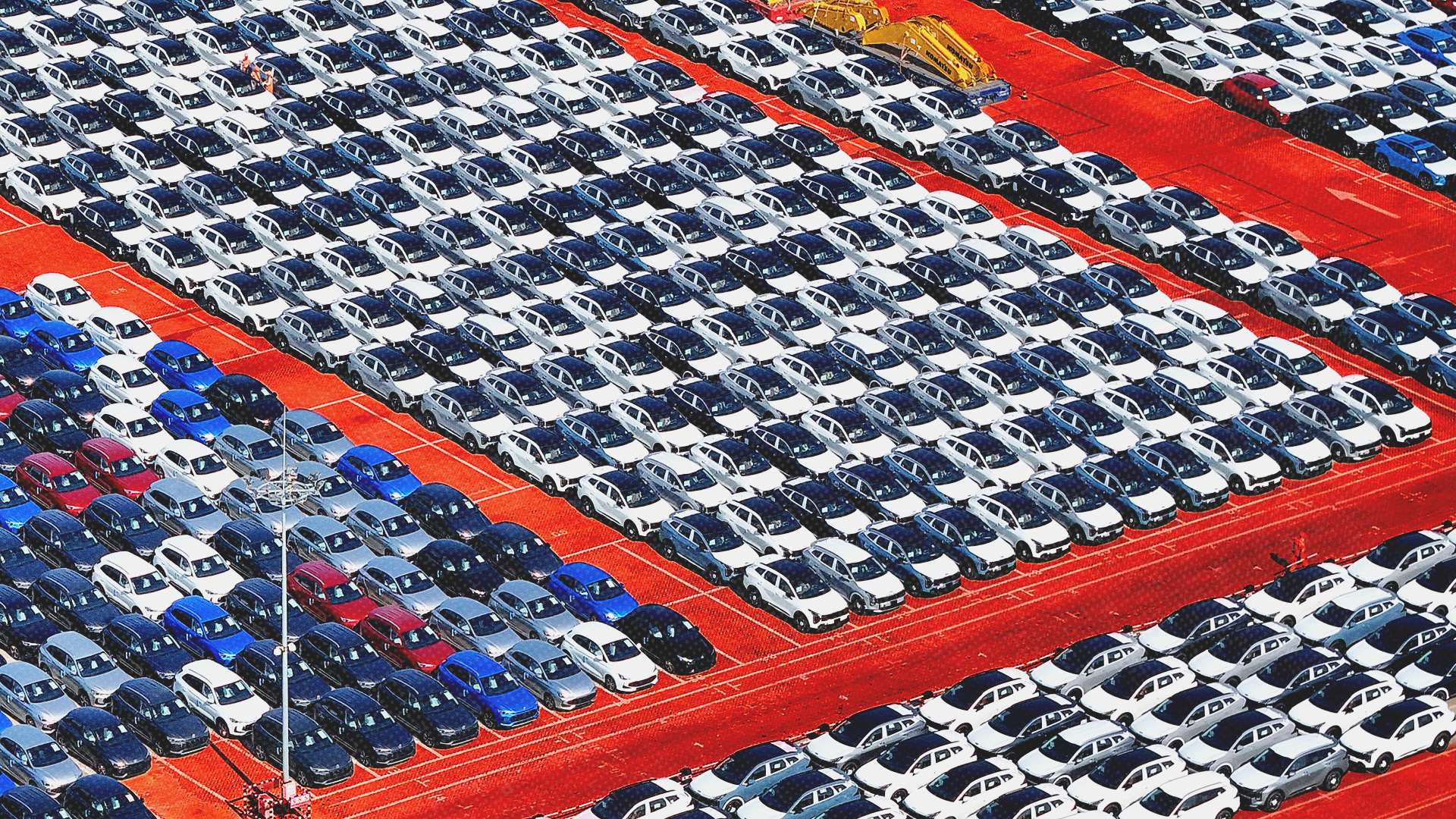
As President Donald Trump arrives in China to meet with Chinese President Xi Jinping this week, American lawmakers are trying to shut Chinese carmakers out of U.S. markets for good.
Thanks to a mix of tariffs and other import regulations, it’s been effectively impossible for American consumers to purchase a Chinese car. In January 2025, the Biden administration’s Commerce Department ratcheted up restrictions by issuing a final rule prohibiting the sale and import of connected vehicles—cars that use systems like Wi-Fi, Bluetooth, and satellite connectivity—and connected vehicle parts from China and Russia. The rule went into effect in March 2025,
Now, lawmakers are trying to codify these protectionist policies. Late last month, Sens. Bernie Moreno (R–Ohio) and Elissa Slotkin (D–Mich.) introduced the Connected Vehicle Security Act, which would ban “connected vehicles and related software and hardware associated with foreign adversaries,” including China, Russia, North Korea, and Iran. A companion bill was also introduced in the House of Representatives.
The protectionist measures come as Chinese cars are gaining popularity worldwide. In 2025, Chinese company BYD surpassed Tesla to become the world’s largest seller of battery electric vehicles (E.V.s). In Europe, 55 percent of electric cars imported into the European Union in 2024 were from China. And in Brazil, the world’s sixth-largest car market by volume, Chinese brands made up more than 80 percent of E.V. sales in the first quarter of 2025, according to CNBC.
The popularity of these vehicles is no surprise, given their low costs. The 2026 model of BYD’s most popular E.V., the Seagull, has a starting price of just $10,300. Meanwhile, the cheapest new E.V. in the U.S., the Chevrolet Bolt, is expected to retail for $28,995, according to Kelly Blue Book. On average, American shoppers spend $50,000 for a new car.
Despite maintaining a 100 percent tariff on Chinese vehicles, Trump has indicated he’s receptive to allowing Chinese automakers to open plants in the United States. Still, it could be a long time until Chinese cars hit American roads, especially if members of Congress get their way.
“It’s an economic security issue, of course, but it is also a national security issue,” Slotkin told CNBC on Tuesday.
If the “national security” rationale behind banning something very popular from China sounds familiar, that’s because it is. Slotkin herself said a Chinese car is like “TikTok on wheels.” Much like during the forced sale of TikTok, lawmakers are arguing that nobody should be able to spy on Americans, even when U.S. companies have been scrutinized for harvesting user data without consent.
Ironically, Slotkin’s bill is backed by General Motors, which this week agreed to pay a $12.75 million settlement for allegedly breaking a California privacy law and unlawfully selling driving data to brokers. And if the National Highway Traffic Safety Administration finalizes a rule mandating driving-impairment tech, all new U.S. cars will be required to have tracking technology, raising concerns that car companies could gain even more material to share with insurers and third parties.
Protecting consumers from unwarranted vehicle surveillance is a laudable goal. But American consumers might be willing to take a chance on a Chinese car if it means a more affordable vehicle. Unfortunately, they can’t, thanks to tariffs and rules enacted in the name of national security. Americans may enjoy more freedoms than the rest of the world, but not when it comes to car shopping.