
Support CleanTechnica’s work through a Substack subscription or on Stripe.
We have written several times about Tesla’s massively missed targets for robotaxi rollout, including an article yesterday highlighting some of the problems making the service inadequate and low volume. However, a reader noted that there has been progress that we haven’t reported on.
The reader, Ole Laursen, pointed us to a Robotaxi Tracker website. There’s a variety of interesting info there. Let’s start with the fact that several new unsupervised Tesla Robotaxis have been discovered in the past month.
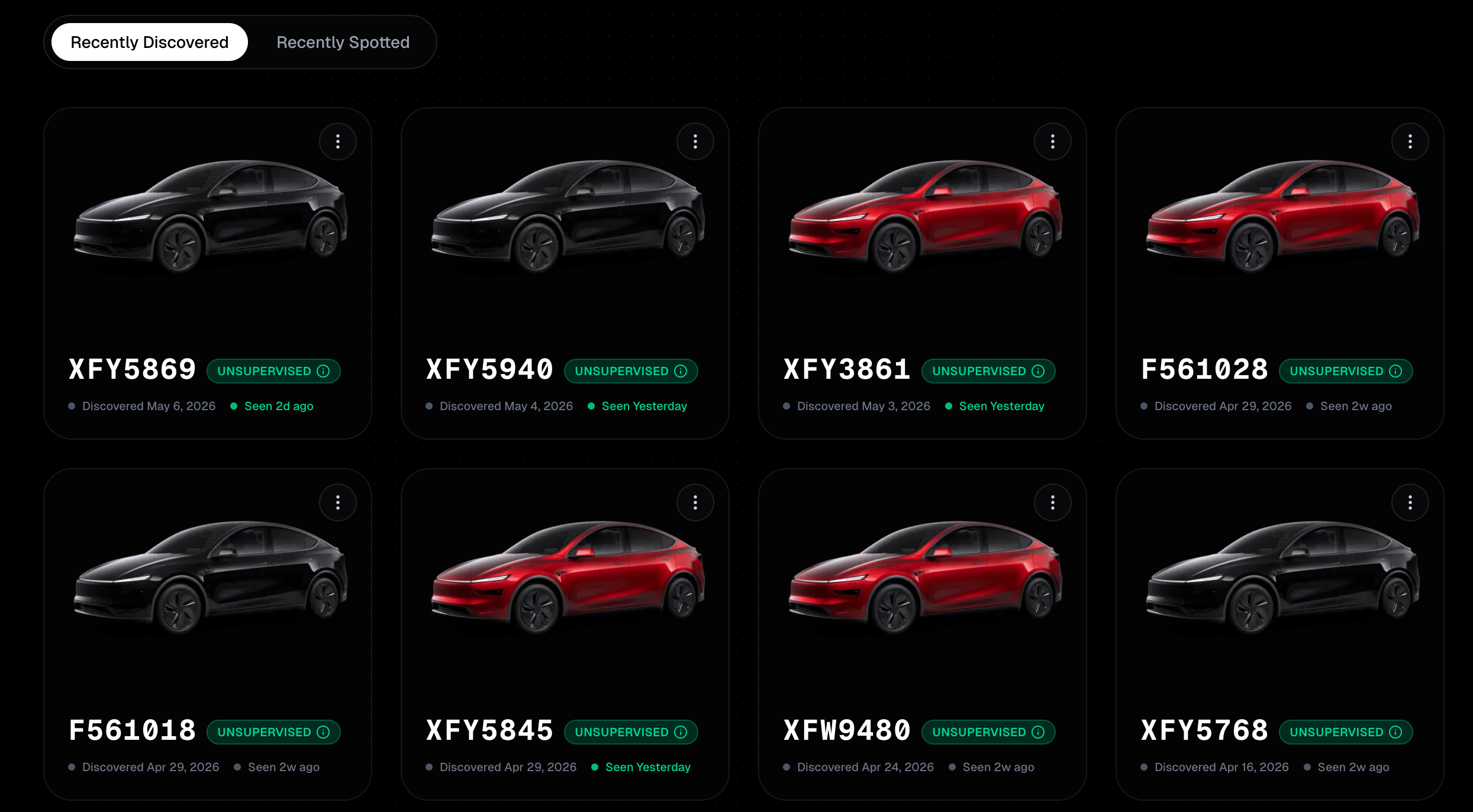
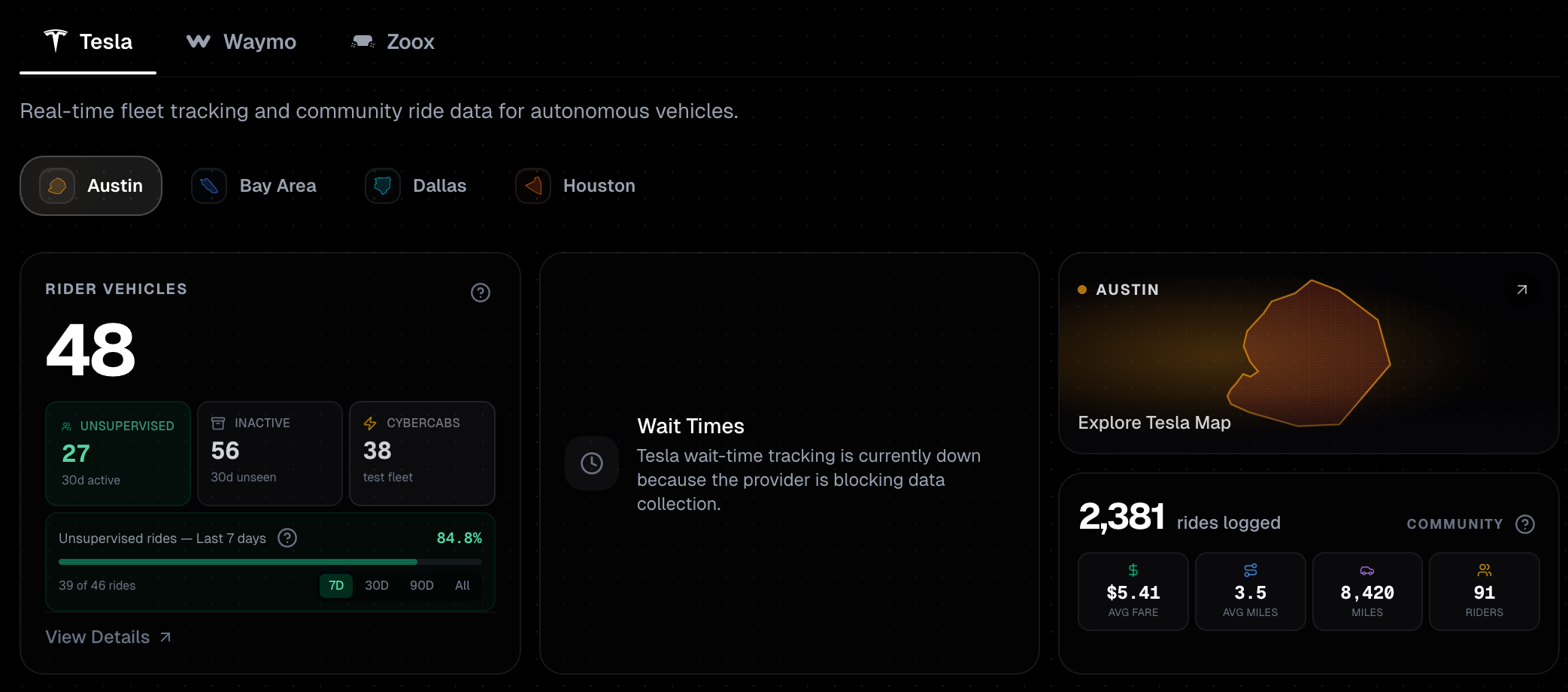
According to the website, there are 39 unsupervised Tesla Robotaxis on the road today. Most of them, 27, are in Austin. Overall, there are apparently 48 rider vehicles in Austin, while there are 56 inactive vehicles there and 38 Cybercabs in a test fleet in the city. There are another 5 unsupervised Tesla Robotaxis in Dallas and 6 in Houston. The new unsupervised fleet robotaxis have been added in those cities in the past month.
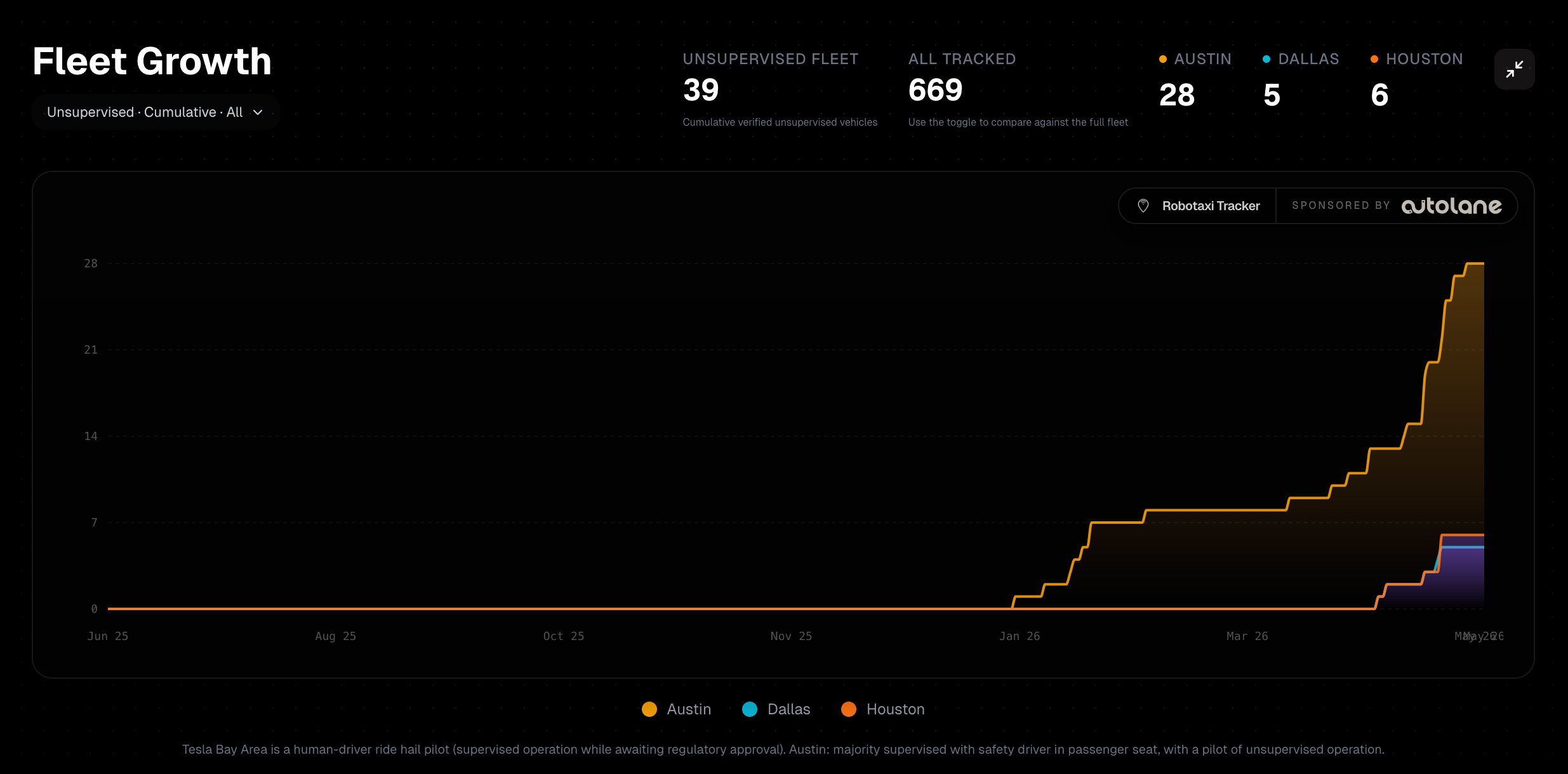
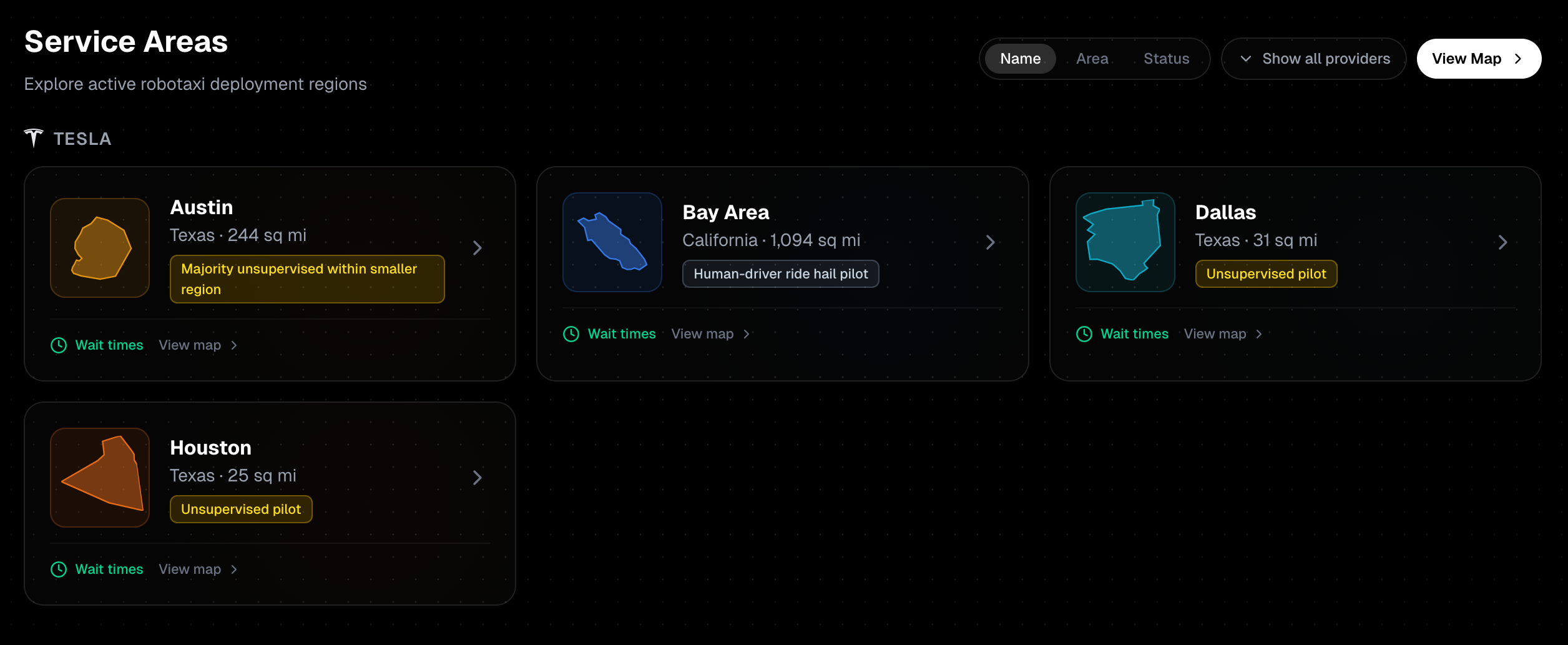
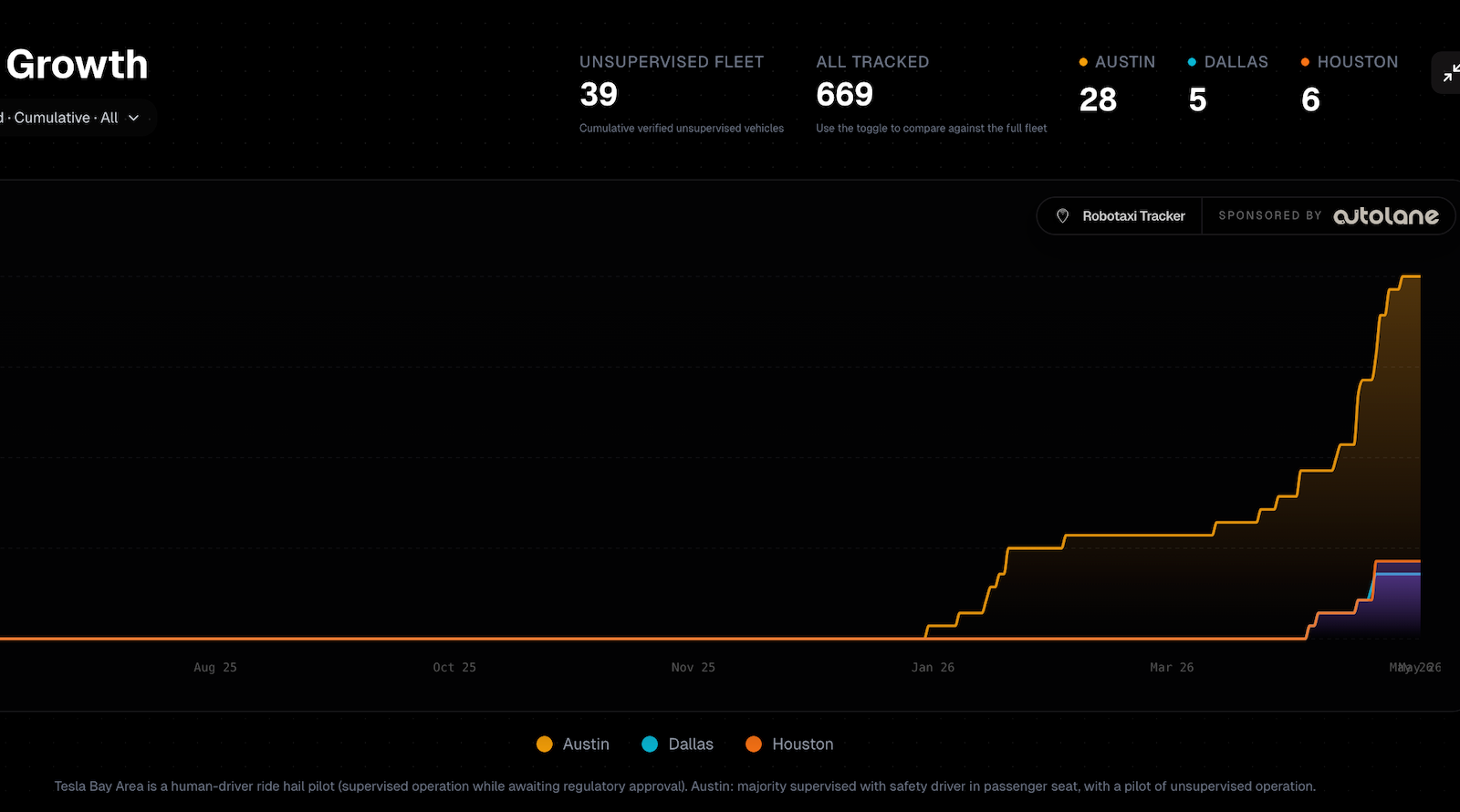
“Tesla started up in two more cities, Dallas and Houston, without safety drivers. Only a handful of cars in each city,” Ole summarized it. “Meanwhile, they started ramping the number of cars without safety drivers in Austin, so it went from a handful to currently something like 28.”
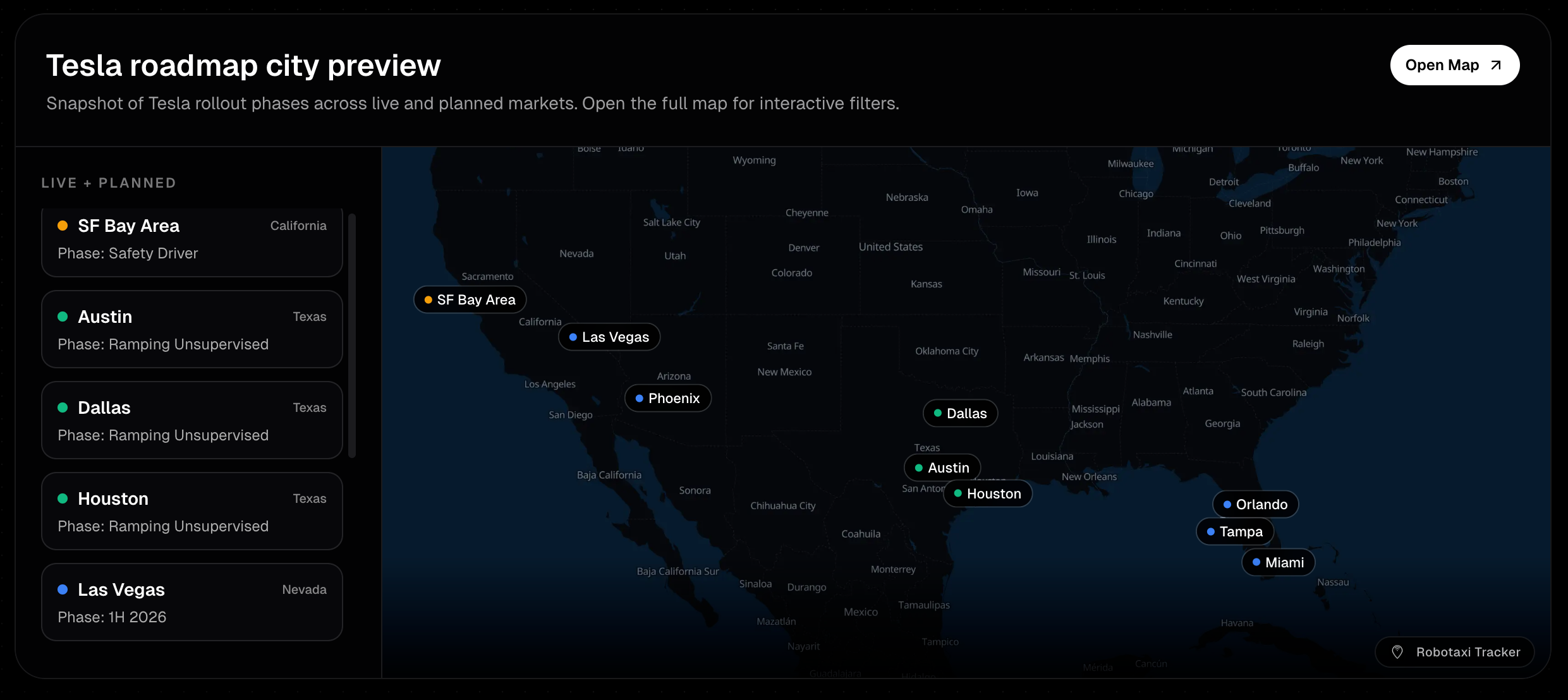
There are no unsupervised Tesla Robotaxis in the San Francisco Bay Area, but there are plans to launch fleets in Tampa, Miami, Orlando, Phoenix, and Las Vegas in the second half of the year.
“On the latest earnings call, Musk explained that their main issue holding back the robotaxi ramp wasn’t accidents/safety, but that the cars would do something disturbing other traffic or get stuck looping around instead of giving up in a sensible way,” Ole added. Well, that is what I’ve seen for years. I understand the technology is getting better, but I’ve also seen it overhyped for a decade, including by other FSD users countless times in recent years, and I’m still not sure about Tesla’s approach to solving these problems. Also, whether or not the accidents are a concern is up for debate.
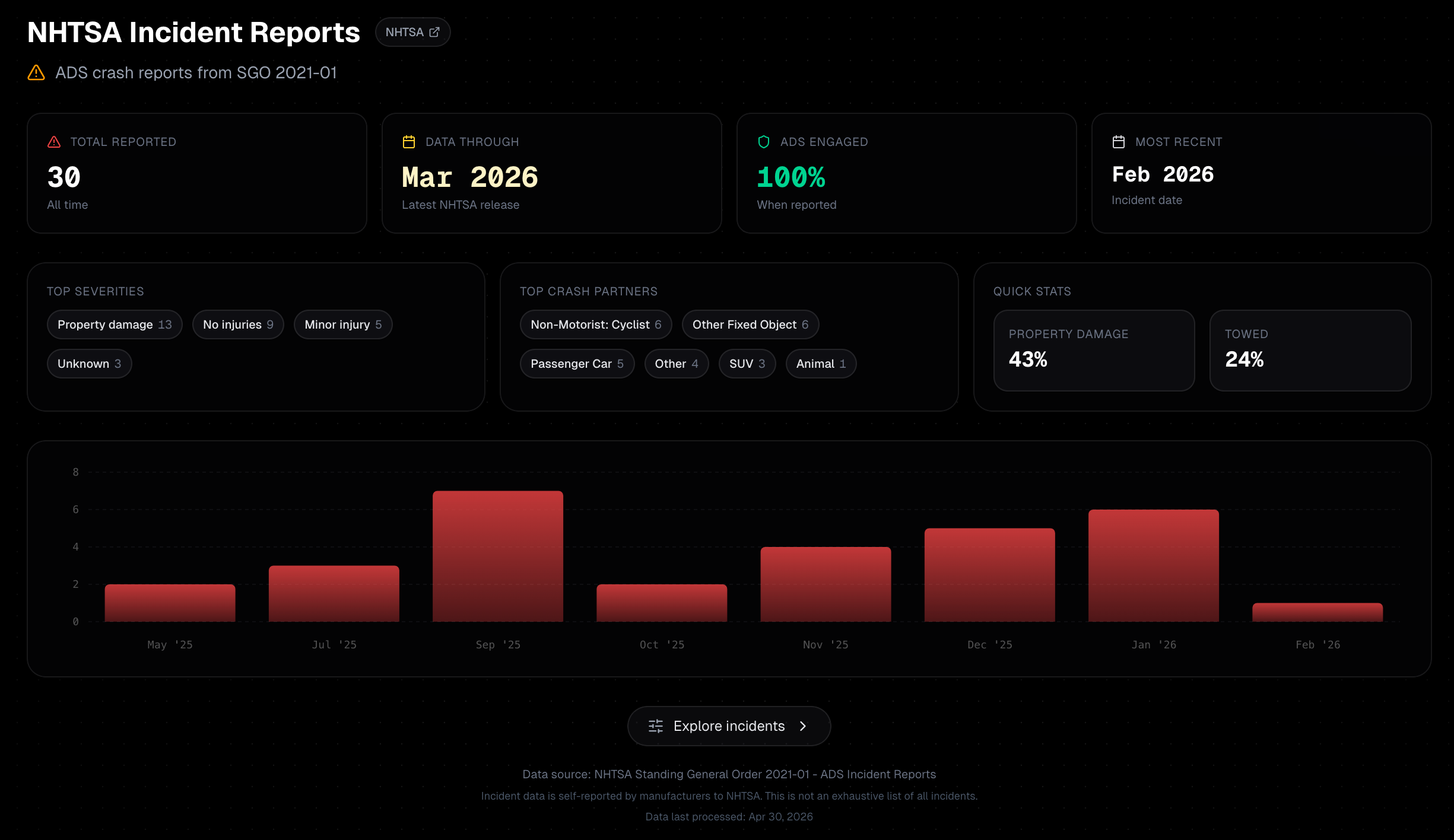
The site also tracks NHTSA incident reports, something Tesla wants to be hidden from the public. In total, 30 incidents have been reported in the past year. From those, 5 involved major injury and 13 involved property damage. Additionally, 6 involved cyclists and 6 involved “Other Fixed Object” — so, presumably, the Tesla hit a fixed object of some sort. In 24% of cases, towing was needed. Overall, 43% of incidents involved property damage.
We don’t have enough data to make any statistically significant conclusions from this. However, one would not expect a few dozen cars to get into 30 accidents, right? Let me know what you notice here and if you think I’m missing something important.
Back to the matter of scale-up, a comment last week from “Kev” that I just ran across sums it up like this: “Tesla have 64 robotaxis in 3 locations, 38 of which don’t have a safety driver. Their Bay Area operation is just a regular taxi service. Waymo have over 1,300 taxis all driverless. Baidu and Pony also both have over 1,000 driverless taxis. Almost a year since the Austin launch and Tesla is far closer to Lucid than Waymo, Baidu or Pony.ai.”
Indeed. So far, Tesla is way behind in terms of deployment. Tesla fans think it will scale up quickly, though, and soon reach a crossover point where it surpasses these other companies. Critics and skeptics don’t see Tesla’s system as adequate and expect the company will continue missing targets (massively) and floundering with inadequate service. They see these pilot deployments as stock market hype and technological hopium.
This is the big, trillion-dollar question — can Tesla quickly scale up the service safely and adequately, or is it trying to push a technology that simply isn’t good enough while Waymo and others are starting to rapidly scale up reliable robotaxi service? One could say that we should get the answer to that question this year. However, that kind of thing has been said about Tesla for about 7 years, so even if targets are missed again this year, will investors care or will they just assume 2027 is the year Tesla truly cracks the nut? As long as there is some progress, as shown above, is that enough to keep their hope alive? Or does missing target after target finally get old? Or, if Tesla does find a way to scale up robotaxi deployment significantly in 2026 (say, deploying 1,000+ vehicles this year), will that prove the technology is truly capable of competing with or even outcompeting Waymo and gang?
Is the data above proof of serious progress? Or is it proof that Tesla’s tech simply isn’t good enough? Or are we still in a “wait and see” holding pattern?
Sign up for CleanTechnica’s Weekly Substack for Zach and Scott’s in-depth analyses and high level summaries, sign up for our daily newsletter, and follow us on Google News!
Advertisement
Have a tip for CleanTechnica? Want to advertise? Want to suggest a guest for our CleanTech Talk podcast? Contact us here.
Sign up for our daily newsletter for 15 new cleantech stories a day. Or sign up for our weekly one on top stories of the week if daily is too frequent.
CleanTechnica uses affiliate links. See our policy here.
CleanTechnica’s Comment Policy