
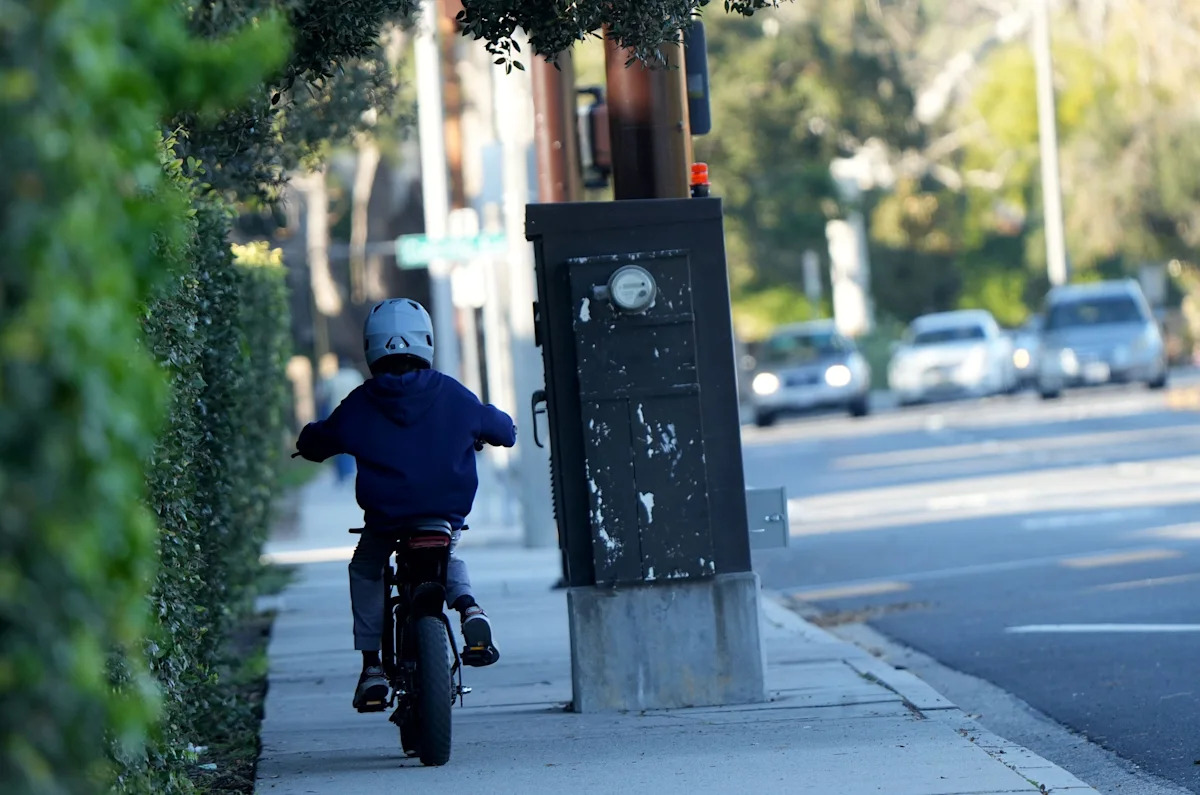
The use of electric bicycles and motorcycles, or e-bikes and e-motorcycles, has been making news across California, as some have been caught riding bikes beyond their limits or riding electric motorcycles instead.
Amid troubles with e-bikes and e-motorcycles, authorities have tried various measures to curb deaths, injuries, and nuisance caused by their use.
A 51-year-old Aliso Viejo mother was recently charged with involuntary manslaughter, among other charges, after an 81-year-old man died two weeks after her 14-year-old son allegedly struck him with an e-motorcycle.
In the Central Valley, e‑bike crashes involving children are sending more young riders to hospitals — and, in some cases, proving fatal. In early May, a 13‑year‑old boy was killed, and two other children were seriously injured in separate e‑bike crashes. At Valley Children’s Hospital, e‑bike and e‑scooter injuries rose from 11 cases in 2023 to 41 in 2025. And in the first four months of 2026, the hospital has already treated nearly as many e‑bike‑related injuries as it did in all of last year (22).
Attorney General Rob Bonta joined several California counties’ district attorneys on April 14 in issuing a consumer alert reminding manufacturers, retailers, consumers, and parents of important laws in the state regarding e-bikes and what does and doesn’t classify as an e-bike.
One online retailer, one of the largest in the state, has taken note and announced its intent to curb sales of illegal e-bikes, but what are e-bikes, and why have they caused a stir?
What is an e-bike?
The California Department of Motor Vehicles defines an electric bicycle, or e-bike, as “a bicycle equipped with fully operable pedals and an electric motor of less than 750 watts.”
The DMV also breaks down e-bikes into three different categories:
Class 1- A pedal-assisted bicycle with a motor that provides assistance only when the rider is pedaling, with a limit of 20 mph.
Class 2- A throttle-assisted bicycle equipped with a motor used exclusively to propel the bicycle. The bicycle does not provide throttle assistance once it reaches 20 mph.
Class 3: A pedal-assisted electric bicycle equipped with a speedometer and a motor that assists up to 28 mph.
Class 3 bicycles may be operated only by individuals aged 16 or older who are wearing a helmet, in a bicycle lane, and not transporting passengers.
The DMV also advises riders to follow local ordinances, which may have additional regulations.
Sellers can only advertise or sell vehicles as e-bikes if they are one of the three classes specified by the DMV and must not advertise the vehicles as intended to be modified, AG Bonta said in a news release.
Are e-bikes banned in California?
Online retail giant Amazon announced that it was no longer selling e-bikes that exceed state speed limits and would require third-party sellers on its site to comply with the law, said Orange County District Attorney Todd Spitzer in a Facebook post.
The OC DA said the retailer’s decision comes after listings on its site were found to advertise e-bikes that go up to 40 mph, which is illegal in the state. He also said that e-bike and e-motorcycle-related crashes and injuries have increased 430% in the last four years in Southern California alone.
While this doesn’t mean that e-bikes are banned in California, it does mean that the sale of modified bikes will now be subject to stronger enforcement, with one of the largest retailers behind the move.
E-motorcycles and regulation-compliant e-bikes can still be bought and sold in the state, but parents should be wary of exactly which they are getting for their child, or they could be held liable, as was the case for the Orange County mom.
Ernesto Centeno Araujo covers breaking news for the Ventura County Star. He can be reached at ecentenoaraujo@vcstar.com, 805-437-0224 or @ecentenoaraujo on Instagram and X.
This article originally appeared on Palm Springs Desert Sun: Amid e-bike controversy, online retailer bans illegal sales