
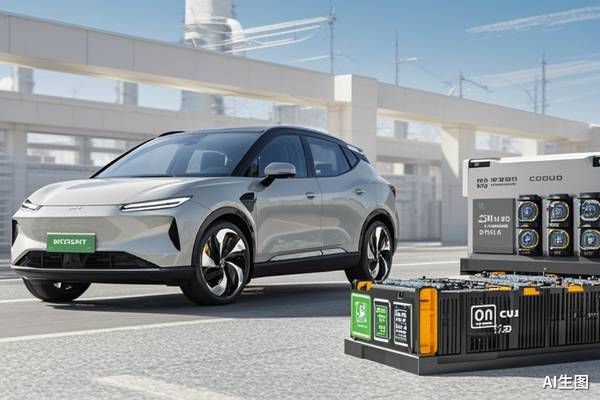
Trump will arrive in Beijing for a visit to China on May 13, 2026. Meanwhile, the EU has announced an additional tariff of up to 38% on Chinese electric vehicles, which has been in effect for seven months.
In 1981, the United States also set “voluntary export restraints” on Japanese automobile exports. From that year on, the Japanese automobile industry underwent a painful and profound structural restructuring.
In 2009, Toyota’s overseas production capacity exceeded its domestic production capacity in Japan. This figure represents a “spatial transfer” that the Japanese automobile industry completed in nearly 30 years.
In 2023, China’s electric vehicle exports exceeded those of Japan for the first time, making China the world’s largest automobile exporter. Three years later, it is facing almost the same pressure as Japan did back then.
These phenomena scattered over a 40 – year time – axis are driven by the same structure repeating its operation.
The market calls this structure the “Three Paths to Cope with Export Pressure”. Today, we will use this framework to help you understand the current position of Chinese electric vehicles.
The full text is about 2,500 words and is estimated to take 7 minutes to read.
What happened in Japan in 1981?
In 1980, Japanese automobile exports accounted for more than 26% of the US market share. Cars from Honda, Toyota, and Nissan could be seen on every street corner in the United States. Workers in Detroit began to lose their jobs, and the pressure from the US Congress was transmitted to the White House.
In May 1981, the Reagan administration reached a “Voluntary Export Restraint Agreement (VER)” with Japan, stipulating that Japan’s automobile exports to the United States should not exceed 1.68 million vehicles per year. Before 1981, Japan exported 1.91 million vehicles to the United States.
The first reaction of the Japanese automobile industry was: although exports were restricted, market share could not be allowed to disappear.
They did three things simultaneously:
First, they transformed towards high – end products. Since the export volume was restricted, they increased the unit price of each vehicle. Toyota launched Lexus, Honda launched Acura, and Nissan launched Infiniti. These three luxury brands were all born within 10 years after the export restrictions. The average price per vehicle increased from $6,500 in 1981 to over $20,000 in the 1990s.
Second, they built factories in the United States. Honda built its first local factory in Marysville, Ohio, in 1982. Toyota established the Georgetown plant in Kentucky in 1988. By building factories in the United States, the export restrictions became ineffective – the products no longer needed to be “exported” as they were produced and sold in the United States.
Third, they accepted price self – restraint. The quantity restrictions actually created scarcity on the supply side, which allowed the selling price of Japanese cars in the United States to increase, and the profit actually increased. Some economists analyzed later that the VER agreement actually helped Japanese automobile manufacturers.
This is Japan’s path: high – end transformation + production capacity transfer + accepting quantity constraints in exchange for price space.
The cost was that it took nearly 30 years for the Japanese automobile industry to complete this round of structural restructuring. It was in 2009 that Toyota’s overseas production capacity exceeded its domestic production capacity.
There are seven similarities in the pressure faced by Chinese electric vehicles
Compare the current situation of Chinese electric vehicles with that of the Japanese automobile industry in 1981:
Similarity 1: The extremely rapid export growth has triggered a backlash of protectionism in the target market. According to 36Kr, Japan’s share of automobile exports to the United States in 1980 was 26%; in 2026, the share of Chinese electric vehicles in the European market has reached about 20%.
Similarity 2: The local industries in the target market have strong political lobbying capabilities. In 1981, the Big Three in Detroit lobbied the US Congress; in 2026, Volkswagen, BMW, and Stellantis lobbied the European Parliament in Brussels.
Similarity 3: “Unfair subsidies” are the core accusation. In the 1980s, the United States accused the Japanese government of providing subsidies; from 2024 – 2026, the EU launched an anti – subsidy investigation into Chinese electric vehicles, and the final tariff could be as high as 38%.
Similarity 4: Export restrictions are a double – edged sword and may unexpectedly boost profits. Restricted quantity + undiminished demand = room for price increase.
Similarity 5: The pressure has forced an accelerated layout of overseas factories. BYD’s factory in Hungary has started construction, and SAIC, Chery, and Great Wall all have plans to build factories in Europe.
Similarity 6: The domestic market is highly saturated, and exports are a strategic necessity. In the 1980s, the Japanese domestic automobile market had reached maturity; in 2026, the domestic penetration rate of new energy vehicles in China has exceeded 60%, and the growth mainly depends on going global.
Similarity 7: When facing pressure, both governments have chosen dialogue rather than direct confrontation. The Reagan administration did not use tariffs but the VER; after the EU tariffs were implemented, the Chinese government chose to file a complaint through the WTO channel while keeping the negotiation channel open.
Three fundamental differences determine that the outcome may be different
The similarities end here. There are three variables that make the situation of Chinese electric vehicles fundamentally different from that of Japan in 1981.
The first difference: Technological dominance.
In 1981, the Japanese automobile industry led in manufacturing efficiency and quality management, such as lean production and the Toyota Production System. However, the United States also mastered core components such as engine technology and transmissions, which were not unique to Japan. Therefore, while restricting Japanese exports, the United States could still maintain its own technological self – sufficiency.
The situation of Chinese electric vehicles is different. Battery technology (CATL’s CTB/CTP technology), fast – charging systems (800V high – voltage platform), and intelligent driving algorithms (Huawei ADS, XPeng XNGP) have achieved global leadership in some aspects. A research report by CSC in Q1 2026 shows that European automakers have a 3 – 5 – year technological gap in pure – electric platforms. This means that if Europe wants to develop its local electric vehicle industry, it cannot bypass China’s technology supply chain in the short term, including battery materials, motor rare earths, and inverters.
This is the “sense of being needed” that the Japanese automobile industry in 1981 did not have.
The second difference: The scale and resilience of the domestic market.
In the 1980s, the annual sales volume of the Japanese domestic automobile market was about 6 million vehicles, which was close to the ceiling. Restricted exports = direct compression of growth space.
Data from the China Association of Automobile Manufacturers in April 2026 shows that the annual sales volume of automobiles in China in 2026 is about 31 million vehicles, of which the penetration rate of new energy vehicles is close to 60%. This scale means that even if exports come to a complete halt, the scale effect and cost – sharing logic of Chinese automakers will not collapse. In 1981, Japan faced the situation where “exports were the lifeline”; in 2026, China faces the situation where “exports are a source of growth, not a matter of life and death”.
The third difference: Alternative markets in the Global South.
In 1981, the global automobile consumption market was basically dominated by the United States, Europe, and Japan. If Japan was restricted in the United States and Europe followed suit, the alternative markets it could choose from were very limited.
BYD’s production and sales report for Q1 2026 reveals that in 2026, Chinese automakers have deeply penetrated into Southeast Asia, the Middle East, Latin America, and Africa. BYD’s market share in Thailand has exceeded that of Toyota, and its market share in the new energy vehicle market in Brazil has reached 27%. There is no systematic protectionism against Chinese cars in these markets, and price competitiveness is the moat.
Where are you standing?
In 1981, it took nearly 30 years for the Japanese automobile industry to move from “export restrictions” to “mature overseas factories”. That history was a successful structural restructuring, but the cost was the efforts of two generations and hundreds of billions of dollars in overseas investment.
In 2026, Chinese electric vehicles are facing similar external pressure, but three different variables – technological dominance, domestic market resilience, and alternative markets in the Global South – may make this path faster and less likely to be interrupted.
But one thing is certain: the Chinese electric vehicle industry will not repeat Japan’s complete path, nor will it take a completely different one.
On this time – axis, we are probably at the position of “1983” – the pressure is clear, internal differentiation has begun, and the real strategic choices have not been fully determined.
The next key nodes are the actual production schedule of local European electric vehicles and the production capacity ramp – up speed of Chinese automakers’ overseas factories. Which of these two things happens first will determine the direction of this game.
This article is only for information sharing and industry analysis and does not constitute any investment advice, investment analysis opinion, or trading invitation. The market is risky, and investment should be cautious. Any investment decision made based on the content of this article, the risks and profits and losses shall be borne by the investor himself. The author and the publishing platform shall not bear any legal liability.
This article is from the WeChat official account “BT Finance” (ID: btcjv1). Author: Zhiyu. Republished by 36Kr with authorization.