
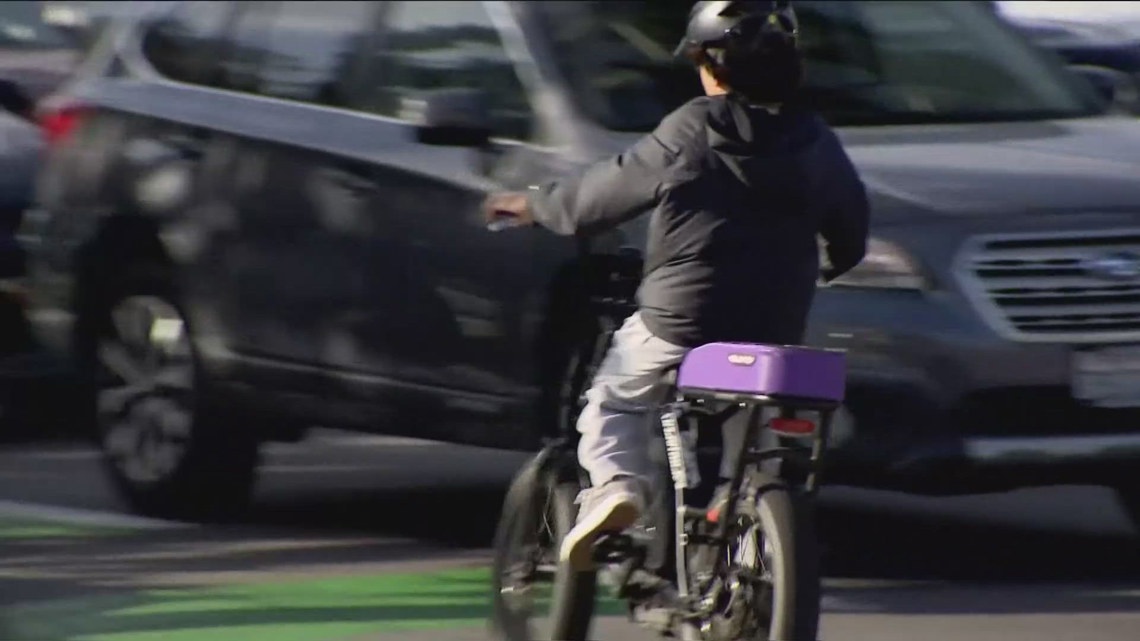
The debate centers on safety concerns and parental rights ahead of the city council vote.
LA MESA, Calif. — City leaders in La Mesa are set to vote Tuesday on a proposal that would ban children under 12 from riding certain e-bikes, sparking a heated debate over safety and government overreach.
Supporters say the rule is intended to reduce crashes and protect young riders as e-bike use continues to grow across San Diego County.

This story continues below.
“This pilot program prohibits children under the age of 12 from being able to operate a Class 1 and a Class 2 e-bike,” said La Mesa Councilmember Laura Lothian.
Lothian, who initially supported the ordinance during its first reading last month, now says she has changed her position after hearing from families who rely on e-bikes for transportation.
“We have families who moved here so their families could travel to the village and have breakfast, go to the farmer’s market, and they’re with their 9 and 10-year-old and they’re on these little e-bikes,” she said.
Supporters of the proposal point to rising injury numbers across the region. Rady Children’s Hospital reported just three e-bike-related injuries in 2021, compared to 262 last year.
“These bikes are dangerous and we want to make sure kids have the proper judgment, the reaction time and reflexes to drive these e-bikes in traffic,” said Councilmember Genevieve Suzuki.
Suzuki also referenced recent serious crashes involving young riders, including a 12-year-old boy who suffered life-threatening injuries in an e-bike collision in Carmel Valley earlier this month.
“These children then require emergency care and it could be orthopedic, it could be traumatic brain injury, and we just don’t want that,” she said.
Opponents, however, argue the proposal goes too far. They say reckless riding behavior among older teens is the real problem.
“I think that a blanket ban is the wrong way to approach the problem,” said La Mesa Planning Commissioner Jerry Jones.
Jones, an avid e-bike rider with young kids of his own, said many e-bikes can be programmed for lower speeds and argued enforcement should focus on unsafe riding rather than age restrictions.
“It’s wheelies, it’s following too close, it’s riding the wrong way on the road, things that are against the rules on a regular bike already,” he said.
If approved, the pilot program would begin with a 60-day warning period before $25 fines are issued. The rules would remain in place through January 2029.