

Listen to this article
Estimated 4 minutes
The audio version of this article is generated by AI-based technology. Mispronunciations can occur. We are working with our partners to continually review and improve the results.
Many American car buyers are gravitating to hybrid vehicles to offset the recent surge in gas prices from the Iran war, according to fresh industry sales data and dealers.
U.S. hybrid sales rose 37 per cent in the two months since the Middle East conflict began at the end of February, according to data from research firm Motor Intelligence. That outpaced the sales growth of the overall car market, which was up 15 per cent in that period.
But fully electric cars have not attracted the same level of consumer interest, even as U.S. gasoline prices topped $4, hitting a four-year high in late April, according to data from the American Automobile Association.
U.S. sales of electric vehicles rose just 11 per cent in the two months since the war began, below the broader sales pace, Motor Intelligence figures show. EV sales remain far below where they were a year ago, still depressed following the expiration last autumn of a $7,500 US federal tax credit.
U.S. shoppers’ relative apathy toward EVs diverges from the trend in Europe, where electric sales are booming amid higher fuel prices. There are many more affordable EVs on sale in Europe, where tailpipe-emissions rules are far more stringent than in the U.S.
In the United Kingdom, EV sales jumped 79 per cent in the two months after the Iran conflict began, a sharper increase than the broader market. Germany’s sales of fully electric cars also outpaced the overall industry, rising 39 per cent in that span.
Hybrids an easier hedge for some shoppers
Analysts and dealers point to several reasons why hybrids – which use a lithium-ion battery and electric motor to assist the gas engine, saving fuel – have become the go-to option for U.S. shoppers seeking a “green” vehicle.
Hybrids are generally less expensive than EVs, and there are more models to choose from. Also, owners do not have to learn a new technology that requires them to change their daily routine, like plugging in a vehicle at night.
“People were already interested in hybrids before gas prices started to go up,” said Kevin Roberts, director of economic and market intelligence at online marketplace CarGurus. “Higher gas prices just kind of increased that interest even further.”
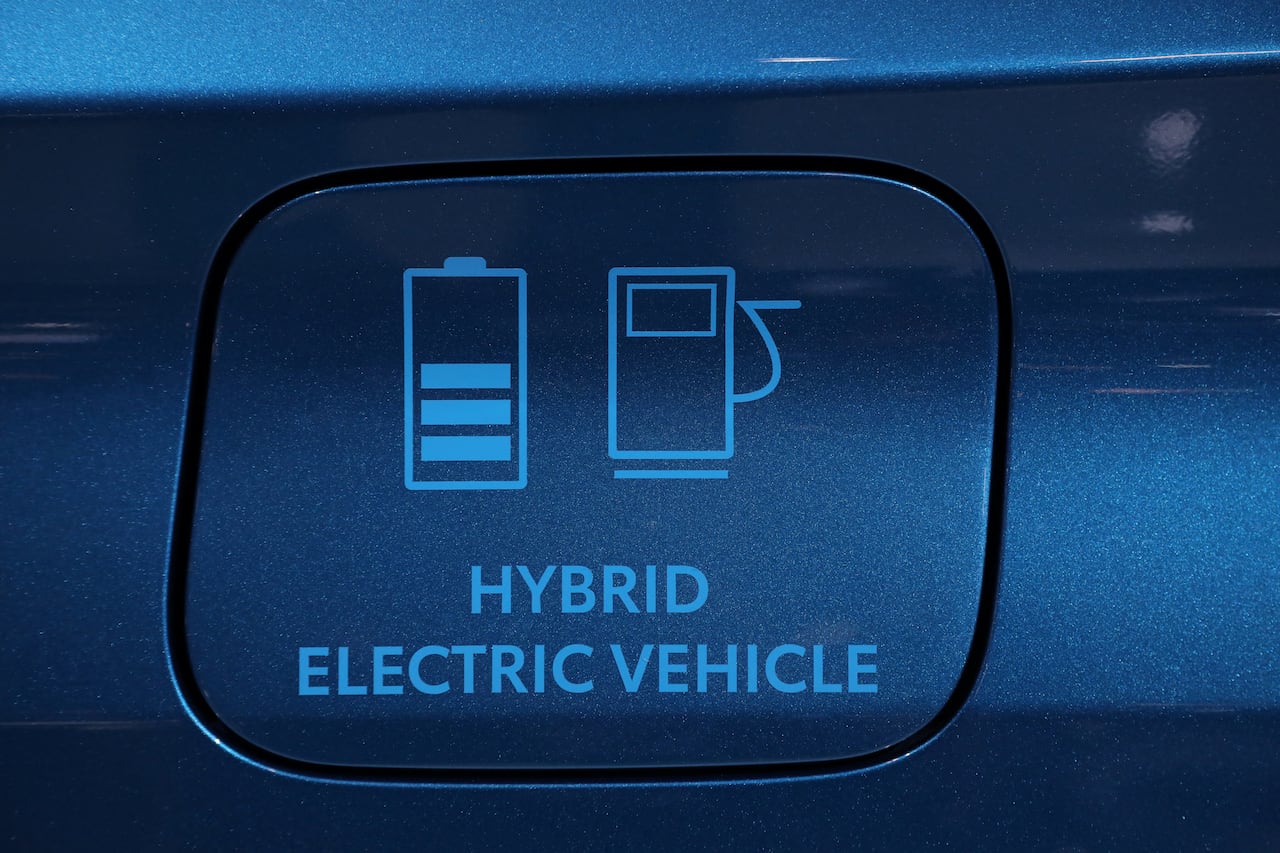 A hybrid vehicle is displayed an auto show in Canada. (Chris Helgren/Reuters)
Digital-shopping data shows growing consumer interest in both hybrids and EVs. Of all vehicle searches on the CarGurus site in April, 14 per cent were for hybrids, up from 12 per cent in the previous month. EV searches accounted for 5 per cent, up from 3.4 per cent.
“Customers are really looking at every penny,” said car dealer Brad Sowers, who has Kia, Stellantis and General Motors stores in the St. Louis area. At his Kia dealership, hybrids accounted for 35 per cent of overall sales in April, up from around 30 per cent in March.
Toyota Motor has benefited from the growing popularity of hybrids, a technology it pioneered in the late 1990s with the introduction of the Prius. In the past couple of years, Toyota has moved to hybrid-only offerings on two of its top sellers, the RAV4 SUV and Camry sedan.
In the two months since the Middle East conflict began, Toyota’s electrified sales in the U.S. grew 34 per cent, a level that mostly reflects the growing hybrid business, along with a relatively small number of full EVs. Toyota’s overall U.S. sales grew 23 per cent in that span.
Trucks still rule, despite high gas prices
The rise in fuel prices has not fazed some car shoppers. The number of large pickup trucks purchased in March and April rose 20 per cent from February, before the war, according to Catalyst IQ, which sells data services to dealerships.
Todd Szott, a car dealer with Toyota, Ford Motor and Stellantis stores in Michigan, said customers are sensitive to gas prices, but are more swayed by whatever deals the carmakers are offering. In many cases, the biggest discounts are on gas-powered vehicles.
“We’re still selling lots of pickup trucks,” he said.