
This Week’s E-Bike News Headlines
Ride1Up’s Revv1 EVO Brings Solid State Battery Tech to the Market
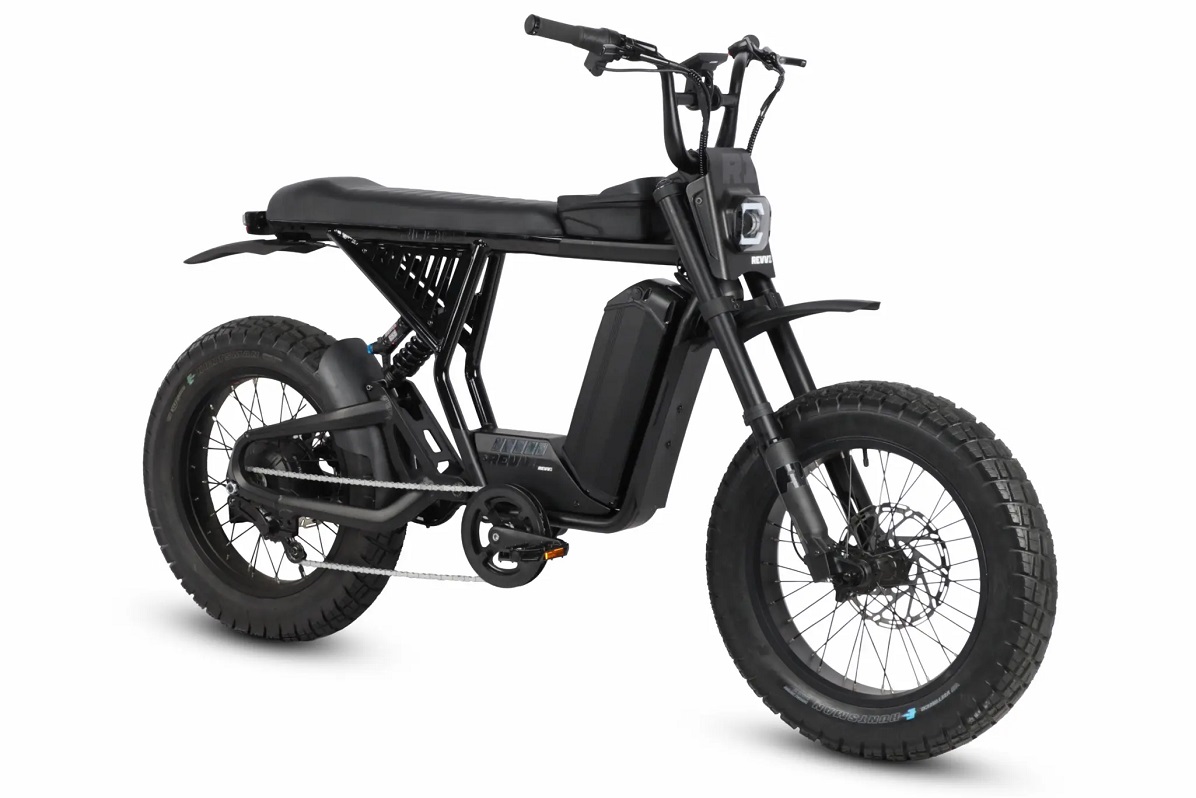
Image Source: Ride1Up
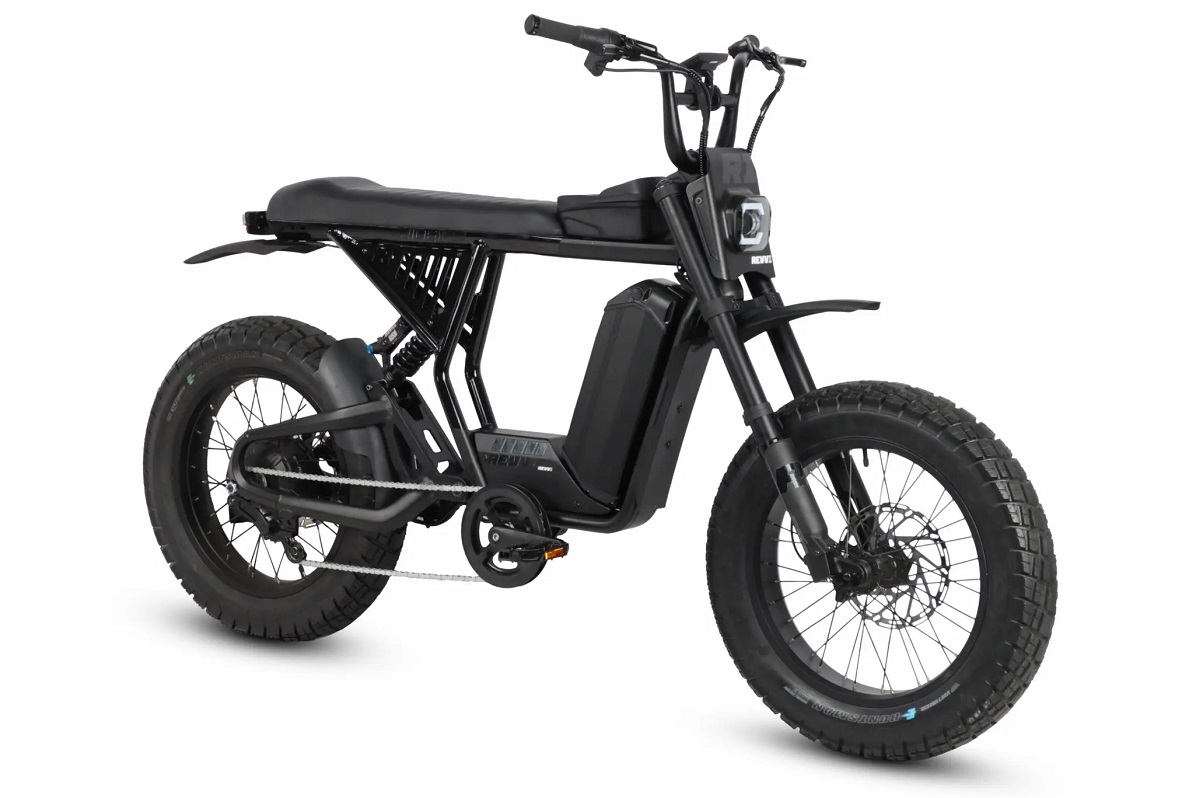
The Revv1 EVO, announced by Ride1Up this week, is an updated take on the brand’s moped-style e-bike. While familiar-looking, its styling closely resembles recent releases from Juiced and Super73. The EVO boasts high battery capacity, longer life, faster charging, and improved durability and cold weather performance when compared with lithium-ion technology.
Ride1Up’s website claims that the bike’s battery has a lifespan of over 1,200 charge cycles and a full charge time of 2 hours with a 9A fast charger. For perspective, current lithium-ion batteries typically last 500-1,000 cycles, and the EVO’s 1,040 Wh battery would take around 6.5 hours to recharge with a standard 3A lithium-ion battery charger.
While not purely solid state, the Revv1 EVO’s semi-solid-state power pack also has improved durability and resilience when compared to lithium-ion technology. It can handle fast charging with a 9A charger without a decrease in lifespan, and Ride1Up claims that it can retain 70% of its capacity at -4 degrees Fahrenheit.
Additionally, the EVO’s semi-solid-state battery uses a gel electrolyte, which is more stable that the liquid electrolyte used in lithium-ion batteries. While lithium-ion batteries can catch fire if punctured, crushed, or overheated, Ride1Up’s website says “The Revv1 Evo’s battery passed puncture, crush, thermal, and short-circuit tests without incident.”
On top of its 52V, 1,040 Wh battery, the Revv1 EVO features a 750W motor with a 2,080W peak and up to 100 Nm torque. It is also equipped with 4-piston brakes, integrated turn signals, and 20×4” all-terrain Vee Huntsman tires. For suspension, the EVO’s dual-crown fork offers an impressive 160mm travel, while its coil shock allows for 90mm of rear wheel travel.
Ride1Up states that this version of the Revv1 weighs 90 lbs (compared to 95+ for other models) and carries a 400 lb payload capacity. It will ship as a Class 2 e-bike limited to 20 mph via throttle and pedal assist, but it can also be unlocked to a faster Class 3 or off-road mode.
The bike, which is set to ship in August, is currently available for pre-order for $2,395.
Our Take:
The Revv1 has been a strong contender in the moped-style category since its release. We’ve had the pleasure of testing and reviewing each of its three versions, including the comfortable full-suspension model, the budget-friendly hardtail bike, and the powerful, off-road-ready DRT version. Each bike has been speedy, capable, and extremely fun—so we have no reason to doubt that this new version would be different.
Of course, the EVO’s battery claims are the star of the show. Giant was reportedly preparing to announce a similar semi-solid-state battery in the near future, but Ride1Up has beaten the industry titan to the punch. Of course, until the bike’s release, and until we get hands-on testing to validate or refute the company’s claims, impressive headlines can only go so far.
Still, it’s an exciting time in the industry. Solid-state technology has been called the “holy grail” of e-bikes—a promising future that has remained on the horizon. While Ride1Up’s battery tech is only a step toward that mark, it shows the potential to change the industry, and more importantly, cement e-bikes as a useful, worthwhile investment.
Battery tech aside, however, it is curious to see that the Revv1 EVO is equipped with an admittedly beastly 750W motor. While previous versions of the bike carried 1,000W nominal motors, the EVO’s departure from this trend seems to signal Ride1Up’s intention to make its moped-style e-bike fall well within the legal limits of many states’ rapidly-changing laws.
The Ride Safe Act would Govern Micromobility Devices by Speed Tiers in Massachusetts
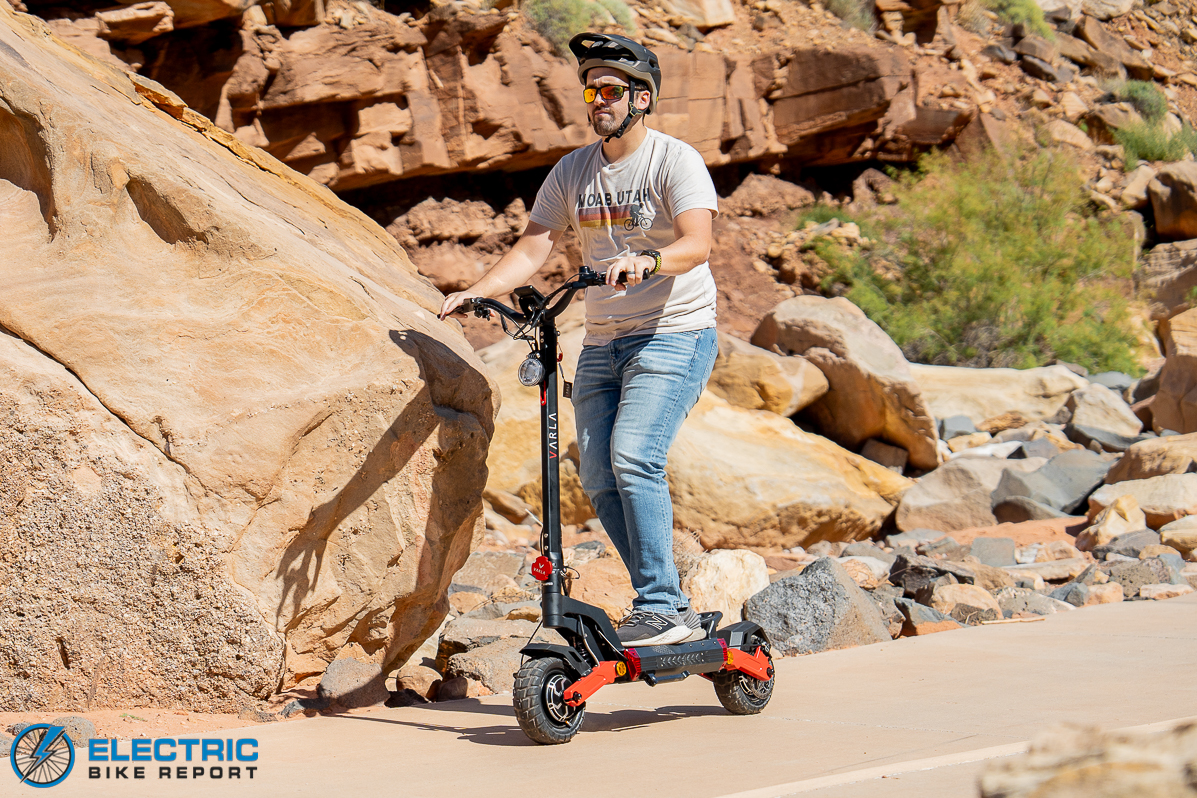
The bill, also known as S.3077, or the Ride Safe Act, was introduced by Massachusetts Governor Maura Healey. In 2024, Governor Healey signed a law into effect that required a special commission to study and recommend regulations for micromobility devices such as e-bikes, mopeds, and electric scooters.
Among many other things, the bill adds a definition for Class 3 e-bikes to Massachusetts law. Following widely accepted standards, it outlines e-bikes in this group as those offering motor assistance up to 28 mph while the rider is pedaling.
It also adds definitions for “micromobility devices” and “powered micromobility devices,” both referred to as transportation devices used as an alternative to motor vehicles on roads, bike lanes, and sidewalks. The latter are specified to be things like electric scooters, skateboards, hoverboards, unicycles, etc.
Additionally, the bill redefines mopeds or “motorized bicycles” as pedal or non-pedal devices with a motor, an automatic transmission, and a speed not exceeding 30 mph. If enacted, the bill would require annual registration and insurance coverage for mopeds. They would also be prevented from riding in bike lanes and recreational bike paths.
Perhaps most importantly, S.3077 would create a new Speed Tier system that organizes e-bikes, micromobility devices, and other vehicles into four categories.
Speed Tier 0 would include unpowered micromobility devices and powered devices that can travel 20 mph or less, including Class 1 and 2 e-bikes.Items in Speed Tier 1 would include powered micromobility devices that can travel between 21 and 30 mph, such as Class 3 e-bikes.
Those in Tier 2 would cover devices capable of speeds between 31 and 40 mph, while those in Speed Tier 3 would be anything that able to exceed 40 mph. Devices in Speed Tiers 2 and 3 would be restricted from areas shared by bikes, pedestrians, low-speed mobility devices. As such, they would be banned from sidewalks, bike lanes, bike paths, separated micromobility lanes, and shared-use paths.
The bill also establishes electrical safety standards. E-bikes would require UL 2271 and UL 2849 or equivalent certifications, while other micromobility devices would need to meet UL 2272 standards. Additionally, it prevents aftermarket modifications that exceed the manufacturer-designed speed, power, or passenger capacity.
While not the end of the bill’s scope, it also establishes age restrictions for e-bikes and mobility devices in the Speed Tier system. Riders 16 years and younger would be allowed to use Tier 0 devices as long as they are wearing helmets. Users of devices in Tiers 1, 2, and 3 would be required to be at least 16 years of age.
Our Take:
There’s no doubt that Massachusetts is aiming to organize and regulate a wide variety of devices and vehicles with a single system. The approach is ambitious and admirable, but when it comes to e-bikes alone, we can’t help but think it’s overcomplicated. For example, organizing Class 1 and 2 e-bikes into a Tier 0—and Class 3 e-bikes into Tier 1—is likely to be somewhat confusing.
PeopleForBikes has already created model legislation that organizes e-bikes into three Classes. The group has also worked to separate e-bikes from electric motorcycles and e-dirt bikes in California with SB 1167, as we covered previously.
Every state that creates unique laws and classification systems only causes more complications for e-bike manufacturers and, possibly, sellers, as they would need to make and label products to meet individual state requirements. Massachusetts’ bill is further evidence of the need for federal-level legislation that defines e-bikes and similar devices.
The CPSC Recalls 7,000 Malker and 2,800 Quemeney Bicycle Lights
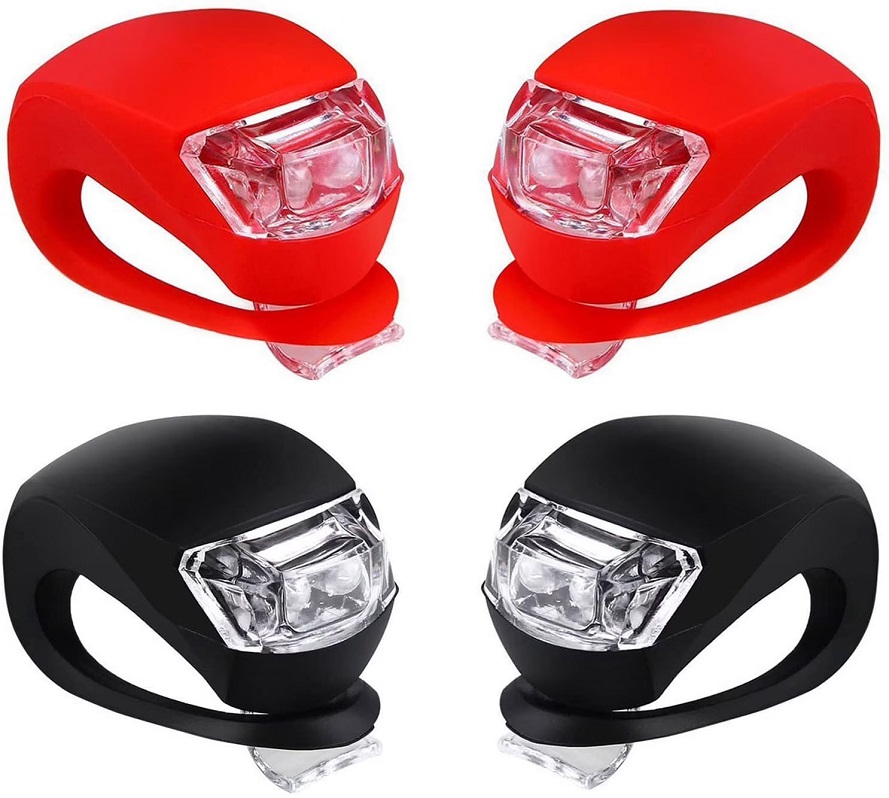
Image Source: Walmart
Three models of bicycle lights from two brands have been recalled for violating labeling and safety standards for consumer products with button cell and coin batteries. In both cases, their batteries can be easily accessed and ingested by children, potentially causing serious injuries, internal chemical burns, or death.
Fortunately, no incidents or injuries have been reported.
The first model, labeled “Malker Bicycle Light,” consists of 7,000 products made with red, black, or white silicone. They were sold on Amazon in 4- or 8-packs, for $6.99 and $9.99, respectively. Each light contains two CR2032 button cell batteries. The items were sold online from October 2025 through November 2025 by MalkerDirect.
The second and third items, consisting of 2,800 lights of models BL-01 and BL-02, were labeled “QUEMENEY.” These lights, which also contain two button cell batteries, were made in six colors: red, yellow, blue, green, black, and white.
These items were sold in 6- or 24-packs (either one of each color or four of each color, respectively) on Amazon from March 2024 through February 2026. Six-packs cost between $7 and $10, while the 24-packs were sold for between $15 and $18.
In both cases, consumers who purchased the lights should remove their batteries, throw them away, take photos of the lights in the trash, and send photos to the manufacturer for a full refund. In the case of the Malker lights, photos can be emailed to [email protected]. The email address for the Quemeney lights is [email protected].