

Listen to this article
Estimated 4 minutes
The audio version of this article is generated by AI-based technology. Mispronunciations can occur. We are working with our partners to continually review and improve the results.
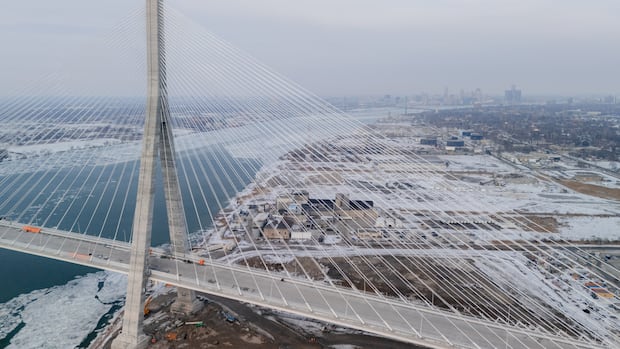
When the Gordie Howe International Bridge opens sometime this spring, it’ll include a 2.5 kilometer multi-use path for pedestrians and cyclists, connecting to local trails in Windsor–including the Trans Canada Trail — and in Detroit, including the Joe Louis Greenway.
For cycling advocate Tom Omstead and his wife Sue from Share the Road- Essex County, the concept, particularly for pedal-assist e-bike riders, just made sense.
The couple says they’ve seen a major uptick in e-bike users across the city, with both “cyclotourists” and commuters increasingly turning to these power-assisted bikes as an affordable way to get around.
So, the idea of being able to cycle safely, back and forth across the border on a toll-free path at top speeds of 32 kilometers per hour, seemed like a no brainer.
That was until the couple learned about a City of Windsor bylaw prohibiting the use of “power assisted bikes” on paved pathways, trails and sidewalks — including the proposed paved bike path on Gordie Howe International Bridge.
The Omsteads wrote to the city’s Environment, Transportation and Public Safety Standing Committee late last month— calling on the city to update the bylaw before the bridge opens.
Tom Omstead says the bylaw came as a surprise, given that the bridge was intentionally designed to create a “multi-modal modern connection” between Windsor and Detroit, not create barriers.
“We’ve got cycling corridors linking it to Essex County and the rest of Canada, like the Herb Gray Parkway, and it’s all been designed for these type of vehicles and cyclists and walkers to be shared amongst us all,” said Tom.
He adds the long-term success of those corridors will likely depend heavily on e-bike riders, who he says are “going to be probably the dominant users here.”
A recent Facebook post to Share the Road – Essex County’s page noted unless the city changes the bylaw, it won’t be “ready to accommodate what will be a significant share of the users of the bridge.”
“From both the transportation and tourism perspective, this bylaw simply doesn’t align,” said Tom. “Particularly given that many of these cyclotourists … [and] seniors traveling longer distances, increasingly are relying on these pedal-assisted e-bikes.”
It’s an issue that’s raising concerns on both sides of the border.
Todd Scott is the executive director of Detroit Greenways Coalition, a group that advocates for the building of a network of safe greenways and bike lanes that connect people and places.
He says he only learned of the bylaw and became concerned when the Windsor Bridge Authority asked him to remove that e-bikes were allowed on the Gordie Howe International Bridge from his website.
In Michigan, where e-bikes are allowed on paved pathways, Scott says the Gordie Howe International Bridge would’ve opened up a major cost and environment-efficient tourism opportunity for Detroit e-bike riders who would’ve otherwise “gone up north” in Michigan for vacation to visit Canada for a change.
“So much of what Canada has in southwest Ontario is just as good as what’s up north, and if you ride your bike, it’s not going to cost you any money and gas,” said Scott.
Now, he’s worried about what Windsor’s restrictions on e-bikes will mean for Detroiters hoping to cross the bridge–and vise versa.
“It’s a concern, because we don’t want people to be scared about coming over to Canada, and we want to encourage it as much as possible,” said Scott.
In an emailed statement to CBC Windsor, a spokesperson from the Windsor Detroit Bridge Authority said that “the policy for what is permitted on the multi-use path is being finalized which is why Detroit Greenways was asked to limit the specific content on their website.”
They added, “we look forward to sharing details once the policy is complete.”
CBC Windsor also reached out to the City of Windsor for comment, but did not hear back before publication deadline.
Tom says he hopes the city will take steps to modernize the bylaw so that it aligns “more closely to the intent of the infrastructure that’s been invested in.”
“We want Windsor to take the same approach as Detroit and the major Canadian cities,” said Tom. “Windsor’s an outlier, which is ironic, because it’s a gateway city.”