
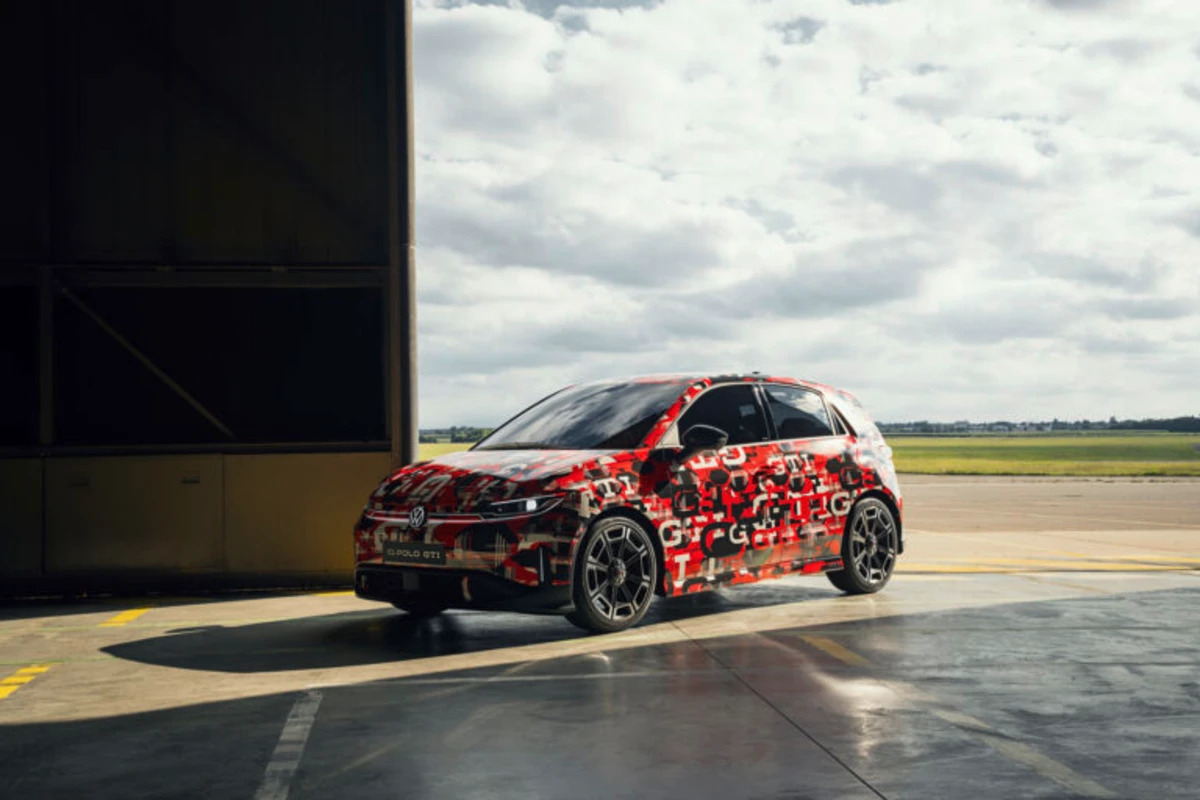
The GTI badge has meant exactly one thing for fifty years: a hot hatch with front-wheel drive, honest performance, and a price that didn’t require selling a kidney. In 1976, the Golf GTI arrived without supercar theatrics or luxury-car pretension, and it rewrote the rulebook for what a performance car could be.
Half a century later, Volkswagen has chosen the Nürburgring 24-hour race – the same venue where it has been building the GTI legend one lap at a time – to announce that those three letters are going electric. The car wearing them is not a Golf. It’s the ID. Polo GTI.
It is the first electric car to get a GTI badge, and it arrives with 223 horsepower from a front-mounted motor.
Advertisement
Advertisement
For context, the last gasoline Polo GTI managed just 197 horsepower, so the claim that this is “the most powerful production Polo of all time” per Volkswagen, holds up on paper (and wasn’t that hard to beat, honestly).
It also gets an electronic differential like you’d find on the Golf GTI, which lets the car’s computers send power to the tire that can handle it and shift torque in turns for maximum agility. The powertrain specifics VW hasn’t confirmed yet, but it apparently claims the throttle response, sound experience, and steering have been tuned to evoke the original 1976 Golf GTI.
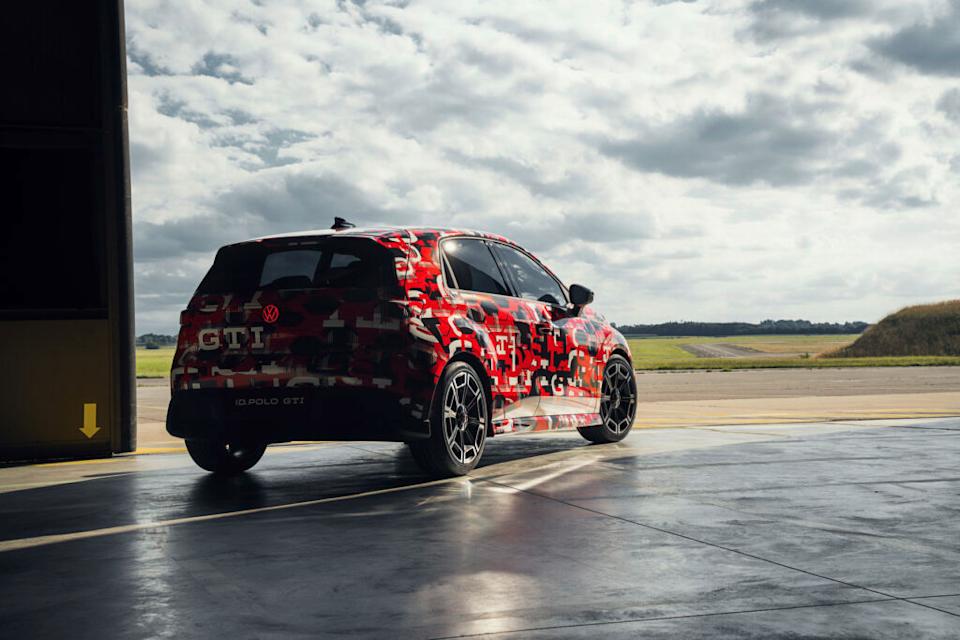 The Nurburgring Setting Is Doing a Lot of Work Here
It will be a race weekend all about the three legendary red letters, with Volkswagen celebrating 50 years of the GTI at the 24h Nürburgring running May 14–17, 2026.
The world premiere of the ID. Polo GTI takes place on the Ring-Boulevard on Friday, in front of an estimated 280,000 spectators. The next day, three Golf GTI Clubsport 24h cars take to the Nordschleife – two in the SP4T class and one in SP3T – all prepared by Max Kruse Racing from Duisburg.
Advertisement
Advertisement
Car number 50 will be driven by VW test and development driver Benjamin Leuchter, eight-time FIA World Rallycross Champion Johan Kristoffersson, and Nurburgring specialists Heiko Hammel and Nico Otto, with the aim of a class victory for the third time in a row.
Car number 10 draws a different kind of celebrity, with former German national soccer team player Max Kruse among the drivers in the SP3T class.
The race cars themselves have been updated for this year. The Golf GTI Clubsport 24h produces 397 PS and has gained active gearbox cooling as part of a wider push for reliability across the 24-hour distance, with engine calibration also revised.
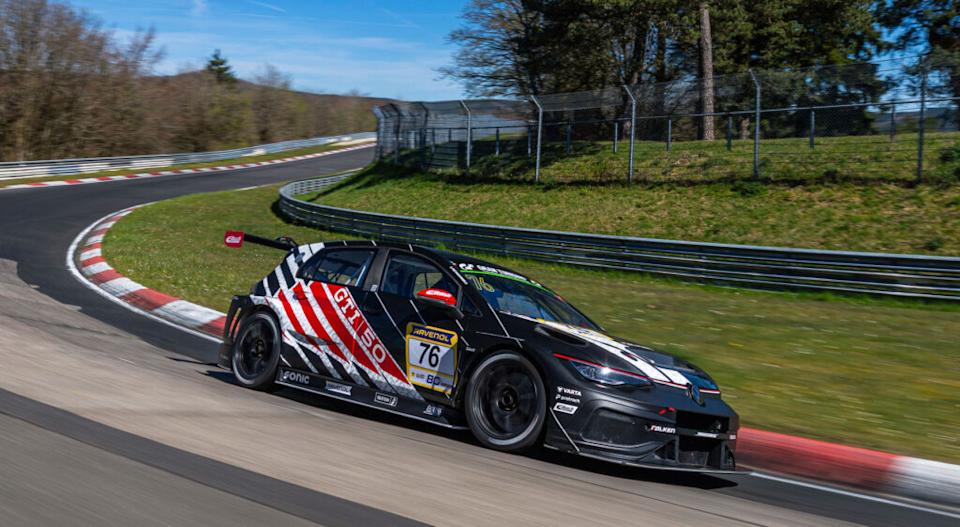
The boot lid is now carbon fibre composite, following the doors, which made the switch in 2025, bringing the total race weight to just 1,200 kg without a driver.
Advertisement
Advertisement
All three cars run on E20 fuel, made from 60 percent renewable raw materials.
The ID. Polo GTI itself will also join the parade ahead of the race. Around 40 Volkswagen GTIs spanning all eight generations will take to the Nordschleife track to greet fans lining the circuit, and the new ID. Polo GTI will be among them.
There’s also a Golf R 24H show car on display at the Ring-Boulevard, giving the first glimpse of the Volkswagen race car planned for the 24h Nürburgring in 2027.
The real question hanging over the ID. Polo GTI isn’t whether it can make 223 horsepower feel quick – I’ve no doubt it will. Electric torque in a small, light car is never slow. The question is whether VW can make it feel like a GTI rather than just a fast EV with red accents.
Advertisement
Advertisement
Volkswagen has promised to tune it to feel like a real GTI, going for the throttle response and steering of the original 1976 Golf GTI, and it even plans to make the simulated gear shifts feel authentic.
The ID. Polo GTI is confirmed to arrive in March 2027, which gives VW’s engineers some runway to back it up.