
We often talk about “inflection points” in technology as if they are scheduled events, like a product launch or a quarterly earnings call. But in reality, true shifts—the kind that alter the trajectory of an entire industry – are usually born of necessity and fueled by crisis. We are witnessing exactly that right now in Europe.
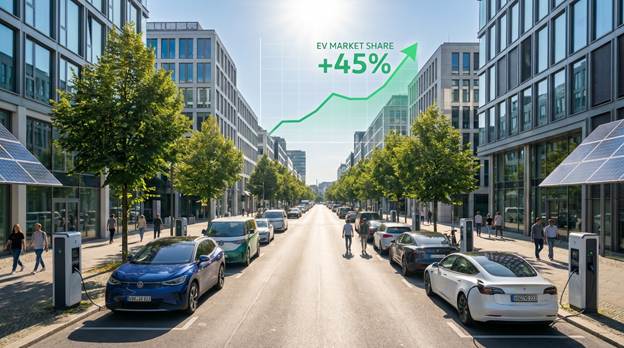
According to recent data, European EV sales surged 51 percent, with electric vehicles capturing a staggering 22% of the total market share across March and April. To put that in perspective, that isn’t just growth; it is a stampede. While the U.S. continues to debate the merits of range expectancy and charging infrastructure, Europe has effectively decided that the internal combustion engine (ICE) is a liability they can no longer afford to carry.
The Catalyst: When Oil Becomes a Weapon of Choice
The primary driver behind this 51% jump isn’t a sudden, collective realization that the environment is in trouble – though that remains a background factor. The immediate catalyst is the utter instability of the oil supply chain. Recent geopolitical disruptions have made gasoline and diesel not just expensive, but unreliable.
For the average European commuter, the “pump price” has transitioned from a nuisance to a genuine economic threat. When your ability to get to work is tied to the stability of regions thousands of miles away, a battery-electric vehicle (BEV) ceases to be a “green statement” and becomes a tool for energy independence. This “flip” is driven by a survival instinct. People are moving to EVs because electricity can be generated locally, whereas oil remains at the mercy of global cartels. This shift is validated by the International Energy Agency’s (IEA) Global EV Outlook, which notes that energy security is now a top-tier driver for electrification.
Is the Flip Sustainable?
The big question is whether this 22% market share is a temporary spike or the new floor. In my experience watching tech cycles, once you hit 20% adoption, you’ve moved past the “Early Adopters” and are firmly into the “Early Majority.”
However, sustainability depends on two things: infrastructure and parity. Europe has been far more aggressive than the U.S. in mandating standardized charging protocols, which reduces buyer friction. Furthermore, as the volume of EV production scales, the price gap between an ICE vehicle and an EV is closing. Because Europe taxes carbon heavily, the “Total Cost of Ownership” (TCO) for an EV is often lower than a gas car. Detailed TCO studies by organizations like Transport & Environment support the fact that EVs are becoming the economically superior choice for the European middle class.
Advertising
Why Europe Is Outpacing the United States
It is frankly embarrassing to look at the delta between European and American EV adoption. The U.S. is currently hovering in the high single digits or low double digits for EV market share, while Europe is hitting 22% and climbing. Why the gap?
First, geography. European commutes are generally shorter, and cities are denser. Second, and more importantly, is policy. Europe has implemented the Euro 7 standards, which make it increasingly difficult and expensive to manufacture small, affordable gas engines.
But the real reason is psychological. Europeans view energy as a national security issue. In the U.S., we treat gasoline like a birthright, and our political system is heavily influenced by the fossil fuel lobby. In Europe, the transition to EVs is seen as a way to “defund” hostile oil-producing entities. They are buying EVs to protect their sovereignty; we are still buying SUVs because we like the way they look in the driveway. The European Automobile Manufacturers’ Association (ACEA) provides the raw data that confirms this diverging trend between the two continents.
The Vehicles Leading the Charge
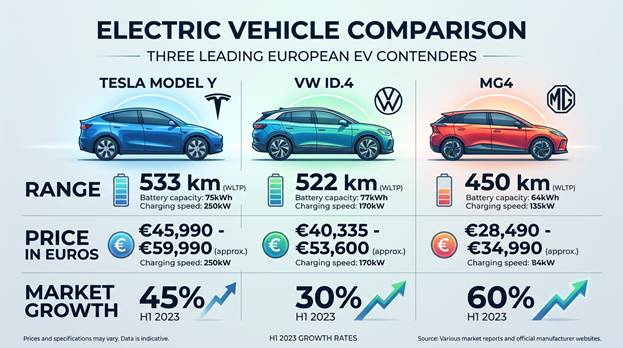
The surge isn’t just about “EVs” in the abstract; it’s about specific models that have hit the sweet spot of utility and price.
The Tesla Model Y: It remains the gold standard. Tesla’s Gigafactory in Berlin has given them a massive logistical advantage.
The Volkswagen ID.4 and ID.3: Despite early software wobbles, VW’s massive dealership network and brand loyalty are driving huge numbers.
The MG4 Electric: Produced by SAIC, the MG4 is offering incredible value, undercutting European manufacturers and proving that Chinese-backed brands are a legitimate threat.
The Volvo EX30: This small SUV is a masterclass in minimalist design, appealing directly to the affluent, eco-conscious urban professional.
The Aggressive EV Buyer Profile
Advertising
Who is driving this 51% jump? The most aggressive shift is coming from Corporate Fleet Managers and Middle-Class Suburban Families.
In Europe, company cars are a massive part of the market. With new tax incentives favoring zero-emission vehicles, fleet managers are swapping out thousands of diesel wagons to meet Corporate Sustainability Reporting Directive (CSRD) requirements. On the consumer side, the “multi-car household” in the suburbs is making their primary vehicle an EV. They realize that 95% of their driving is local, and with home electricity prices stabilized by government caps, the EV is the “smart money” choice.
The Infrastructure Reality Check
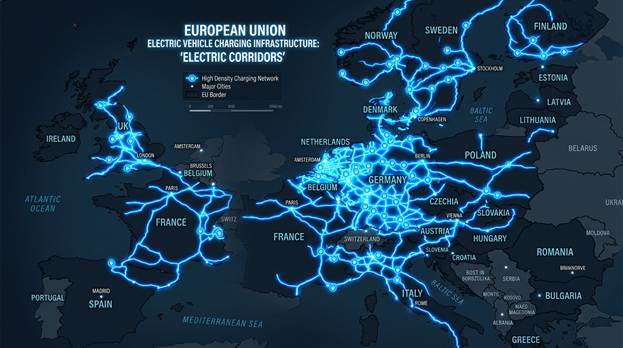
The Alternative Fuels Infrastructure Regulation (AFIR) in Europe now mandates fast-charging stations every 60 kilometers along main transport corridors. This level of government-mandated certainty gives buyers the confidence to make the switch. In the U.S., we rely on a patchwork of private networks and unreliable National Electric Vehicle Infrastructure (NEVI) rollouts. Europe has treated charging like a utility; the U.S. treats it like a luxury.
The Looming Challenges
While the numbers are celebratory, there are clouds on the horizon. The “lithium gold rush” creates a dependency on mineral processing that is currently dominated by China. Europe is working to mitigate this through the European Critical Raw Materials Act, but building a domestic supply chain takes a decade, not a quarter.
Wrapping Up
The 51% jump in European EV registrations is a watershed moment. It proves that when the cost of the status quo (oil) becomes higher than the cost of change (EVs), the market will move with breathtaking speed. Europe has reached the 22% mark because they have aligned their national security, environmental goals, and consumer economics.
For the U.S. automotive industry, this is a clarion call. If American manufacturers don’t accelerate their EV programs and if the U.S. government doesn’t get serious about infrastructure, we will find ourselves in a world where European and Chinese automakers own the future. The “flip” is here, it is sustainable, and it is leaving the laggards behind.
Disclosure: Images rendered by Artlist.io
Rob Enderle is a technology analyst at Torque News who covers automotive technology and battery developments. You can learn more about Rob on Wikipedia and follow his articles on TechNewsWord, TGDaily, and TechSpective.
Follow us today…


