
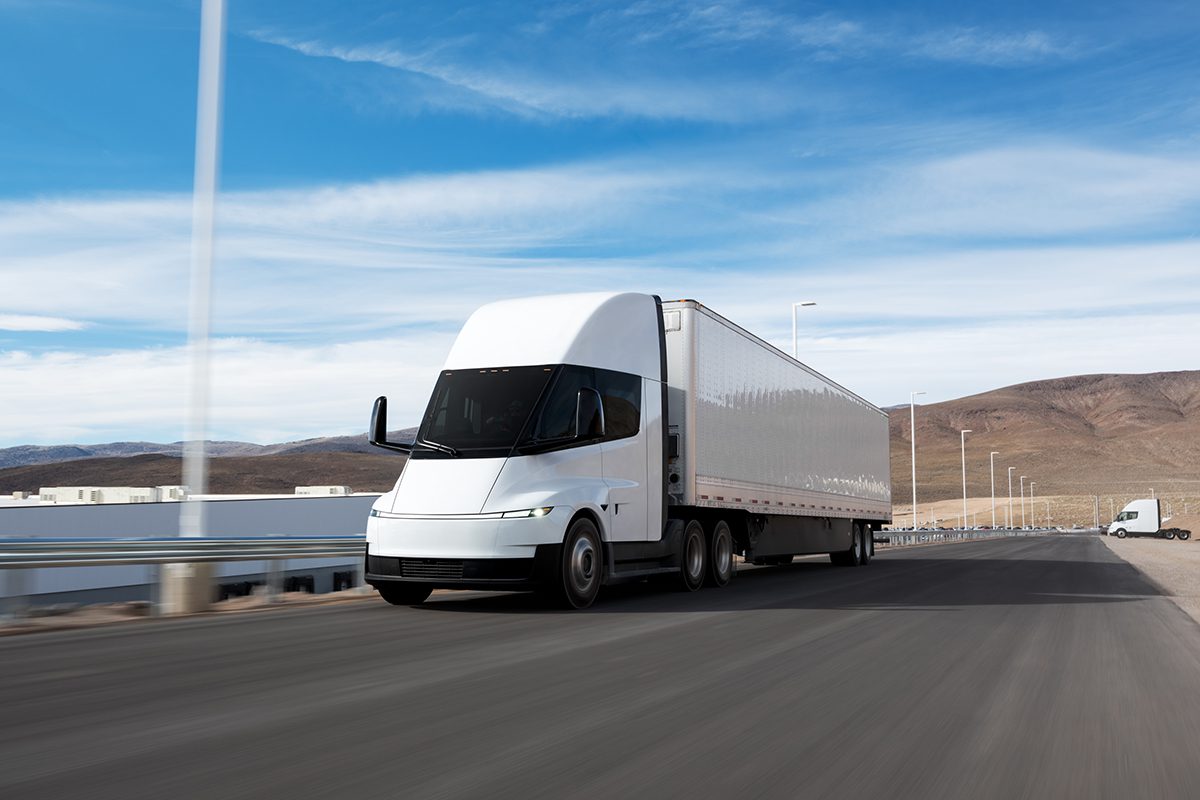
WattEV announced an order for 370 Tesla Semi Class 8 electric trucks, a deployment the company describes as the largest single electric truck deployment in California. The first 50 units are scheduled to begin delivery in 2026, with the full fleet expected to be operational by the end of 2027.
The deployment is designed to support WattEV’s broader electric freight model, which combines vehicle deployment, megawatt-class charging infrastructure and full-service leasing. The company positioned the approach as a turnkey path for carriers to electrify operations without taking on capital risk.
More than 300 of the Tesla Semis will be deployed under a joint program with the Port of Oakland. The first deliveries are expected to coincide with WattEV’s planned opening of truck-charging stations at the Port of Oakland and in Fresno. Both sites will be equipped with Tesla Megawatt Charging System chargers, which the company says can provide 300 miles of range to a Tesla Semi in about 30 minutes.
Additional depots are scheduled to open this year in Stockton, while WattEV plans to break ground in Sacramento in 2026. Those Northern and Central California stations will extend WattEV’s existing network of six operational Southern California depots located at the Port of Long Beach, San Bernardino, Gardena, Bakersfield, Vernon and Oxnard. The company also has 15 additional sites under active development as it targets gradual nationwide expansion.
“We selected the Tesla Semi based on cost, performance and availability after issuing a public request for proposals,” said Salim Youssefzadeh, WattEV’s CEO.
Youssefzadeh framed the deployment as part of WattEV’s long-haul electric freight strategy.
“This deployment is a major step toward WattEV’s national expansion into long-haul electric transportation,” he said. “We intend to be the operator that builds the infrastructure, the fleet, and the logistics platform for electrified freight delivery at scale.”
The company also tied the deployment to diesel cost displacement and total cost of ownership. Youssefzadeh said diesel fuel costs are expected to remain a decisive factor in fleet procurement decisions, and that WattEV’s electrified freight solutions allow the company to deliver goods at better economics compared with diesel today.