
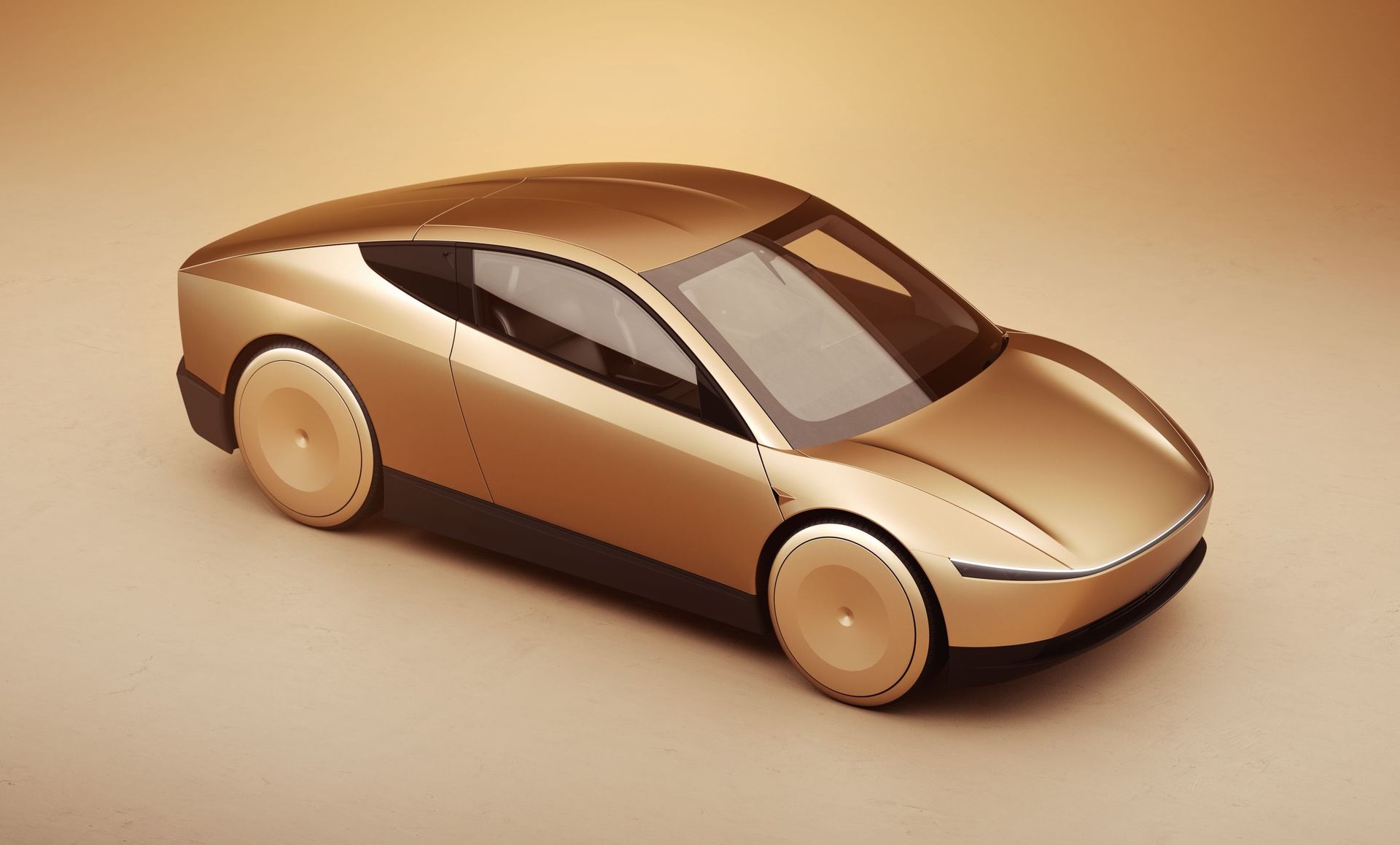
Tesla appears to be building dedicated Supercharging infrastructure for its upcoming autonomous EV fleet. If true, it would be a surprise, as we thought the company primarily planned to use a wireless charging system.
Private Superchargers
According to permit filings discovered by MarcoRP (@MarcoRPi1 / X), Tesla plans at least a few Supercharging stations that will not be available to the public.
Most recently, MarcoRP reported about two private Supercharging sites in Arizona. The first one, with 56 stalls, will be located in the Phoenix East Valley:
“Pre-permits were submitted last week to the city of Chandler for the addition of 56 V4 charging stalls in an industrial plot of land on S Roosevelt Ave.”
If the station is not publicly accessible and is too small for Tesla Semi trucks, it seems most likely that it’s for the upcoming Tesla Robotaxi (also known as Cybercab).
Tesla is planning a major Robotaxi charging buildout in the Phoenix East Valley!!
Pre-permits were submitted last week to the city of Chandler for the addition of 56 V4 charging stalls in an industrial plot of land on S Roosevelt Ave.
The application explicitly states that the… pic.twitter.com/9I3OoMRnkT
— MarcoRP (@MarcoRPi1) April 17, 2026
The second private Supercharging site in Arizona is to be located in Mesa (in an industrial area on the east side of the city), but no details have been revealed yet.
Previously, MarcoRP reported on a potential Robotaxi charging hub in San Francisco, California, where an existing parking garage on Sansome St. will have 48 stalls (18 publicly available and 30 reserved for fleet use).
A new Supercharging hub is coming soon to San Francisco, California!!
Planning permits have been filed for the addition of 48 V4 stalls in an existing parking garage on Sansome St.
18 stalls will be available for public use, while 30 stalls will be reserved for fleet use. pic.twitter.com/E1iSjh7byE
— MarcoRP (@MarcoRPi1) January 20, 2026
We can’t be 100% sure, but it seems that Tesla’s autonomous EVs will have their own Supercharging stations. There is nothing wrong with Supercharging, but we thought that the Robotaxi would rely on the wireless charging system.
The pilot EVs do not have a standard charging flap like other Teslas (it’s located in an odd, not very convenient place in the rear). It seemed like an additional solution, just in case there is no wireless charging. Additionally, the need to plug and unplug would require a human or a robot, increasing the cost of the autonomous service.
🚨 Tesla Cybercab charging port is in the rear of the vehicle!
Here’s a great look at plugging it in!!
— TESLARATI (@Teslarati) January 29, 2026
The only conclusion is that the implementation of wireless charging is not yet ready, or that the two solutions will exist side by side, at least initially.