
Oil prices, EV rebates driving interest in electric cars
Published 3:00 pm Wednesday, April 29, 2026
With the price of gas hovering above $2 a litre in Metro Vancouver for weeks, some Langley drivers have decided to directly cut down on their fuel expenses.
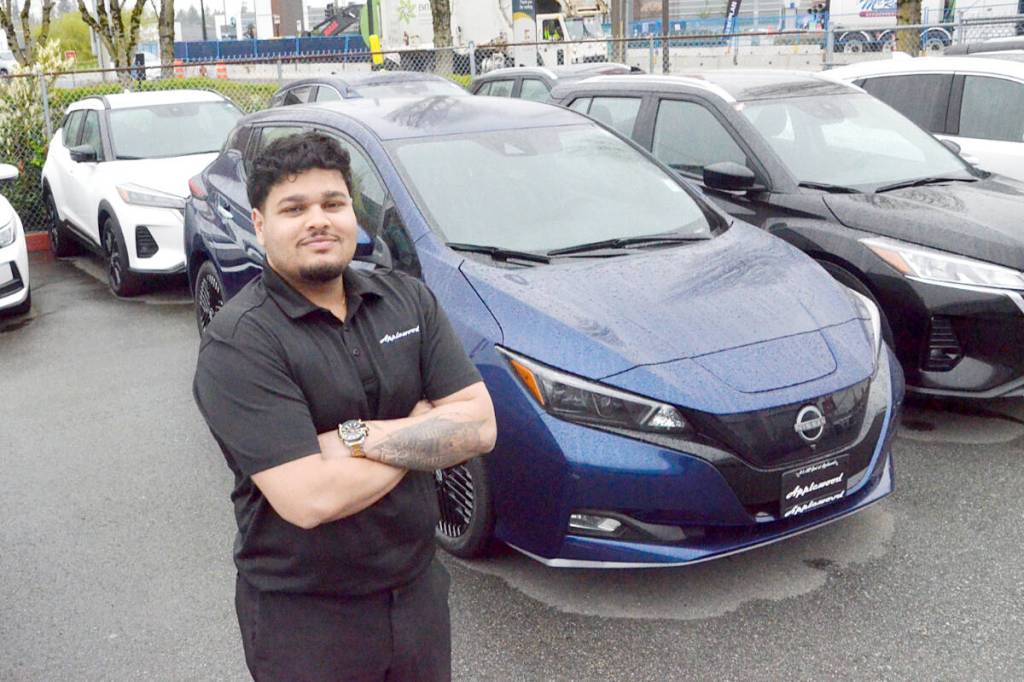
Interest in electric cars has been higher in recent weeks at Langley’s Applewood Nissan dealership, according to brand concierge Himanshu Sharma.
In January, for example, the dealership had 10 pre-owned electric vehicles on the lot. As of late April they were down to just two.
Other buyers were going for new cars, especially now that the federal government has re-instated a $5,000 rebate for electric vehicles valued at less than $50,000.
Drivers were split on which to choose.
“It depends on the budget,” said Sharma. “A lot of people like to go for the pre-owned.”
He noted that the new EVs retail for more than $40,000, whereas used Nissan Leafs retail for around $20,000 to $30,000.
Data from the Langley-based New Car Dealers Association of B.C. bears out the rising interest in battery electric vehicles (BEVs).
In February, 18.6 per cent of all new vehicle sales in the province were zero-emission vehicles, up from 13.7 per cent in January. The return of the rebates sparked that increase – the war in Iran that drove up fuel prices started on Feb. 28, at the very end of the month.
Rebates are $5,000 this year and are available for EVs that cost less than $50,000. EVs made in Canada have no dollar value cap and are always eligible for the rebate. Next year, the rebates will drop to $4,000, and they will drop by $1,000 every year until the end of March 2031, when they will be eliminated.
A similar rebate of $2,500 applies to plug-in hybrid electric vehicles (PHEVs), which will drop by $500 every year until it is eliminated.
The switch is being helped by relatively low electricity prices. British Columbia has the third-lowest residential electricity cost in Canada, after Manitoba and Quebec.
According to BC Hydro, switching from an internal combustion SUV to an electric one can save about $2,500 a year in fuel costs – a calculation based on fuel costs in 2023, when prices were fluctuating between $1.50 a litre and $2.20 a litre.
While people are considering EVs, they’re not switching in large numbers to public transit as an alternative mode of transportation.
TransLink spokesperson Dan Mountain said that as of late April, the transit agency has not seen an increase in transit ridership since the start of the war in Iran.