
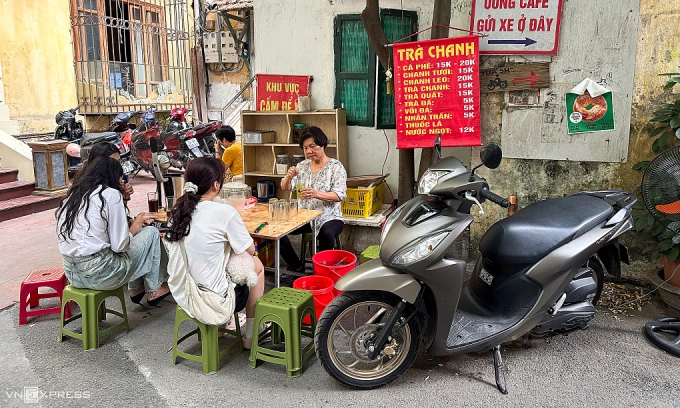
Nguyet Nga, 63, takes orders at her sidewalk tea stall near Hoan Kiem Lake in downtown Hanoi while pointing to a spotless Honda Vision she bought late last year.
Despite plans to restrict gasoline motorbikes within Ring Road 1, which encircles the downtown area, she says she will “deal with it when it comes” as electric vehicles do not yet suit her needs. Starting July 1, Hanoi will pilot a low-emission zone, restricting gasoline motorbikes during certain hours in central districts within Ring Road 1. Meanwhile, she continues to use her 15-year-old Honda Wave for daily work.
She believes policies will reflect real-life conditions and not be implemented too abruptly, and so expects gasoline motorbikes to remain in use even in central Hanoi. She says she understands the policy as a restriction rather than a full ban, which supported her decision to buy a new gasoline motorbike.
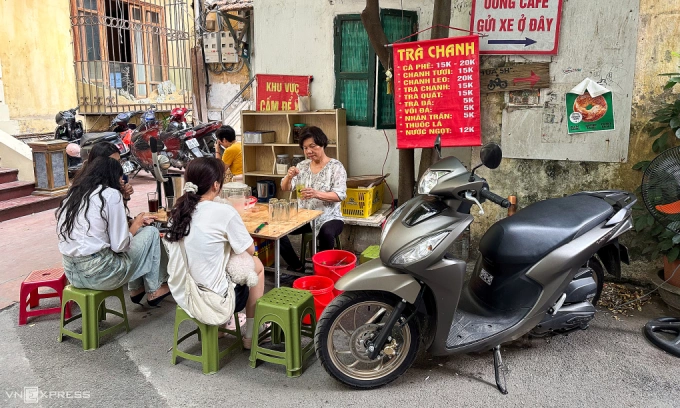
Nguyet Nga, 63, at her iced tea stall, where she always parks her gasoline motorbike beside her. Photo by VnExpress/Minh Quan
Although family and friends have encouraged her to switch to EVs, she remains hesitant. Living in an old apartment complex with unreliable electricity, she worries that power outages could prevent her from charging the vehicle when it is urgently needed. This concern is common among residents in her building, where charging infrastructure remains limited. She also owns a house where several motorbikes are stored on the ground floor, but fears a battery malfunction while charging vehicles overnight could cause a fire.
Nga is hardly an outlier. Many people in the city remain reluctant to abandon gasoline motorbikes.
Honda Vietnam reported that its motorbike sales in Hanoi, mostly gasoline-powered, did not decline in the first quarter, while sales across northern Vietnam rose by 3%. The Vietnam Association of Motorcycle Manufacturers, which includes five companies, similarly reported an 8.3% year-on-year increase in sales in the first quarter.
Manufacturers said the figures indicate gasoline motorbikes remain in demand despite increasing policy pressure to reduce emissions. Dealers within Ring Road 1 reported weaker walk-in traffic due to rising demand for EVs, but those who visit typically make quick purchasing decisions.
At a dealership on Nguyen Luong Bang Street, Nguyen Huong, 49, bought a new Honda Lead, her family’s third. She says she likes its design and that charging an electric motorbike takes too long. At another dealership on Tran Khanh Du Street, some parents looked for scooters for their children as they prepared to enter university. Thanh Hoai, who went with her daughter, says she initially considered an electric motorbike in light of the policy changes, but then her apartment does not allow charging.
Dang Thanh, 23, who works near Ring Road 1, faces a similar problem. She could charge her electric motorbike at her previous rented home, but her new apartment prohibits it. Public charging stations are an option, but she says they are inconvenient and time-consuming, often requiring 30 minutes to an hour, including the travel time. “I may have to ask to charge at a neighboring building,” she said. “If that is not possible, I will sell my electric bike and go back to a gasoline one.”
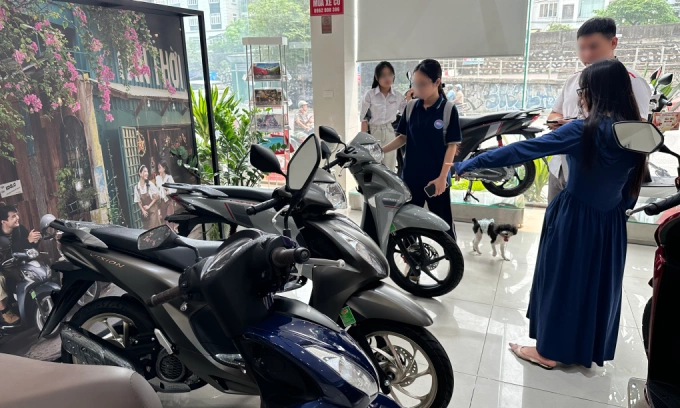
Hoai (in blue) and her daughter shop for a motorbike. Photo by VnExpress/Minh Quan
Industry experts say gasoline motorbikes have proven their convenience over decades of widespread use in Vietnam, making it difficult for users to switch quickly. While policies promoting low-emission transport are expected to continue, the transition may cause disruptions, particularly in densely populated urban areas such as Hanoi and HCMC.
A director at an electric motorbike company says battery-swapping models could offer a solution. These allow users to replace batteries instead of charging them, reducing fire risks and shortening waiting times to levels similar to refueling gasoline vehicles. But he admits battery-swapping stations remain limited compared to gas stations.
Experts say gasoline and electric motorbikes are likely to coexist in the near term rather than replace one another entirely. Consumers who are not ready to give up gasoline vehicles may adopt electric ones as a secondary option for use in restricted areas.
Electric motorbikes are only one of several solutions for reducing emissions but gasoline vehicles have not been taken off roads yet. Some people are considering alternatives such as public transport.
For Nga, the fallback plan is simple: “If gasoline motorbikes are completely banned in the future, I will ride a bicycle.”