
April 22, 2026
By Karan Singh
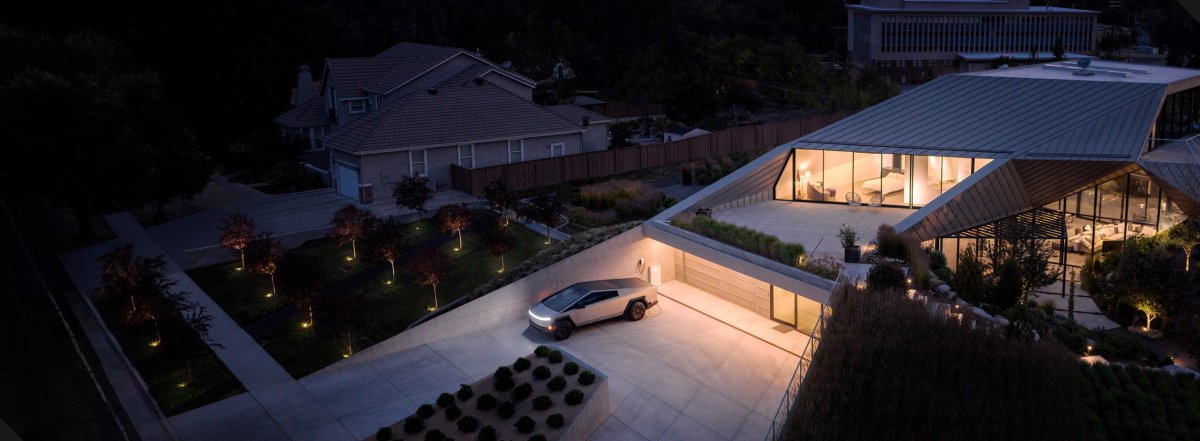
Earlier this year, Tesla unlocked the true potential of the Cybertruck’s massive battery pack by introducing Powershare Grid Support in Texas. Now, Tesla is officially expanding its Vehicle-to-Grid (V2G) and Vehicle-to-Everything (V2X) capabilities to the largest electric vehicle market in the United States: California.
PG&E and @Tesla have just announced that the Cybertruck, Tesla Powershare Gateway and Tesla Universal Wall Connector have all been approved for participation in PG&E’s residential Vehicle‑to‑Everything (V2X) program, marking a major milestone for bidirectional EV integration in… pic.twitter.com/kjrF7kyLKO
— Sawyer Merritt (@SawyerMerritt) April 20, 2026 The PG&E Integration
According to a recent press release from Pacific Gas and Electric Company (PG&E), Cybertruck owners within their massive service territory can now enroll in the utility’s residential V2X program. This integration allows owners to actively use their trucks to support the local electrical grid and get paid for their energy contributions.
Tesla Energy officially confirmed the expansion on X, highlighting the dual benefits of the program.
.@Cybertruck, Tesla Powershare Gateway & Tesla Universal Wall Connector can now participate in PG&E’s residential Vehicle‑to‑Everything (V2X) program
Powershare Grid Support lets you power your home in an outage & earn money by selling power back to the electric grid during grid…
— Tesla Energy (@teslaenergy) April 20, 2026 Hardware Requirements
To participate in the California program, owners will need three specific pieces of hardware: the Cybertruck itself, a Tesla Powershare Gateway, and a Tesla Universal Wall Connector. This specific hardware combination allows the vehicle to safely isolate the home from the grid during a blackout to provide backup power, while also enabling it to seamlessly export energy back to the electrical grid when authorized.
Earning Money While Parked
The primary draw of Powershare Grid Support is the financial incentive. During periods of high grid stress, such as extreme summer heatwaves when air-conditioning demand spikes, PG&E will call on enrolled vehicles to discharge a portion of their battery packs back into the electrical grid.
In exchange for providing this distributed energy, Tesla owners will earn money. This effectively turns Cybertrucks into a grid power bank and generates revenue for the customer when the vehicle isn’t in use.
Building on the Texas Foundation
This California expansion follows the successful launch of V2G features in Texas back in February 2026. By proving the technology in two of the largest and most demanding energy markets in the country, Tesla is actively demonstrating how electric vehicles can act as mobile Megapacks. As more trucks hit the road, this decentralized network of batteries will play a crucial role in stabilizing local grids and providing vital backup power to communities.
Subscribe to our newsletter to stay up to date on the latest Tesla news, upcoming features and software updates.
April 22, 2026
By Nehal Malik

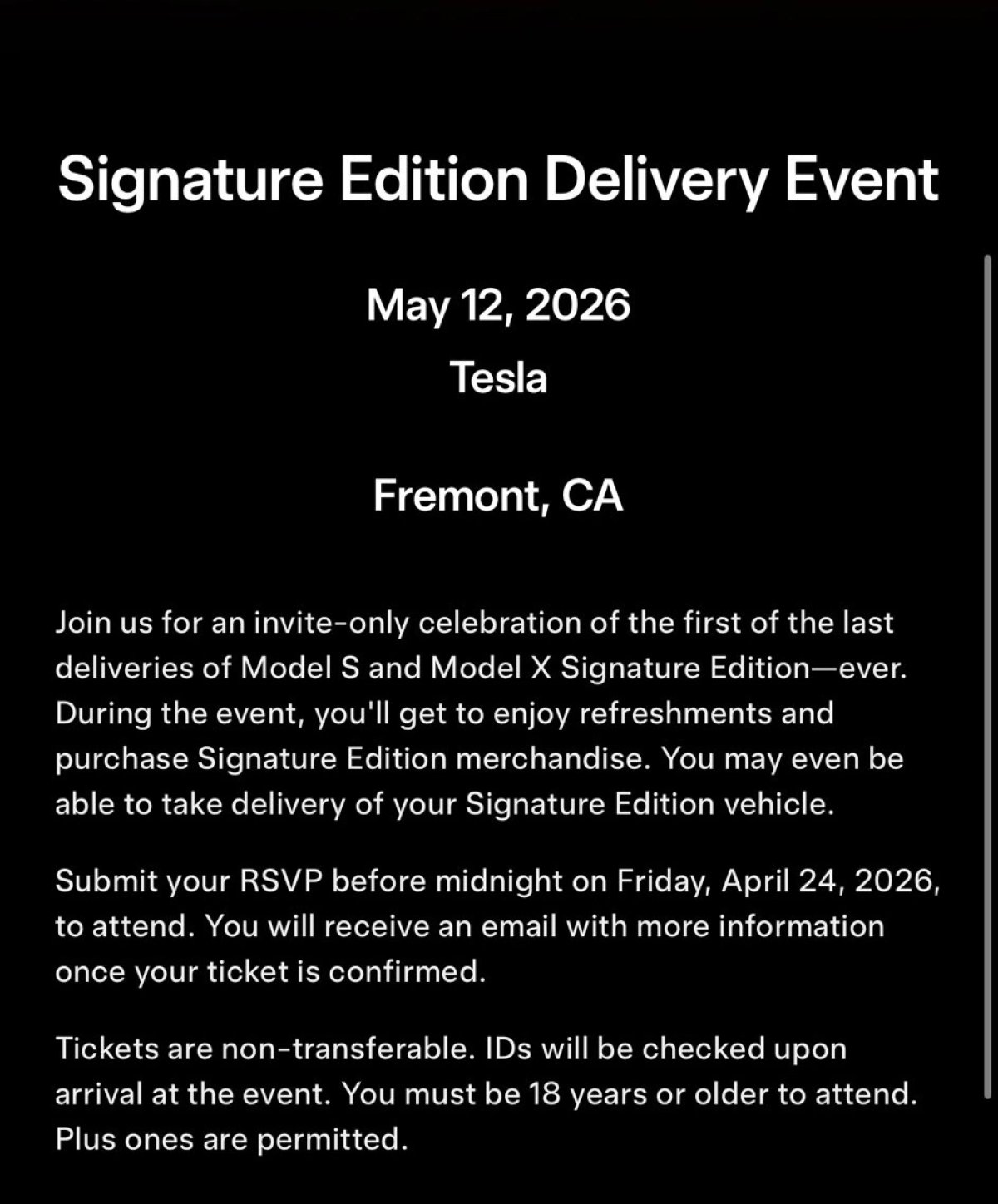
Tesla is officially preparing to say goodbye to the two vehicles that defined its rise to global dominance. The automaker has begun sending out invitations for an exclusive delivery event at its Fremont, California, factory to celebrate the final production run of the Model S and Model X.
According to the invite, shared by Tesla watcher Sawyer Merritt (@sawyermerritt) on X, the “Signature Edition Delivery Event” is scheduled for May 12, 2026. Tesla invites customers to “Join us for an invite-only celebration of the first of the last deliveries of Model S and Model X Signature Edition—ever.” The company noted that attendees will be able to enjoy refreshments and purchase exclusive merchandise, adding that “You may even be able to take delivery of your Signature Edition vehicle.”
 The Final 350 Units
These Signature Edition vehicles are the ultimate collector’s items for Tesla enthusiasts. Tesla is producing just 250 units of the Model S and a mere 100 units of the Model X. While the Model X Signature Edition is already reportedly sold out, the Model S units are likely nearing their limit.
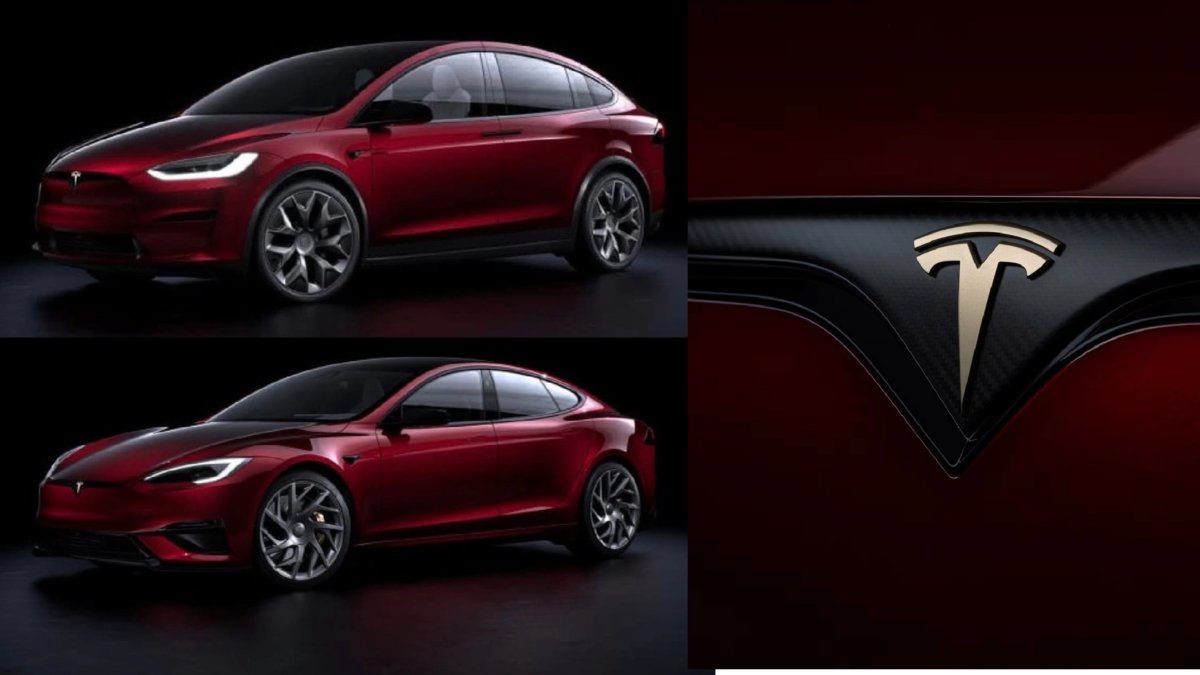
These aren’t your standard Plaids, either; they feature a bespoke “Garnet Red” paint, gold Tesla “T” badges, and a numbered dashboard plate (e.g., 1/250), along with other unique touches. Inside, the cars feature a white theme with gold piping and Alcantara accents. This ultra-limited run comes with a steep price tag of $159,420, which is a significant jump over the $124,990 price for a standard Model S Plaid following recent inventory price hikes.
 Strict Terms for a Legendary Send-off
Because of their extreme rarity, Tesla is taking steps to ensure these cars don’t immediately end up on auction sites. Buyers are required to sign a one-year no-resale agreement and also give Tesla the right of first refusal when they do decide to sell.
Additionally, these final units include the “Luxe Package,” which bundles Lifetime Supercharging, Full Self-Driving (Supervised), four years of Premium Service, and Premium Connectivity. However, owners should keep in mind that these high-value perks cannot be transferred to a second owner, making the first owner the only one to truly enjoy the “all-inclusive” nature of these final flagships.
An Era Comes to a Close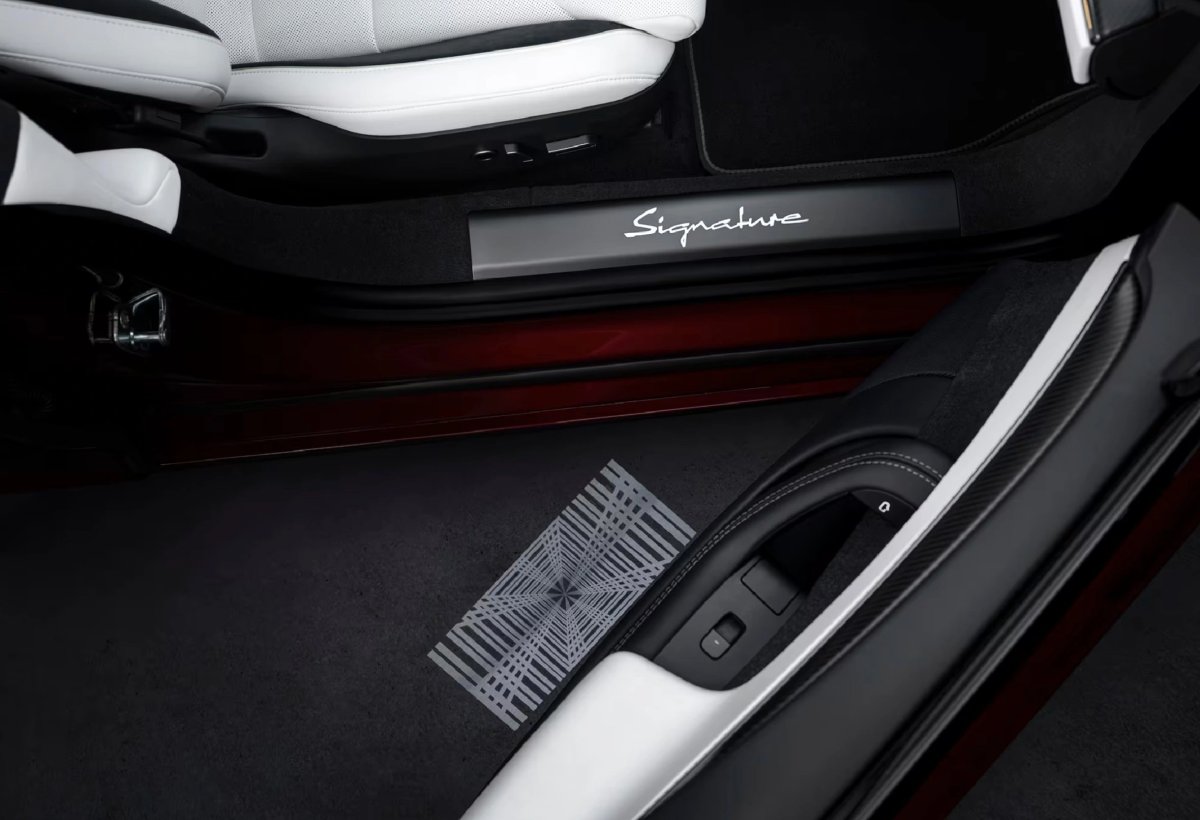
The May event is more than just a delivery day; it marks the end of an era. The Model S and Model X were the vehicles that proved electric cars could be sexy, fast, and practical on a global scale. Tesla officially closed custom orders at the end of March, and with inventory nearly cleared out, these Signature Editions represent the final exclamation point.
As the Fremont production lines pivot toward mass-market projects and the Optimus robot, the May 12 celebration will be a sentimental look back at the cars that started it all. For the lucky few who were invited to order a Signature Edition, it’s a chance to own a piece of automotive history before Tesla moves fully into its next chapter.
April 22, 2026
By Karan Singh
Tesla recently shared a new video highlighting the operational status and environmental innovations at its Texas Lithium Refinery. The footage provides a closer look at the facility’s interior, its workforce, and the cutting-edge processes designed to drastically reduce the carbon footprint of battery production.
Building on previous updates confirming that the new facility has entered production, this release visually demonstrates how Tesla is flipping the script on traditional, highly polluting lithium refining methods.
Our Lithium Refinery is designed to have a much lower carbon footprint than traditional hard rock refineries
– Acid-free refining helps produce a safe coproduct
– Water is recycled throughout production, with every drop treated & cleaned on site
– Designed to close the loop for… pic.twitter.com/lk4fucACGC
— Tesla North America (@tesla_na) April 18, 2026 Acid-Free Advantage
Traditional hard rock lithium refineries rely heavily on highly corrosive acids, which produce hazardous waste as a byproduct. Tesla’s Texas facility employs an innovative acid-free alkaline leaching process on spodumene.
This revolutionary method being pioneered by Tesla achieves two key environmental victories. First, the alkaline leaching process cuts carbon emissions by an impressive 34% compared to traditional hard rock refining methods.
Second, is that instead of generating toxic sodium sulfate waste, Tesla’s process generates analcime sand. This is a completely safe, inert co-product that can be repurposed and sold as a building material for concrete mixtures, turning a disposal challenge into a secondary revenue stream.
Water Conservation at Scale
Water consumption is notoriously high in traditional mining and refining sectors. To combat this, Tesla emphasizes that water is heavily conserved and recycled throughout the entire production process.
According to Tesla, every single drop used at the facility is treated, cleaned, and continuously monitored on site. By using fewer steps and fewer harsh chemicals overall, the refinery significantly minimizes its environmental impact on the local Texas water table.
Closing the Loop and Securing the Grid
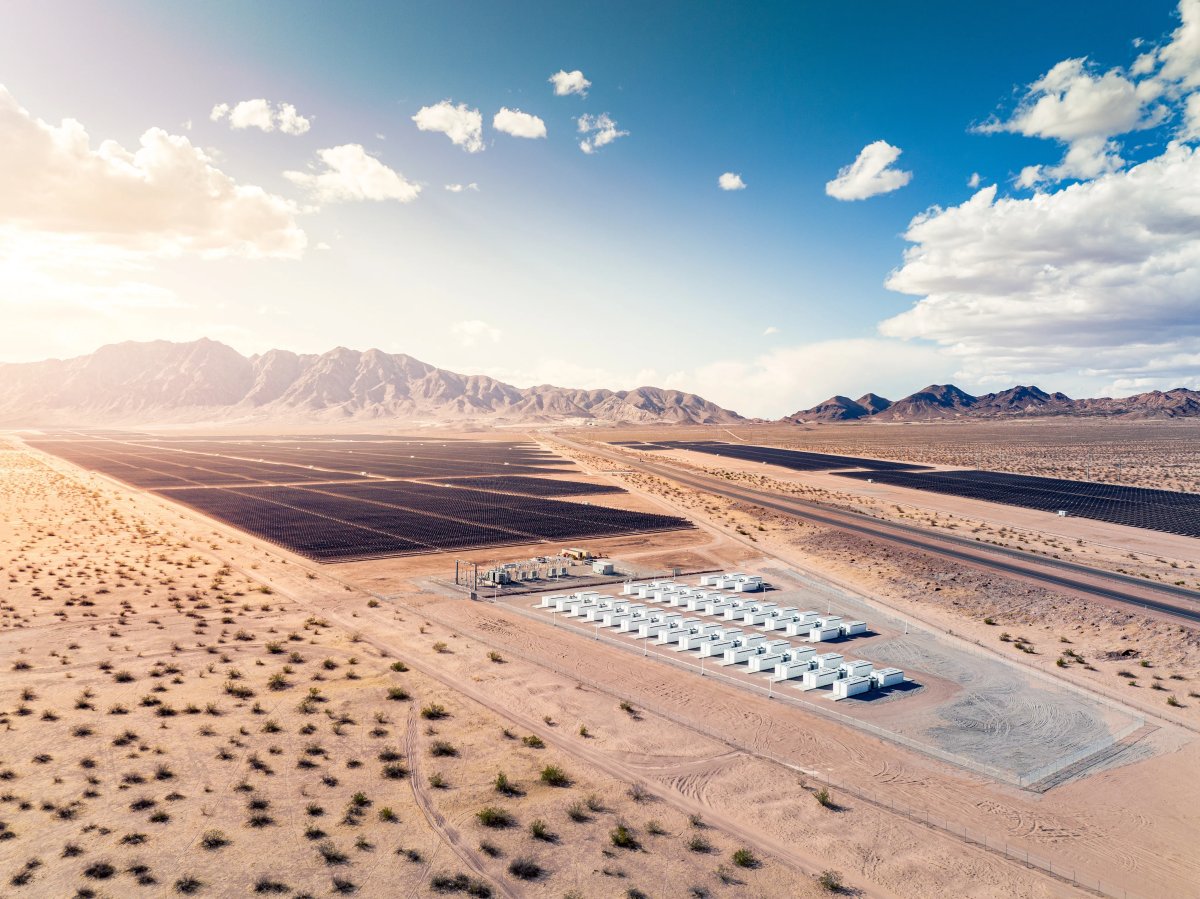
The video footage also highlights the installation of massive Megapack clusters on the property. These utility-scale battery systems provide critical grid stability, ensuring the facility maintains reliable power during intensive industrial operations without placing undue strain on the local Texas power grid.
Ultimately, this facility represents another step in Tesla’s vertical integration strategy. By refining its own lithium right in North America, Tesla is securing a steady, lower-impact supply of battery-grade materials. As noted in the announcement, the refinery is explicitly designed to close the loop for lithium in Tesla’s battery supply chain, supporting both raw material processing today and future battery recycling initiatives tomorrow.