
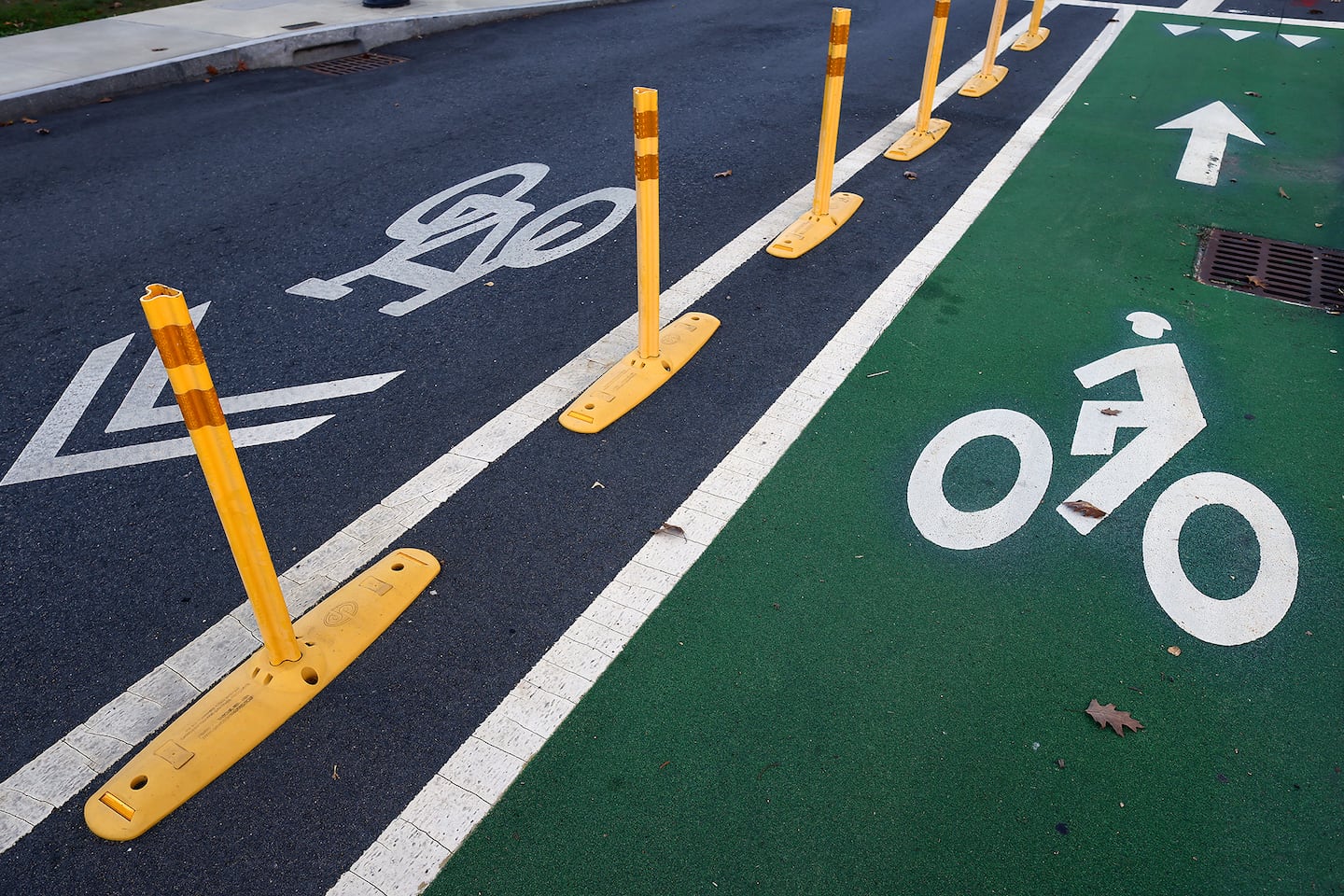
Over the last two decades, America’s roads have grown more diverse, with electric bikes, scooters, mopeds, e-motos, powered skateboards, e-unicycles, and wheeled gadgets that defy easy description an increasingly common sight.
In theory, this is a good thing. Smaller, more efficient vehicles are good for the environment, cut down on pesky double-parking, and can offer young and budget-constrained users a viable transportation option.
But busy and congested roadways like Boston’s have been hard-pressed to incorporate this cacophony of new transportation modes into a regulatory framework that was built around cars, pedestrians, regular bikes, and motorcycles.
Can you ride a e-bike on a bike trail? If so, what kinds? Do mopeds belong in bike lanes and if not … where do they belong?
A new report from a state commission has recommended a framework for bringing some more order to the streets. It’s not likely to end the discussion. But these recommendations would provide more workable legal definitions and regulations and they deserve support from the Legislature.
Get The Gavel
A weekly SCOTUS explainer newsletter by columnist Kimberly Atkins Stohr.
The commission’s charge was to defuse growing conflicts over sidewalks, bike lanes, and other shared spaces. New devices also have also introduced safety risks that authorities need to address. Last year a pedestrian in Back Bay was killed by an e-bike rider, spurring calls for regulations, and researchers nationally have noted an uptick in e-bike-related injuries.
Faced with similar pressures, some states, like New Jersey, have moved aggressively to require all e-bike users to have licenses and registration. Just last week, the Illinois Legislature advanced legislation that, among other things, would forbid riders under 15 from using any kind of e-bike. Some states have also specifically targeted e-bike riding under the influence of drugs and alcohol.
The Massachusetts commission, which was established as part of legislation passed in 2024, attempts to steer a more moderate course. The recommendations do not call for any prohibitions or bans on any specific vehicle types, which may disappoint some safety advocates, and they do not go as far as New Jersey did in requiring licenses for e-bikes. Drinking and riding e-bikes would still not be a crime (though disorderly conduct is, so don’t get any ideas).
But the recommendations would set up a more rational system for categorizing and regulating these devices, and institute some common-sense rules.
For instance, the commission recommends setting a minimum age of 16 for riders of the fastest e-bikes, known as Class 3 e-bikes, which can go up to 28 miles per hour. It would also require all riders of Class 3 e-bikers to wear helmets.
The commission also recommends making moped riders carry insurance. Mopeds do not necessarily go any faster than e-bikes, but they are heavier — meaning, they can do more damage in a collision. Mopeds would also be booted from bike lanes under the proposals.
A main feature of the recommendations is that they call for comprehensive vehicle definitions that categorize everything ranging from electric skateboards to mobility aids like power wheelchairs, and then slot them into speed-based tiers that dictate where they are allowed to operate.
Mopeds and all vehicles traveling at or above 31 miles per hour would be excluded from bike lanes. Combined with another recommendation, which asks the Legislature to institute a mandatory 20-mile-per-hour speed limit on all shared paths, road users could expect immediate roadway safety improvements.
Shared paths are all the places where foot traffic and cyclists — all transit modes except cars — meet. Think of places like the Esplanade. With the increasing capabilities of new devices, this baseline speed limit is beneficial for everyone — though localities that wanted to allow higher speeds on trails would be allowed to.
All of this change requires proper enforcement, which is almost impossible if authorities can’t quickly tell vehicles types apart. Faster e-bikes often look almost exactly the same as slower vehicles. So the commission recommends creating a micro ID decal that would display important vehicle information, like top speed and vehicle category on a scannable sticker. Faster e-bikes would be required to have one of the decals.
The rest of the recommendations are also valuable, but serve a longer time horizon. They include things like public education campaigns, new street design guidance, and expanding micromobility studies.
While pondering those longer-term ideas, legislators should also be willing to reopen the questions that the commission grappled with. We’re not convinced that insurance or licensing on the fastest e-bikes might not become necessary at some point, especially if regulations in other states continue to tighten and make Massachusetts an outlier. As evidence of e-bike related injuries mounts, regulations for the devices may need to be revisited.
But that’s for another day. By starting with recommendations that can garner wide consensus, lawmakers can immediately address at least the worst of the traffic chaos.
Editorials represent the views of the Boston Globe Editorial Board. Follow us @GlobeOpinion.