
Most automakers across the globe have a conundrum on their hands. On one hand, the future roads are almost certainly filled with electric vehicles (EVs), and developing the technology, branding, and growing sales is critical. On the other hand, most automakers lose billions annually on their current EV lineup, and entering the market too early caused a massive pivot and huge charges, such as Ford Motor Company’s (F +3.46%) near $20 billion charge toward the end of 2025.
In 2026, foreign rival Toyota (TM +2.04%) sold more EVs than Ford in the first quarter with only one vehicle model. Here’s why it’s a big deal.

Today’s Change
(3.46%) $0.43
Current Price
$12.87
Key Data Points
Market Cap
$51B
Day’s Range
$12.62 – $13.04
52wk Range
$9.35 – $14.79
Volume
46M
Avg Vol
60M
Gross Margin
6.52%
Dividend Yield
4.66%
What’s going on
The EV industry’s training wheels are officially off, and investors now have a better understanding of how important government incentives, such as the $7,500 federal EV tax credit, are. The U.S. EV industry is now forced to support sales and drive demand by focusing on more affordable products, better pricing and branding strategies, and infrastructure development.
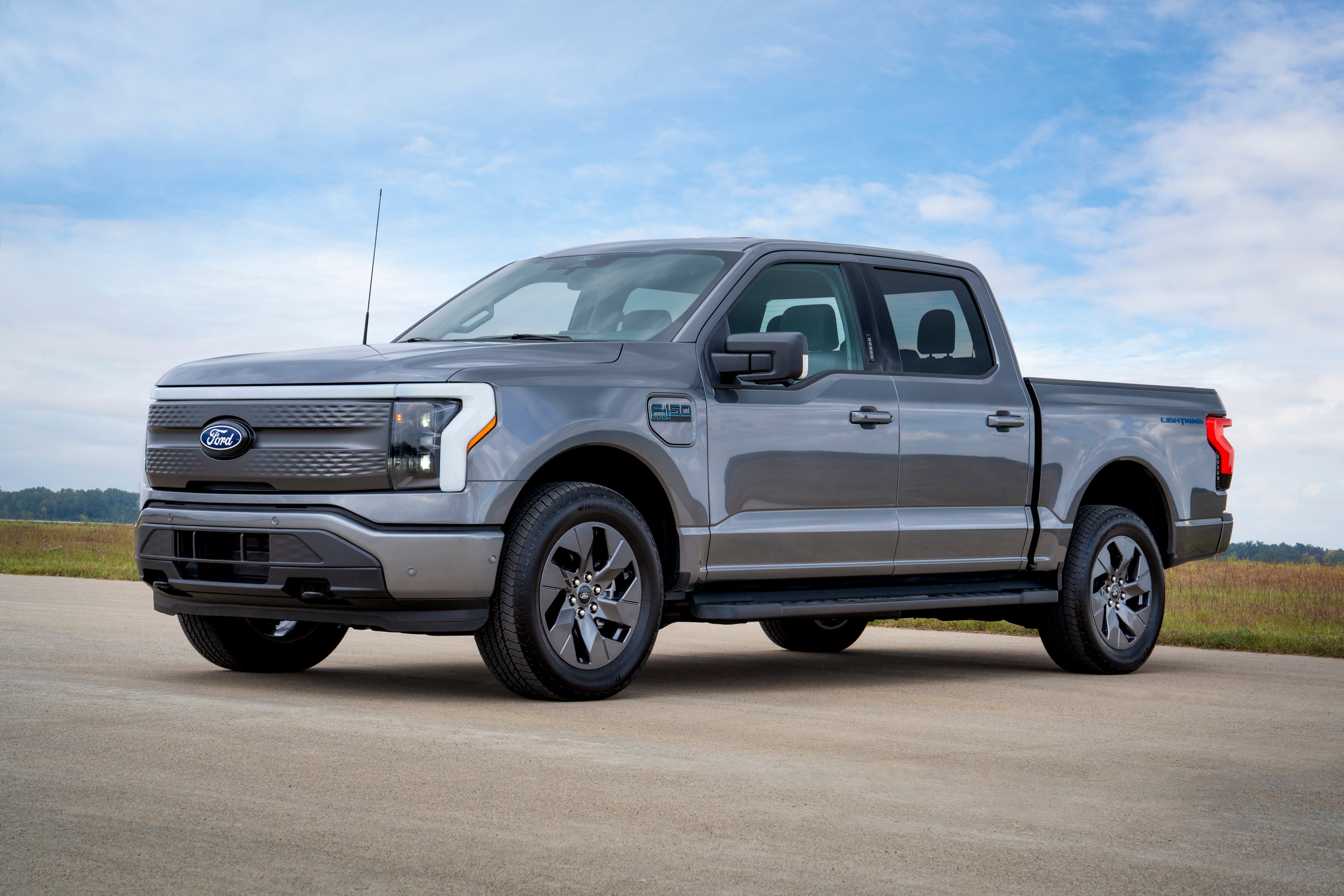
Image source: Ford Motor Company.
EV sales in the U.S. dropped 27% during the first quarter, compared to the prior year, according to Cox Automotive. EV market share was 5.8% of new-vehicle sales during the first quarter, flat from the fourth quarter of 2025, and far below the 10.6% peak in the third quarter of 2025.
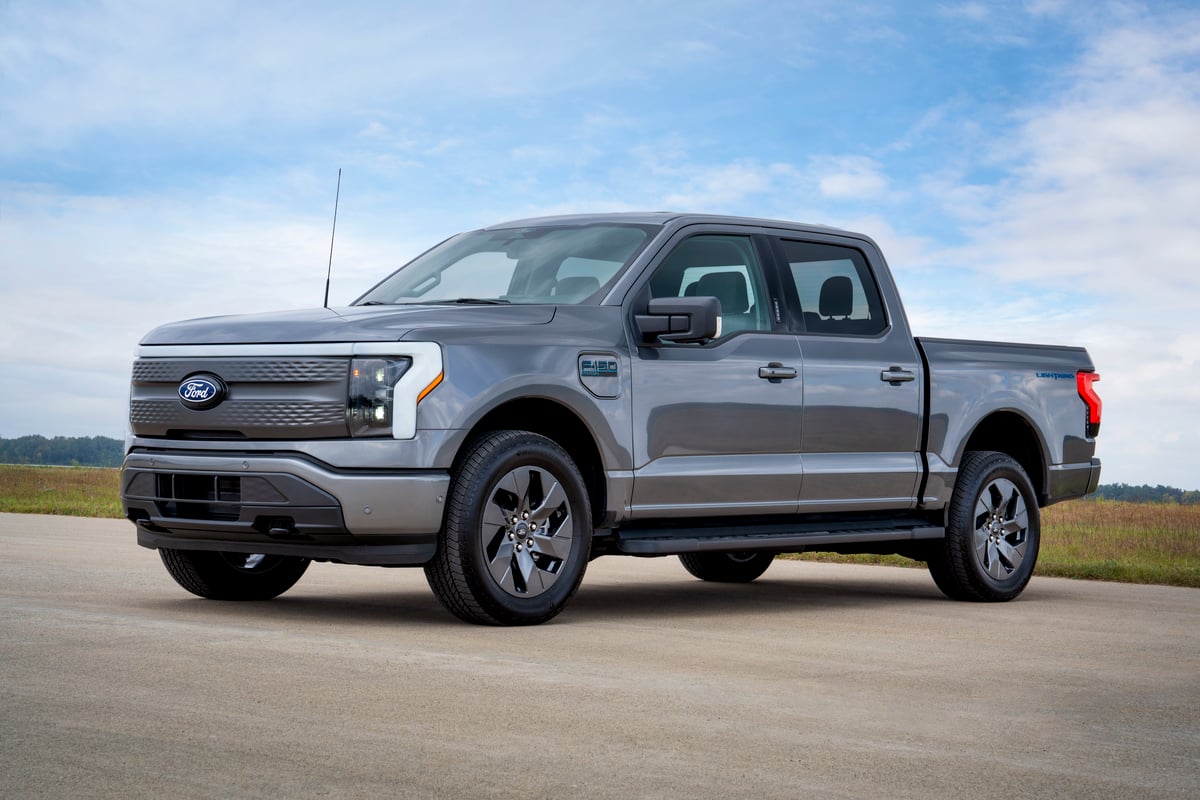
Not all that long ago, Ford was busy touting its No. 2 EV sales rank in the U.S. market. Few predicted that Toyota would surge ahead of the Detroit icon, especially on its own turf. As Ford announced it would pivot away from EVs in the near term and discontinued its F-150 Lightning in its current form, Toyota quietly launched three new electric SUV models: the 2026 bZ, bZ Woodland, and C-HR.
Toyota’s bZ sold over 10,000 units in the U.S. during the first quarter, up a healthy 79% year over year. Meanwhile, Ford sold a total of 6,860 EVs during the first quarter, a far less healthy 70% decline from the prior year. Ford EVs were also outsold by single models of General Motors’ (GM +4.19%) Cadillac (9,551) and Chevrolet (13,359) branded EVs. Even Hyundai built a substantial lead over Ford with its 12,662 EVs sold. Of course, we can’t forget Tesla (TSLA +2.96%), which clawed back some of its lost market share and accounted for 54% of the industry’s total EV sales in the U.S.

Today’s Change
(2.04%) $4.34
Current Price
$217.20
Key Data Points
Market Cap
$283B
Day’s Range
$214.06 – $219.85
52wk Range
$167.18 – $248.90
Volume
443K
Avg Vol
304K
Gross Margin
17.61%
Dividend Yield
1.32%
What it all means
The truth is that Ford may drop even further in EV sales rankings, and is already fighting off a surging Lexus brand and a capable Kia. In the grand scheme, however, it’s not incredibly important at this stage. The difference, other than the outlier Tesla, is a few thousand vehicles.
That said, Ford is currently pivoting to more affordable EVs and hybrids, pushing back some high-end EV projects until 2028, and won’t launch its $30,000 mid-size electric pickup on its upcoming Universal EV Platform until next year. Expect Ford to languish in the rankings until then, with hopes to rapidly regain lost market share once it hits the roads.