
April 15, 2026
By Nehal Malik
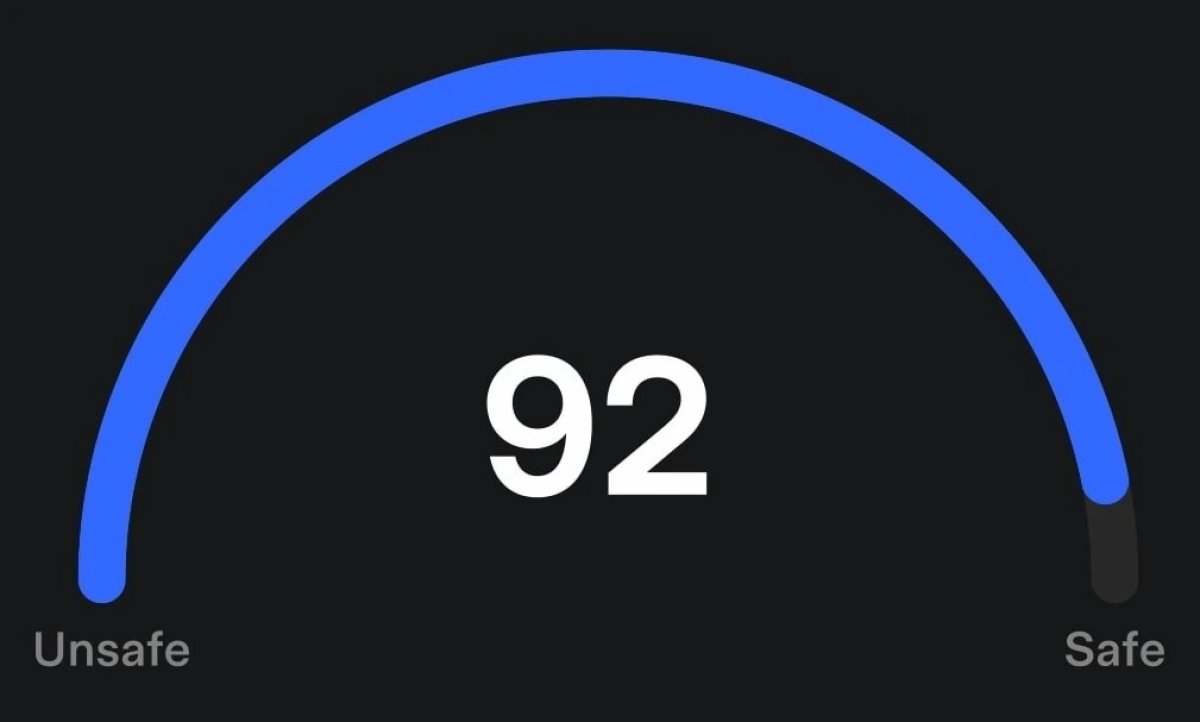
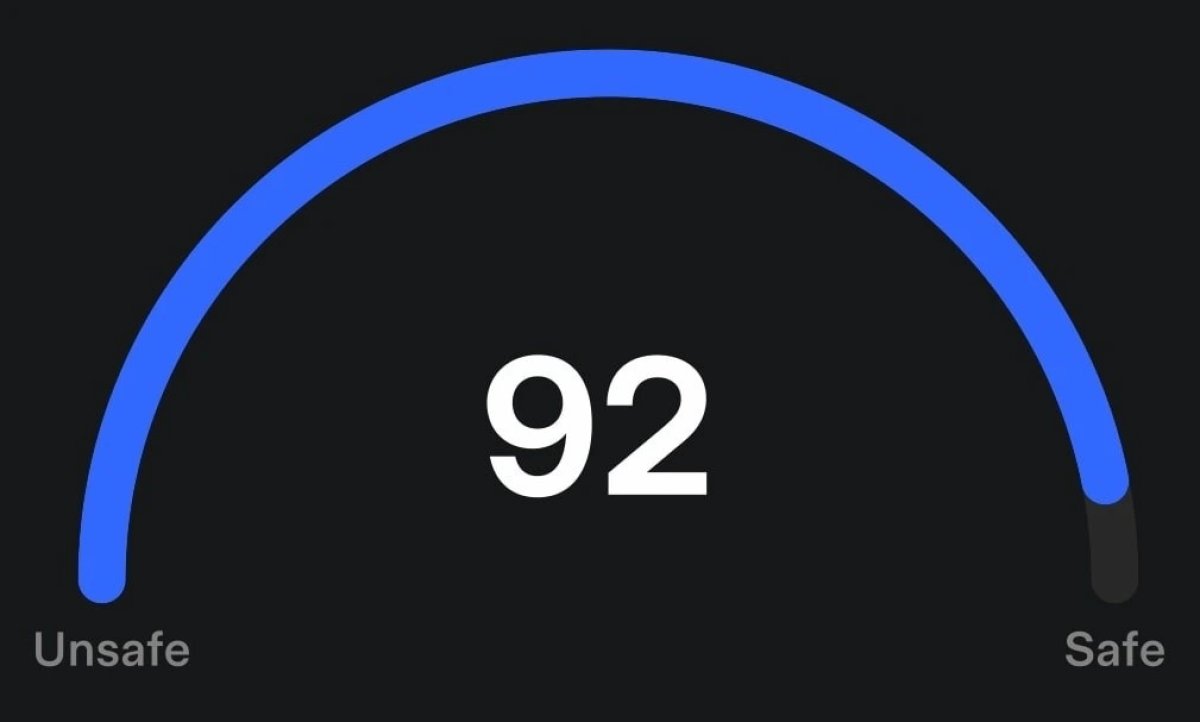
Tesla is doubling down on the idea that its software is safer than the average human driver. In a major update to its in-house insurance program, the company has released Safety Score version 3.0, which introduces a massive incentive for those who let their cars do the heavy lifting.
According to an announcement on X, the update fundamentally changes how premiums are calculated for new policies. “With the latest version of Safety Score (v3.0), every mile you drive with FSD Supervised enabled will receive a score of 100,” the company noted. By giving every FSD mile a perfect rating, Tesla is essentially rewarding users with lower monthly bills just for keeping the system engaged.
A New Formula for Risk
Since launching in 2019, Tesla Insurance has used real-time driving behavior to set rates. Instead of just looking at your age or credit score, Tesla tracks metrics like hard braking, aggressive turning, and unsafe following distances (in states where it is allowed to, at least). These factors feed into a 0–100 Safety Score; the higher the number, the lower your premium.
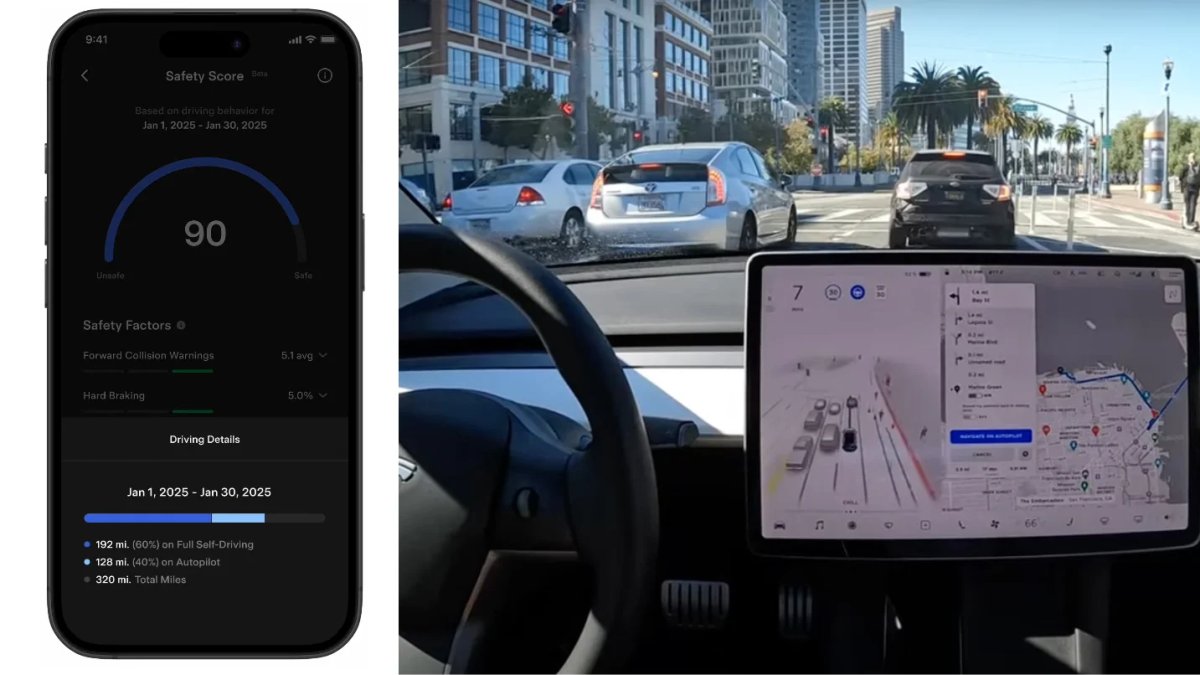
Tesla Insurance already offered discounts for FSD users, but with Safety Score 3.0, Tesla is separating manual driving from assisted driving entirely. While your manual miles are still scrutinized for mistakes, any mile driven under FSD (Supervised) is automatically banked as a perfect 100. This creates a weighted average that “allows you to maintain a higher average safety score over time, resulting in lower monthly insurance premiums.” This FSD discount can be so significant that the savings on insurance might even cover the cost of your monthly FSD subscription.
Data-Driven Discounts
Tesla’s move isn’t just a marketing ploy; it is backed by a staggering 26.5 billion miles of real-world driving data. This data has allowed Tesla to refine its Predicted Collision Frequency (PCF) model, which now has a more precise understanding of risk patterns. For example, version 3.0 has updated how late-night driving is measured to better reflect when accidents actually happen.
The core metrics that affect your score — like collision warnings, hard braking, and seatbelt usage — now only apply to the miles you drive manually. This shift highlights Tesla’s confidence that FSD significantly reduces the likelihood of a crash. Tesla isn’t the only one who thinks so, either; third-party providers like Lemonade have also started offering deep discounts for FSD-driven vehicles, claiming they are safer than humans.
Limited Rollout and Availability
For now, this specific Safety Score 3.0 benefit is only available for new policies in select states. According to Tesla, it applies to all new policies in Indiana, Tennessee, Texas, Arizona, Virginia, and Illinois. Owners in Tennessee, who only gained access to Tesla Insurance earlier this year, are among the first to benefit.
Notably, Florida is currently excluded from this FSD-mileage perk, though it remains a key market for Tesla’s expansion after it recently became the first new state to get Tesla Insurance in over three years. As the company gathers more data from these initial states, a wider rollout to existing policyholders and other regions is likely on the horizon.
By gamifying safety and tying it directly to drivers’ wallets, Tesla is creating a powerful feedback loop. Not only does it encourage safer manual driving, but it also accelerates the adoption of FSD. As the software continues to improve with version 14 (and soon 15), your Tesla might eventually become the cheapest car on the road to insure, provided you let it take the wheel.
Subscribe to our newsletter to stay up to date on the latest Tesla news, upcoming features and software updates.
April 15, 2026
By Karan Singh
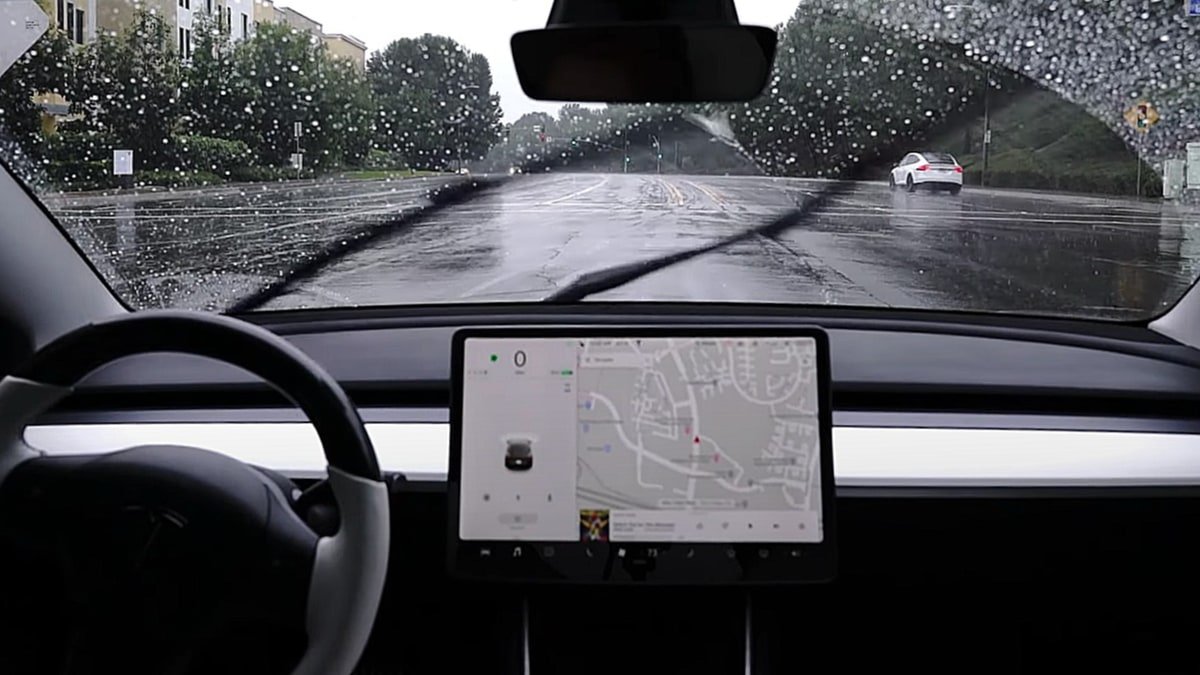
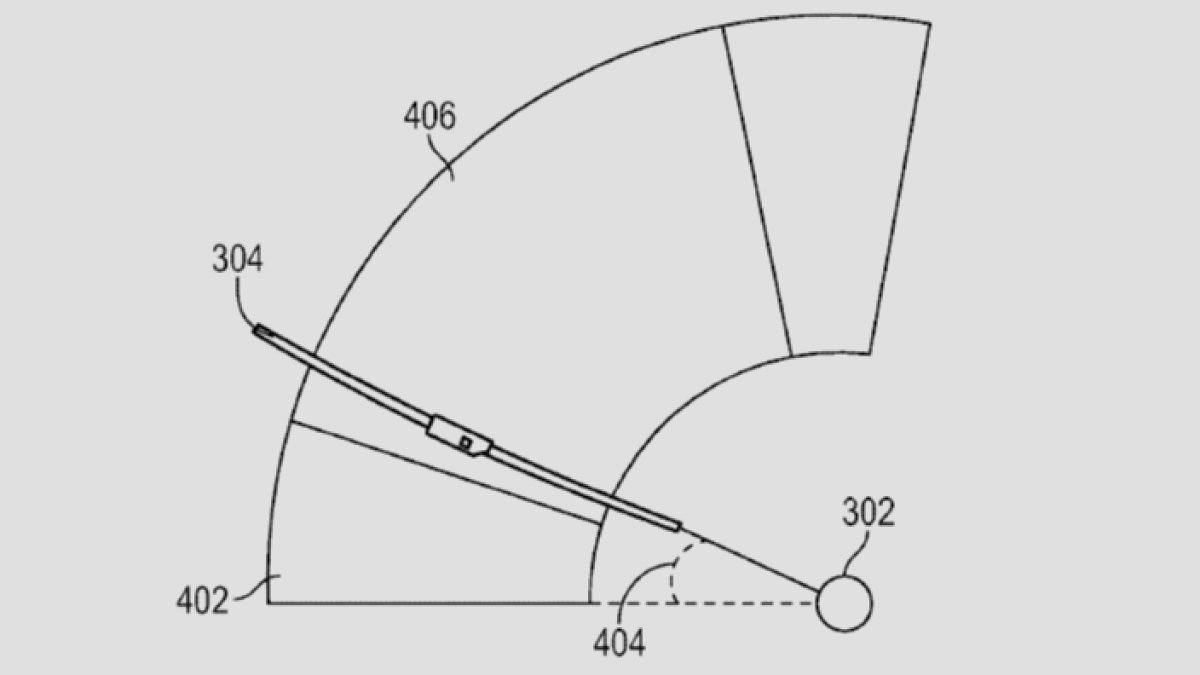
Tesla owners have long lamented the infamous dry wipe issue, a byproduct of the decision to rely entirely on cameras rather than traditional infrared rain sensors to detect precipitation. However, a newly published patent titled “Wiper Friction Estimation for Autowiper Performance Improvement” reveals an ingenious software solution to the problem.
Better yet, Tesla engineer and co-inventor Yun-Ta Tsai recently confirmed on X that this technology is already active across the entire fleet and gets even smarter in FSD v14.3 update.
 The Energy Balance Model
Instead of relying purely on visual data from the cameras to guess if the windshield is wet, the new system measures the actual physical resistance the wiper blade encounters. To do this, the vehicle’s Body Control Module utilizes an advanced “energy balance model.”
The system precisely monitors the electrical power input going to the wiper motor using internal voltage and current sensors. It then factors in all known efficiency losses. This includes electrical losses in the motor itself, frictional losses in the mechanical wiper linkage, and aerodynamic drag on the blade due to the vehicle’s current speed.
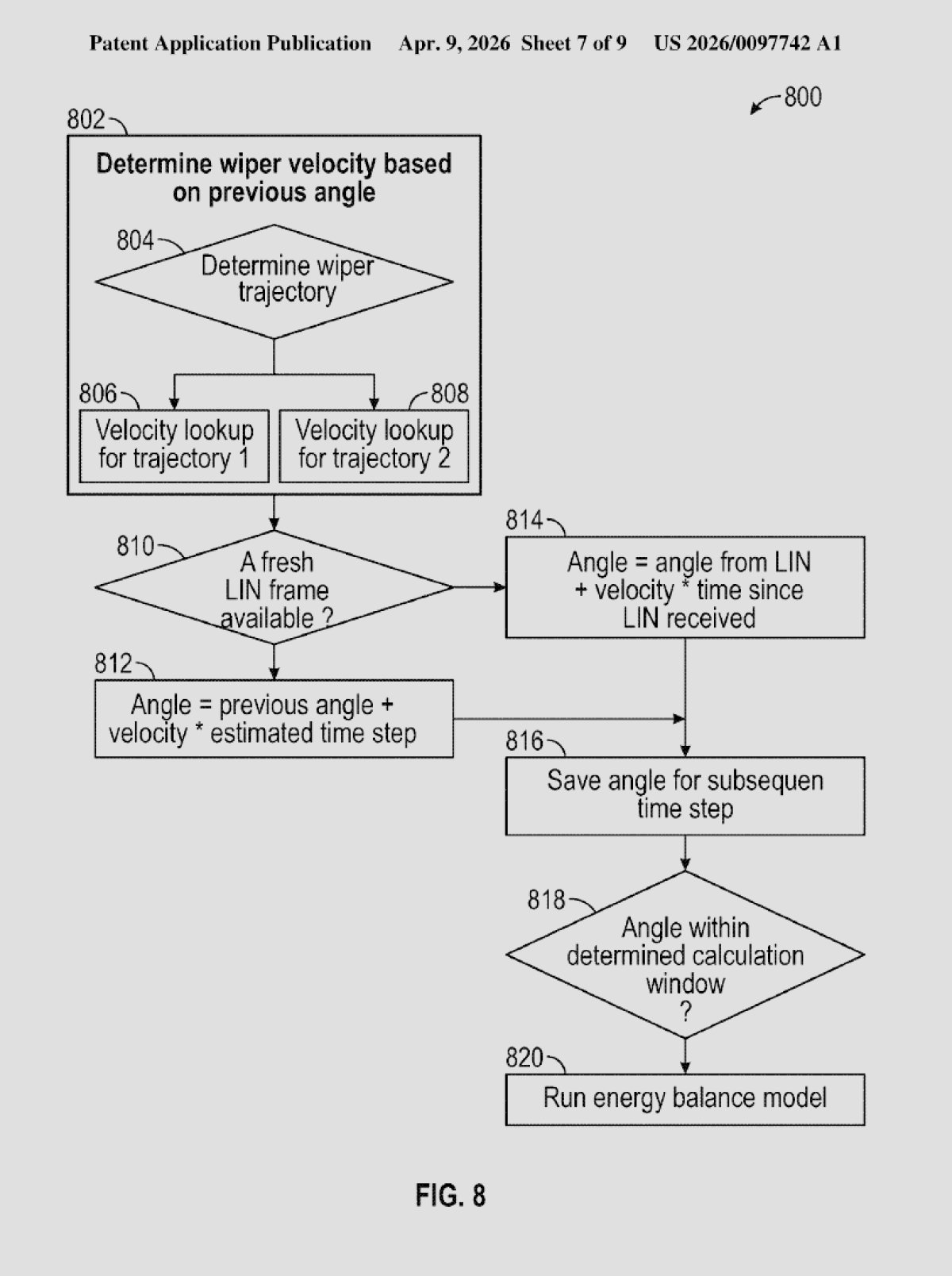
By balancing the electrical power going in against these known mechanical and aerodynamic losses, the system isolates the exact amount of friction occurring directly between the rubber wiper blade and the glass.
To ensure pinpoint accuracy, the system primarily calculates this friction during the middle portion of the wiper’s arc. Within this defined calculation window, the wiper blade is moving at its highest velocity and lowest acceleration, providing the cleanest possible data signal.
Giving FSD the Sense of Touch
This continuous stream of friction data creates a direct feedback loop to the Autopilot ECU. If the vehicle’s cameras provide a sense of sight, this friction estimation finally gives the system a sense of touch.
Friction allows us to feel what material is on the glass, so we could promptly trigger a wash if needs to.https://t.co/h0pn0oRFaC
— Yun-Ta Tsai (@yunta_tsai) April 10, 2026
By analyzing the physical friction, the vehicle can instantly deduce exactly what is on the glass without relying purely on the cameras:
Dry Glass and Grime: If the estimated friction is significantly higher than expected, the system knows the glass is completely dry or covered in sticky debris. This prevents further abrasive dry wiping and can automatically trigger the washer fluid to clear the obstruction.
Ice and Frost: If friction is unusually low under wet conditions, the system can detect a slick layer of frost or ice on the windshield. The vehicle can then automatically activate the climate control system and defrost functions to melt the ice.
Worn Blades: By monitoring these friction values over time, the system can even detect when the rubber wiper blades are degrading and automatically alert the driver that it is time to replace them.
Already Deployed and Evolving in v14.3
While patent filings usually point to future hardware, this friction estimation is purely a software innovation. Taking to X, Tesla engineer Yun-Ta Tsai confirmed that this logic has already been implemented across the entire fleet via over-the-air updates. Tsai noted that feeling the physical material on the glass is what currently allows the system to promptly trigger a windshield wash when needed and to detect if a dry wipe has occurred.
Tsai also teased that further winter-weather improvements based on this specific technology, including better wiper-fluid control, defrosting, and defogging behaviors, are officially bundled into the FSD v14.3 update.
April 14, 2026
By Nehal Malik
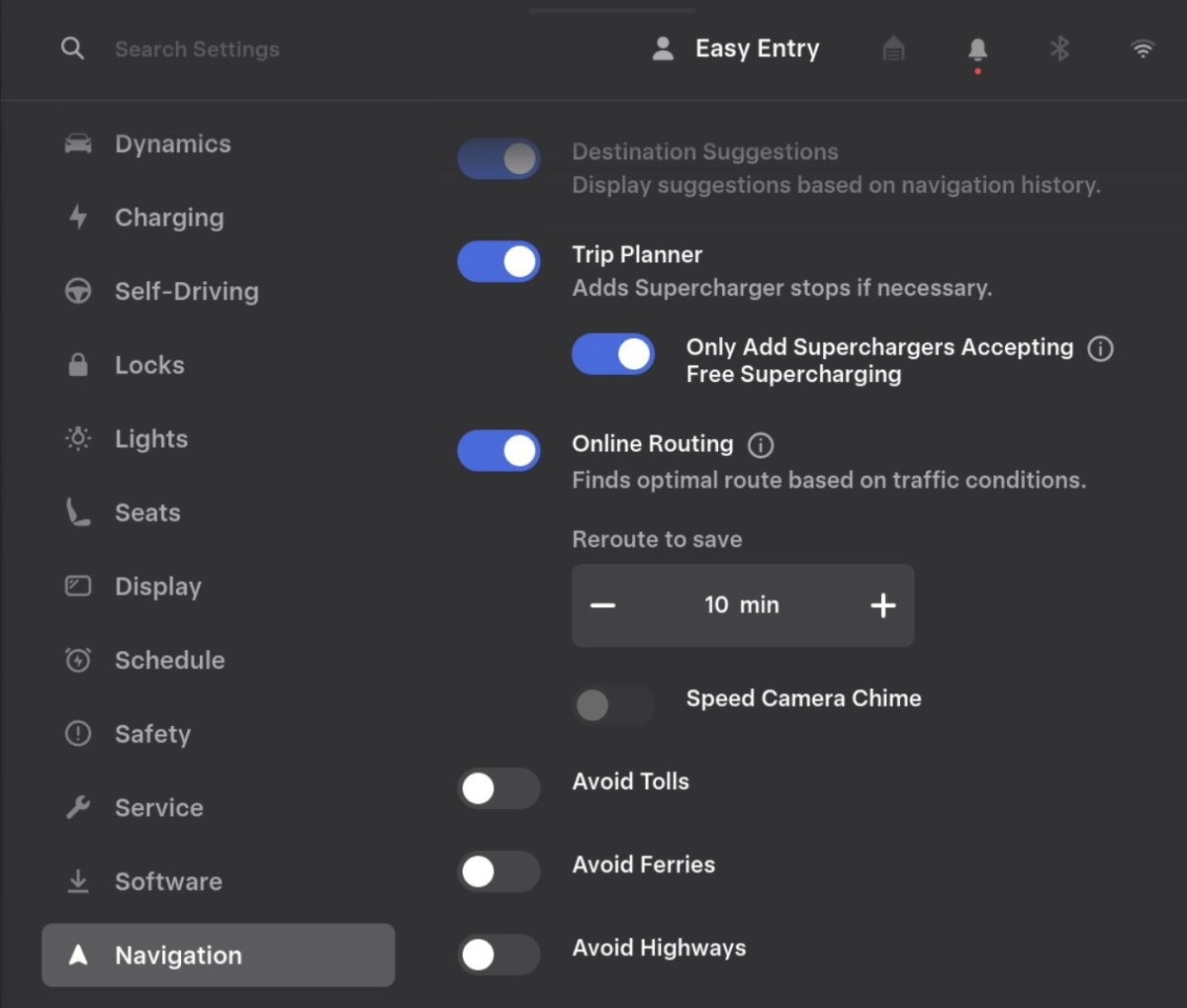
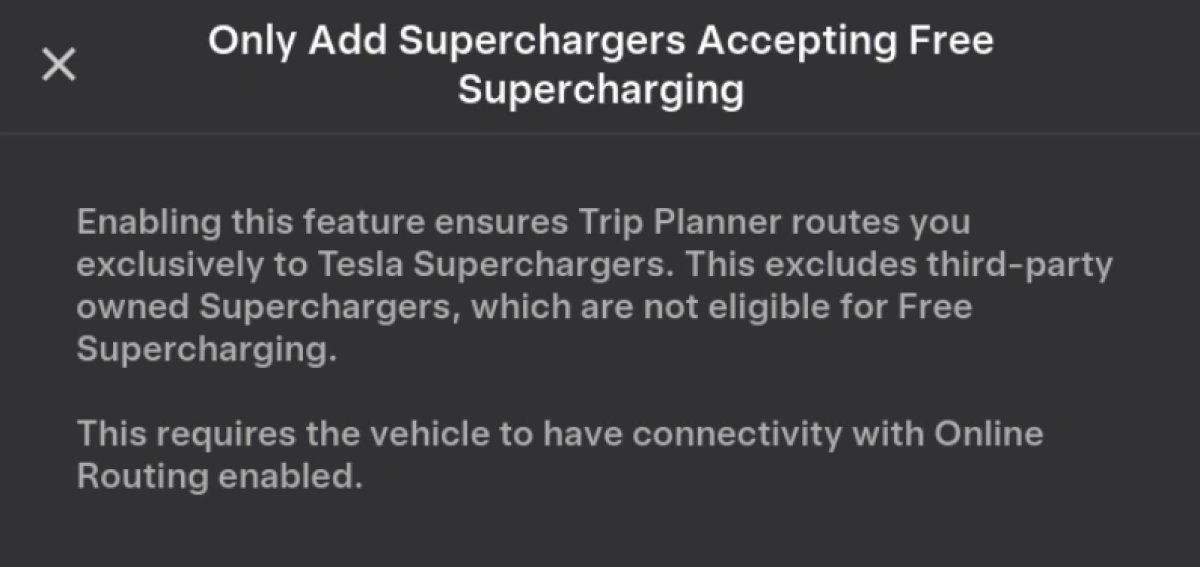
Tesla is adding a highly requested navigation filter that will help drivers keep their charging costs at exactly zero. As part of an upcoming update, the company is introducing an option to “Only Add Superchargers Accepting Free Supercharging” within the vehicle’s Trip Planner.
The new feature was confirmed by the @TeslaCharging account on X, which noted: “We’ve now also made it easy for customers with free supercharging to only be routed to Tesla Superchargers (where their free supercharging always applies).” This update is a major win for owners who still hold lifetime Supercharging perks, as it ensures the car won’t accidentally send them to a stall where they have to pay out of pocket.
The Rise of Third-Party Superchargers
For a long time, every Supercharger was owned and operated directly by Tesla. However, last fall, the company began selling white-label Supercharger hardware to third-party businesses like convenience stores, gas stations, and hotels. While these sites are managed by Tesla’s backend and show up on the in-car map, they are technically independent. Because these businesses set their own pricing to generate revenue, they are exempt from Tesla’s “Free Supercharging for Life” awards.
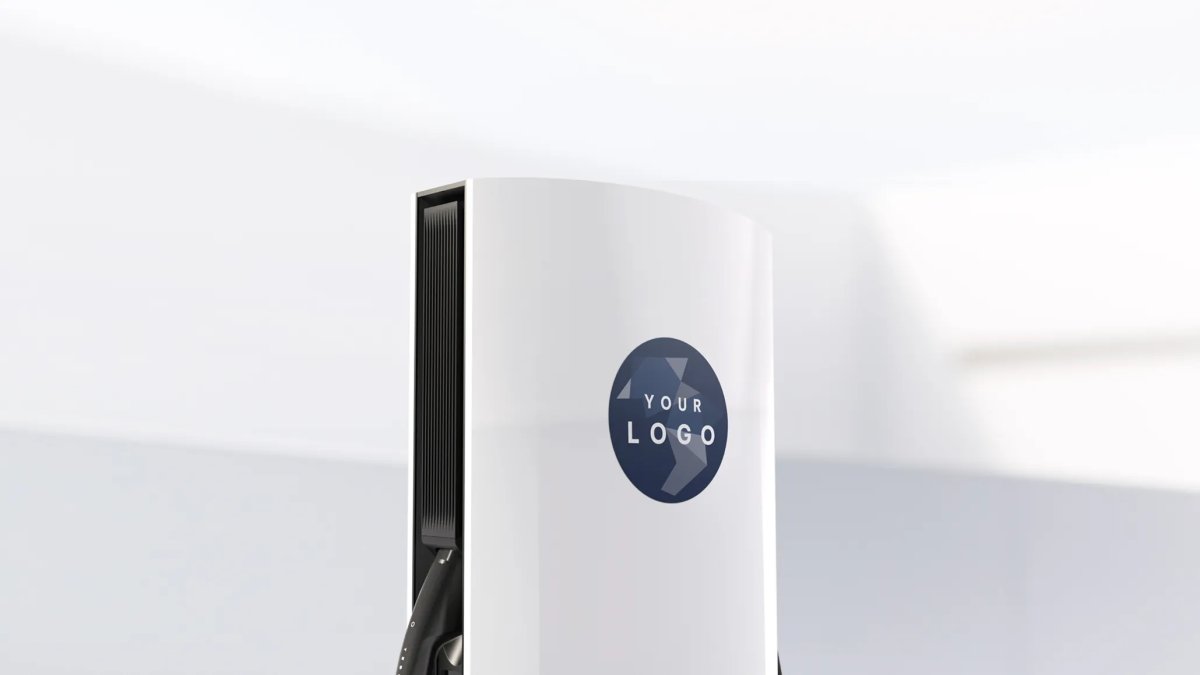
This has caused some confusion for owners who pull up to a familiar-looking pedestal only to realize later that they’ve been billed. Tesla recently launched a pricing transparency calculator to help businesses communicate costs better, but the new navigation toggle is the ultimate solution for drivers who want to avoid these paid sites entirely.
A Grace Period for New Users
Tesla seems to understand that the distinction between a first-party and third-party Supercharger stall isn’t always obvious, especially when your car itself routes you to one. One owner, @thecyberfam, recently shared a notification they received in the Tesla app after visiting a third-party site at a Wawa. The message read: “Tesla will waive the cost of your first charge. Future charges at third party-owned sites will be subject to the price set by owners.”
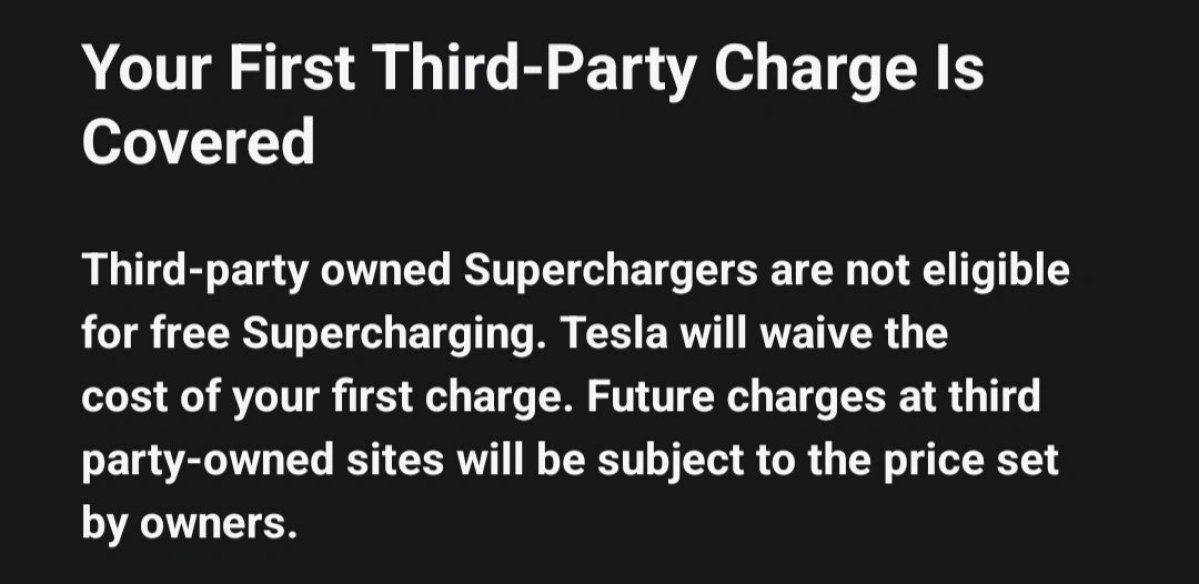
The owner noted on X: “We stopped at our very first 3rd party Supercharger the other day (Wawa) and didn’t know how that would work with our free Supercharging. We didn’t get charged but then I noticed this message in the app. The first one is on them, from now on I pay for 3rd party.” This one-time waiver is a nice gesture, especially since Tesla has surpassed 80,000 Supercharger stalls globally, making it harder for drivers to keep track of which sites are corporate-owned.
Navigation Logic and the Spring Update
The option will be available under Trip Planner in Settings > Navigation. It will likely roll out in Tesla’s upcoming Spring 2026 software update, which was announced earlier this week. The toggle specifically states that enabling the feature “excludes third-party owned Superchargers” from Trip Planner. It also mentions that “this requires the vehicle to have connectivity with Online Routing enabled.” It is currently unclear if this filter will be available to all Tesla owners, also benefiting those who would prefer to charge exclusively at Tesla Superchargers, or if it will only appear for those whose accounts are flagged with the Free Supercharging perk.
As Tesla continues to expand its network through partnerships, keeping the charging experience simple is key. This update shows that Tesla is listening to its “legacy” owners while continuing to build out a massive infrastructure that serves both the general public and its most loyal fans. We expect this feature to go live for the general public over the next few weeks as the Spring Update begins its global rollout.