Earlier this month, Tesla reported first-quarter 2026 results showing production of over 408,000 vehicles, deliveries of 358,023 vehicles, and 8.8 GWh of energy storage deployments, falling short of analyst delivery expectations and leaving the company with its largest backlog of unsold EVs. The delivery miss, combined with soft retail demand in China and Tesla’s ongoing pivot toward AI, robotaxis, and robotics, has intensified debate over whether its core EV business can support its long-term autonomy-focused ambitions. Next, we’ll examine how Tesla’s first-quarter delivery shortfall and rising inventory may affect the AI- and energy-led investment narrative.
Outshine the giants: these 21 early-stage AI stocks could fund your retirement.
Tesla Investment Narrative Recap
To own Tesla today, you need to believe its shift from an EV manufacturer toward an AI, robotaxi, and energy platform can eventually justify a premium valuation, despite current pressure on its auto business. The Q1 2026 delivery shortfall and record inventory directly test that belief, because the most important near term catalyst is progress on autonomy and robotaxis, while the biggest current risk is that slowing EV demand and rising costs constrain Tesla’s ability to fund that transition.
Against that backdrop, the Q1 2026 report of 408,386 vehicles produced, 358,023 delivered, and 8.8 GWh of storage deployed is especially relevant. It reinforces concerns about demand softness and inventory risk at the same time analysts are highlighting autonomy, AI chips (through Terafab), and energy storage as key future profit drivers. Whether those higher margin initiatives can offset a weaker core EV engine sooner rather than later is what many shareholders are now weighing.
Yet while optimism around AI and robotaxis is growing, investors should also be aware of how rising tariffs, expiring EV incentives, and slower product ramps could…
Read the full narrative on Tesla (it’s free!)
Tesla’s narrative projects $141.3 billion revenue and $10.9 billion earnings by 2029.
Uncover how Tesla’s forecasts yield a $421.27 fair value, a 20% upside to its current price.
Exploring Other Perspectives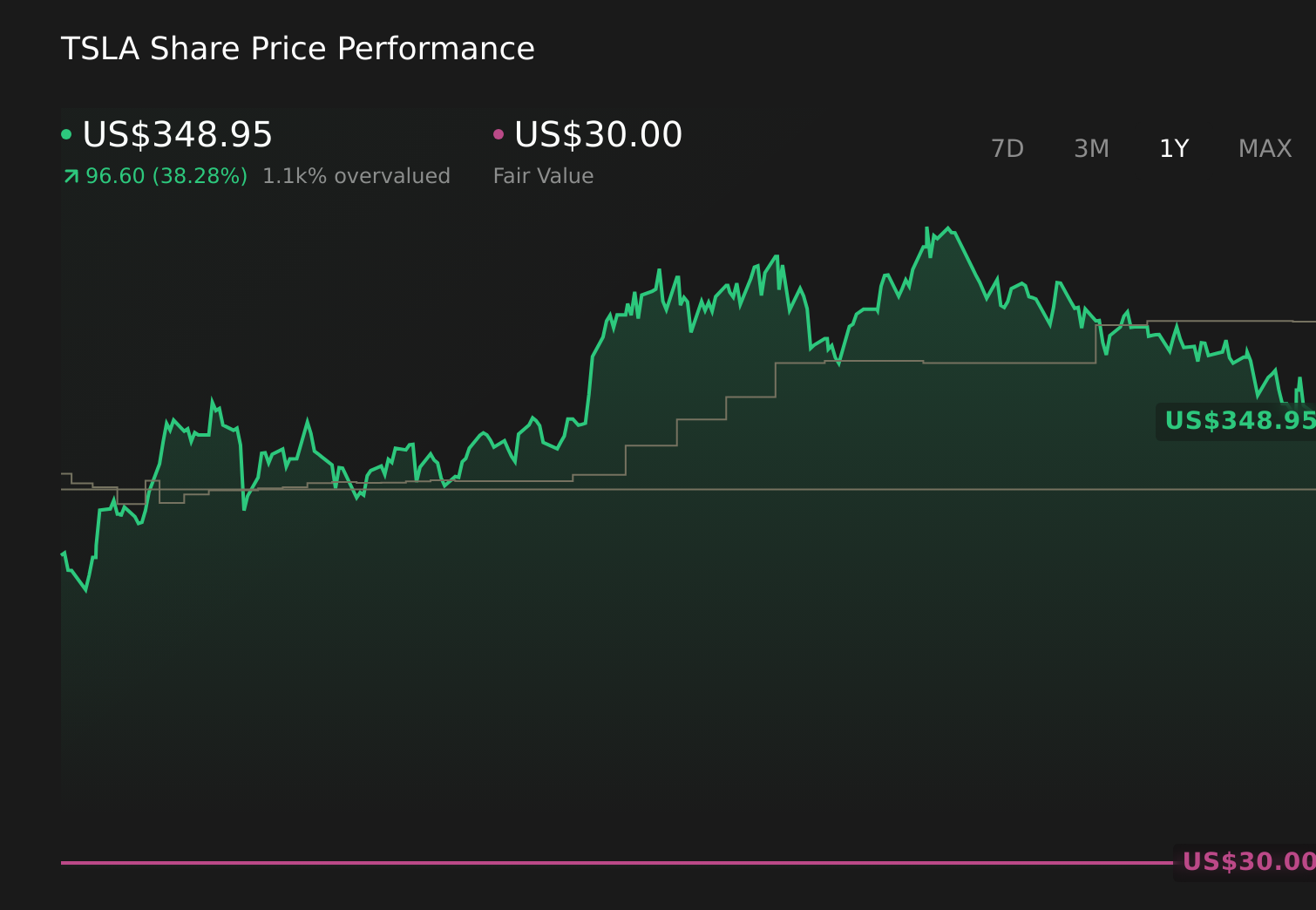 TSLA 1-Year Stock Price Chart
Some of the most optimistic analysts were assuming revenue near US$193.2 billion and earnings of US$19.0 billion by 2028, which makes their upbeat view on faster autonomy and Optimus ramps look very different to the more cautious take raised by Tesla’s Q1 delivery miss and inventory build, so it is worth comparing these opposing expectations before deciding which story you believe could hold up if the numbers keep shifting.
Explore 131 other fair value estimates on Tesla – why the stock might be worth less than half the current price!
Form Your Own Verdict
Don’t just follow the ticker – dig into the data and build a conviction that’s truly your own.
Curious About Other Options?
Our top stock finds are flying under the radar-for now. Get in early:
This article by Simply Wall St is general in nature. We provide commentary based on historical data
and analyst forecasts only using an unbiased methodology and our articles are not intended to be financial advice. It does not constitute a recommendation to buy or sell any stock, and does not take account of your objectives, or your
financial situation. We aim to bring you long-term focused analysis driven by fundamental data.
Note that our analysis may not factor in the latest price-sensitive company announcements or qualitative material.
Simply Wall St has no position in any stocks mentioned.
Valuation is complex, but we’re here to simplify it.
Discover if Tesla might be undervalued or overvalued with our detailed analysis, featuring fair value estimates, potential risks, dividends, insider trades, and its financial condition.
Have feedback on this article? Concerned about the content? Get in touch with us directly. Alternatively, email editorial-team@simplywallst.com