Apr 11, 2026
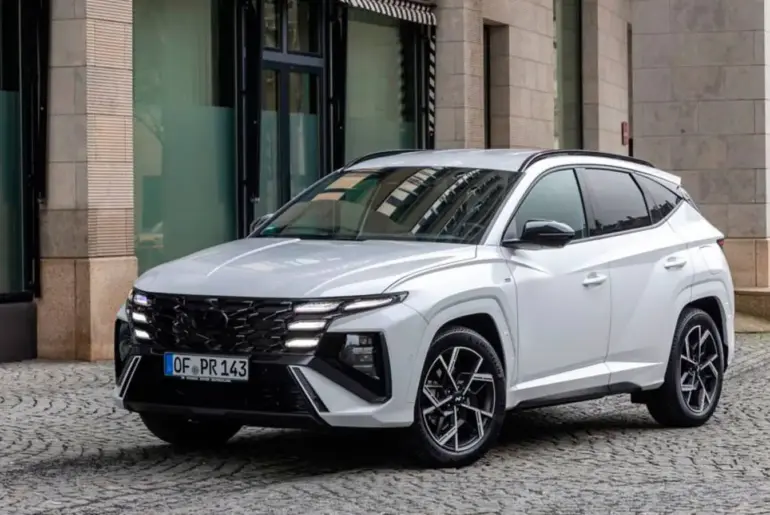
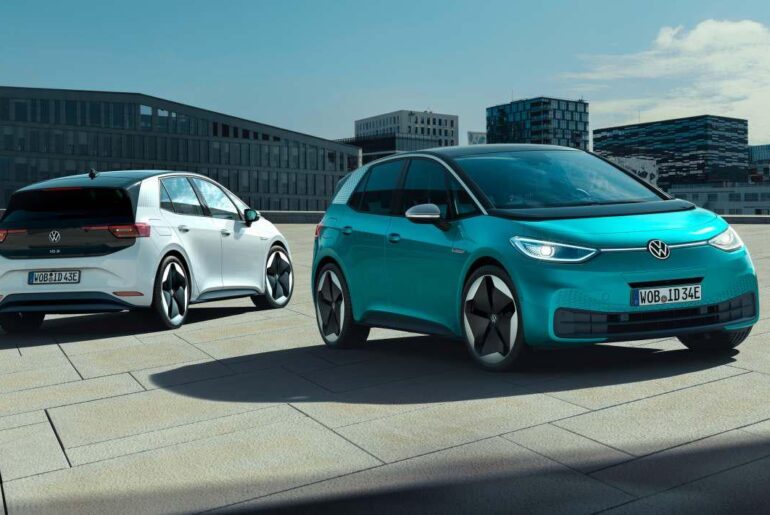
According to a report from Oilprice.com, Chinese electric vehicle exports increased by 140% in March, reaching a record monthly high of 349,000 units. This data was provided by the China Passenger Car Association.
Consumers in the Asia Pacific region, Europe, and the United States have shown increased interest in electric and hybrid vehicles. This shift follows a rise in fuel prices linked to a conflict in the Middle East that began in late February. The situation has disrupted crude oil supply and elevated international oil prices.
In Asian markets, where the fuel price impact was initially observed, showrooms are experiencing high consumer traffic. Wait times for electric vehicles in Australia have extended by several months. A major Chinese manufacturer noted that delivery times for two of its popular models have grown significantly.
The United Kingdom’s largest automotive marketplace reported a sharp increase in consumer inquiries for both new and used electric vehicles since late February. A company official stated that the conflict has acted as a catalyst for this interest, as consumers perceive traditional fuel as vulnerable to global events.
In the United States, gasoline prices have also risen. However, analysis suggests that a sustained increase in demand for electric and hybrid vehicles there may require several consecutive months of high fuel prices.
Interactive table based on the Store Companies dataset for this report.
Sort: Rank
Sort: Company A-Z
Sort: Headquarters A-Z
#
Company
Headquarters
Focus
Scale
Note
1
BYD Auto
Shenzhen, Guangdong
EVs, PHEVs, passenger cars
Very large
World’s leading EV maker
2
SAIC Motor
Shanghai
Passenger & commercial vehicles
Very large
State-owned, partners with VW & GM
3
Geely Auto
Hangzhou, Zhejiang
Passenger cars, EVs
Very large
Owns Volvo Cars, Zeekr, Lotus
4
Changan Automobile
Chongqing
Passenger & commercial vehicles
Very large
State-owned, major OEM
5
GAC Group
Guangzhou, Guangdong
Passenger cars, EVs
Very large
State-owned, partners with Toyota, Honda
6
Great Wall Motors
Baoding, Hebei
SUVs, pickups, EVs
Very large
Known for Haval, Wey, Ora brands
7
Dongfeng Motor Corporation
Wuhan, Hubei
Passenger & commercial vehicles
Very large
State-owned, major OEM
8
NIO
Shanghai
Premium electric vehicles
Large
EV maker with battery swap tech
9
Xpeng
Guangzhou, Guangdong
Smart electric vehicles
Large
Known for advanced driver assistance
10
Li Auto
Beijing
Premium EREV SUVs
Large
Extended-range electric vehicles
11
Chery Automobile
Wuhu, Anhui
Passenger cars, EVs
Very large
Major exporter, owns Exeed, Jetour
12
FAW Group
Changchun, Jilin
Passenger & commercial vehicles
Very large
State-owned, partners with VW, Toyota
13
BAIC Group
Beijing
Passenger & commercial vehicles
Very large
State-owned, owns BAIC BJEV
14
Zeekr
Ningbo, Zhejiang
Premium electric vehicles
Large
Geely’s premium EV brand
15
AITO
Shenzhen, Guangdong
Premium NEV SUVs
Large
Seres, Huawei, CATL joint venture
16
Leapmotor
Hangzhou, Zhejiang
Affordable electric vehicles
Large
EV maker, tech vertical integration
17
Hongqi
Changchun, Jilin
Luxury passenger vehicles
Large
FAW’s premium brand
18
JAC Motors
Hefei, Anhui
Passenger & commercial vehicles
Large
State-owned, EV partnership with VW
19
Wuling Motors
Liuzhou, Guangxi
Mini EVs, passenger cars
Large
SAIC-GM-Wuling joint venture
20
Hozon Auto
Tongxiang, Zhejiang
Electric vehicles
Medium
Neta brand, affordable EVs
21
Lynk & Co
Hangzhou, Zhejiang
Premium connected cars
Large
Geely’s global brand with Volvo
22
Deepal
Chongqing
New energy vehicles
Medium
Changan’s EV brand
23
Voyah
Wuhan, Hubei
Premium new energy vehicles
Medium
Dongfeng’s premium EV brand
24
Seres Group
Chongqing
New energy vehicles
Medium
EV maker, partner with Huawei
25
Jetta
Chengdu, Sichuan
Affordable passenger cars
Medium
FAW-Volkswagen budget brand
26
Geometry
Hangzhou, Zhejiang
Pure electric vehicles
Medium
Geely’s mainstream EV brand
27
Aiways
Shanghai
Electric vehicles
Medium
EV maker focused on exports
28
Borgward
Beijing
Passenger vehicles
Small
Revived German brand, Chinese-owned
29
Haima Automobile
Haikou, Hainan
Passenger cars, EVs
Medium
Former FAW-Mazda joint venture
30
Enovate
Shanghai
Electric vehicles
Small
EV startup, premium positioning
This report provides a comprehensive view of the passenger car industry in China, tracking demand, supply, and trade flows across the national value chain. It explains how demand across key channels and end-use segments shapes consumption patterns, while also mapping the role of input availability, production efficiency, and regulatory standards on supply.
Beyond headline metrics, the study benchmarks prices, margins, and trade routes so you can see where value is created and how it moves between domestic suppliers and international partners. The analysis is designed to support strategic planning, market entry, portfolio prioritization, and risk management in the passenger car landscape in China.
Quick navigation
Key findings
Domestic demand is shaped by both household and industrial usage, with trade flows linking local supply to imports and exports.
Pricing dynamics reflect unit values, freight costs, exchange rates, and regulatory shifts that affect sourcing decisions.
Supply depends on input availability and production efficiency, creating a distinct national cost curve.
Market concentration varies by segment, creating different competitive landscapes and entry barriers.
The 2035 outlook highlights where capacity investment and demand growth are most aligned within the country.
Report scope
The report combines market sizing with trade intelligence and price analytics for China. It covers both historical performance and the forward outlook to 2035, allowing you to compare cycles, structural shifts, and policy impacts.
Market size and growth in value and volume terms
Consumption structure by end-use segments
Production capacity, output, and cost dynamics
Trade flows, exporters, importers, and balances
Price benchmarks, unit values, and margin signals
Competitive context and market entry conditions
Product coverageProdcom 29102100 – Vehicles with spark-ignition engine of a cylinder capacity. 1 .500 cm., newProdcom 29102230 – Motor vehicles with a petrol engine > 1 .500 cm. (including motor caravans of a capacity > 3 .000 cm.) (excluding vehicles for transporting . .10 persons, snowmobiles, golf cars and similar vehicles)Prodcom 29102250 – Motor caravans with a spark-ignition internal combustion reciprocating piston engine of a cylinder capacity > 1 .500 cm. but . 3 .000 cm.Prodcom 29102310 – Motor vehicles with a diesel or semi-diesel engine . 1 .500 cm. (excluding vehicles for transporting . .10 persons, s nowmobiles, golf cars and similar vehicles)Prodcom 29102330 – Motor vehicles with a diesel or semi-diesel engine > 1 .500 cm. but . 2 .500 cm. (excluding vehicles for transporting . .10 persons, motor caravans, snowmobiles, golf cars and similar vehicles)Prodcom 29102340 – Motor vehicles with a diesel or semi-diesel engine > 2 .500 cm. (excluding vehicles for transporting . .10 persons, motor caravans, snowmobiles, golf cars and similar vehicles)Prodcom 29102353 – Motor caravans with a compression-ignition internal combustion piston engine (diesel or semi-diesel) of a cylinder capacity > 1 .500 cm. but . 2 .500 cm.Prodcom 29102355 – Motor caravans with a compression-ignition internal combustion piston engine (diesel or semi-diesel) of a cylinder capacity > 2 .500 cm.Prodcom 29102400 – Other motor vehicles for the transport of persons (excluding vehicles for transporting . .10 persons, snowmobiles, golf cars and similar vehicles)Prodcom 29102410 – Motor vehicles, with both spark-ignition or compression-ignition internal combustion piston engine and electric motor as motors for propulsion, other than those capable of being charged by plugging to external source of electric powerProdcom 29102430 – Motor vehicles, with both spark-ignition or compression-ignition internal combustion piston engine and electric motor as motors for propulsion, capable of being charged by plugging to external source of electric powerProdcom 29102450 – Motor vehicles, with only electric motor for propulsionProdcom 29102490 – Other motor vehicles for the transport of persons (excluding vehicles with only electric motor for propulsion , vehicles for transporting u2265 10 persons, snowmobiles, golf cars and similar vehicles)Country coverageCountry profile and benchmarks
This report provides a consistent view of market size, trade balance, prices, and per-capita indicators for China. The profile highlights demand structure and trade position, enabling benchmarking against regional and global peers.
Methodology
The analysis is built on a multi-source framework that combines official statistics, trade records, company disclosures, and expert validation. Data are standardized, reconciled, and cross-checked to ensure consistency across time series.
International trade data (exports, imports, and mirror statistics)
National production and consumption statistics
Company-level information from financial filings and public releases
Price series and unit value benchmarks
Analyst review, outlier checks, and time-series validation
All data are normalized to a common product definition and mapped to a consistent set of codes. This ensures that comparisons across time are aligned and actionable.
Forecasts to 2035
The forecast horizon extends to 2035 and is based on a structured model that links passenger car demand and supply to macroeconomic indicators, trade patterns, and sector-specific drivers. The model captures both cyclical and structural factors and reflects known policy and technology shifts in China.
Historical baseline: 2012-2025
Forecast horizon: 2026-2035
Scenario-based sensitivity to income growth, substitution, and regulation
Capacity and investment outlook for major producing companies
Each projection is built from national historical patterns and the broader regional context, allowing the report to show where growth is concentrated and where risks are elevated.
Price analysis and trade dynamics
Prices are analyzed in detail, including export and import unit values, regional spreads, and changes in trade costs. The report highlights how seasonality, freight rates, exchange rates, and supply disruptions influence pricing and margins.
Price benchmarks by country and sub-region
Export and import unit value trends
Seasonality and calendar effects in trade flows
Price outlook to 2035 under baseline assumptions
Profiles of market participants
Key producers, exporters, and distributors are profiled with a focus on their operational scale, geographic footprint, product mix, and market positioning. This helps identify competitive pressure points, partnership opportunities, and routes to differentiation.
Business focus and production capabilities
Geographic reach and distribution networks
Cost structure and pricing strategy indicators
Compliance, certification, and sustainability context
How to use this report
Quantify domestic demand and identify the most attractive segments
Evaluate export opportunities and prioritize target destinations
Track price dynamics and protect margins
Benchmark performance against leading competitors
Build evidence-based forecasts for investment decisions
This report is designed for manufacturers, distributors, importers, wholesalers, investors, and advisors who need a clear, data-driven picture of passenger car dynamics in China.
FAQ
What is included in the passenger car market in China?
The market size aggregates consumption and trade data, presented in both value and volume terms.
How are the forecasts to 2035 built?
The projections combine historical trends with macroeconomic indicators, trade dynamics, and sector-specific drivers.
Does the report cover prices and margins?
Yes, it includes export and import unit values, regional spreads, and a pricing outlook to 2035.
Which benchmarks are included?
The report benchmarks market size, trade balance, prices, and per-capita indicators for China.
Can this report support market entry decisions?
Yes, it highlights demand hotspots, trade routes, pricing trends, and competitive context.
1. INTRODUCTION
Report Scope and Analytical Framing
Report DescriptionResearch Methodology and the Analytical FrameworkData-Driven Decisions for Your BusinessGlossary and Product-Specific Terms2. EXECUTIVE SUMMARY
Concise View of Market Direction
Key FindingsMarket TrendsStrategic ImplicationsKey Risks and Watchpoints3. DOMESTIC MARKET SIZE AND DEVELOPMENT PATH
Market Size, Growth and Scenario Framing
Market Size: Historical Data (2012-2025) and Forecast (2026-2035)Growth Outlook and Market Development Path to 2035Growth Driver DecompositionScenario Framework and Sensitivities4. CATEGORY SCOPE, DEFINITIONS AND BOUNDARIES
Commercial and Technical Scope
What Is Included and How the Market Is DefinedMarket Inclusion CriteriaProduct / Category DefinitionExclusions and BoundariesDistinction From Adjacent Products and Substitute Categories5. CATEGORY STRUCTURE, SEGMENTATION AND PRODUCT MATRIX
How the Market Splits Into Decision-Relevant Buckets
By Product Type / ConfigurationBy Application / End UseBy Customer / Buyer TypeBy Channel / Business Model / Technology PlatformSegment Attractiveness MatrixProduct Matrix and Segment Growth Logic6. DOMESTIC DEMAND, CUSTOMER AND BUYER ARCHITECTURE
Where Demand Comes From and How It Behaves
Consumption / Demand: Historical Data (2012-2025) and Forecast (2026-2035)Demand by End-Use and Buyer GroupDemand by Customer / Consumer SegmentPurchase Criteria, Switching Logic and Adoption BarriersReplacement, Replenishment and Installed-Base DynamicsFuture Demand Outlook7. DOMESTIC PRODUCTION, SUPPLY AND VALUE CHAIN
Supply Footprint and Value Capture
Production in the CountryDomestic Manufacturing FootprintCapacity, Bottlenecks and Supply RisksValue Chain Logic and Margin PoolsDistribution and Route-to-Market Structure8. IMPORTS, EXPORTS AND SOURCING STRUCTURE
Trade Flows and External Dependence
ExportsImportsTrade BalanceImport DependenceSourcing Risks and Resilience9. PRICING, PROMOTION AND COMMERCIAL MODEL
Price Formation and Revenue Logic
Domestic Price Levels and CorridorsPricing by Segment / Specification / ChannelCost Drivers and Margin LogicPromotion, Discounting and Procurement PatternsRevenue Quality and Commercial Levers10. COMPETITIVE LANDSCAPE AND PORTFOLIO POWER
Who Wins and Why
Market Structure and ConcentrationCompetitive ArchetypesSegment-by-Segment Competitive IntensityPortfolio Breadth and Product PositioningCapability MatrixStrategic Moves, Partnerships and Expansion Signals11. DOMESTIC MARKET STRUCTURE AND CHANNEL LOGIC
How the Domestic Market Works
Core Demand CentersLocal Production and Distribution RolesChannel StructureBuyer and Procurement ArchitectureRegional Imbalances Within the Country12. GROWTH PLAYBOOK AND MARKET ENTRY
Commercial Entry and Scaling Priorities
Where to PlayHow to WinDistributor / Partner / Direct Entry OptionsCapability ThresholdsEntry Risks and Mitigation13. WHERE TO PLAY NEXT: MOST ATTRACTIVE GROWTH OPPORTUNITIES
Where the Best Expansion Logic Sits
Most Attractive Product NichesMost Attractive Customer SegmentsWhite Spaces and Unsaturated OpportunitiesHigh-Margin and Underpenetrated PocketsMost Promising Product Adjacencies14. PROFILES OF MAJOR COMPANIES
Leading Players and Strategic Archetypes
Leading Manufacturers and SuppliersProduction Footprint and CapacitiesProduct Portfolio and Segment FocusPricing Positioning and Indicative Price LogicChannel / Distribution StrengthStrategic Archetypes15. METHODOLOGY, SOURCES AND DISCLAIMER
How the Report Was Built
Modeling LogicSource RegisterPublications, Regulatory and Industry ReferencesAnalytical NotesDisclaimer
Loading News content from Store report…
BYD Auto
World’s leading EV maker
SAIC Motor
State-owned, partners with VW & GM
Geely Auto
Owns Volvo Cars, Zeekr, Lotus
Changan Automobile
State-owned, major OEM
GAC Group
State-owned, partners with Toyota, Honda
Great Wall Motors
Known for Haval, Wey, Ora brands
Dongfeng Motor Corporation
State-owned, major OEM
NIO
EV maker with battery swap tech
Xpeng
Known for advanced driver assistance
Li Auto
Extended-range electric vehicles
Chery Automobile
Major exporter, owns Exeed, Jetour
FAW Group
State-owned, partners with VW, Toyota
BAIC Group
State-owned, owns BAIC BJEV
Zeekr
Geely’s premium EV brand
AITO
Seres, Huawei, CATL joint venture
Leapmotor
EV maker, tech vertical integration
Hongqi
FAW’s premium brand
JAC Motors
State-owned, EV partnership with VW
Wuling Motors
SAIC-GM-Wuling joint venture
Hozon Auto
Neta brand, affordable EVs
Lynk & Co
Geely’s global brand with Volvo
Deepal
Changan’s EV brand
Voyah
Dongfeng’s premium EV brand
Seres Group
EV maker, partner with Huawei
Jetta
FAW-Volkswagen budget brand
Geometry
Geely’s mainstream EV brand
Aiways
EV maker focused on exports
Borgward
Revived German brand, Chinese-owned
Haima Automobile
Former FAW-Mazda joint venture
Enovate
EV startup, premium positioning
Loading Reviews content from Store report…
Loading Dashboard content from Store report…
Loading Macro Indicators content from Store report…