Key Points
In the first quarter of 2026, Tesla reported EV sales below Wall Street analyst estimates.
The electric vehicle is facing headwinds.
Another issue is building at Tesla, which could challenge its free cash flow even more than expected heading into the year.
As it does at the end of every quarter, the electric vehicle and robotaxi company Tesla(NASDAQ: TSLA) reported its EV deliveries before actually releasing its full quarterly results.
Tesla once again reported disappointing deliveries of 358,023 for the first quarter of 2026, below the 370,000 that Wall Street analysts had expected. To make matters worse, there’s another problem brewing.
Will AI create the world’s first trillionaire? Our team just released a report on the one little-known company, called an “Indispensable Monopoly” providing the critical technology Nvidia and Intel both need. Continue »
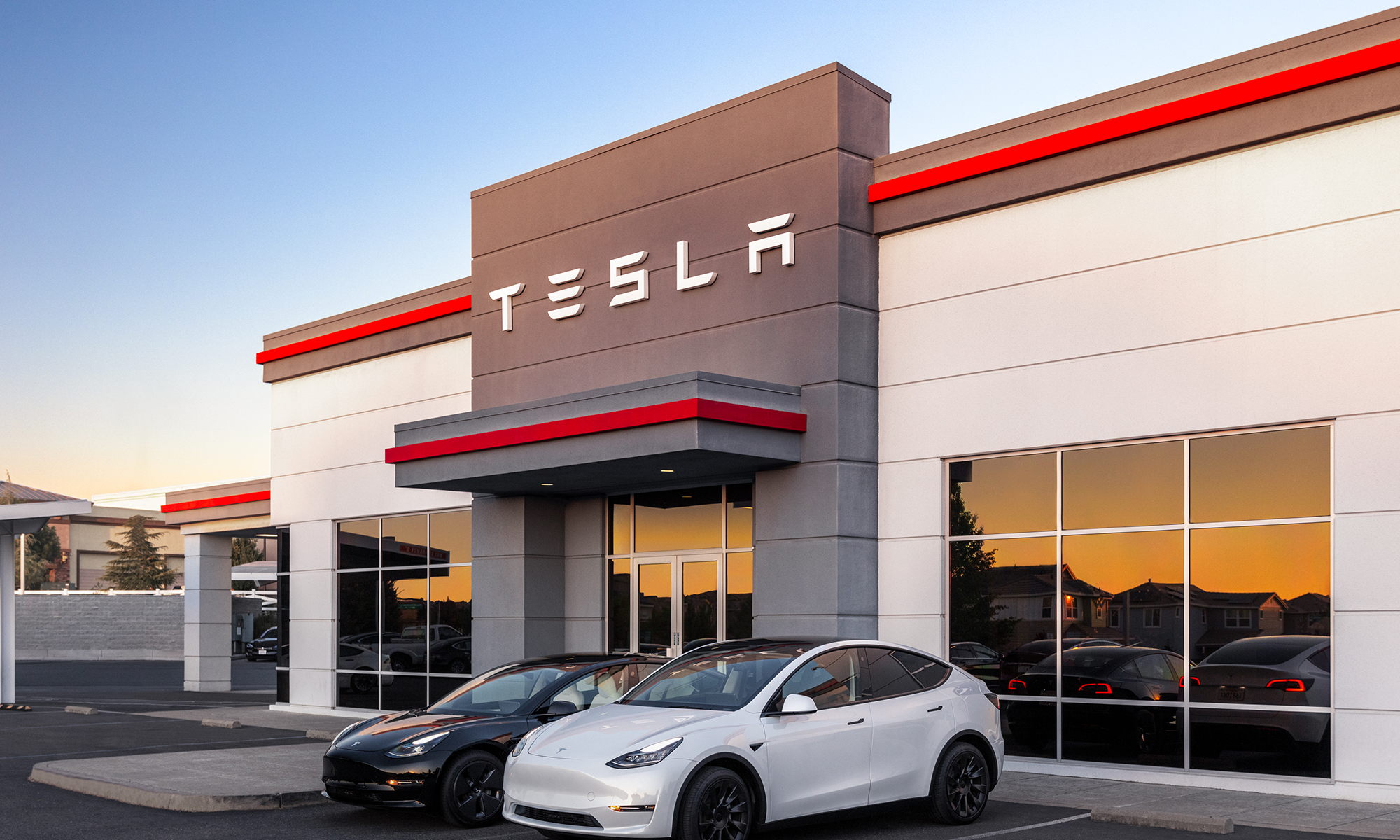
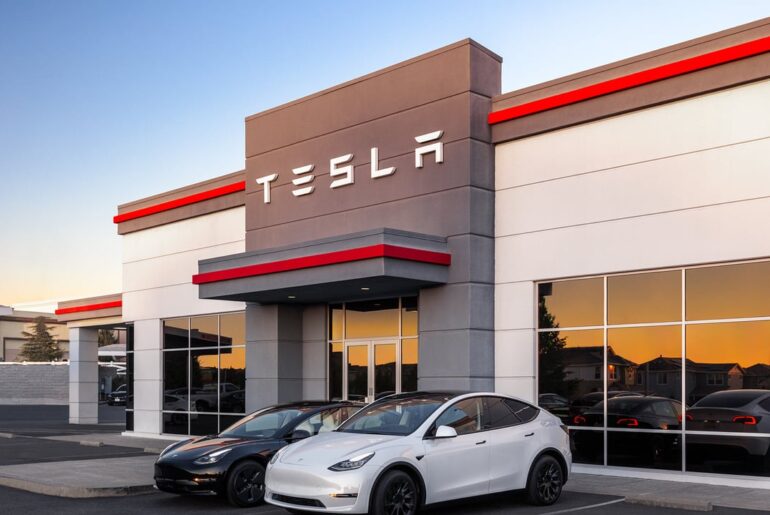
Image source: Tesla.
Inventory is building
First-quarter deliveries in 2026 rose 6% from Q1 2025, but that’s not saying a whole lot, considering deliveries in Q1 2025 were down 13% year over year. Total deliveries fell from 1.79 million in 2024 to 1.64 million in 2025.
It’s not just Tesla that has struggled. The entire EV sector is facing headwinds. There is now much more competition in the space, plus tariffs from the Trump administration, and a de-emphasis of green energy has not helped either. For instance, the Trump administration eliminated a $7,500 federal tax credit for EVs.
Tesla’s Model 3 Sedan and Model Y SUV made up 97% of all sales in the quarter. The struggling EV deliveries were not a big surprise, according to William Blair analyst Jed Dorsheimer. In a research note, as reported by CNBC, Dorsheimer stated that “global EV demand ex-China remains under pressure, and Tesla is actively sacrificing its EV business in favor of a fully autonomous future.”
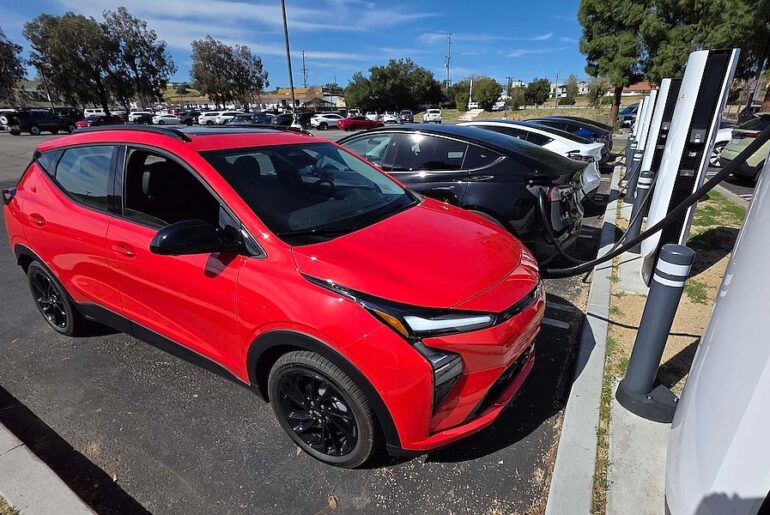
However, Tesla’s EV struggles raise another issue. In the quarter, the company delivered over 358,000 EVs but produced over 408,300 vehicles, meaning it is now sitting on a significant backlog of unsold EVs. This is the largest buildup of unsold vehicles Tesla has ever had.
The buildup is also likely to add to concerns about free cash flow, said JPMorgan Chase analyst Ryan Brinkman, because inventory serves as a headwind to cash until those vehicles are sold.
It also comes at a time when Tesla has already significantly increased its capital expenditure guidance to $20 billion this year, after allocating $8.5 billion to capex in 2025. This money is expected to flow into the company’s artificial intelligence ambitions, including its planned production of humanoid robots.
According to data from Visible Alpha, analysts expect Tesla to generate negative free cash flow of over $6 billion this year and over $1.2 billion next year.
A lot of pressure now on robotaxis
Struggles in the EV business are nothing new at this point. The industry has not fared well, and Tesla CEO Elon Musk does not appear to be focusing on what was once the company’s core business, either.
That’s because launching a fleet of robotaxis has become Tesla’s main focus, as well as the market’s. Tesla has begun rolling out its robotaxi fleet in several cities and hopes to significantly expand the number of cities it operates in. While no humans are physically driving these vehicles, it’s hard to know how many are fully self-driving. Wired recently reported that many of Tesla’s robotaxis are still operated remotely by humans.
Ultimately, the stock now depends heavily on the success of robotaxis and, eventually, the humanoid robots. Tesla’s stock has fallen about 18% this year (as of April 6), but it still trades at a big valuation of 174 forward earnings.
The stock doesn’t really trade on fundamentals; it is more of a pure bet on Musk and the heavy success of robotaxis in a newish autonomous market, with investors hoping Musk can quickly capture market share. However, given the large valuation and uncertainties about robotaxis, I still remain cautious on the stock.
Don’t miss this second chance at a potentially lucrative opportunity
Ever feel like you missed the boat in buying the most successful stocks? Then you’ll want to hear this.
On rare occasions, our expert team of analysts issues a “Double Down” stock recommendation for companies that they think are about to pop. If you’re worried you’ve already missed your chance to invest, now is the best time to buy before it’s too late. And the numbers speak for themselves:
Nvidia:if you invested $1,000 when we doubled down in 2009,you’d have $472,291!*Apple: if you invested $1,000 when we doubled down in 2008, you’d have $49,299!*Netflix: if you invested $1,000 when we doubled down in 2004, you’d have $536,003!*
Right now, we’re issuing “Double Down” alerts for three incredible companies, available when you joinStock Advisor, and there may not be another chance like this anytime soon.
*Stock Advisor returns as of April 10, 2026.
JPMorgan Chase is an advertising partner of Motley Fool Money. Bram Berkowitz has no position in any of the stocks mentioned. The Motley Fool has positions in and recommends JPMorgan Chase and Tesla. The Motley Fool has a disclosure policy.