Powertrain Options & Prices
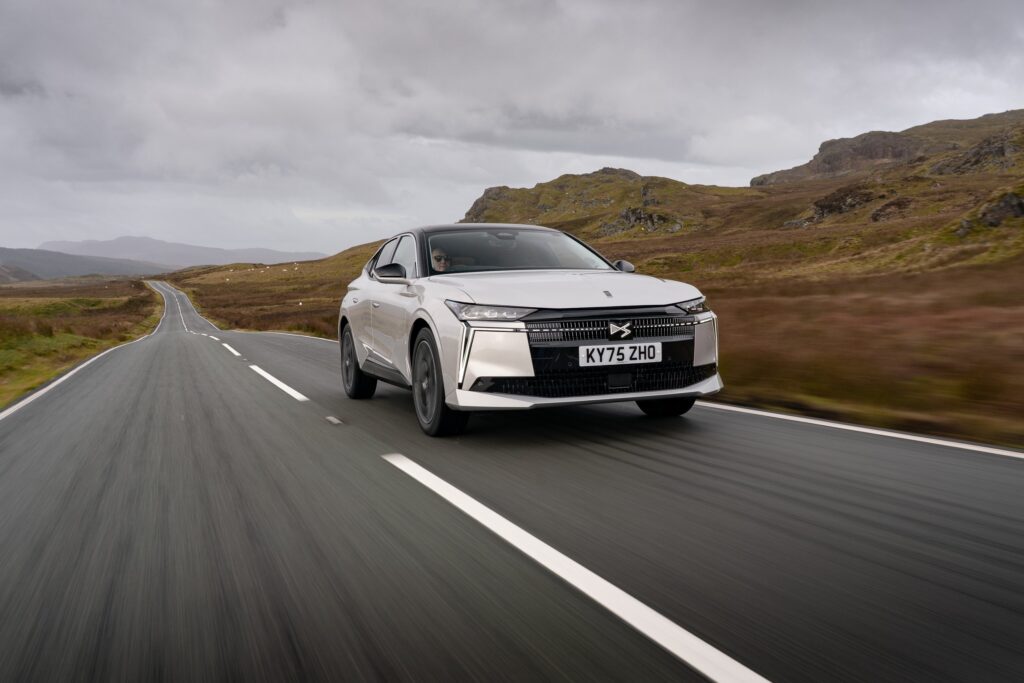
In terms of powertrains, you can choose from a self-charging hybrid, a plug-in hybrid (PHEV), or a fully electric model. Spending £32,200 (March ’26) gets you the entry-level Pallas trim in the self-charger, and then there’s a hefty premium of almost £7k to get you into the PHEV model, while the electric version tops out at £39,160, although you can reduce this via various grants.
The self-charging hybrid uses a 3-cylinder 1.2-litre engine developing 143 bhp, with a predicted 54mpg and a 0-60mph time of 10.4 secs. Electric propulsion is largely limited to setting off from junctions, although DS reckons you can manage around half of your town journeys without using any fuel.
The PHEV gets a beefier 4-pot 1.6 litre engine. Your power is upped to 222bhp and, thanks to the battery, you can manage what DS reckons is 51 miles using electric power only. I got very close to that figure, and you’ll be quicker too, with 0-60mph improving to a time of 7.4 seconds. Your top speed here is a healthy 143mph, and be sure to make full use of the hybrid system, as there’s a potential for 94mpg…apparently.
The fully electric version, which DS refers to as E-Tense, develops 211bhp and can manage a potential 277 miles on a full battery. Sprinting from 0-60mph takes 7.1 seconds, and your flat out top speed is 99mph. Plug it into a rapid charger, and you’ll go from 20-80 per cent charge in around 35 minutes. If you’ve got a wall box at home or work, a full charge takes just over 5 hours. Plug it in when you get home, and you’ll be sorted for the morning.
All versions are available in four trim levels: Pallas, Performance Line, Etoile, and Etoile Nappa Leather.