Micromobility company Lime is rolling out a new design of its rental electric bikes in the UK that it hopes will be more appealing to women and older riders.
Updated Lime bikes started appearing in British cities in late March, having already been trialled on streets in select locations across the US, Australia and Europe for several months.
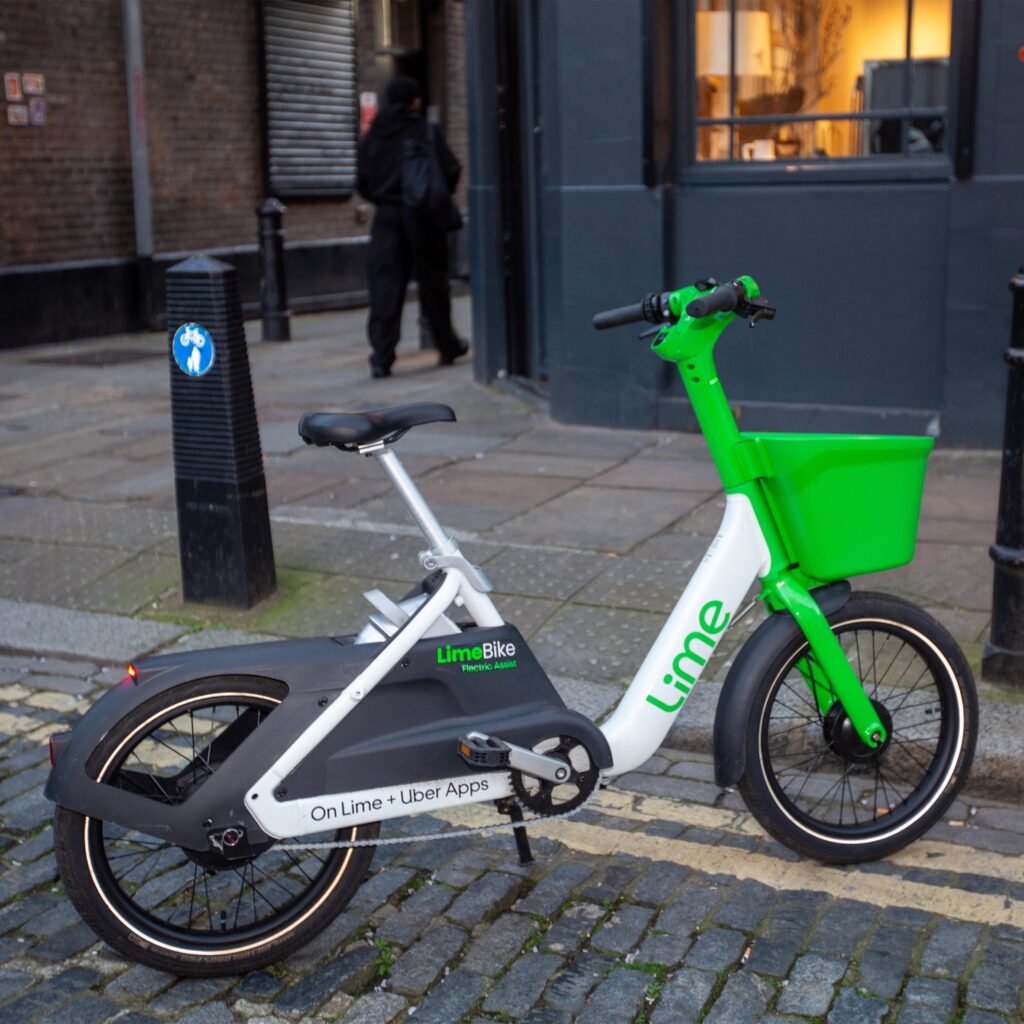
Among several changes from the previous Gen4 bike are much smaller wheels, a lower frame and the relocation of the battery from the crossbar to behind the seat post.
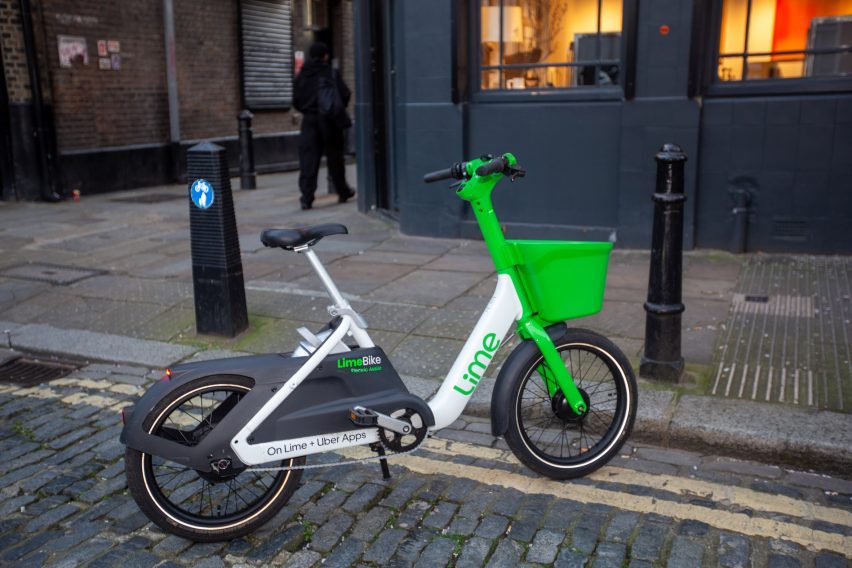 Lime is rolling out the new design across UK cities
Lime has pitched the new-generation bike – which was designed in-house by its research and development teams in San Francisco and Kunshan, China – as more inclusive.
“We’re constantly innovating, and our main goal with this bike was to make something that works for more people,” Lime chief technology officer Jon Jenkins told Dezeen.
“We asked, how do we create a vehicle that gets more people cycling?”
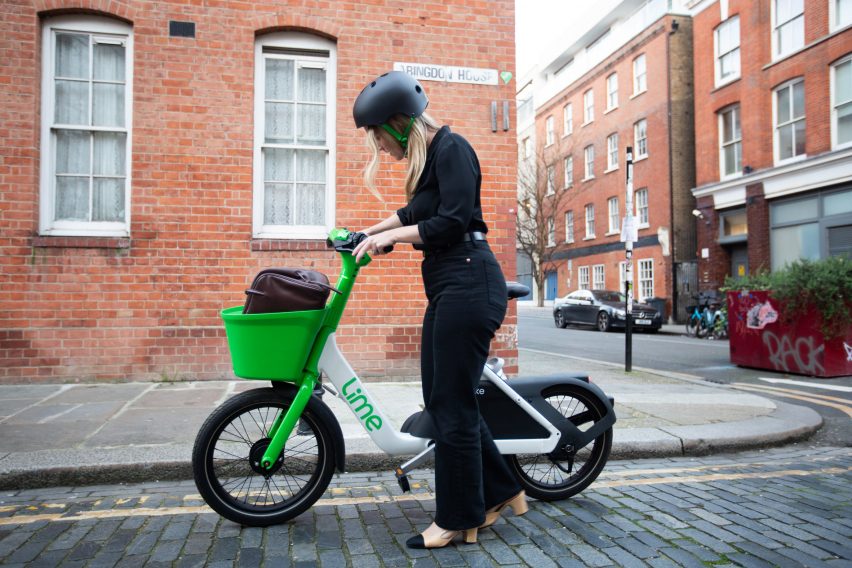 The new bike features several significant design changes
The design is based on feedback from “groups traditionally underrepresented in Lime’s active riders”, such as women and older people.
“A lot of it came down to confidence,” said Jenkins. “Women and older riders shared that the e-bikes felt hard to manoeuvre when you’re starting, stopping or trying to position the bike.”
Other people reported difficulty getting on and off the bikes, or expressed a desire to be able to easily put both feet on the ground while sat on the saddle, Jenkins added.
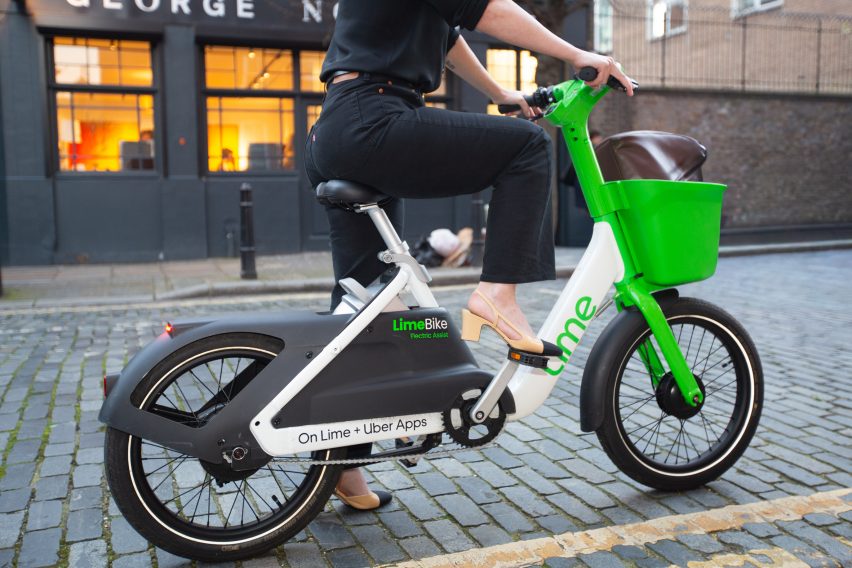 Smaller wheels and a lower centre of gravity make the bike more stable and easier to manoeuvre than the previous model
“Those insights shaped the geometry of the bike,” he said. “The lower frame, lower centre of gravity, smaller wheels and battery placement all come directly from that feedback.”
“It also changes how the bike reads visually,” Jenkins added. “The frame silhouette is designed to flow more naturally into the character line of the front basket and hides the battery largely out of sight.”
Despite the extensive design changes, the handlebars, seat and pedals have kept the same positioning as the previous bike to make the riding experience feel familiar.
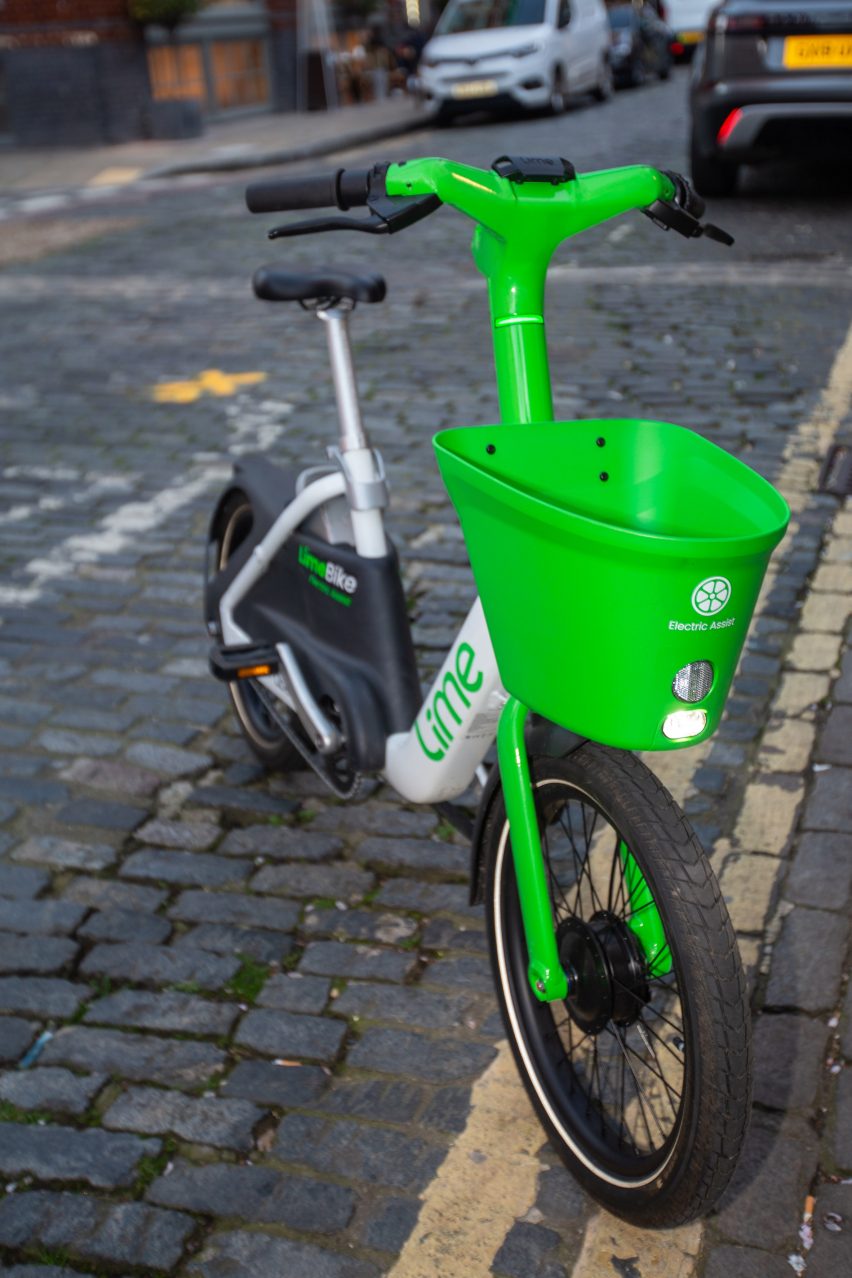 A new phone holder and saddle-height adjuster are among other design changes
The new bike comes after reporting by London Centric in early 2025 claimed that the design of the Gen4 bikes was contributing to severe leg breaks in riding accidents.
According to the publication, the bike’s chunky crossbar concentrates all of its 35 kilograms onto the rider’s leg if they fall sideways.
The term “Lime bike leg” subsequently gained attention across the UK media, and Lime is facing legal claims over the issue.
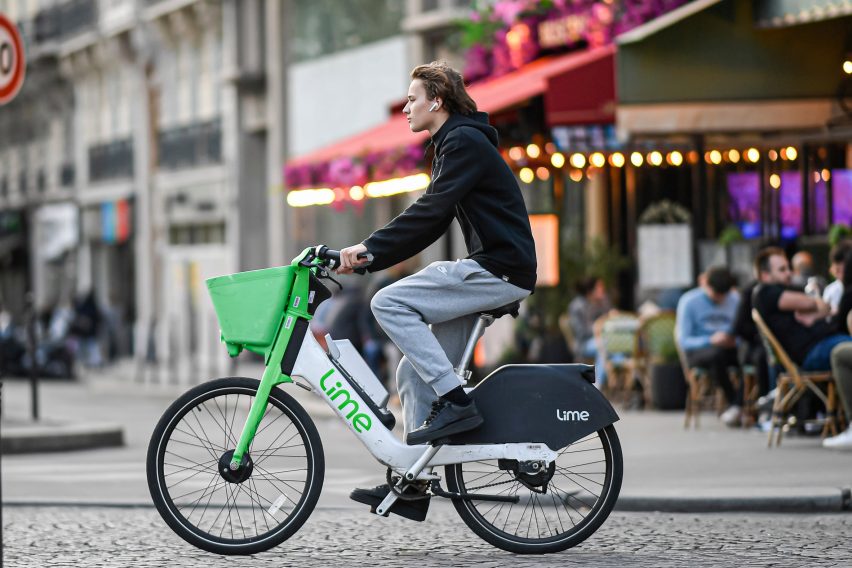 The new design updates the chunkier Gen4. Photo by Victor Velter via Shutterstock
However, Jenkins said the new model “wasn’t introduced to respond to a specific concern”. Lime says safety is its “highest priority”.
Among other updates is a more durable phone holder than the previous rubber cradle, which was often tampered with on the previous-generation bikes.
“We redesigned our phone holder from the ground up,” said Jenkins. “We built dozens of prototypes and held several rounds of UX testing with riders before settling on the design you see today. Phone security was a top area of focus, along with ease of operation.”
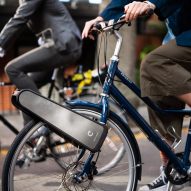
Mechanical bike turns into e-bike “in a number of seconds” with CLIP device
The new bikes also have an easier-to-use but robust flip mechanism for adjusting the saddle height.
“We treated it as a key touchpoint rather than a minor detail,” said Jenkins. “We know that most Lime rides start with a seat adjustment, so we wanted to make that a great experience.”
Other changes include the addition of drainage holes in the bottom of the front basket, the addition of a front-wheel mudguard, and a single-prong kickstand intended to make the bike sturdier on windy days.
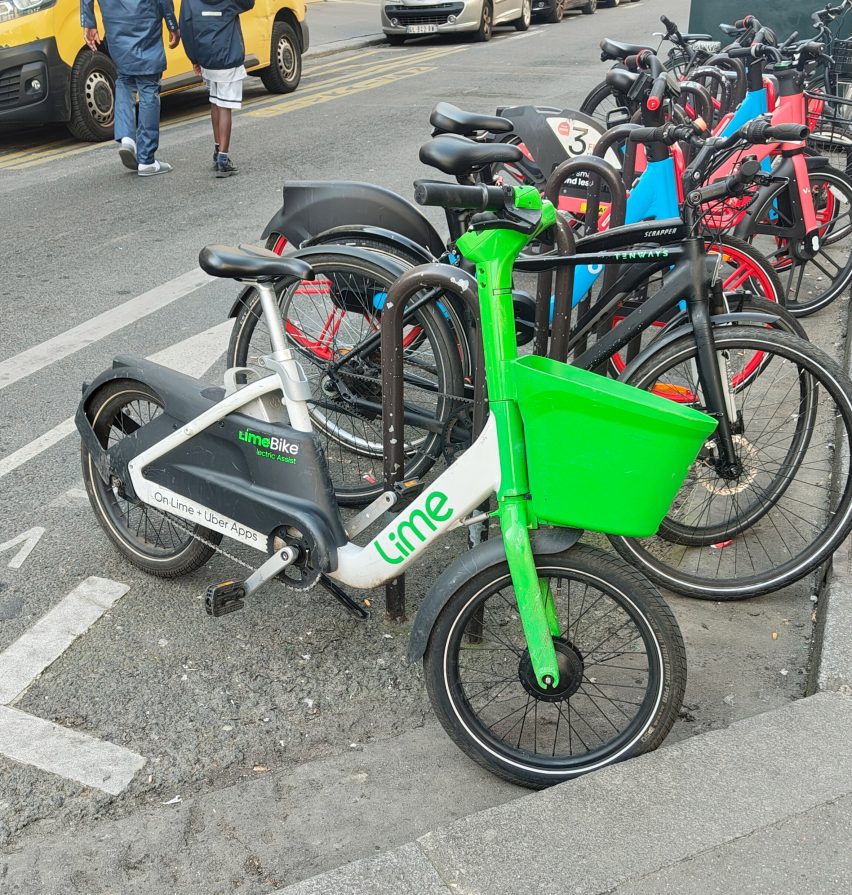 The updated Lime bike has already been available in Paris and other cities for some time. Photo by Nat Barker
The design is modular, with replaceable components that Lime says will extend the bikes’ lifespans and reduce waste, as well as making it easier to update the model.
In an apparent response to concerns about irresponsible parking, the new bikes also feature “upgraded on-board technology to improve location recognition accuracy”.
Lime does not disclose the number of bikes it operates, and has only said the rollout of the new design will be “gradual”, operating as a mixed fleet alongside the Gen4.
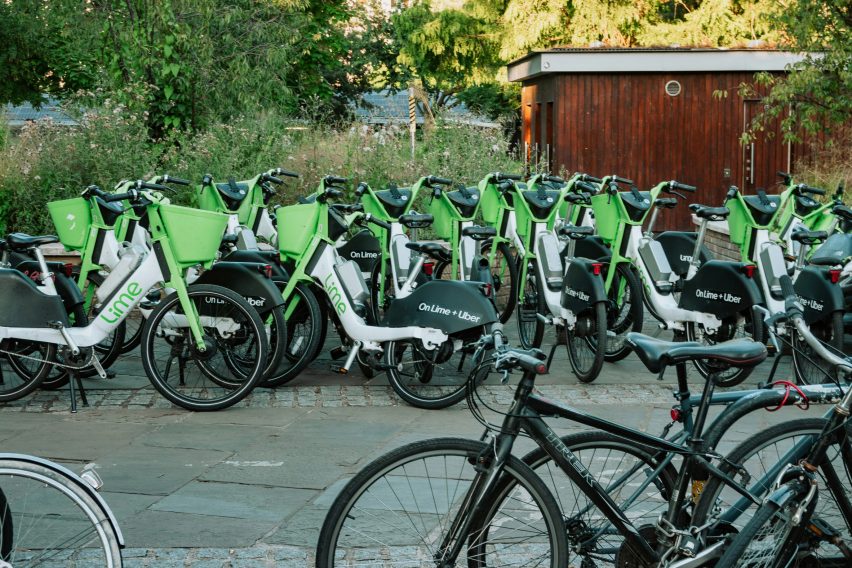 Lime has faced some criticisms amid the proliferation of its bikes in cities. Photo by Samuel Regan-Asante via Unsplash
San Francisco-based Lime operates in nearly 30 countries. Its app-bookable bikes and scooters have become hugely popular in many major cities since the company launched in 2017, with London its biggest market.
But it has also faced controversy amid its rapid expansion, receiving pushback from several municipalities concerned about Lime bikes filling up pavements.
Other lightweight electric vehicle designs previously covered on Dezeen include the four-wheeled Komma and the two-person Olto.
The photography is by Jamie Henderson courtesy of Lime unless otherwise stated.