Asia’s latest fuel shock has done more than raise transport costs. It has pushed a familiar vulnerability back into view, the region’s deep exposure to imported oil and gas moving through the Strait of Hormuz. Reuters reported that the corridor normally carries about a fifth of the world’s oil and LNG, with most of the affected oil volumes heading to Asia, and that Brent crude rose 60 percent in March as the crisis intensified. For fuel-importing economies across the region, that kind of disruption does not stay confined to energy markets for long. It quickly becomes a problem for inflation, logistics, household spending, and public budgets.
That is part of what makes this a useful moment to look again at electric vehicles. Not because expensive fuel automatically creates an EV boom, and not because consumers suddenly abandon old habits overnight. The more important shift is happening at the policy level. Each oil shock forces governments back into the same short-term playbook: subsidies, tax cuts, and emergency relief. Those measures can soften the immediate pain, but they do not reduce structural dependence on imported fuel. In that sense, EV adoption is starting to look less like a narrow consumer or climate issue and more like a question of fiscal resilience, energy security, and industrial preparedness.
The immediate cost of oil dependence
Across Asia, the first response to the current crisis has been expensive and immediate. Reuters reported that Japan is using ¥800 billion from reserve funds to cap gasoline prices, Indonesia has allocated IDR 381.3 trillion for fuel and electricity subsidies, the Philippines has activated a ₱20 billion emergency fuel fund, and Malaysia has pushed monthly energy subsidies up to RM4 billion. Vietnam has suspended fuel taxes, while other governments in the region have also moved to limit the spillover into transport costs and consumer prices.
There is nothing unusual about those decisions. Sudden fuel spikes are politically difficult to absorb, especially when they feed quickly into broader inflation. But the limits of this approach are becoming clearer. Emergency relief buys time. It does not change the underlying exposure. If oil shocks become a recurring feature of geopolitical instability, then the real policy question is no longer only how governments cushion the next spike. It is how long they can keep doing so without shifting more political and fiscal weight toward systems that reduce oil dependence over time.
Why EV policy now looks like economic policy
This is where the EV story becomes more interesting. The IEA’s Global EV Outlook 2025 shows that electric car sales in Southeast Asia grew by nearly 50 percent in 2024 and reached 9 percent of all car sales in the region. That matters because it shows the market was already moving before the latest Hormuz disruption. The current crisis did not create Asia’s EV transition from scratch. It has made the strategic case for it easier to see.
That case is also broader than emissions. EV readiness now sits much closer to questions of transport resilience, industrial policy, trade exposure, and fiscal sustainability. Reuters also reported a surge in EV interest across Asia-Pacific during the latest fuel crisis, including in Japan, South Korea, Australia, and New Zealand. That does not mean every market is approaching a breakout moment. It does suggest that the economic logic becomes more persuasive when every oil shock sends governments back into costly relief mode.
Seen that way, the comparison is no longer abstract. One path relies on repeated emergency spending whenever oil markets tighten. The other requires slower, more difficult investment in charging networks, grid readiness, industrial ecosystems, and targeted support for electrified transport. The second path is not cheaper in the short run. It is, however, one of the few ways to reduce exposure over time. That is why EV policy is increasingly starting to resemble economic policy.
Not every country is equally prepared
Asia is not entering this debate from a common starting point. Thailand is one of the clearest examples of a country with a relatively mature policy stack. Its EV 3.5 package runs from 2024 to 2027 and ties support to industry development and local ecosystem growth, while the country’s 30@30 strategy aims for zero-emission vehicles to account for 30 percent of annual vehicle production by 2030. Thailand has spent years treating EVs not only as a market opportunity but also as an industrial-policy project. That leaves it in a stronger position when fuel insecurity sharpens the case for electrification.
Indonesia presents a more mixed picture. It has scale, industrial ambition, and a strong strategic rationale, but the distance between policy intent and practical readiness remains visible. The IEA notes in its charging outlook that Indonesia aims to reach 30,000 charging stations by 2030. That target is significant, but it also points to how much infrastructure still needs to be built. Indonesia captures a broader regional truth. Fuel vulnerability can strengthen the case for EVs, but infrastructure and execution still determine how much momentum a crisis can actually unlock.
Vietnam’s framework is more incentive-led. The government has extended the 0 percent registration fee for battery electric cars through February 2027, preserving a direct consumer-side push while the wider ecosystem continues to develop. In a period of volatile fuel prices, measures that reduce the upfront barrier to entry may carry more weight than they did when energy markets were calmer.
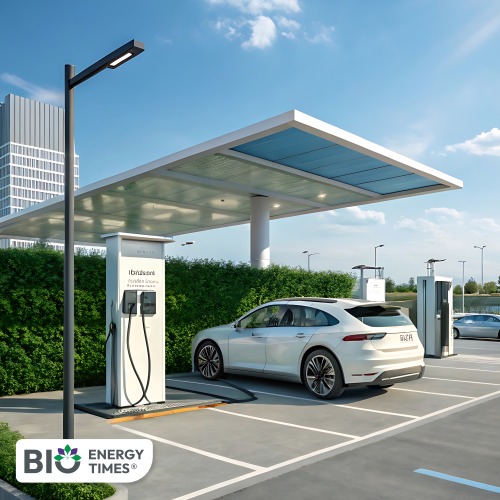
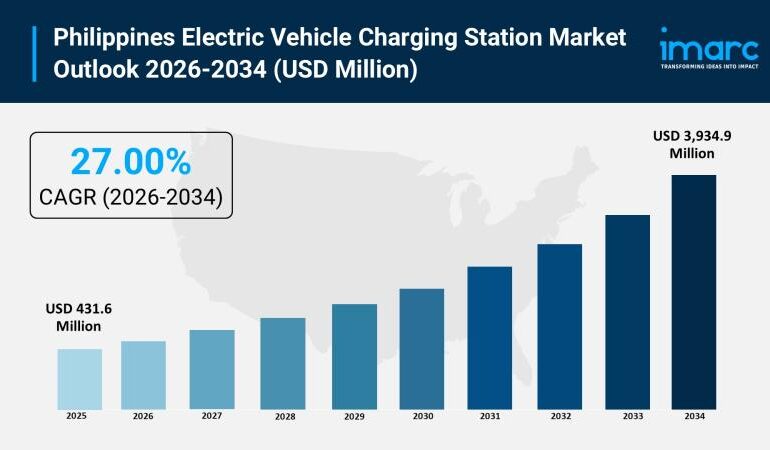
The Philippines sits in a revealing middle ground. The Electric Vehicle Industry Development Act gives the country a formal framework for EV adoption and industry development, and the government has also extended zero tariffs on EVs and parts through 2028. But system readiness is still catching up. According to the Department of Energy, cited by BusinessWorld and PNA, the Philippines had 912 publicly accessible charging stations nationwide as of March 31, 2025, against a target of about 7,300 by 2028. That gap helps explain why fuel shocks can strengthen the strategic logic for EV policy without quickly translating into mass-market uptake.
The real policy test
The harder question now is what governments choose to fund after the emergency response. If the default answer remains broader subsidies whenever oil prices spike, then the fiscal burden will keep returning with each new crisis. If more governments begin shifting resources toward charging networks, electrified fleets, industrial capacity, and other forms of transport resilience, then fuel shocks may end up accelerating a more structural transition.
EVs do not remove every vulnerability tied to energy systems. They do not erase grid constraints, supply-chain risks, or affordability gaps. But repeated oil crises are making one point harder to avoid. The cost of postponing EV readiness is becoming easier to measure in budget terms, not only in environmental ones.
Asia’s EV transition will still move unevenly. Income levels, infrastructure, manufacturing depth, grid quality, and policy coordination vary too widely for any single regional story to apply everywhere. Even so, the latest Hormuz-driven shock has clarified something important. Electric mobility is no longer only a future-facing technology agenda or a consumer lifestyle debate. For a growing number of Asian governments, it is becoming part of a more difficult calculation about how long they can afford to manage oil dependence the old way.
TNGlobal INSIDER publishes contributions relevant to entrepreneurship and innovation. You may submit your own original or published contributions subject to editorial discretion.
Featured image: distelAPPArath on Pixabay
Why OpenClaw is forcing a rethink of AI security, trust, and authority