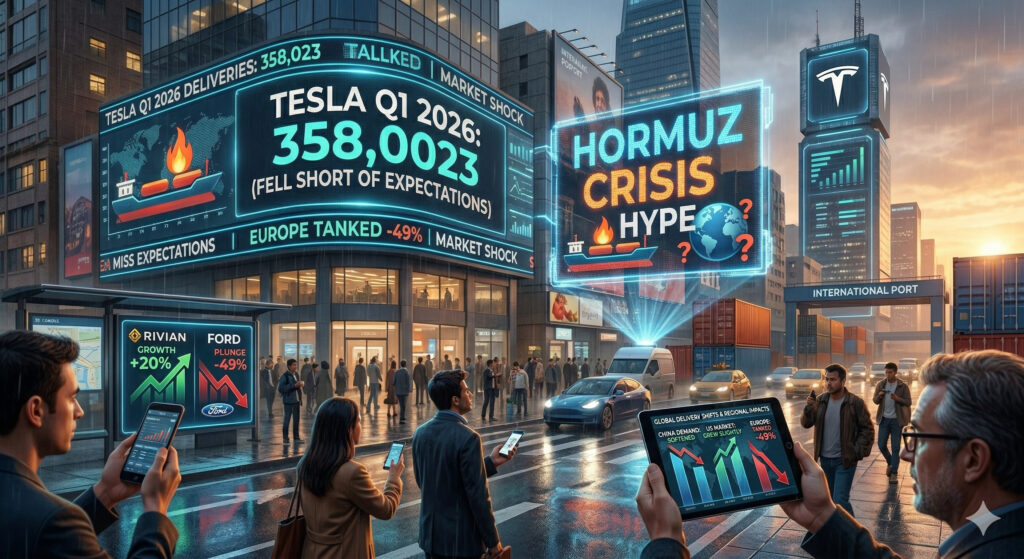
In a highly anticipated update, Tesla reported its Q1 2026 production and delivery numbers, sparking widespread debate across the automotive and financial sectors. The electric vehicle giant delivered 358,023 vehicles globally during the quarter, while production reached 362,615 units. Although these figures surpassed some of the more conservative forecasts, they still fell short of earlier expectations, marking a 13% year-over-year decline in deliveries.
The results highlight the increasing complexity of the global EV market, where shifting demand patterns, geopolitical concerns, and intensifying competition are reshaping industry dynamics. Tesla’s performance this quarter reflects both resilience and vulnerability, as it navigates a rapidly evolving landscape.
Production vs Deliveries: Understanding the Gap
Tesla’s production numbers slightly exceeded deliveries, suggesting a buildup of inventory. This gap has raised questions among analysts regarding demand consistency and logistical challenges. While a small difference between production and deliveries is typical, the current disparity indicates that Tesla may be facing short-term demand fluctuations or distribution inefficiencies.
Historically, Tesla has maintained strong delivery performance, often exceeding expectations. However, the Q1 2026 results suggest a potential shift, where production capacity is no longer the primary constraint—instead, demand variability and regional challenges are becoming more significant factors.
Regional Performance Breakdown
China: Softening Demand
China, one of Tesla’s most important markets, showed signs of weakening demand. Increased competition from domestic EV manufacturers, combined with changing consumer preferences, has impacted Tesla’s market share. Local companies are offering competitive pricing, advanced features, and strong government backing, making the market more challenging for international players.
Additionally, economic uncertainties and evolving regulatory frameworks have contributed to cautious consumer behavior. Tesla’s performance in China will be closely monitored in the coming quarters as it adjusts its strategy to maintain relevance in this critical market.
United States: Modest Growth
In contrast, Tesla experienced slight growth in the United States. Continued interest in EVs, supported by government incentives and expanding charging infrastructure, has helped sustain demand. However, growth remains modest, indicating that the market may be approaching saturation in certain segments.
Tesla’s ability to innovate and introduce new models or features will be crucial in maintaining momentum in the U.S. market.
Europe: Sharp Decline
Europe emerged as the weakest region for Tesla in Q1 2026, with deliveries dropping by a staggering 49%. Several factors contributed to this decline, including economic slowdown, reduced subsidies in some countries, and increasing competition from European automakers.
European consumers are also showing a growing preference for locally manufactured vehicles, further intensifying competition. Tesla’s European strategy may require significant adjustments to regain traction in this market.
Competitive Landscape: Winners and Losers
Tesla’s mixed performance stands in contrast to its competitors, highlighting the volatility of the EV market.
Rivian’s Growth Story
:contentReference[oaicite:1]{index=1} reported a 20% increase in deliveries, reaching 10,365 vehicles in Q1 2026. This growth reflects strong demand for its electric trucks and SUVs, as well as improved production efficiency.
Rivian’s success demonstrates that niche positioning and product differentiation can yield positive results even in a competitive environment.
Ford’s Decline
On the other hand, :contentReference[oaicite:2]{index=2} experienced a significant setback, with EV deliveries plunging by 49%. This decline underscores the challenges faced by traditional automakers as they transition to electric mobility.
Ford’s struggles highlight the importance of execution, supply chain management, and consumer perception in the EV market.
Global EV Market Trends
Despite the mixed performance of individual companies, the global EV market continues to grow. Electric vehicles now account for over 20% of total vehicle sales in key regions, signaling a structural shift in the automotive industry.
This growth is driven by several factors, including:
Government incentives and regulations promoting clean energy
Advancements in battery technology
Increasing environmental awareness among consumers
Expansion of charging infrastructure
However, the market is also becoming more competitive, with new entrants and established players vying for market share. This competition is leading to price pressures and innovation, benefiting consumers but challenging manufacturers.
Impact of Geopolitical Factors
The so-called Hormuz fuel crisis hype has added another layer of complexity to the market. Concerns about oil supply disruptions have influenced energy prices and consumer sentiment, indirectly affecting EV demand.
While higher fuel prices can boost interest in electric vehicles, uncertainty and economic instability may offset this effect. Tesla and other EV manufacturers must navigate these external factors carefully to maintain growth.
Investor Reactions
The market reaction to Tesla’s Q1 2026 results has been mixed. Some investors view the delivery shortfall as a sign of slowing growth, while others see it as a temporary setback in a still-expanding market.
Analysts have emphasized the importance of focusing on long-term trends rather than short-term fluctuations. Tesla’s strong brand, technological leadership, and global presence remain key strengths.
Challenges Ahead for Tesla
Tesla faces several challenges moving forward:
Maintaining demand in a competitive market
Addressing regional disparities in performance
Managing production and inventory efficiently
Navigating geopolitical and economic uncertainties
Additionally, the company must continue to innovate and expand its product lineup to stay ahead of competitors.
Opportunities for Growth
Despite these challenges, Tesla also has significant opportunities:
Expanding into emerging markets
Leveraging advancements in AI and autonomous driving
Enhancing energy solutions and battery technology
Strengthening its global supply chain
By capitalizing on these opportunities, Tesla can reinforce its position as a leader in the EV industry.
Conclusion
Tesla’s Q1 2026 delivery report paints a complex picture of a company at a crossroads. While the decline in deliveries raises concerns, the broader context reveals a dynamic and evolving market.
The performance of competitors like Rivian and Ford further underscores the volatility of the EV sector. As electric vehicles continue to gain market share, companies must adapt to changing conditions and consumer preferences.
For Tesla, the path forward will depend on its ability to balance innovation, efficiency, and market responsiveness. The coming quarters will be crucial in determining whether the company can maintain its leadership position in an increasingly competitive landscape.
Ultimately, the Q1 2026 results serve as a reminder that even industry leaders must continuously evolve to stay ahead in a rapidly changing world.
Frequently Asked Questions (FAQs) – Tesla Q1 2026 Deliveries
1. What are Tesla’s delivery numbers for Q1 2026?
Tesla delivered a total of 358,023 vehicles in Q1 2026, while production reached 362,615 units. This marked a decline of approximately 13% compared to the same period last year.
2. Why did Tesla deliveries decline in Q1 2026?
The decline in Tesla deliveries was mainly due to weaker demand in China, a sharp drop in Europe sales, increased competition from local EV manufacturers, and global economic uncertainties affecting consumer demand.
3. How did Tesla perform in China, the US, and Europe?
Tesla saw softened demand in China, slight growth in the United States, and a significant 49% decline in Europe. These regional differences highlight shifting dynamics in the global EV market.
4. What is the difference between Tesla production and deliveries?
Production refers to the number of vehicles manufactured, while deliveries represent the number of vehicles handed over to customers. In Q1 2026, Tesla produced more vehicles than it delivered, indicating possible inventory buildup or logistical delays.
5. How does Tesla compare with Rivian and Ford in 2026?
Rivian reported a 20% increase in deliveries, showing strong growth, while Ford experienced a 49% decline in EV sales. Tesla remains the market leader but is facing increasing competition.
6. What are the major trends in the electric vehicle market in 2026?
Key trends include rising EV adoption rates (over 20% in some regions), increased competition, technological advancements, and shifting demand patterns across different global markets.
7. How do global fuel prices impact EV demand?
Higher fuel prices typically increase interest in electric vehicles as consumers look for cost-effective alternatives. However, economic instability can offset this effect by reducing overall purchasing power.
8. What challenges is Tesla facing in the EV market?
Tesla faces challenges such as increased global competition, fluctuating demand, pricing pressure, regulatory changes, and supply chain complexities.
9. Is Tesla still leading the electric vehicle market?
Yes, Tesla remains a dominant player in the global EV market, but its leadership is being challenged by both emerging startups and established automakers expanding their EV portfolios.
10. What is the future outlook for Tesla and the EV industry?
The EV industry is expected to continue growing rapidly, driven by sustainability goals and technological innovation. Tesla’s future success will depend on its ability to adapt to market changes and maintain competitive advantages.