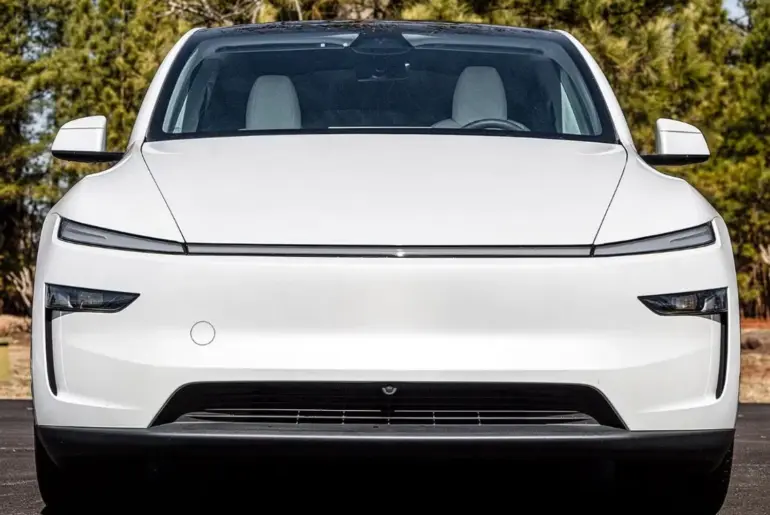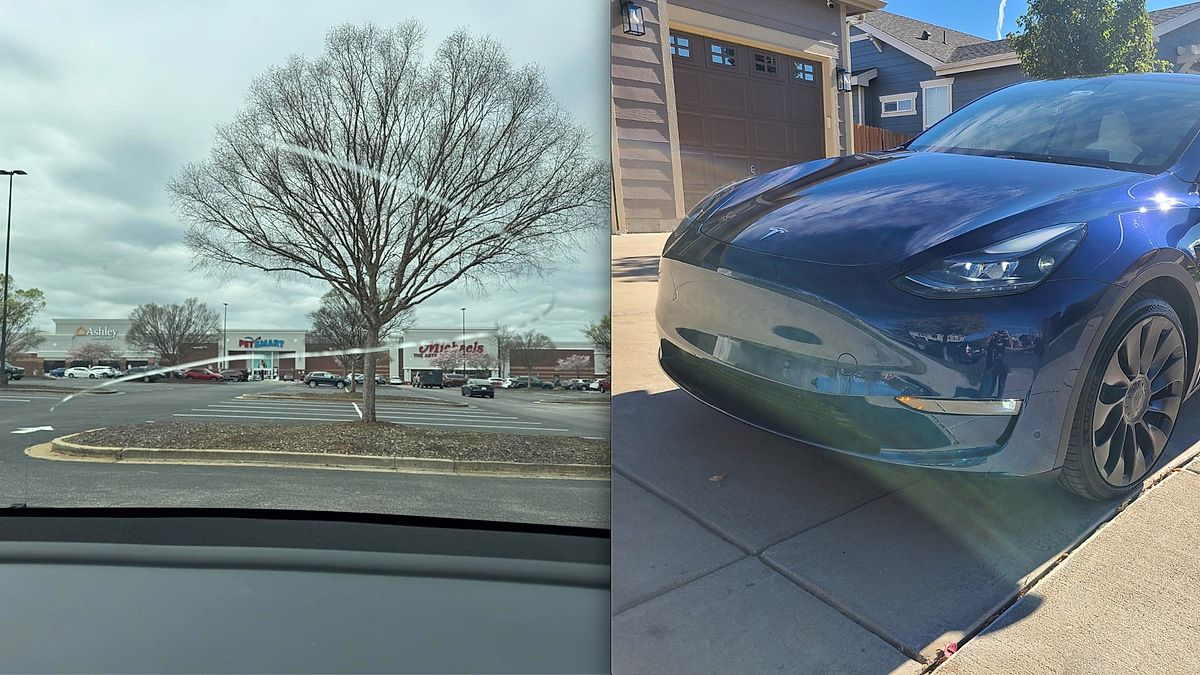
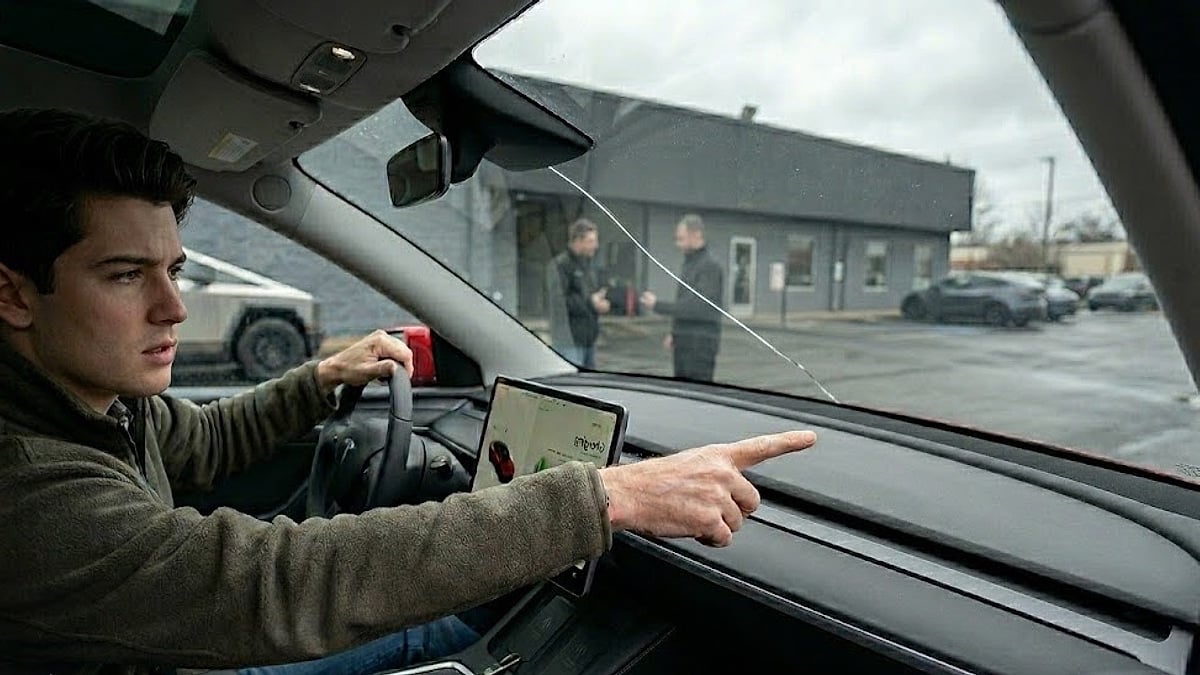
A 2023 Tesla Model Y Performance owner in Georgia is the latest to report a spontaneous, 30-inch windshield “stress crack” that appeared without any external impact. Despite the vehicle being under a full factory warranty, Tesla Service Centers are increasingly denying these claims, citing them as “wear and tear” and charging owners upwards of $1,500 for replacements.
This report investigates the technical shift in Tesla’s glass durability, the rise of “thermal shock” failures during cabin preconditioning, and why the manufacturer is pivoting toward a subscription-based “Windshield Protection Plan” rather than addressing the root installation defects.
The Investigation: A $1,500 Surprise in Centerville
I have spent 30 years in the automotive industry, and if there is one thing I have learned, it is that glass does not just “explode” or “crawl” 30 inches across a dashboard without a reason. Yet, that is exactly what Doug Newsom from Centerville, Georgia, experienced with his 2023 Model Y Performance.
Doug shared his frustration on the Tesla Model 3 and Model Y Owners Club Facebook page, stating:
“So we went to Tesla service today to find out why our 2023 Model Y Performance windshield just started to crack, starting from the bottom, under the trim, with no sign of impact from anything. It has grown 30” over the last few days, and I was told that they don’t know why. It’s a 3-hour trip and no resolution. They did say that for $1500+, we could get it replaced, and they would sell us another warranty to cover future issues. We have a full factory warranty now, and this issue is either a defective windshield or an installation problem.”
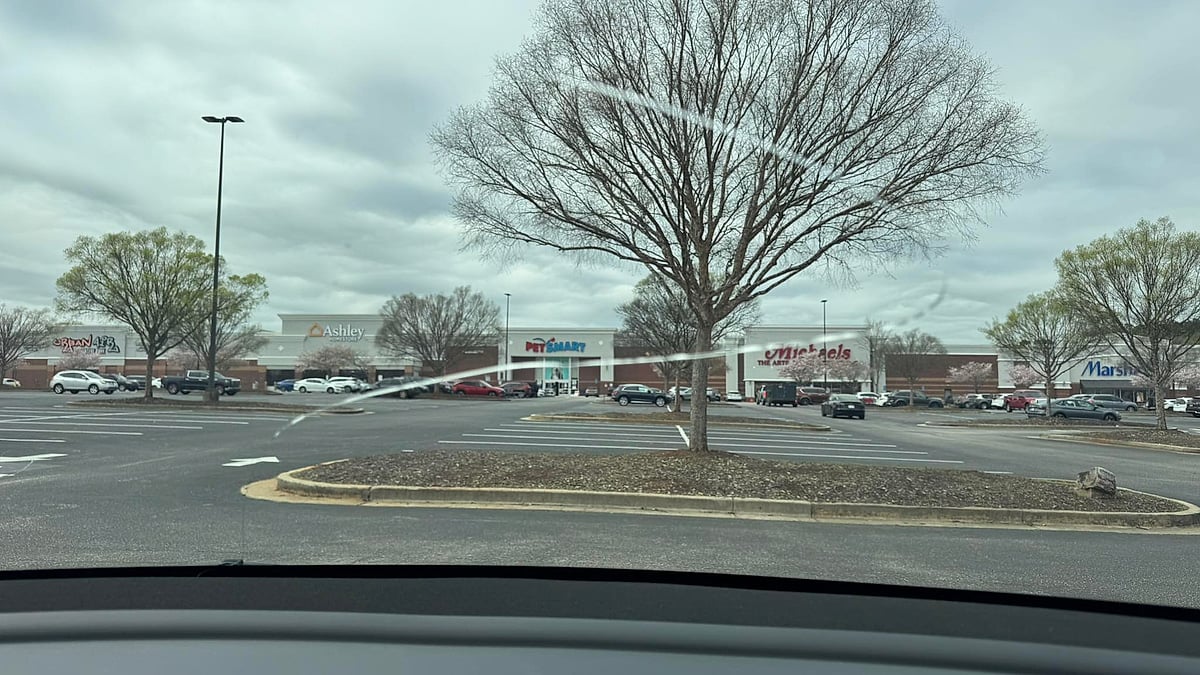
From my view, Doug’s situation is not an isolated incident of bad luck. In my recent reporting for Torque News, I documented how a Tesla Model Y owner discovered a windshield crack of mysterious origin with no impact mark, only to have their warranty claim flipped on them at the last minute (Tesla Service Center Lied About a Warranty Repair). This trend suggests a widening gap between Tesla’s structural engineering and its customer service obligations.
Who, How, and Why?
Who is affected? Primarily owners of the 2023 through 2026 Model Y and Model 3. The Performance (MYP) trims seem particularly vulnerable, likely due to the stiffer suspension transferring more torsional stress to the chassis and glass.
How does it happen? The cracks frequently originate from the “blackout” bordering the area under the trim where the glass is bonded to the frame. When the vehicle’s body flexes during normal driving or undergoes rapid temperature shifts, a microscopic manufacturing flaw becomes a catastrophic failure.
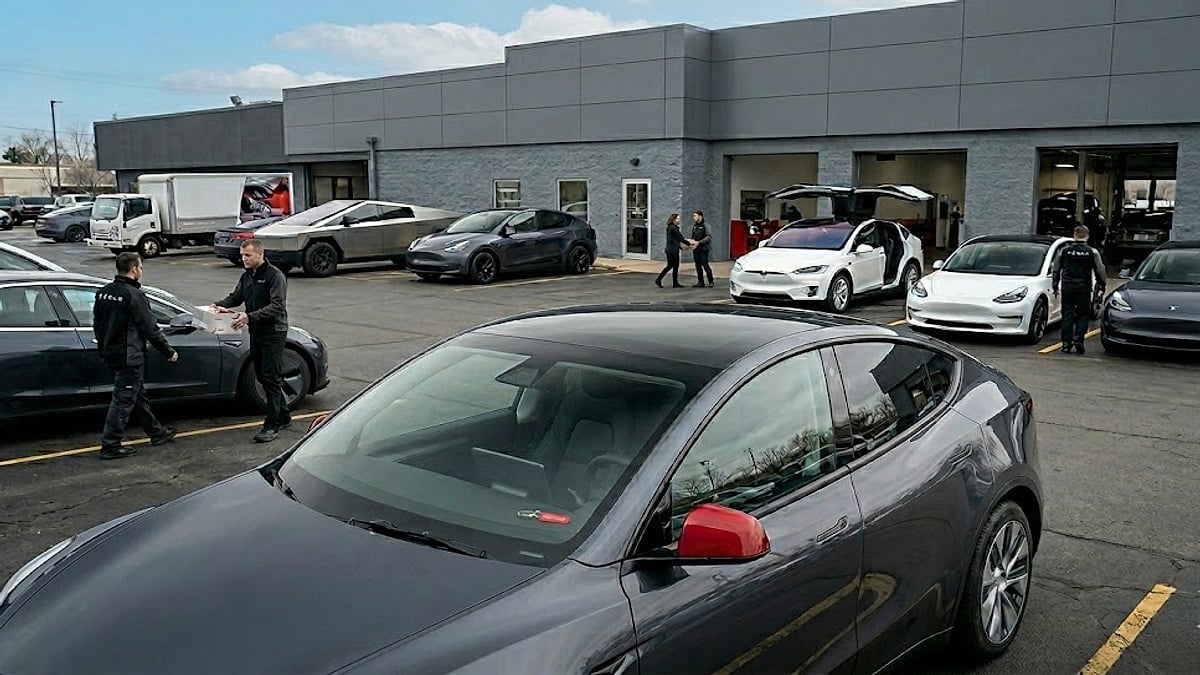
Why is Tesla denying claims? According to industry analysis, Tesla employs highly specialized glass across its range, and base prices tend to be above the industry average, which is why the cost frequently surprises new owners (The True Tesla Windshield Replacement Cost Revealed). By classifying these as “environmental damage” rather than “structural stress,” Tesla shifts a massive financial liability from its balance sheet onto consumers.
My Take
I have seen many cars in my three decades, but the Model Y’s relationship with its HVAC system is unique. Many owners report that their glass cracks specifically while using the cabin preconditioning feature in cold weather. As I noted in a recent Torque News investigation, the owner reports that Tesla replaced his windshield, and now he has significant wind noise as a result.
When you blast 80°F air onto a windshield sitting in 20°F Georgia frost, the glass’s expansion creates immense pressure. If there is even a tiny misalignment in the installation, the glass has nowhere to go but crack. Tesla knows this, yet they continue to push the “Windshield Protection Plan,” a $12-per-month subscription, as the “solution” instead of improving the glass tempering process. It feels less like a service and more like a “pay-to-play” warranty.
What You Need To Know
If you are driving a 2023–2026 Model Y, here is the technical reality of your windshield:
Stress vs. Impact: A true stress crack usually starts at the edge and follows a single, clean line. If you run a ballpoint pen along the crack and it never “snags,” there is no impact point.
The “30-Inch Crawl”: Unlike older automotive glass, Tesla’s thin-profile acoustic glass is designed for weight savings, which means cracks spread faster and farther under tension.
Warranty Logic: Tesla’s “New Vehicle Limited Warranty” covers manufacturing defects, but service centers often use a “pen test” to find any microscopic pit, even one unrelated to the crack, to deny the claim.
Calibration Costs: You aren’t just paying for glass. Tesla’s $1,500 quote includes “Pitch Verification” for the Autopilot cameras.
Technical Observations from Owner Communities
The “no impact” phenomenon is the leading topic in technical forums this month. In a recent discussion on r/TeslaModelY, an owner shared a strikingly similar story: “I accidentally left it defrosting for 20 min… the main tech told me it’s not related to that. It’s a stress fracture. I guess the way this windshield is designed, unlike other cars, it goes several inches lower, hugging the frame, so when the car moves on the road, it could crack,” which you can read in the full discussion here.
Another owner highlighted the glass’s vulnerability during seasonal shifts, writing, “My Model Y windshield is nearly $1400. I got a tiny imperceptible ‘rock chip,’ and it blossomed into a full-width window crack immediately,” in this Reddit thread. From my experience, this confirms that the glass is under high static tension from the factory.
Key Takeaways for Readers
Document Everything: If a crack appears, take high-resolution photos immediately before it spreads. Look for the “start point” under the trim.
The Pen Test: Use the ballpoint pen trick yourself before going to the Service Center. If the pen doesn’t catch, you have leverage for a warranty claim.
Insurance Strategy: Check whether your state (such as Florida or Massachusetts) has a $0-deductible glass law. If not, the $12/month Tesla Windshield Protection might actually be cheaper than a $1,500 surprise.
Third-Party Alternatives: Safelite and local shops are often $500–$700 cheaper, but ensure they can perform the ADAS camera calibration required for FSD.
From My View: A Question of Trust
My 30 years in the business tell me that Tesla is currently facing a “glass crisis” that it isn’t willing to admit. When you leave a customer’s car with “greasy fingerprints” and a $1,500 bill for an out-of-stock part, you aren’t just failing a repair; you are breaking the trust of your most loyal advocates. Doug’s experience of being offered a new warranty to cover a failure of the current warranty is a move right out of a bad late-night infomercial.
The Model Y’s Achilles Heel
The 2023 Tesla Model Y Performance is a marvel of engineering, but its Achilles heel is clearly the front glass. Whether it is thermal shock from preconditioning or structural flex from the MYP’s rigid chassis, owners are being left to foot the bill for what looks increasingly like a design flaw. As we move deeper into 2026, I expect more pressure on the NHTSA to investigate these “spontaneous” failures.
How About You? Has your Tesla windshield cracked without a clear impact? Did Tesla honor your warranty, or did they hand you a $1,500 estimate? Leave a comment in the red Add new comment link below.
About The Author
Denis Flierl is a 14-year Senior Reporter at Torque News and a member of the Rocky Mountain Automotive Press (RMAP) with 30+ years of industry experience. Based in Parker, Colorado, Denis leverages the Rockies’ high-altitude terrain as a rigorous testing ground to provide “boots-on-the-ground” analysis for readers across the Rocky Mountain region, California EV corridors, the Northeast, Texas truck markets, and Midwest agricultural zones. A former professional test driver and consultant for Ford, GM, Ram, Toyota, and Tesla, he delivers data-backed insights on reliability and market shifts. Denis cuts through the noise to provide national audiences with the real-world reporting today’s landscape demands. Connect with Denis: Find him on LinkedIn, X @DenisFlierl, @WorldsCoolestRides, Facebook, and Instagram.
Photo credit: Denis Flierl via Doug Newsom
Follow us today…