Support CleanTechnica’s work through a Substack subscription or on Stripe.
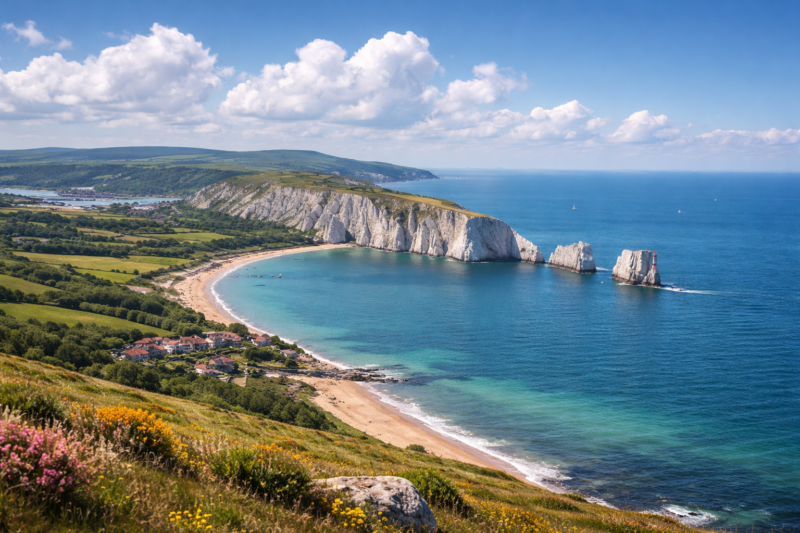
The Isle of Wight is where Charles Dickens wrote some of David Copperfield, a novel that may have been his most autobiographical. The opening could also serve as a meaningful observation and guidance for our own times: “WHETHER I shall turn out to be the hero of my own life, or whether that station will be held by anybody else, these pages must show.”
The Isle of Wight has partnered with Char.gy to have about 1,500 EV chargers installed across the small island. “Partnering with Isle of Wight Council marks an important step forward in delivering fair, accessible charging infrastructure at scale. At char.gy, our focus is on enabling every resident, especially those without off-street parking, to make the switch to electric vehicles with confidence,” Char.gy CEO John Lewis said.
Would Dickens have approved? Of course he would not have known about fossil fuels and gas and diesel vehicles in his time and all the toxic air pollution that harms the planet and human health. He wouldn’t have known about all the disastrous oil spills at sea and on land, the oil pipelines that leak, energy dependence on imported oil and its wasting of huge amounts of money, dumb wars, climate change impacts, and corrupt politics.
There is a clue from history, however. Anyone who knows anything about Dickens understands he did appreciate the outdoors and natural settings. “They had taken Winterbourne House in Bonchurch, which Charles fell instantly in love with — he wrote ‘I think it is the prettiest place I ever saw in my life, either at home or abroad.’” (The article linked above was written by one of Dickens’ descendants, Ian Dickens. The Charles Dickens quote is about the Isle of Wight.) So, any measures taken to protect and preserve the Isle of Wight may have aligned with his respect and regard for the island.
At the moment, there may be as few as 35 public EV chargers available, but there will be far more soon enough. The island has about 140,000 residents and over 2 million visitors per year.
How can making the Isle of Wight more sustainable be a heroic action? The cost of continuing to use fossil fuels and their climate change impacts — financially, environmentally, and socially — are huge. Doing nothing to solve these problems is not an option. Taking the appropriate actions for our own health and that of the planet and other species is the right course. History will show whether we answered the call or continued doing the harm.
Sign up for CleanTechnica’s Weekly Substack for Zach and Scott’s in-depth analyses and high level summaries, sign up for our daily newsletter, and follow us on Google News!
Advertisement
Have a tip for CleanTechnica? Want to advertise? Want to suggest a guest for our CleanTech Talk podcast? Contact us here.
Sign up for our daily newsletter for 15 new cleantech stories a day. Or sign up for our weekly one on top stories of the week if daily is too frequent.
CleanTechnica uses affiliate links. See our policy here.
CleanTechnica’s Comment Policy