The most notable recent transactions include:
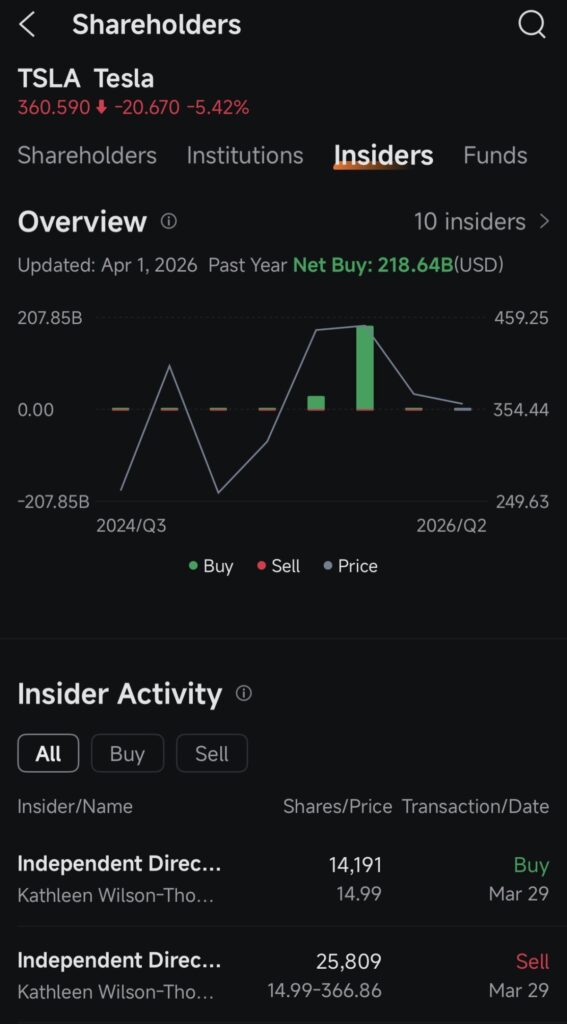
• On March 30, 2026, director Kathleen Wilson-Thompson exercised 40,000 stock options at a bargain $14.99 strike price (a tiny fraction of today’s levels) and then sold 25,809 shares in 15 separate transactions at prices ranging from about $352.83 to $366.86, pocketing roughly $9.27 million. This was executed under a pre-planned Rule 10b5-1 trading plan adopted back in November 2025, which is a common way for insiders to sell on autopilot without accusations of timing the market on inside info.
• Earlier in March (March 6), CFO Vaibhav Taneja sold 2,265 shares at $397.03, generating about $899,000. He has had other smaller sales and RSU-related activity.
• In February, Wilson-Thompson sold another ~25,731 shares at around $415.56, adding over $10.6 million to the tally.
Other directors and executives (including past sales by figures like James Murdoch and Kimbal Musk in late 2025) have trimmed positions at higher prices throughout the year. Over the last 90 days, net insider selling has been in the hundreds of thousands to low millions, with executives responsible for essentially all the net sales.
Context and What It Means
A big caveat: most of these sales stem from option exercises or vested equity compensation rather than fresh open-market dumps signaling panic. Insiders at high-growth companies like Tesla routinely sell shares to diversify, cover taxes on RSUs/options, or fund personal needs — especially after big run-ups. Elon Musk himself has not been a heavy seller in the most recent filings (though he has gifted shares and holds a massive stake worth tens of billions).
That said, the pattern of consistent selling with almost no open-market buying by insiders can raise eyebrows, particularly while the stock has faced pressure from softer Q1 delivery expectations and questions around autonomy timelines, robotaxi progress, and capital spending. Broader data shows insiders have sold hundreds of millions in value over longer periods, though large historical “buys” by Musk were often tied to compensation or specific events.
Insider selling alone isn’t a guaranteed red flag — it’s legal, disclosed, and often planned — but when it clusters during a stock dip, it can feed into sentiment that some at the top are cashing in chips while retail holders ride the volatility.